
- Catalogs
- ZIBO QIANHENG AUTOMATION ENGINEERING COMPANY LTD
- porcelain insulator porosity test machine

porcelain insulator porosity test machine

porcelain insulator porosity test machine
- Preparation: A ceramic piece is extracted from the thickest part of the insulator. A testing reagent is prepared using 1g of fuchsin dye in 100g of industrial ethanol/water.
- Procedure: The specimen is placed in the machine with the reagent, subjected to a pressure of no less than 20 x 106 Pa for 72 hours.
- Result Judgment: After cleaning and drying, the specimen is broken to check for dye penetration. Slight cracks from preparation are not considered failures.
- Name: Porosity testing machine
- Model: QHPT-35
- Manufacturer: Zibo Qianheng Automation Engineering Company Ltd
- Testing Pressure: 0-35Mpa
- Controlling Accuracy: +2% of Max pressure, -1% of Min Pressure
- Pressure Control Mode: Manual control
- Operating Mode: Manual control
- Time of Pressure Holding: At any length
- Testing Medium: Water
Catalog excerpts

ZIBO QIANHENG AUTOMATION & ENGINEERING COMPANY LTD Addr: Zibo city, Shandong province, China Tel: +86-0533-2766990 Fax:+86-05332767180 E-mail: [email protected] Website: www.conhen.com Introduction of Porosity Testing Machine of Porcelain Insulator Brief Introduction: This equipment is applied to test porosity property of HV porcelain insulator under constant high pressure environment. Standard applied: GB/T 775.1-2006 Test method of insulator Equivalent to IEC 60383-1 Insulators for overhead lines with nominal voltage above 1000 V; part 1: ceramic or glass insulator units for A.C. systems; definitions, test methods and acceptance criteria Type of test: Sample test of porcelain insulator Page 1 / 3 Machine of porosity test of porcelain insulator
Open the catalog to page 1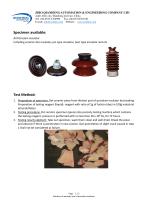
ZIBO QIANHENG AUTOMATION & ENGINEERING COMPANY LTD Addr: Zibo city, Shandong province, China Tel: +86-0533-2766990 Fax:+86-05332767180 E-mail: [email protected] Website: www.conhen.com Specimen available: All Porcelain insulator Including ceramic disc insulator, pin type insulator, post type insulator and etc Test Method: 1. Preparation of specimen: Get ceramic piece from thickest part of porcelain insulator by breaking Preparation of testing reagent (liquid): reagent with ratio of 1g of fuchsin (dye) in 100g industrial ethanol/Water. 2. Testing procedure: Put ceramic specimen (piece) into porosity...
Open the catalog to page 2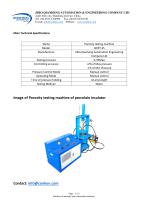
ZIBO QIANHENG AUTOMATION & ENGINEERING COMPANY LTD Addr: Zibo city, Shandong province, China Tel: +86-0533-2766990 Fax:+86-05332767180 E-mail: [email protected] Website: www.conhen.com Main Technical Specifications Name Model. Manufacturer Testing pressure Controlling accuracy Pressure Control Mode Operating Mode Time of pressure holding Testing Medium Porosity testing machine QHPT-35 Zibo Qianheng Automation Engineering Company Ltd 0-35Mpa +2% of Max pressure -1% of Min Pressure Manual control Manual control At any length Water Image of Porosity testing machine of porcelain insulator Contact:...
Open the catalog to page 3All ZIBO QIANHENG AUTOMATION ENGINEERING COMPANY LTD catalogs and technical brochures
 Company Profile
28 Pages




- Automated testing machine
- Material test machine
- Computer-controlled test machine
- Tensile testing machine
- Laboratory testing machine
- Bending test machine
- Automatic crimping machine
- Hydraulic testing machine
- Resistance testing machine
- Hydraulic crimping machine
- Mechanical testing machine
- Cable testing machine
- Horizontal testing machine
- Grinding polishing machine
- Torsion testing machine
- Semi-automatic crimping machine
- Servo-hydraulic testing machine
- PLC-controlled crimping machine
- Torque testing machine