
- Catalogs
- Zhejiang Lisheng Spring Co., Ltd.
- Wave Spring catalog-06
Wave Spring catalog-06
1 /1Page
Wave Spring catalog-06
1 /1Page
Catalog excerpts

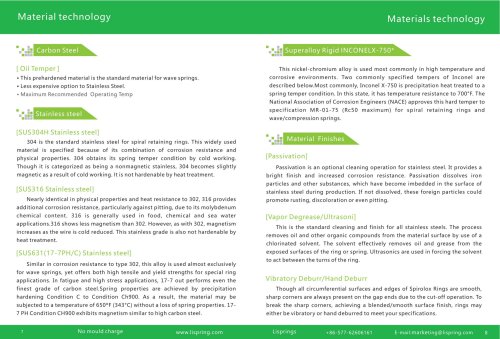
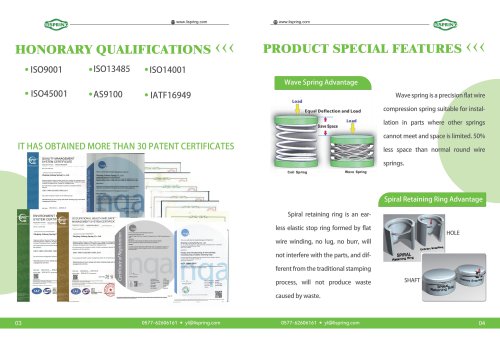
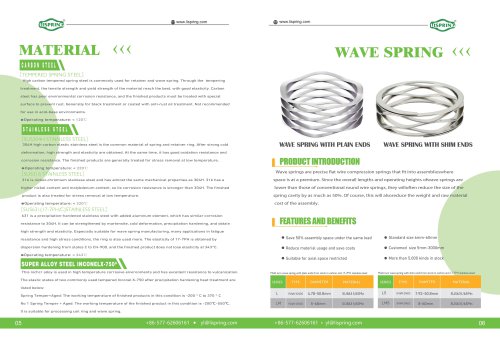
Materials technology Carbon Steel Superalloy Rigid INCONELX-750*^ [ Oil Temper ] • This p re hardened material is the standard material for wave springs. • Less expensive option to Stainless Steel. • Maximum Recommended Operating Temp Stainless steel This nickel-chromium alloy is used most commonly in high temperature and corrosive environments. Two commonly specified tempers of Inconel are described below.Most commonly, Inconel X-750 is precipitation heat treated to a spring temper condition. In this state, it has temperature resistance to 700°F. The National Association of Corrosion Engineers (NACE) approves this hard temper to specification MR-01-75 (Rc50 maximum) for spiral retaining rings and wave/compression springs. [SUS304H Stainless steel] 304 is the standard stainless steel for spiral retaining rings. This widely used material is specified because of its combination of corrosion resistance and physical properties. 304 obtains its spring temper condition by cold working. Though it is categorized as being a nonmagnetic stainless, 304 becomes slightly magnetic as a result of cold working. It is not hardenable by heat treatment. Nearly identical in physical properties and heat resistance to 302, 316 provides additional corrosion resistance, particularly against pitting, due to its molybdenum chemical content. 316 is generally used in food, chemical and sea water applications.316 shows less magnetism than 302. However, as with 302, magnetism increases as the wire is cold reduced. This stainless grade is also not hardenable by heat treatment. Similar in corrosion resistance to type 302, this alloy is used almost exclusively for wave springs, yet offers both high tensile and yield strengths for special ring applications. In fatigue and high stress applications, 17-7 out performs even the finest grade of carbon steel.Spring properties are achieved by precipitation hardening Condition C to Condition Ch900. As a result, the material may be subjected to a temperature of 650°F (343°C) without a loss of spring properties. 17-7 PH Condition CH900 exhibits magnetism similar to high carbon steel. Passivation is an optional cleaning operation for stainless steel. It provides a bright finish and increased corrosion resistance. Passivation dissolves iron particles and other substances, which have become imbedded in the surface of stainless steel during production. If not dissolved, these foreign particles could promote rusting, discoloration or even pitting. This is the standard cleaning and finish for all stainless steels. The process removes oil and other organic compounds from the material surface by use of a chlorinated solvent. The solvent effectively removes oil and grease from the exposed surfaces of the ring or spring. Ultrasonics are used in forcing the solvent to act between the turns of the ring. Though all circumferential surfaces and edges of Spirolox Rings are smooth, sharp corners are always present on the gap ends due to the cut-off operation. To break the sharp corners, achieving a blended/smooth surface finish, rings may either be vibratory or hand deburred to meet your specifications. E-mail:ma [email protected]
Open the catalog to page 1All Zhejiang Lisheng Spring Co., Ltd. catalogs and technical brochures
 Product Guide-01
1 Page
 Product Guide-02
1 Page
 Product Guide-03
1 Page
 Product Guide-04
1 Page
 Product Guide-05
1 Page
 Product Guide-06
1 Page
 Product Guide-07
1 Page
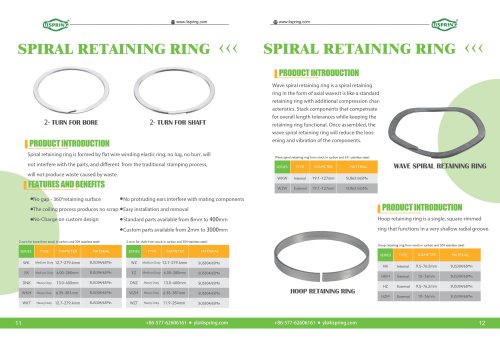 Product Guide-08
1 Page
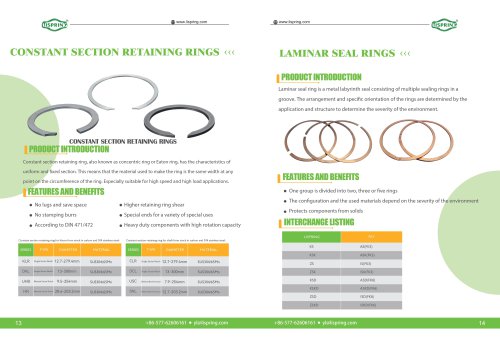 Product Guide-09
1 Page
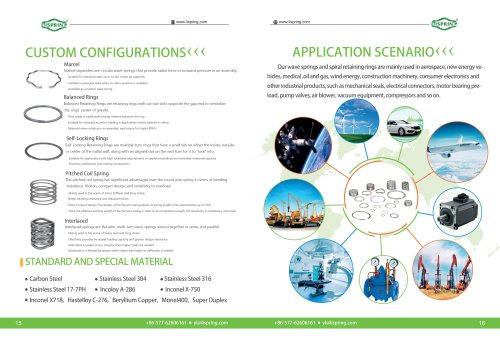 Product Guide-10
1 Page
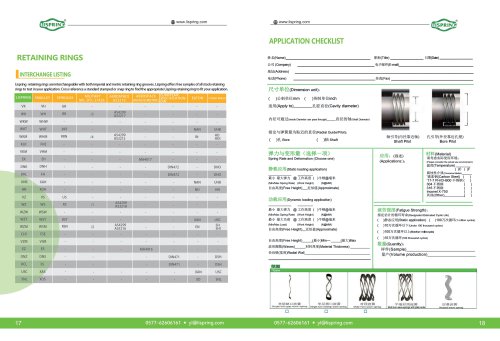 Product Guide-11
1 Page
 wave spring catalog-01
1 Page
 Wave Spring catalog-02
1 Page
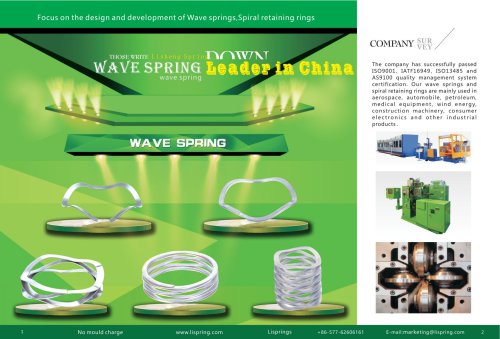 Wave Spring catalog-03
1 Page
 Wave Spring catalog-04
1 Page
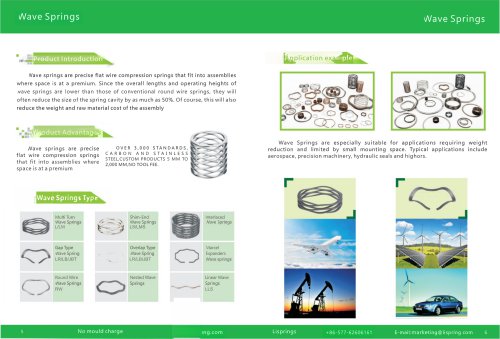 Wave Spring catalog-05
1 Page
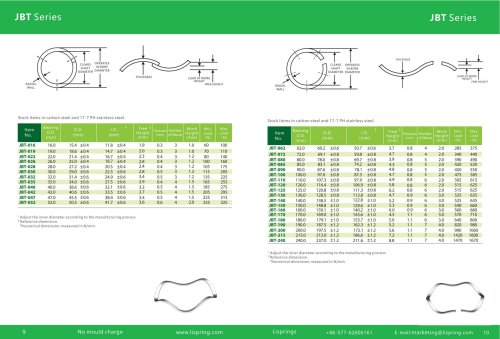 Wave Spring catalog-07
1 Page
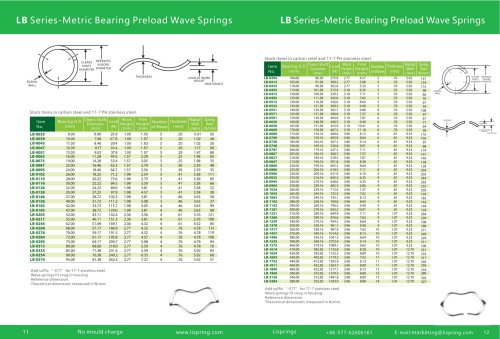 Wave Spring catalog-08
1 Page
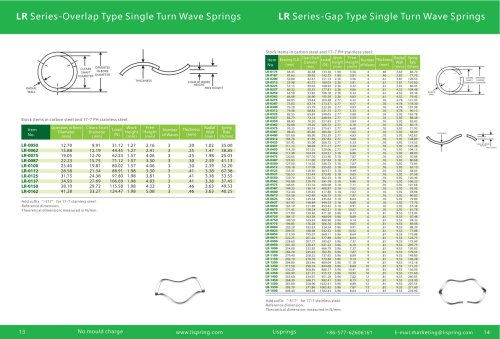 Wave Spring catalog-09
1 Page
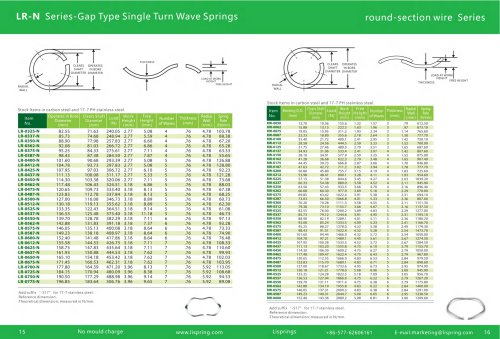 Wave Spring catalog-10
1 Page
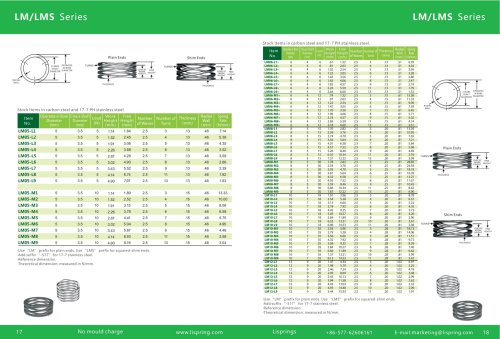 Wave Spring catalog-11
1 Page
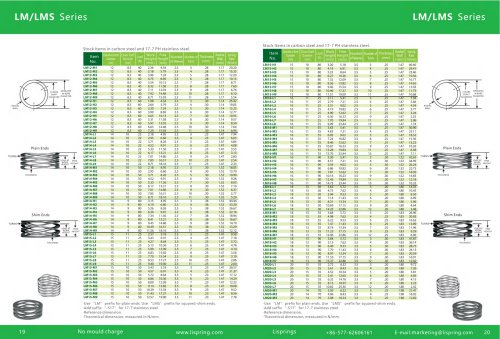 Wave Spring catalog-12
1 Page
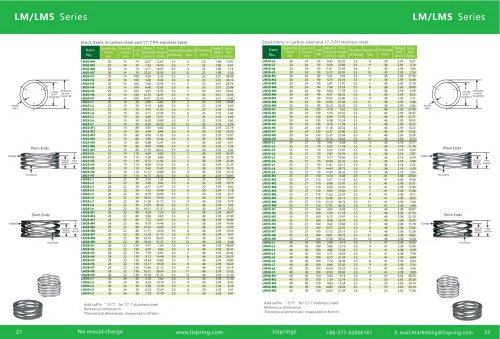 Wave Spring catalog-13
1 Page
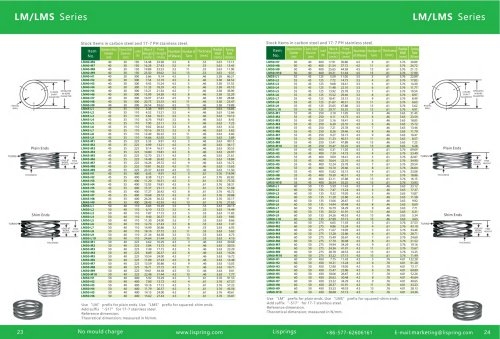 Wave Spring catalog-14
1 Page
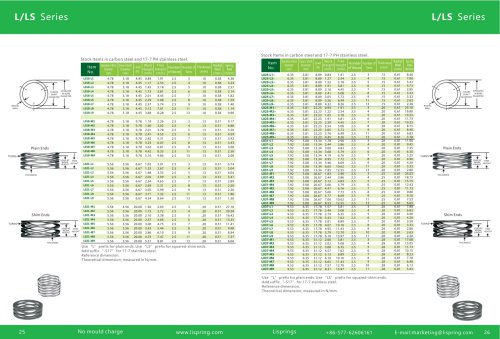 Wave Spring catalog-15
1 Page
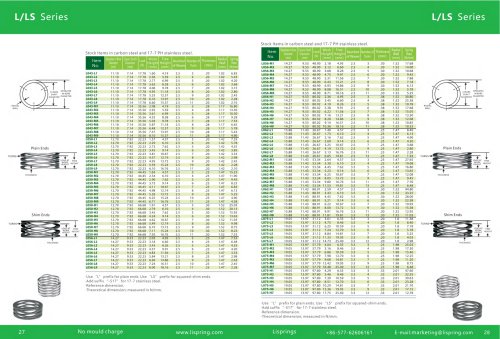 Wave Spring catalog-16
1 Page
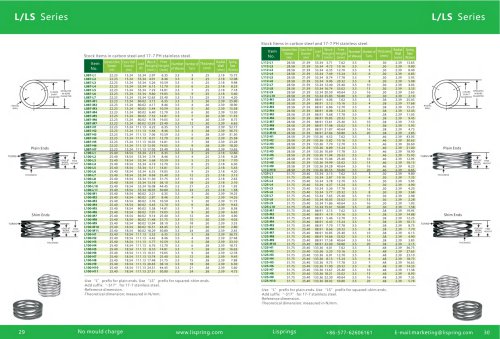 Wave Spring catalog-17
1 Page
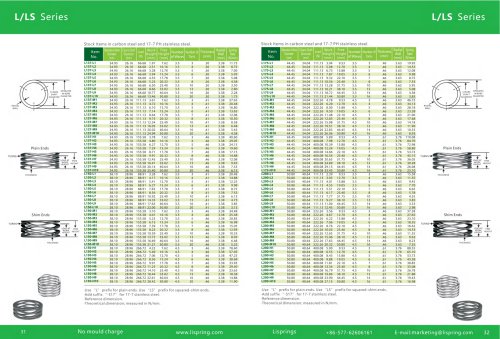 Wave Spring catalog-18
1 Page
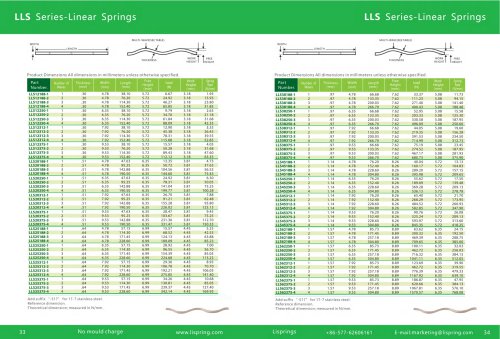 Wave Spring catalog-19
1 Page
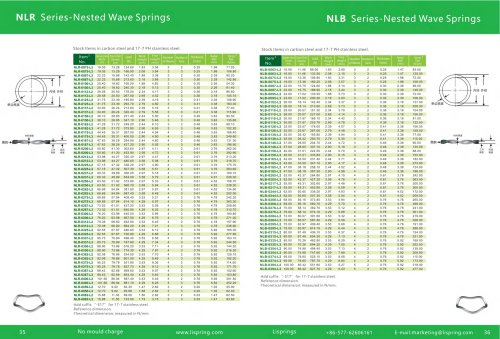 Wave Spring catalog-20
1 Page
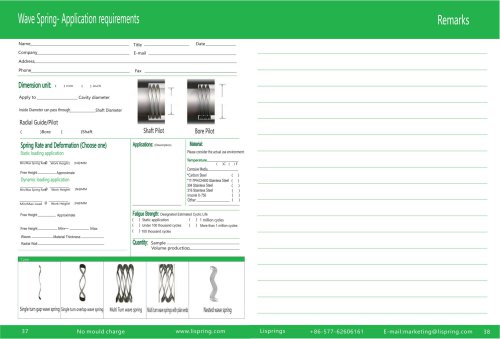 Wave Spring catalog-21
1 Page
 Lispring Spiral Retaining Rings
58 Pages