
- Catalogs
- YUEQING DANPU ELECTRIC ( LANGIR ) CO.,LTD.
- L25U Series Push Button Switch/Anti Vandal Switch

L25U Series Push Button Switch/Anti Vandal Switch

L25U Series Push Button Switch/Anti Vandal Switch
Overview of Control Systems
This document outlines various types of control systems used across different sectors including automotive, marine, kitchen appliances, small appliances, and industrial applications.
1. Car Controls
Car controls refer to the mechanisms and interfaces that allow drivers to operate and manage vehicle functions. These include steering, braking, acceleration, gear shifting, and dashboard controls. Emphasis is placed on ergonomic design, safety standards, and integration with electronic systems.
2. Yacht Controls
Yacht controls encompass navigation, engine management, and onboard system controls tailored for marine environments. Key considerations include waterproofing, corrosion resistance, and user-friendly interfaces for safe operation at sea.
3. Kitchen Controls
Kitchen controls manage appliances such as ovens, stoves, and refrigerators. These controls focus on temperature regulation, timing, and safety features to ensure efficient and safe cooking processes.
4. Small Appliances Controls
Controls for small appliances like coffee makers, toasters, and vacuum cleaners prioritize simplicity, durability, and energy efficiency. User interfaces are designed for ease of use and reliability.
5. Industrial Controls
Industrial controls involve complex systems for managing machinery and processes in manufacturing and production environments. These controls emphasize precision, robustness, compliance with industrial standards, and integration with automation systems.
Summary
The document highlights the importance of tailored control systems adapted to the specific requirements of each sector, focusing on safety, usability, durability, and compliance with relevant standards.
Catalog excerpts
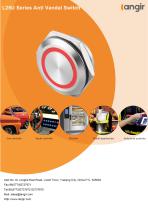
Yacht controls Small appliances Industrial controls
Open the catalog to page 1All YUEQING DANPU ELECTRIC ( LANGIR ) CO.,LTD. catalogs and technical brochures
 Piezo Switch Catalog
16 Pages
 1P DC Circuit Breaker/DC MCB
5 Pages
 2P DC Circuit Breaker/DC MCB
5 Pages
 3P DC Circuit Breaker/DC MCB
5 Pages
 4P DC Circuit Breaker/DC MCB
5 Pages
 KP45 Piezo Keypad
5 Pages
 KP44 Piezo Keypad
5 Pages
 KP34 Piezo Keypad
7 Pages


- Single-pole switch
- Push-button switch
- Circuit breaker
- Technology switch
- Multipole switch
- Safety electric switch
- Metal stand
- Panel-mount keypad
- IP67 switch
- Illuminated push-button switch
- Cable tie
- Touch push-button switch
- Action push-button switch
- Form push-button switch
- Touch switch
- Metal switch
- IP65 push-button switch
- Hermetic switch
- Bipolar switch
- Current circuit breaker