
- Catalogs
- YUEQING DANPU ELECTRIC ( LANGIR ) CO.,LTD.
- L22U Series Push Button Switch/Anti Vandal Switch

L22U Series Push Button Switch/Anti Vandal Switch

L22U Series Push Button Switch/Anti Vandal Switch
Main Sections
1. Car Controls
This section covers the specifications and operational procedures for controls used in automotive applications. It includes details on ergonomic design, safety standards, and integration with vehicle systems.
2. Yacht Controls
Focuses on control systems specific to yachts, emphasizing marine-grade materials, waterproofing standards, and user interface considerations for maritime environments.
3. Kitchen Small Appliances
Details the control mechanisms for small kitchen appliances, highlighting energy efficiency, user safety features, and compliance with household electrical standards.
4. Industrial Controls
Describes control systems used in industrial settings, including robustness requirements, environmental resistance, and compatibility with automation protocols.
Key Specifications and Recommendations
- Ergonomics: Controls must be designed for ease of use and accessibility in their respective environments.
- Safety Standards: Compliance with relevant safety regulations is mandatory across all sectors.
- Material Requirements: Use of durable, environment-appropriate materials to ensure longevity and reliability.
- Integration: Controls should seamlessly integrate with existing systems and support necessary communication protocols.
Summary of Critical Parameters
- Waterproofing levels for yacht controls to withstand marine conditions.
- Electrical safety ratings for kitchen appliances.
- Environmental resistance for industrial controls, including temperature and dust tolerance.
- Ergonomic standards tailored to user interaction in cars and yachts.
Best Practices
- Regular testing and certification to maintain compliance.
- Use of standardized components to facilitate maintenance and replacement.
- Design for user-friendly interfaces to reduce operational errors.
Catalog excerpts
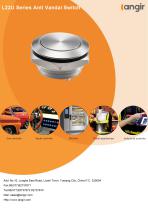
Yacht controls Small appliances Industrial controls
Open the catalog to page 1All YUEQING DANPU ELECTRIC ( LANGIR ) CO.,LTD. catalogs and technical brochures
 Piezo Switch Catalog
16 Pages
 1P DC Circuit Breaker/DC MCB
5 Pages
 2P DC Circuit Breaker/DC MCB
5 Pages
 3P DC Circuit Breaker/DC MCB
5 Pages
 4P DC Circuit Breaker/DC MCB
5 Pages
 KP45 Piezo Keypad
5 Pages
 KP44 Piezo Keypad
5 Pages
 KP34 Piezo Keypad
7 Pages


- Single-pole switch
- Push-button switch
- Circuit breaker
- Technology switch
- Multipole switch
- Safety electric switch
- Metal stand
- Panel-mount keypad
- IP67 switch
- Illuminated push-button switch
- Cable tie
- Touch push-button switch
- Action push-button switch
- Form push-button switch
- Touch switch
- IP65 push-button switch
- Metal switch
- Hermetic switch
- Bipolar switch
- Current circuit breaker