
- Catalogs
- Wuxi Danikor Automation Technology Co.,Ltd
- Danikor Torque Arms Models


- Company
- Products
- Catalogs
- News & Trends
- Exhibitions
Danikor Torque Arms Models
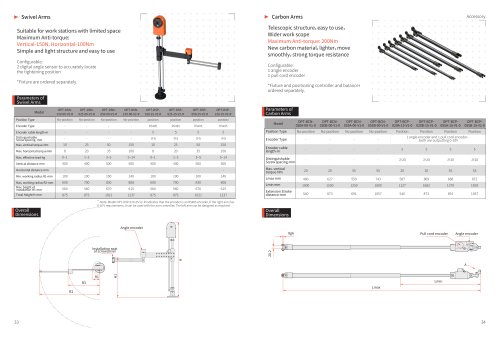
Danikor Torque Arms Models
Overview
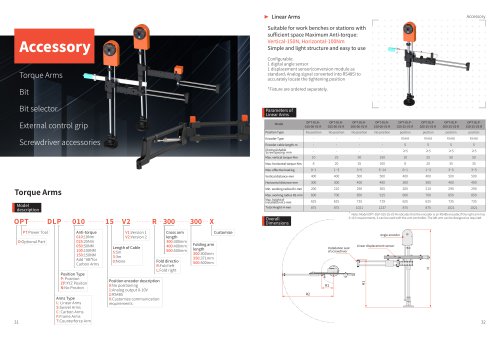
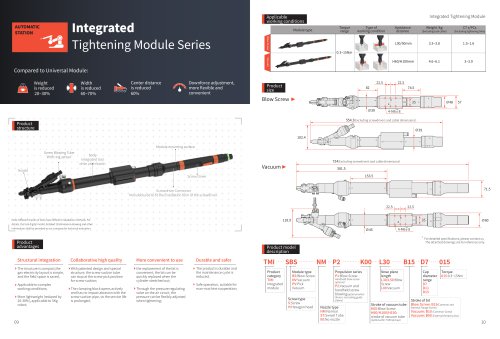
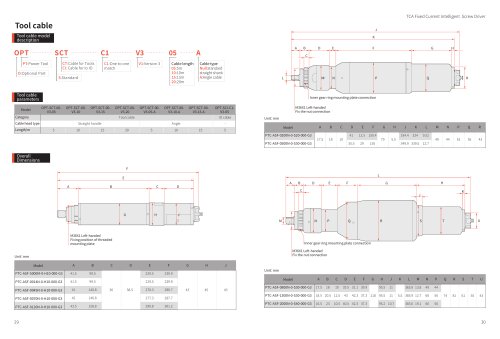
This document provides technical specifications and configuration options for swivel arms and carbon arms used in workstation applications, particularly for torque tools such as screwdrivers. It includes detailed parameters, encoder types, torque limits, dimensions, and accessory compatibility.
1. Product Types and Features
Swivel Arms
- Designed for workstations with limited space.
- Maximum anti-torque: Vertical 150 Nm, Horizontal 100 Nm.
- Simple, lightweight structure for ease of use.
- Configurable with digital angle sensors for precise tightening position detection.
- Fixtures are ordered separately.
Carbon Arms
- Telescopic structure allowing wider working range.
- Maximum anti-torque: 200 Nm.
- Made from new carbon material, offering lighter weight, smooth movement, and strong torque resistance.
- Configurable with angle encoders and pull cord encoders.
- Fixtures, positioning controllers, and balancers are ordered separately.
2. Encoder Types and Configuration
- Angle Encoder: Provides accurate angular position feedback.
- Pull Cord Encoder: Measures extension stroke distance.
- Some models support both encoders outputting 0-5 V signals.
- RS-type encoders (e.g., RS485) are available for certain models, compatible with arm controllers.
3. Key Parameters and Dimensions
- Encoder Cable Length: Typically 15 meters for carbon arms.
- Screw Spacing: Varies by model, important for mounting compatibility.
- Torque Ratings: Maximum vertical and horizontal torque values specified per model.
- Working Radius: Minimum (R1) and maximum (R2) working radius dimensions define the operational reach.
- Installation Height: Maximum installation height (H1) and total height (H) are provided for fitting considerations.
- Extension Stroke Distance: Relevant for telescopic carbon arms, indicating the range of extension.
4. Model Identification and Ordering Notes
- Model codes follow a pattern indicating arm type, encoder type, cable length, and version.
- OPT-BCN and OPT-BCP prefixes denote swivel and carbon arms respectively.
- OPT-DSN and OPT-DSP models relate to angle encoder installation seats and configurations.
- Fixtures, controllers, and balancers are not included and must be ordered separately.
- Special notes indicate that right and left arms can have different encoder voltage requirements and configurations.
5. Recommendations and Best Practices
- Select arm type based on workspace constraints and torque requirements.
- Use digital angle sensors or encoders to improve tightening accuracy and repeatability.
- Ensure compatibility of encoder output signals with arm controllers.
- Consider cable length and mounting dimensions carefully to fit workstation layout.
- Order necessary accessories such as fixtures and balancers separately to complete the setup.
6. Summary of Critical Specifications
| Parameter | Swivel Arms | Carbon Arms |
|---|---|---|
| Max Vertical Torque | 150 Nm | 200 Nm |
| Max Horizontal Torque | 100 Nm | 200 Nm |
| Encoder Types | Digital Angle Sensor | Angle Encoder, Pull Cord Encoder |
| Encoder Cable Length | Not specified | Typically 15 m |
| Structure | Simple, light | Telescopic, carbon material |
| Accessories | Fixtures ordered separately | Fixtures, controllers, balancers ordered separately |
Catalog excerpts
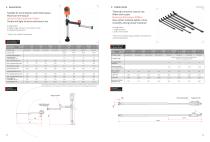
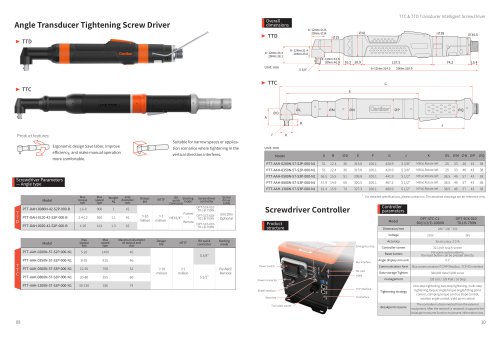
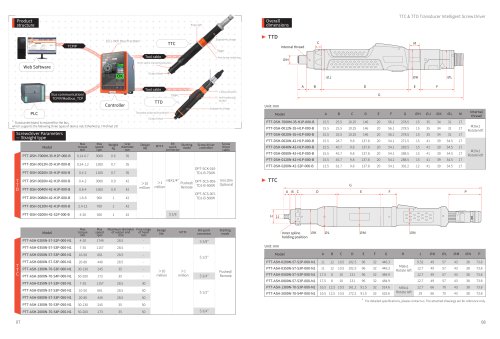
Suitable for workstations with limited space Maximum Anti-torque: Vertical-150N, Horizontal-lOONm Simple and light structure and easy to use 2 digital angle sensor to accurately locate the tightening position ‘Fixture are ordered separately. Parameters of Swivel Arms Telescopic structure, easy to use, Wider work scope Maximum Anti-torque: 200Nm New carbon material, lighter, move smoothly, strong torque resistance 1 angle encoder 1 pull cord encoder *Fixture and positioning controller and balancer ordered separately. OPT-DSN- OPT-DSN- OPT-DSN- OPT-DSN- OPT-DSP- OPT-DSP- OPT-DSP- OPT-DSP- Parameters of Carbon Arms M . . OPT-BCN- OPT-BCN- OPT-BCN- OPT-BCN- OPT-BCP- OPT-BCP- OPT-BCP- OPT-BCP-
Open the catalog to page 1All Wuxi Danikor Automation Technology Co.,Ltd catalogs and technical brochures
 Danikor Prodcuts Catalog
2 Pages
 Danikor Company Profile
46 Pages
 Flexible Feeding System
2 Pages
 Industrial Torque Screwdriver
29 Pages
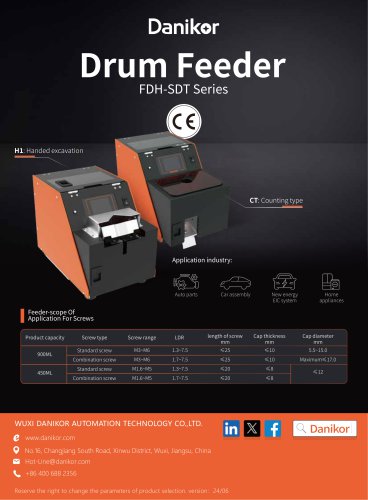 Screw Dispenser/Screw Presenter
2 Pages
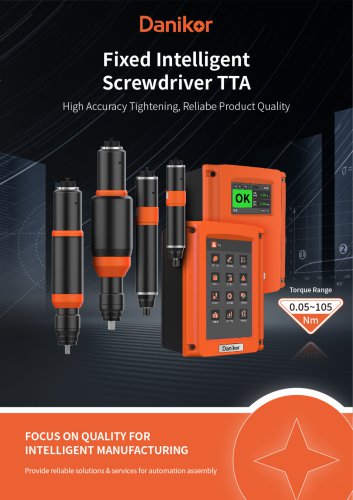 TTA PTT-ASF Series
5 Pages
 Step Feeder
4 Pages
 Flexible Feed System
7 Pages
 Vibration Bowl Feeder
3 Pages
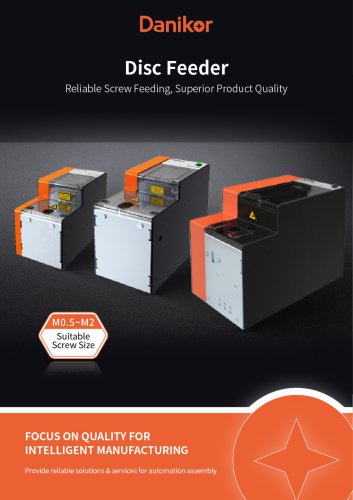 Disc Feeder
5 Pages
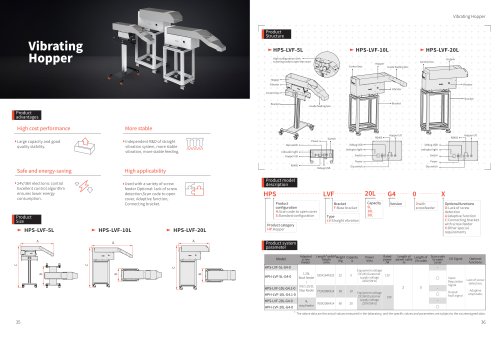 Danikor Vibrating Hopper
1 Page
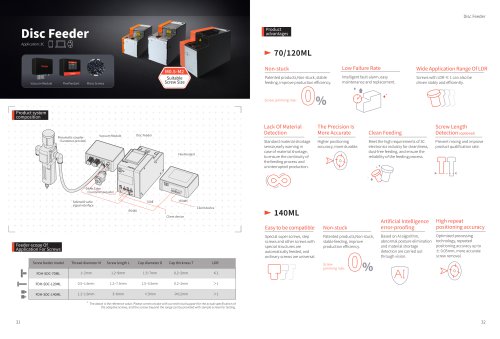 Danikor Disc Feeder
1 Page
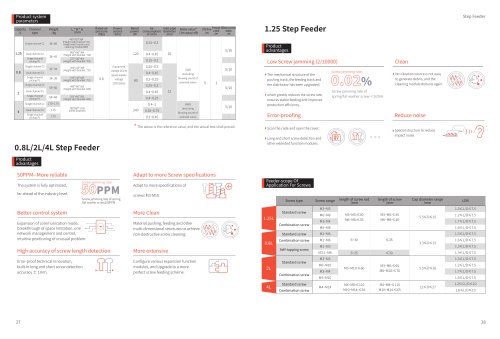 Danikor Step Feeder
1 Page
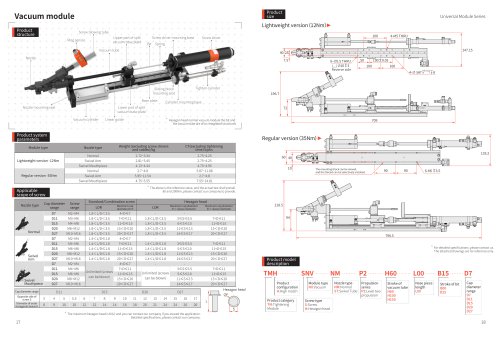 Danikor Vacuum module
1 Page
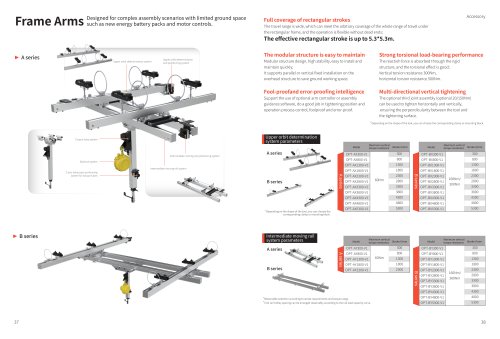 Danikor Frame Arms
1 Page
 Danikor Torque Arms
1 Page
 Flexible Feeding System
2 Pages
 Smart Electric Screwdriver
14 Pages


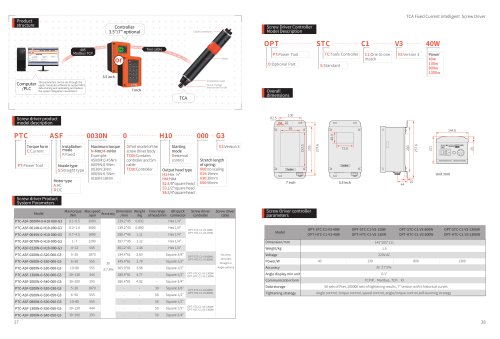
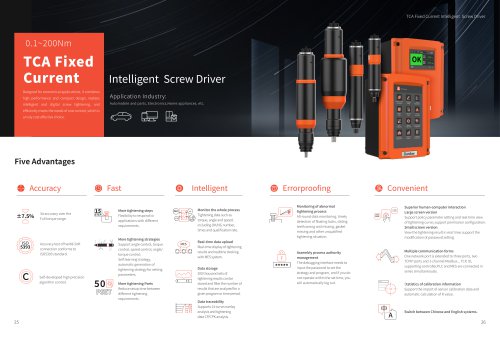
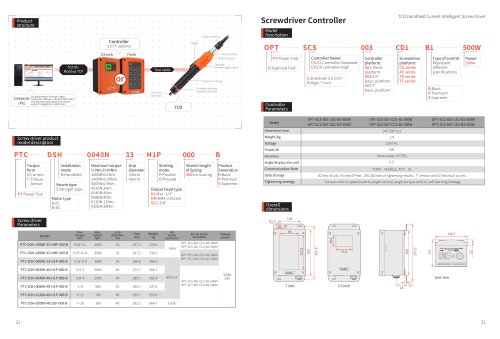
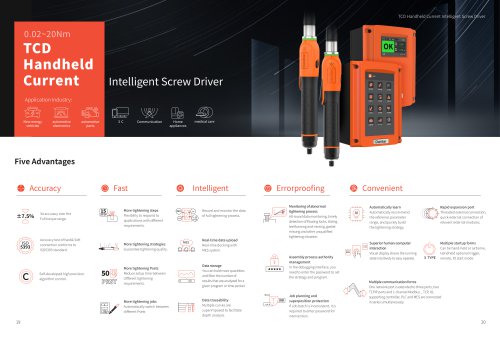

- Danikor feeder
- Measurement software
- Danikor electric screwdriver
- Danikor brushless electric screwdriver
- Danikor corded electric screwdriver
- Danikor straight electric screwdriver
- Danikor automatic feeder
- Danikor DC electric screwdriver
- Vibratory feeder
- Danikor bulk material feeder
- Cordless electric screwdriver
- Pistol electric screwdriver
- Danikor electric screwdriver with torque control
- Calibration software
- Danikor semi-automatic electric screwdriver
- Danikor automatic electric screwdriver
- Danikor screwing unit
- Battery-powered electric screwdriver
- Continuous-motion feeder