- Catalogs
- WIKA Alexander Wiegand SE & Co. KG
- Measurement technology for the aluminium industry

Measurement technology for the aluminium industry
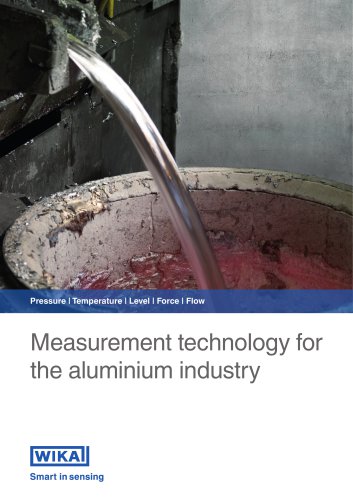
Measurement technology for the aluminium industry
WIKA is a global leader in pressure and temperature measurement, established in 1946, with over 10,000 employees. The company provides high-precision instruments and services, ensuring flexibility and high delivery performance worldwide.
WIKA offers a comprehensive range of process instrumentation for the aluminium industry, designed to withstand extreme conditions and support productivity and product quality.
Aluminium is the second most-used metal globally due to its lightweight, strength, and corrosion resistance, with demand expected to rise significantly by 2050.
WIKA's instruments ensure strict process control in alumina refineries, particularly in the Bayer process, by accurately measuring flow, pressure, level, and temperature to mitigate risks like mechanical overpressure in digesters.
WIKA provides robust instruments for precise temperature control in the anode baking process, reducing the risk of low-quality anodes.
Reliable temperature measurement solutions from WIKA are crucial for maintaining stable cell operations and efficiency in primary aluminium smelters.
WIKA's immersion thermocouples offer precise temperature measurements for molten aluminium, essential for efficiency in casting houses.
WIKA offers comprehensive calibration services with ISO 17025 accredited laboratories, ensuring high standards in calibration and maintenance.
WIKA ensures safety through rigorous testing and offers instruments that support digital bus systems, enhancing process monitoring and reducing costs.
WIKA is advancing in IoT with autonomous wireless platforms and maintenance-free sensors for various applications.
The document discusses advanced temperature and pressure measurement solutions for high current and voltage environments, particularly in power plants and industrial settings.
SAW temperature sensors allow direct measurement on conductors without batteries or external power sources, suitable for new installations and retrofits.
The CPG1500 digital pressure gauge combines digital accuracy with analogue simplicity, equipped with a data logger and supports various communication protocols for remote monitoring.
Engineered solutions include diaphragm monitoring systems for critical processes in the chemical and petrochemical industries, using a patented double-diaphragm design to prevent contamination.
Diaphragm seals protect pressure measuring instruments from extreme conditions and are available in various configurations, withstanding pressures from 10 mbar to 3,600 bar.
WIKA has a worldwide presence with contact information provided for various regions, including Europe, North America, Latin America, Asia, Africa, the Middle East, and Australia.
Catalog excerpts
Pressure I Temperature I Level I Force I Flow
Open the catalog to page 1
Alexander Wiegand, Chairman and CEO, WIKA About us As a family-run business acting globally, with over 10,000 highly qualified employees, the WIKA group of companies is a worldwide leader in pressure and temperature measurement. The company also sets the standard in the measurement of level and flow, and in calibration technology. Founded in 1946, WIKA is today a strong and reliable partner for all the requirements of industrial measurement technology, thanks to a broad portfolio of high-precision instruments and comprehensive services. With manufacturing locations around the globe, WIKA ensures...
Open the catalog to page 2
Anode carbon plant 08 Primary aluminium smelter 10 Calibration & service centre 14 WIKA - Your partner in the aluminium industry To increase productivity and product quality in primary metallurgy, WIKA supports you with a comprehensive portfolio of process instrumentation that enables flexible operation and complete process monitoring. Our robust and reliable measuring instruments have been developed on the basis of many years of application experience and can withstand even extreme process conditions. Customers trust our instrumentation solutions for measurements under high-pressure conditions...
Open the catalog to page 3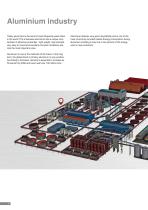
Aluminium industry Today, aluminium is the second most-frequently used metal in the world. This is because aluminium has a unique combination of attractive properties - light weight, high strength, very easy to mould and excellent corrosion resistance are only the most important ones. Aluminium is one of the materials of the future. In the long term, the global trend in primary aluminium is very positive. According to forecasts, demand is expected to increase by 50 percent by 2050 and reach well over 100 million tons. Aluminium features very good recyclability and is one of the most commonly...
Open the catalog to page 4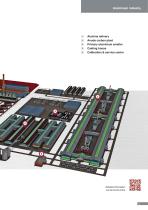
2 Anode carbon plant 3 Primary aluminium smelter 5 Calibration & service centre Detailed information can be found online
Open the catalog to page 5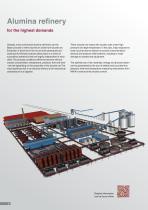
Alumina refinery for the highest demands Globally, most commercial alumina refineries use the Bayer process to refine aluminium oxide from bauxite ore. Extraction of aluminium from its ore and subsequent processing into finished products takes place in a series of successive operations that are largely independent of each other. The process conditions within the alumina refinery caustic concentration, temperature, pressure, flow and level - are set depending on the properties of the bauxite ore.The most significant risk in an alumina refinery is the mechanical overpressure of a digester. There,...
Open the catalog to page 6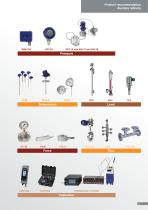
Product recommendation Alumina refinery Flap indicators Flow Wedge flow meter
Open the catalog to page 7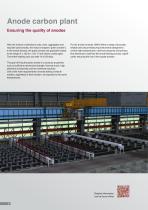
After the mixture of petroleum coke, resin, aggregates and recycled used anodes, the mass is shaped (“green anodes”). In the anode furnace, the green anodes are gradually heated to the range of 1,100 to 1,120 °C and slowly cooled again. The entire heating cycle can take 16 to 28 days. The goal of firing the green anode is to produce properties such as sufficient mechanical strength, thermal shock, high electrical conductivity, and low chemical reactivity. One of the main requirements of anode baking is that all anodes, regardless of their location, are exposed to the same temperatures. For the...
Open the catalog to page 8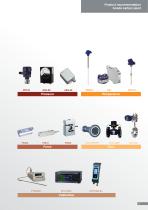
Product recommendation Anode carbon plant
Open the catalog to page 9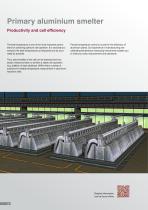
Primary aluminium smelter Productivity and cell efficiency The bath temperature is one of the most-important parameters for achieving optimum cell operation. It is necessary to measure the bath temperatures as frequently and as accurately as possible. Precise temperature control is crucial for the efficiency of aluminium plants. Our experience in manufacturing and calibrating temperature measuring instruments enables you to meet your exact requirements and standards. Thus, abnormalities in the cell can be detected and necessary measures taken to achieve a stable cell operation (e.g. addition...
Open the catalog to page 10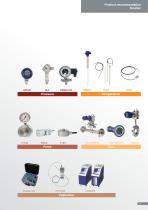
Product recommendation Smelter
Open the catalog to page 11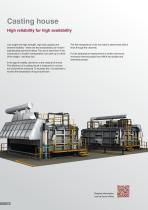
Casting house High reliability for high availability Low weight with high strength, high load capacity and extreme flexibility – these are the characteristics of modern sophisticated aluminium alloys. The use of aluminium in the construction of modern transportation can save up to a third of the weight – and thus fuel. In the age of mobility, aluminium is the material of choice. The efficiency of a casting house is measured in cost per ton of aluminium produced. To increase this, it is essential to monitor the temperature of liquid aluminium. The flow temperature of the hot metal is determined...
Open the catalog to page 12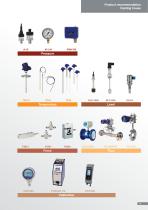
Product recommendation Casting house
Open the catalog to page 13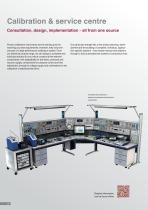
Calibration & service centre Consultation, design, implementation � all from one source Precise calibration instruments are the starting point for resolving your test requirements. However, they only form one part of a high-performance calibration system. From our extensive product range, we can design a complete and individual solution for you which contains all the relevant components: with adaptability for test items, pressure and vacuum supply, components for pressure control and fine adjustment, through to voltage supply and multimeters for the calibration of electrical test items. Our particular...
Open the catalog to page 14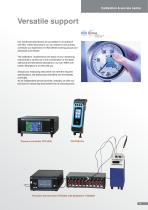
Calibration & service centre Versatile support Our worldwide laboratories are accredited in accordance with ISO 17025. We perform our own research and actively contribute our experience in DKD/DAkkS working groups and standards committees. The calibration, maintenance and repair of your measuring instruments is carried out in full consideration of the latest national and international standards in our own WIKA calibration laboratory or on-site with you. Should your measuring instrument not meet the required specifications, the deficiencies identified are immediately corrected. As an independent...
Open the catalog to page 15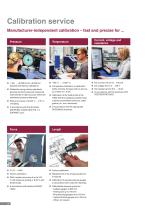
Temperature Current, voltage and resistance ■ -1 bar ... +8,000 bar (to +9,500 bar possible with factory calibration) ■ Calibration using working standards (precise electrical pressure measuring instruments) or high-accuracy reference standards (pressure balances) ■ With an accuracy of 0.003 % ... 0.01 % of reading ■ In accordance with the directives DIN EN 837, DAkkS-DKD-R 6-1 or EURAMET cg-3 ■ Comparative calibration in calibration baths and tube furnaces with an accuracy of down to 1.5 mK ■ Calibration at the fixed points of the ITS90 with the smallest-possible measurement uncertainties (mercury,...
Open the catalog to page 16All WIKA Alexander Wiegand SE & Co. KG catalogs and technical brochures
 Industrial process water
4 Pages
 WIKA Productportfolio
120 Pages