
- Catalogs
- West Control Solutions
- Thermocouples

- Company
- Products
- Catalogs
- News & Trends
- Exhibitions
Thermocouples

1 / 4 PagesView full catalog
Thermocouples
Product catalog summary
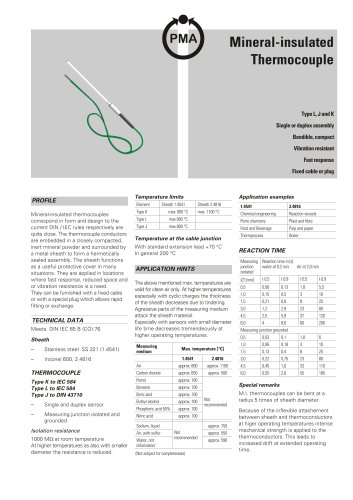
Overview: Industrial thermocouples are used for temperature measurement ranging from -200 to +2315 °C. The sensor and protection tube are directly exposed to the measured temperature, affecting the sensor's lifespan and measurement stability.
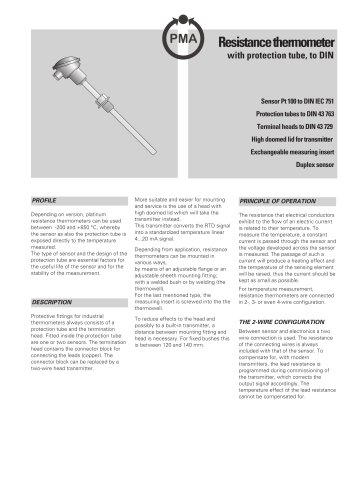
Description: Protective fittings for industrial thermometers consist of a protection tube and a termination head. The protection tube houses one or two thermocouples, while the termination head contains a connector block for extension leads, which can be replaced by a two-wire head transmitter. This transmitter converts the thermovoltage signal into a standardized 4...20 mA signal. Various mounting methods are available, including adjustable flanges and welded bushes.
Principle of Operation: A temperature gradient in an electrical conductor generates an electromotive force (e.m.f.). Two materials with different electrothermal characteristics form a thermocouple, with the output being a function of all junction temperatures. The cold junction temperature is used as a reference and compensated for by the transmitter.
Technical Data: Thermocouples conform to DIN IEC 584, class 2, with different types (J, K, S, L) having specific tolerances and temperature ranges. Protection tubes are available in various forms (AM, AMK, AKK, B, D) with specific materials and operating limits.
Termination Head: Made of weatherproof diecast alloy, conforming to DIN 43 729, with protection mode IP 54 or IP 65. It can accommodate one or two head transmitters.
Accessories: Include adjustable flanges, compression fittings, and head transmitters. Specific order numbers are provided for different configurations.
Ordering Structure: Detailed ordering codes are provided for thermocouples, protection tubes, and termination heads, specifying types, covers, and insertion lengths.
See more
All West Control Solutions catalogs and technical brochures
 Rail Line Brochure
6 Pages
 Product Catalogue
52 Pages
 KS98-2 Brochure
6 Pages
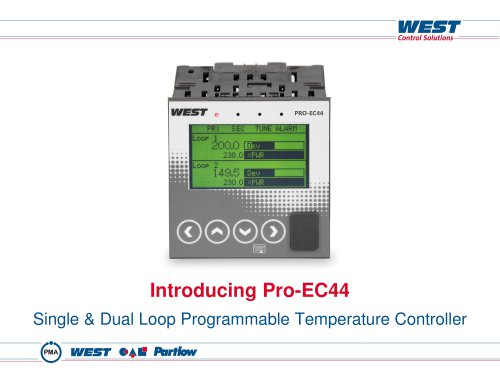 Dual Loop Temperature Controller
15 Pages
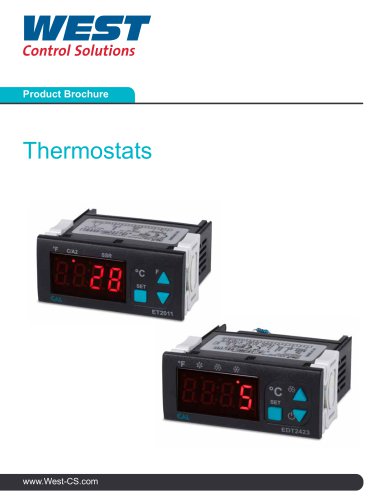 CAL Thermostats Brochure
4 Pages
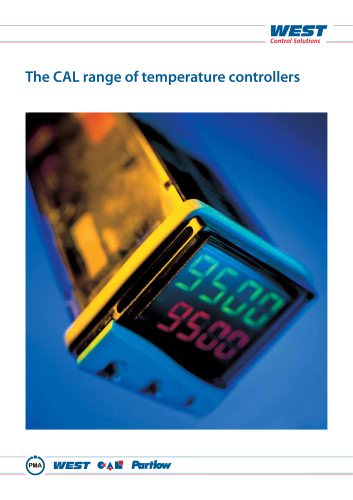 CAL Controller Brochure
4 Pages
 Company Profile
16 Pages
 3-phase with heatsink
8 Pages
 2-phase with heatsink
8 Pages
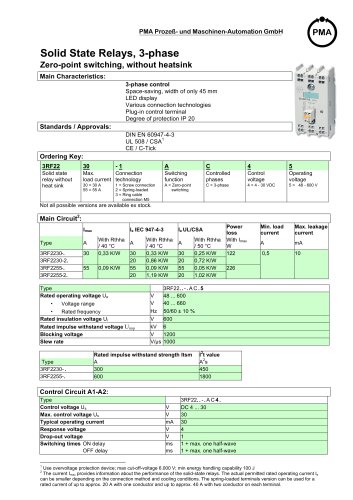 3-phase without heatsink
4 Pages
 2-phase without heatsink
4 Pages





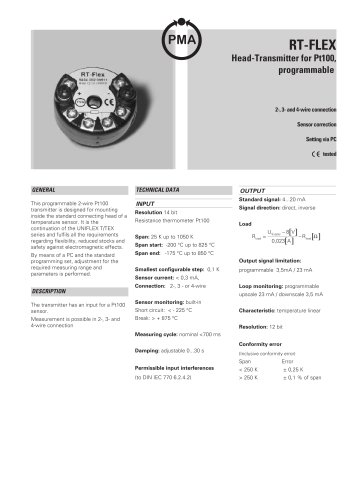
Archived catalogs
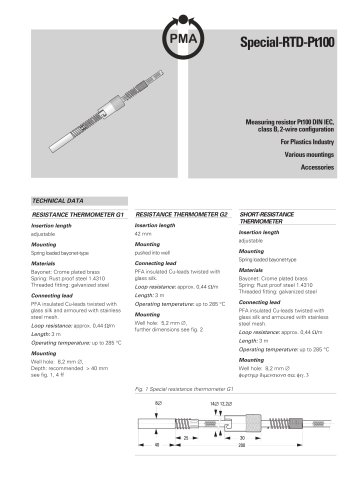 Special-RTD-Pt100
2 Pages
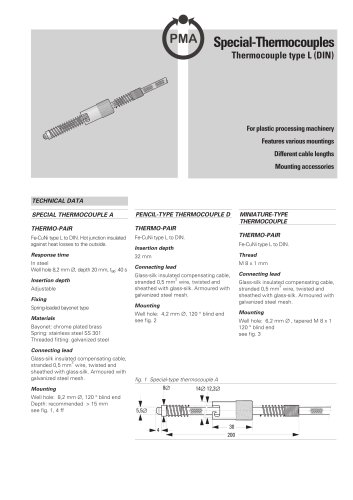 Special Thermocouple
2 Pages





Related Searches
- Pressure transmitter
- Analog pressure transmitter
- Digital temperature control
- Waterproof pressure transmitter
- Membrane pressure transmitter
- Stainless steel pressure transmitter
- Temperature controller
- Digital temperature controller
- Absolute pressure transmitter
- IP65 pressure transmitter
- Automation temperature controller
- IP67 pressure transmitter
- PID temperature control
- Compact pressure transmitter
- PID temperature controller
- Temperature regulator
- Digital thermostat
- Universal temperature control
- Electronic thermostat
- Configurable temperature control
*Prices are pre-tax. They exclude delivery charges and customs duties and do not include additional charges for installation or activation options. Prices are indicative only and may vary by country, with changes to the cost of raw materials and exchange rates.
About DirectIndustry
DirectIndustry is a marketplace that offers B2B players a complete experience, from product sourcing to purchase. DirectIndustry is an entity of VirtualExpo Group.
Are you a buyer?
Are you a supplier?