- Catalogs
- Weilong Intelligent Technology (Dongguan) Co., Ltd.
- WL 0838 Medical Pinch Valve Application


- Company
- Products
- Catalogs
- News & Trends
- Exhibitions
WL 0838 Medical Pinch Valve Application
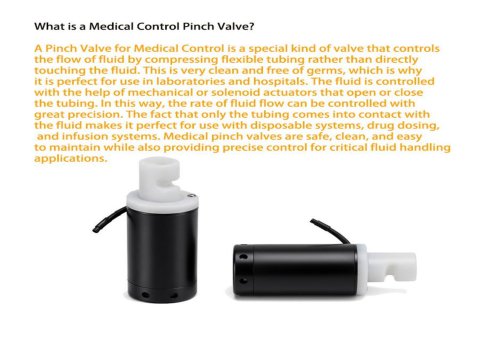
WL 0838 Medical Pinch Valve Application
Pinch valves are crucial in medical, laboratory, and pharmaceutical settings for managing sterile and contamination-free fluids. They are particularly valued for their ability to regulate fluid flow without direct contact with the fluid, ensuring safety and sterility.
In medical infusion therapy systems, pinch valves provide precise on/off or proportional flow control for IV fluids and medications, isolating the fluid within disposable tubing. They are also used in dialysis machines and blood processors to handle sensitive biological fluids safely.
Pinch valves are employed in diagnostic analyzers and laboratory automation to dose, sample, and control micro fluids, ensuring accurate and repeatable results without cross-contamination.
In pharmaceutical production, pinch valves facilitate sterile transfer, filling, and controlled dispensing of medications or vaccines. In biotechnology research, they are used to move cell culture mediums and take sterile samples safely.
Pinch valves are also used in food processing, beverage distribution, and chemical injection systems, where cleanliness is paramount. They are ideal for controlled sampling and reagent injection in environmental monitoring and water testing equipment.
Pinch valves are preferred for modern fluid control applications due to their safety, accuracy, and ease of maintenance. They are compatible with disposable tubing, minimize cleanup, and offer precise control, making them an optimal choice for various industries.
Catalog excerpts
What is a Medical Control Pinch Valve? A Pinch Valve for Medical Control is a special kind of valve that controls the flow of fluid by compressing flexible tubing rather than directly touching the fluid. This is very clean and free of germs, which is why it is perfect for use in laboratories and hospitals. The fluid is controlled with the help of mechanical or solenoid actuators that open or close the tubing. In this way, the rate of fluid flow can be controlled with great precision. The fact that only the tubing comes into contact with the fluid makes it perfect for use with disposable systems, drug dosing, and infusion systems. Medical pinch valves are safe, clean, and easy to maintain while also providing precise control for critical fluid handling applications. ., „
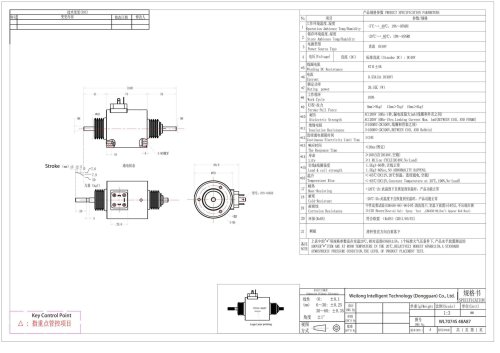
Open the catalog to page 1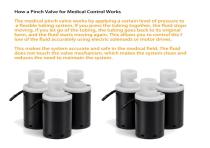
How a Pinch Vaive for Medical Control Works The medical pinch valve works by applying a certain level of pressure to a flexible tubing system. If you press the tubing together, the fluid stops moving. If you let go of the tubing, the tubing goes back to its original form, and the fluid starts moving again. This allows you to control the f low of the fluid accurately using electric solenoids or motor drives. This makes the system accurate and safe in the medical field. The fluid does not touch the valve mechanism, which makes the system clean and reduces the need to maintain the system.
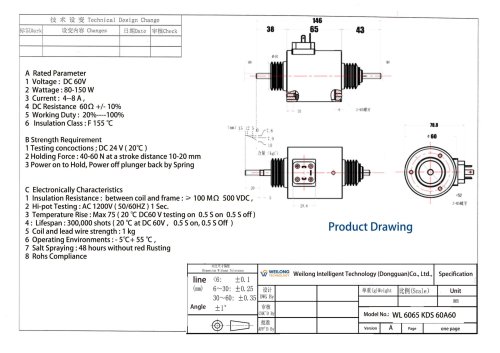
Open the catalog to page 2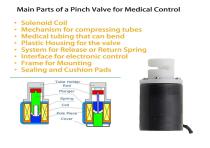
Main Parts of a Pinch Valve for Medical Control Solenoid Coil Mechanism for compressing tubes Medical tubing that can bend Plastic Housing for the valve System for Release or Return Spring Interface for electronic control Frame for Mounting Sealing and Cushion Pads
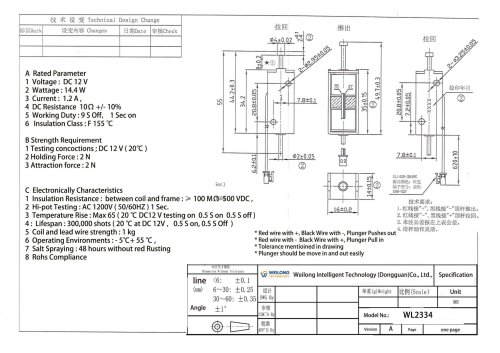
Open the catalog to page 3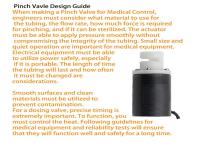
Pinch Vavle Design Guide When making a Pinch Valve for Medical Control, engineers must consider what material to use for the tubing, the flow rate, how much force is required for pinching, and if it can be sterilized. The actuator must be able to apply pressure smoothly without compromising the integrity of the tubing. Small size and quiet operation are important for medical equipment. Electrical equipment must be able to utilize power safely, especially if it is portable. The length of time the tubing will last and how often it must be changed are considerations. Smooth surfaces and clean materials...
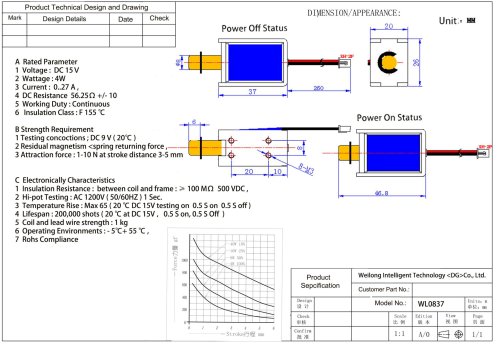
Open the catalog to page 4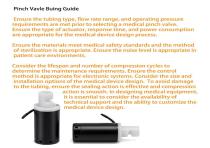
Pinch Vavle Buing Guide Ensure the tubing type, flow rate range, and operating pressure requirements are met prior to selecting a medical pinch valve. Ensure the type of actuator, response time, and power consumption are appropriate for the medical device design process. Ensure the materials meet medical safety standards and the method of sterilization is appropriate. Ensure the noise level is appropriate in patient care environments. Consider the lifespan and number of compression cycles to determine the maintenance requirements. Ensure the control method is appropriate for electronic systems....
Open the catalog to page 5
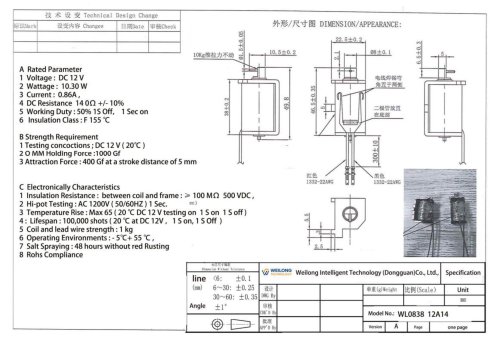
WL 0838 Medical Pinch Valve Application Pinch valves are often used in medical, laboratory, and pharmaceutical applications, where the management of sterile and contamination-free fluids is of utmost importance. In medical infusion therapy systems, they are used to regulate IV fluids and medication with precise on/off or proportional flow control, and they isolate the fluid from the outside world in disposable tubing. In diagnostic analyzer systems and laboratory automation, pinch valves are used to dose fluids, sample fluids, and control micro fluids, ensuring accurate and repeatable results...
Open the catalog to page 6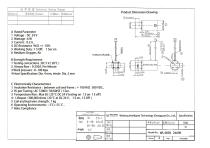
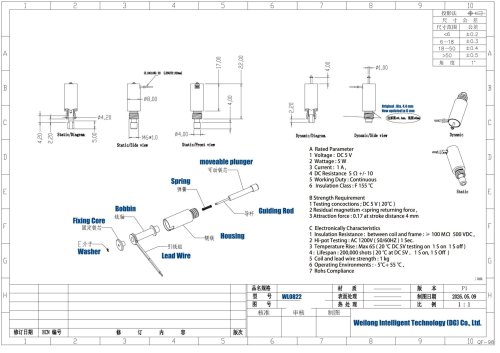
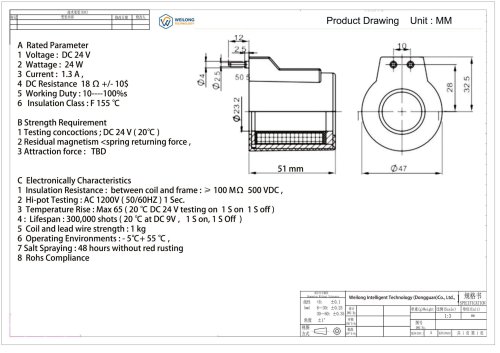
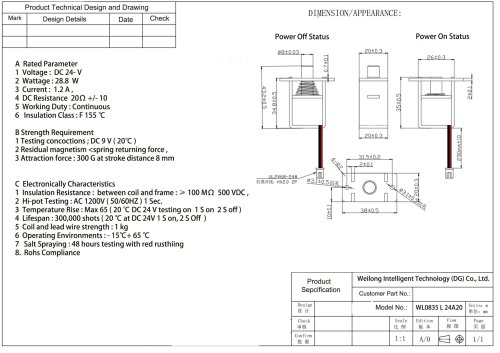
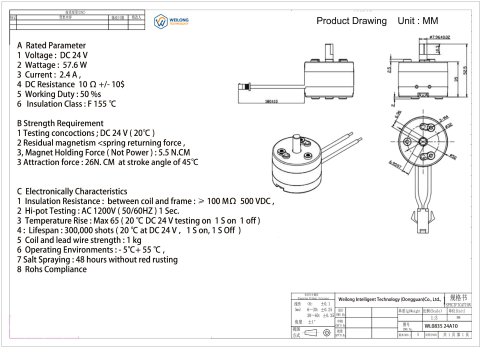
8 ^ t $ Technical Design Change 2 Airway flow: 0-250/L Per Minute 4 Hose Specification: Dia. 4 mm, inisde Dia. 2 mm 1 Insulation Resistance: between coil and frame :> 100 MO 500 VDC, 3 Temperature Rise: Max 65 (20 °C DC 24 V testing on 1 S on 1 S off) 5 Coil and lead wire strength : 1 kg _Dimension H i thou! lolerance_ Weilong Intelligent Technology (Dongguan)Co., Ltd.,
Open the catalog to page 7All Weilong Intelligent Technology (Dongguan) Co., Ltd. catalogs and technical brochures
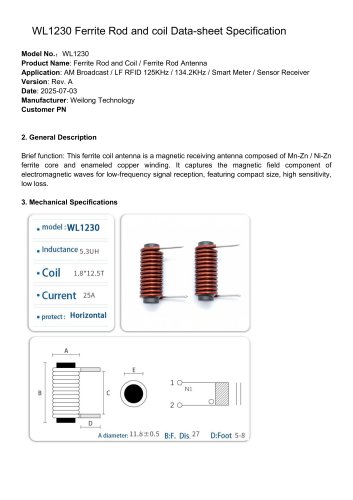 WL1230 Rod Core Ferrite Coil
3 Pages
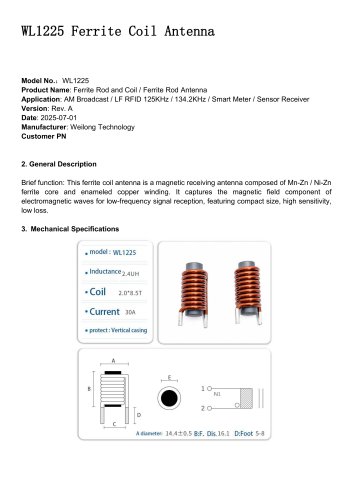 WL1225 Ferrite Coil Antenna
3 Pages
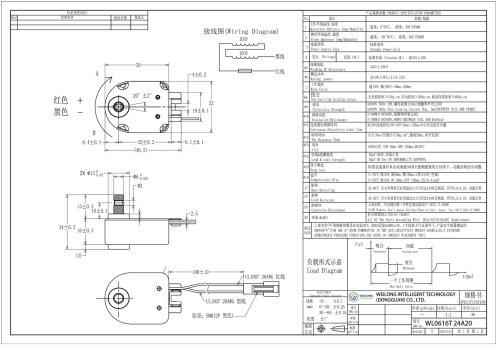 WL0616 Holding Solenoid
8 Pages
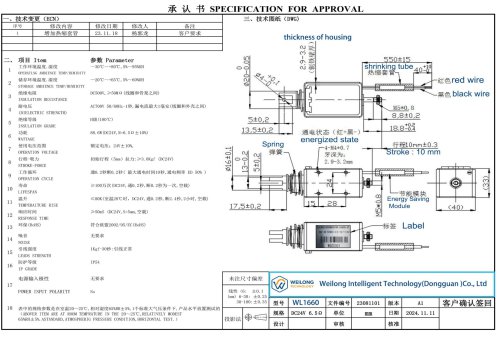 WL3031 Holding electromagnet
8 Pages
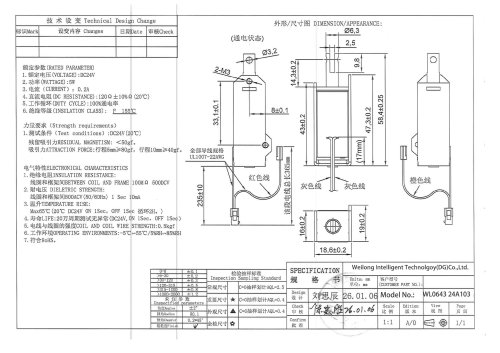 WL 0643 Pull Solenoid
7 Pages
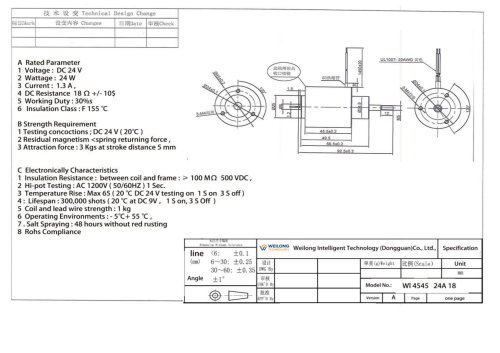 WL4545 push pull solenoid DC
8 Pages