
- Catalogs
- Weidmüller
- Signal converters, limit switches and process indicators Catalogue 2016/2017

Signal converters, limit switches and process indicators Catalogue 2016/2017

Signal converters, limit switches and process indicators Catalogue 2016/2017
This document is a catalogue for analogue signal conditioning products from Weidmüller, covering the 2016/2017 period. It provides an overview of various signal converters, limit switches, and process indicators designed for industrial and marine measurement and control systems.
The catalogue includes a range of products such as signal isolating converters, trip amplifiers, and displays. These products are used in hazardous area applications and are available in compact formats like 6 mm width. They are designed to handle various functions including isolation, conversion, amplification, and transmission of signals.
- Signal converters are available with features like 3-way isolation, supply isolators, and passive isolators.
- Products support a wide range of input and output configurations, including current, voltage, and frequency signals.
- Network-compatible converters offer Ethernet connectivity and PC configuration capabilities.
- Displays feature large LED screens and are designed for easy integration with existing systems.
Analogue conditioners are used in various industries such as power plants, steelworks, water and waste plants, oil and gas production, and chemical processing. They ensure accurate signal transmission from field devices to control rooms, even under challenging environmental conditions.
- To isolate signals from field devices and prevent interference.
- To convert and linearize sensor outputs for long-distance transmission.
- To provide power to sensors and transmitters when the control system cannot.
- To protect control systems from electrical noise and expand analogue input capabilities without costly upgrades.
The catalogue provides a selection table to help users choose the right product based on input, output, configuration, and special characteristics. Weidmüller offers a wide range of products and customization options to meet specific application needs.
The ACT20X series of intrinsically safe signal conditioners are designed for hazardous area applications. These devices are configurable via FDT/DTM technology and are suitable for use in both safe and explosion-risk zones. They offer high insulation strength, accuracy, and temperature stability, ensuring interference-free signal transmission.
- Operating temperature range: -20°C to +60°C.
- International standards approvals: ATEX, IECEx, GOST, FM.
- Features: International approvals for Zones 0, 1, and 2, analogue and binary signal interfaces, HART® transparent signal isolators, integrated alarm contacts, and space-saving two-channel designs.
- ACT20X-HUI-SAO-LP: Offers intrinsically safe inputs for various signal types and separates Ex zones from safe zones.
- ACT20X-HAI-SAO: A current supply isolator for analogue input signals from Ex zones, available in single or double-channel versions.
- ACT20X-SAI-HAO: A current output isolator for controlling field devices in explosion-risk zones, also available in single or double-channel versions.
- ACT20X-HTI-SAO: A temperature transducer for processing temperature signals from PT100 sensors and thermocouples in Ex zones.
Each product variant includes detailed technical specifications such as input and output current, voltage limits, load impedance, accuracy, temperature coefficients, and response times. The modules also feature relay outputs for failure alarms and are designed for easy maintenance with removable terminals.
The ACT20X series is suitable for a wide range of applications in the process industry, particularly where explosive fluids are controlled. They connect to sensors and actuators in hazardous areas, isolating and limiting the energy passed to them.
The ACT20X series provides robust, reliable solutions for signal conditioning in hazardous environments, with a focus on safety, accuracy, and ease of configuration.
The ACT20C signal conditioners enhance process transparency and reliability in system operations. These devices facilitate optimal control of systems by providing continuous information on device status, signals, and data through an Ethernet interface.
- Universal signal conversion, supporting a wide range of applications with customizable conversion methods.
- Simple operation and configuration through software, enabling fast application settings and easy integration into existing Ethernet networks.
- Scalable current or voltage input and output, limit-value monitoring, and diagnostics via Modbus.
- Configured using FDT/DTM software and support communication through RJ45 ports.
The ACT20C provides extensive diagnostic and status information, aiding in fault elimination and process optimization. The Ethernet interface allows for event-driven transmission of diagnostic data, which can be accessed remotely via SCADA systems or the Internet.
The document describes the "Plug & Produce" and "Hot Swapping" features that facilitate quick installation and maintenance. The ACT20C station concept supports efficient commissioning and maintenance, with a focus on high process reliability through galvanic isolation and impulse withstand voltage.
The ACT20C gateway enables access to all connected device data, supporting configuration via FDT/DTM standards. The system is compatible with various communication protocols, including Modbus TCP and OPC, ensuring flexibility in process optimization.
The document includes details on bus termination terminals, rail bus accessories, and ordering data for various components, providing a complete solution for integrating ACT20C signal conditioners into existing systems.
Measurements using thermocouples involve measuring the voltage generated when two different metals contact each other. A differential amplifier reconditions the signal, converting it into standard signals. High-end components use a microprocessor for signal processing, including filtering and linearization.
Thermocouples face issues with thermal voltage at clamping terminals due to different materials. Cold junction compensation involves measuring the temperature at the terminal and adjusting the measured value accordingly.
Temperature-dependent components often have non-linear characteristic curves. Linearization is necessary for accurate processing. Microprocessors adjust the measured signal to match an ideal characteristic curve.
Transformers measure current by utilizing the magnetic field generated by current flow. This method is cost-effective for simple sinusoidal currents but is limited to smaller currents up to 5 A.
Hall-type sensors measure magnetic flux and provide a proportional voltage output. They are suitable for measuring higher currents and various current shapes.
Root mean square (RMS) value measures the effective output of alternating currents. Non-sinusoidal signals require True RMS capable devices for accurate measurement.
Galvanic isolation ensures electrical separation between circuits, preventing damage and signal corruption. Safe separation is specified under DIN VDE 0106 Section 101 to protect against hazardous currents.
Cut-off frequencies define the dynamic transfer characteristic of an isolation amplifier. Higher frequencies can corrupt the required signal.
Hysteresis is the percentage difference between input and output points of a switching contact, ensuring reliable operation.
Monitors input signals for faults, such as broken wires, by exceeding the rated output range.
Response time is the change in output signal for an input signal jump, inversely related to cut-off frequency.
Accuracy measures a device's ability to deliver precise values, while temperature coefficient describes accuracy deviations due to ambient temperature changes.
FDT technology standardizes device integration, independent of communication protocols. Device Type Managers (DTMs) provide device-specific information and functions for configuration and operation.
Safety in hazardous areas involves complying with regulations to prevent explosions. Key regulations include NEC in North America and ATEX in Europe. ATEX directives specify requirements for equipment in explosive environments, focusing on health and safety.
ATEX directives cover operational and product requirements for explosion protection. Group II devices are used in hazardous areas, with specific zones defined by risk levels.
Zone 1 is for areas where explosive atmospheres may occasionally be present during normal operations, less than 10 hours per year. Zone 2 is for areas where explosive atmospheres are normally not present or only briefly present, with a maximum of 30 minutes per year.
These devices are used in environments where explosive gases or dusts may be released, such as offshore oil and gas drilling, tanker ships, refineries, and petrochemical plants. Intrinsically safe devices are designed to prevent sparks or high temperatures that could ignite explosive atmospheres.
Group II devices are divided into categories 1, 2, and 3, with varying safety levels. Category 1 devices are for areas with constant explosive atmospheres, while Category 3 devices are for areas where such atmospheres are rare.
Common methods include pressure-resistant encapsulation (Ex d), increased safety (Ex e), and intrinsic safety (Ex i). Each method has specific applications and safety measures to prevent explosions.
Devices are classified by maximum surface temperatures, ranging from T1 (450°C) to T6 (85°C), to ensure they do not ignite explosive atmospheres.
Since July 1, 2003, all new facilities in hazardous areas must comply with ATEX Directive 94/9/EG, covering products designed for high explosion risk environments.
Rated impulse withstand voltage and surge categories are defined for electrical equipment, with pollution severity categories affecting the design of clearance and creepage distances.
The current-carrying capacity of a component is influenced by its geometry, the number of poles, and the connected conductors. It is determined empirically according to DIN IEC 60512-3 by measuring component and ambient temperatures for different currents. These values are plotted to illustrate the relationship between currents, ambient temperatures, and temperature rise, forming a derating curve. This curve accounts for maximum permissible volume resistances and measurement uncertainties, ensuring practical application suitability.
The IP class of protection is indicated by a code consisting of "IP" followed by two digits. The first digit represents protection against solid bodies, ranging from no protection (0) to complete dust protection (6). The second digit represents protection against liquids, ranging from no protection (0) to protection against indefinite immersion under defined conditions (8).
- 2-way and 3-way Isolation: Electrical separation of input and output signals, with 3-way also decoupling the power supply.
- A/D and D/A Converters: Convert between analogue and digital signals for process monitoring.
- ATEX Directive: EU directive for equipment in hazardous areas, focusing on explosion prevention and protection.
- Device Categories and Groups: Classification for equipment use in explosive zones, with categories for gas and dust protection.
- Explosion Protection Types: Various construction designs to minimize ignition risks in explosive atmospheres.
Catalog excerpts

Signal converters, limit switches and process indicators Catalogue 2016/2017 Let’s connect. Analogue signal conditioning
Open the catalog to page 1
Dear Customers, The PDF versions of our catalogues offer practical additional functions, helping you to find your way around our product range and simplifying the ordering process. In addition to the catalogue, the PDF also contains: • Internal page links • Links to the online catalogue Try it out for yourself. Click the order number to obtain more detailed information and close-up images via you web browser. The links in the PDF file also enable you to go directly to the next desired catalogue page. Further Weidmüller product catalogues can be accessed by clicking the following:
Open the catalog to page 2
Signal Isolating Converters, Trip Amplifiers and Displays Catalogue 4.1 Signal converters in 6 mm width Signal converters Trip amplifier for monitoring AC/DC circuits Indicators and configurable displays Accessories Analogue Signal Conditioning Product overview – Analogue Signal Conditioning Intrinsically safe signal conditioners for hazardous area applications Signal Isolating Converters, Trip Amplifiers and Displays Technical appendix/Glossary Search according to type or order number
Open the catalog to page 3
Product overview Signal Isolating Converters, Trip Amplifiers and Displays Intrinsically safe signal converters – ACT20X Page B.4 • nalogue and binary signal interfaces A to Ex Zone 0 / Division 1 • FDT/DTM software configurable 2 • channel modules in 22.5 mm housing • solating and converting of temperature signals I and DC signals (3-way isolation, supply isolators and passive isolators) • Up to 2 channels with a width of 6 mm • Power supply via the CH20M DIN rail bus • Signal converter in terminal format • assive isolator, temperature/frequency converter P and threshold monitoring • imple wiring...
Open the catalog to page 4
Product overview Configuration adapter • SB interface adapter for configuring signal U converters C • ompatible with ACT20X, WAVE TTA and ITX+ modules • imple installation with plug-in connector S • uitable MultiCard markers for all modules S • luggable cross-connectors for WAVE, MCZ and P MICROSERIES Calibration device • easures and simulates voltage and current M signals • djustable continuous level and ramping functions A • asy to adjust with buttons on front E
Open the catalog to page 5
Product overview - Analogue Signal Conditioning Product overview - Introduction A.2 Analogue Signal Conditioning Quick select - Analogue Signal Conditioning A.4
Open the catalog to page 7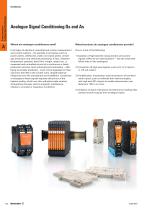
Product overview – Analogue Signal Conditioning Analogue Signal Conditioning Qs and As Where are analogue conditioners used? What functions do analogue conditioners provide? In all types of electronic industrial and marine measurement and control systems – for example in processes such as power plants, steelworks, water and waste plants, oil and gas production and chemical processing. In fact, wherever temperature, pressure, level, flow, weight, speed, etc., is measured and controlled as part of a continuous or batch production process. Such measurement parameters – after being accurately produced...
Open the catalog to page 8
Product overview – Analogue Signal Conditioning Why do we need separate analogue modules nowadays? Surely the control system (PLC or DCS) can perform the same functions? How can I select the right product for my application? 1) ometimes this is true, but look at where the cabling S from the field devices (transmitters, sensors, valves and actuators) needs to go. It will usually go not just straight to the control system. Many signals are also passed to local indicators and alarms, and each will need isolating from the others. 1) eidmüller has a formidable range of analogue W conditioners, covering...
Open the catalog to page 9
Quick select – Analogue Signal Conditioning Selection table Input Miscellaneous Sensor feed Product overview – Analogue Signal Conditioning Quick select – Analogue Signal Conditioning Namur Initiator Namur Initiator Namur Initiator Namur Initiator Namur Initiator Namur Initiator NPN PNP switching signal NPN PNP switching signal NPN PNP switching signal X X X X HART®- transparent HART®- transparent HART®- transparent HART®- transparent X RJ45, Modbus TCP 0…10 A AC/DC 0…60 A AC/DC
Open the catalog to page 10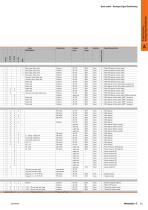
Product overview – Analogue Signal Conditioning Quick select – Analogue Signal Conditioning Auxiliary power Rated voltage Relay output, Status relay Relay output, Status relay Relay output, Status relay Relay output, Status relay Transistor output, Status relay Transistor output, Status relay Status relay Status relay Status relay Status relay Status relay Limit value relay output, Status relay Software Software Software Software Software Software Software Software Software Software Software Software Software Software Software Software Software DIP switch DIP switch DIP switch DIP switch ATEX...
Open the catalog to page 11
Quick select – Analogue Signal Conditioning Selection table Input Miscellaneous Strain gauge transmitter ACT20P-BRIDGE-S Universal measuring transducer ACT20P-PRO DCDC II-S ACT20P-UI-AO-DO-LP-S ACT20P-AI-AO-DC-S WAS6 TTA WAZ6 TTA WAS6 TTA EX WAZ6 TTA EX Measuring- and monitoring modules ACT20P-UI-2RCO-DC-S MCZ SC 0-10V MCZ SC 0-20MA AC/DC measuring transducer ACT20P-CMT-10-AO-RC-S ACT20P-CMT-30-AO-RC-S ACT20P-CMT-60-AO-RC-S WAS1 CMA 1/5/10A ac WAZ1 CMA 1/5/10A ac WAS1 CMA LP 1/5/10A ac WAZ1 CMA LP 1/5/10A ac WAS1 CMA LP 1/5/10A EX Sensor feed Product overview – Analogue Signal Conditioning Quick...
Open the catalog to page 12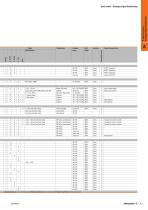
Product overview – Analogue Signal Conditioning Quick select – Analogue Signal Conditioning Output Miscellaneous ± 10 V, ± 20 mA Output Loop powered, NPN output, Limit value 0…11V, 0…22mA 1 analogue output 2 relay outputs Display, DIP switch Software DIP switch, Button, LED Software Software Software Software 24 V - 230 V AC/DC output loop 12...60 V DC 18 V - 230 V AC/DC 18 V - 230 V AC/DC 18 V - 230 V AC/DC 18 V - 230 V AC/DC Reset button (TARE) 2 x Limit value relay outputs Limit value transistor output Limit value transistor output Software, Display potentiometer potentiometer ± 10 V, ± 20...
Open the catalog to page 13All Weidmüller catalogs and technical brochures
 Analogue signal conditioning
194 Pages
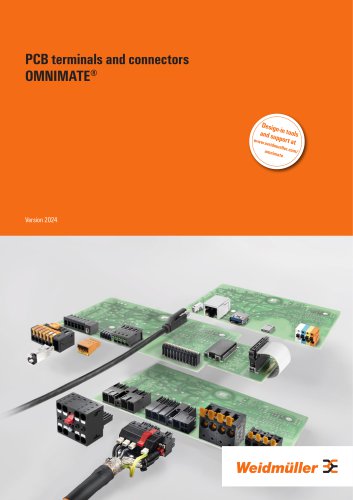 PCB terminals and connectors – OMNIMATE®
1032 Pages
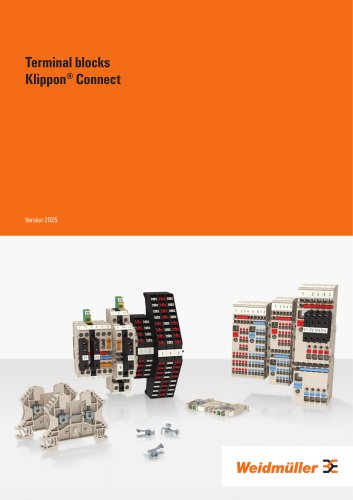 Terminal blocks – Klippon® Connect
872 Pages
 Overview Product Portfolio
52 Pages
 FP PRO TOP3 24/10 2P
7 Pages
 Lightning and surge protection
556 Pages
 Terminal blocks Klippon® Connect
792 Pages
 Complete catalogue
520 Pages
 Relay modules and solid-state relays
236 Pages
 News 2014
211 Pages
 Surge protection devices
372 Pages
 OMNIMATE - device connectivity
730 Pages
 News 2013
160 Pages



Archived catalogs
 News catalogue
182 Pages
 FIELDPOWER®
24 Pages
 Service from Weidmüller
24 Pages


- Cutting system
- Panel PC
- Metal cut-off machine
- Industrial panel PC
- Data connector
- CNC cutting center
- Rectangular housing
- LCD panel PC
- Electrical power supply connector
- Automatic cut-off machine
- Metal connector
- Surge protector
- Linux panel PC
- Polymer connector
- Plastic housing
- Wall-mount box
- Junction block
- Screw-in connector
- Industrial connector