

Profession Sheet - Plant health product Risks

Profession Sheet - Plant health product Risks
- WeeJet Type 3 Coverall: Offers optimum protection during preparation and withstands heavy splashes during cleaning. Features include a triple-protected zipper, elastic thumb-loop, and antistatic treatment.
- WeePro Max Green Type 4 Coverall: Provides protection against plant health product risks, compliant with DIN 32781 standards. It includes an integrated chinstrap, self-adhesive flap zipper, and breathable material for comfort.
Catalog excerpts
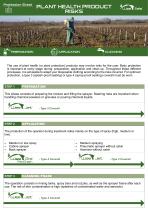
Profession Sheet PLANT HEALTH PRODUCT RISKS The use of plant health (or plant protection) products may involve risks for the user. Body protection is important at every stage during: preparation, application and clean up. Throughout these different processes, it is advisable to adapt your disposable clothing according to the risks incurred. For optimum protection, a type 3 (splash-proof sealing) or type 4 (spray-proof sealing) coverall must be worn. STEP 1 This phase consists of preparing the mixture and filling the sprayer. Slashing risks are important when handling chemical powders or granules or pouring chemical liquids. ® The protection of the operator during treatment relies mainly on the type of spray (high, medium or low). • Medium spraying • Pneumatic sprayer without cabin • Atomizer without cabin • Medium or low spray • Cabine sprayer • Back sprayer ® CLEANING PHASE The operation consists in rinsing tanks, spray bars and nozzles, as well as the sprayer frame after each use. The risk of skin contamination is high (splashes of contaminated water and aerosols). ®
Open the catalog to page 1
BODY PROTECTION AGAINST PLANT HEALTH PRODUCT RISKS WeePro Max Green SIZE : M/L/XL/XXL T y p e 4 B 5 B WeeJet Coverall offering protection against plant health product risks. It complies with DIN 32781: PROTECTION AGAINST PESTICIDES. Designed with an integrated chinstrap to adjust to the protective mask. This model must be worn during the spraying phase. • Integrated chinstrap • Zipper with self-adhesive flap • Tight thermo-sealed seams • A three-panel hood for an optimal mask fit • Elasticized thumb loop for greater glove adjustment • Breathable material for greater comfort • Antistatic inner...
Open the catalog to page 2All Weesafe catalogs and technical brochures
 WeePro Overboot WeeBoot ®
2 Pages
 WeePro Sleeve ®
2 Pages
 WeePro Labcoat ®
2 Pages
 WeePro Max Green ®
2 Pages
 WeePro Max Integral ®
2 Pages
 WeePro Max + ®
2 Pages
 WeePro ®
2 Pages
 WeePro Col ®
2 Pages
 WeeSafe Catalog 2019
56 Pages
 WeeJet Overboot
2 Pages
 WeeJet Sleeve
2 Pages
 WeeBack ®
2 Pages
 WeeJet ®
2 Pages
 WeeCover Max 1 WLC10X ®
2 Pages
 WeeCover Max 1 Integral ®
2 Pages
 WeeCover Blue ®
2 Pages
 WeeCover ®
2 Pages
 WeeCover Max 1 Blue ®
2 Pages


- Fabric clothing
- Waterproof clothing
- Work coveralls
- Chemical protection clothing
- Unisex coveralls
- Construction clothing
- Anti-static clothing
- Clothing with hood
- Fabric coveralls
- Chemical protection coveralls
- Clothing for the food industry
- Zippered coveralls
- Blue coveralls
- Coveralls with hood
- Electrical protection coveralls
- Oversleeve
- Work oversleeve
- White coveralls
- Waterproof coveralls
- Anti-static coveralls