

Saving energy
Saving energy
- Visualization of Digital Twin: Uses BIM for enhanced management efficiency through multidimensional data presentation.
- Centralized Integrated Monitoring: Combines various systems into a centralized control system for risk diagnosis.
- Intelligent Diagnostics: Analyzes alerts and generates reports to prevent failures.
- Energy Management: Offers energy consumption statistics and optimization strategies for savings.
- Hospital Projects: Temperature and humidity sensors ensure vaccine safety in hospital pharmacies.
- Factory and Substation Projects: Demonstrates capability in managing large-scale energy infrastructure.
Catalog excerpts
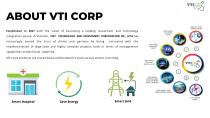
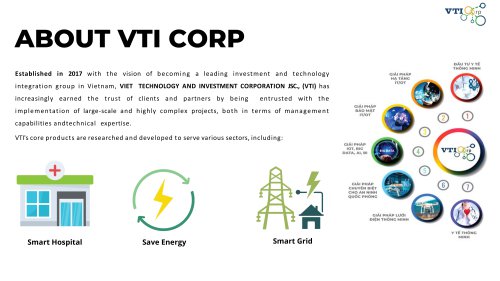
Established in 2017 with the vision of becoming a leading investment and technology integration group in Vietnam, VIET TECHNOLOGY AND INVESTMENT CORPORATION JSC., (VTI) has increasingly earned the trust of clients and partners by being entrusted with the implementation of large-scale and highly complex projects, both in terms of management capabilities andtechnical expertise. VTI’s core products are researched and developed to serve various sectors, including: ClAl PHAP HA TANG IT/OT ClAl PHAP IOT, BIG j DATA, Al. Bl oAlJ Ttf Y T£ THONG MINH GIAI PHAP CHUYEN DIET CHO AN NINH quOc PHONG giAi phAp Li/di OlEN THONC MINH Smart Hospital Save Energy Smart Grid Y TiTHONG MINH
Open the catalog to page 1
Applications, Technologies, and Core Products Application Manufacturing Plant Surveying, Design Calculation, and Simulation Data Center Public Works Operation of Condition Monitoring System Optimal Control Centralized Data Collection Centralized Data Collection Core Technology Sensors, simulation
Open the catalog to page 2
AI PLATFORM Next-generation operation and maintenance platform based on "data – modeling – optimization
Open the catalog to page 3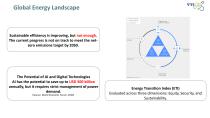
▲ System performance O Transition readiness O Core enablers Sustainable efficiency is improving, but not enough. The current progress is not on track to meet the net- zero emissions target by 2050. The Potential of AI and Digital Technologies AI has the potential to save up to USD 500 billion annually, but it requires strict management of power (Source: World Economic Forum, 2024) Source: World Economic Forum. Energy Transition Index (ETI) Evaluated across three dimensions: Equity, Security, and 1 Sustainability. J
Open the catalog to page 4
Rank Country (2015-2024) ETI score ('24) ('24) (Source: World Economic Forum, 2024) According to Resolution No. 55-NQ/TW of the Politburo on the Strategic Orientation for Vietnam's National Energy Development to 2030, with a Vision to 2045, the specific targets are as follows: The energy savings rate, compared to the business-as-usual scenario, is expected to reach approximately 7% by 2030 and around 14% by 2045. Greenhouse gas emissions from energy activities are to be reduced by 15% by 2030 and 20% by 2045, compared to the business-as-usual scenario.
Open the catalog to page 5
The Challenge for Vietnam's Energy Sector Ensuring Energy Security Applying Condition Monitoring Methods for Electrical Equipment Operation Sustainable Energy efficiency and CO2 emissions reduction C02 emissions per capita (T/capita) Threshold (lower to upper): 15.52 - 0 Developing Optimal Operation Scenarios for System
Open the catalog to page 6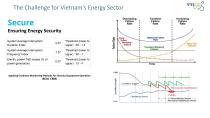
The Challenge for Vietnam's Energy Sector System Average Interruption Duration Index Applying Condition Monitoring Methods for Electrical Equipment Operation
Open the catalog to page 7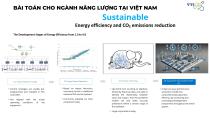
BAI TOAN CHO NCANH NANG Ll/dNG TAI VIET NAM o ,,q Cac thiet bi diu cuoi, bom, chiller: thiet bi dien, cam bien. Cac thiet bi dim cuoi, bom, chiller, thiet bi dien, cam bien. • Large corporations today • Based on expert heuristics, commonly found in traditional industrial PID control systems • Commonly adopted by most companies today • Control strategies are usually preprogrammed and installed in PLC controllers • Not aligned with the actual operating conditions of the equipment • Like blind men touching an elephant, limited by historical data, only able to identify the relationship between input...
Open the catalog to page 8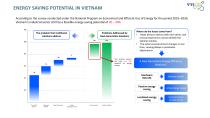
ENERGY SAVING POTENTIAL IN VIETNAMAccording to the survey conducted under the National Program on Economical and Efficient Use of Energy for the period 2019-2030, Vietnam's industrial sector still has a feasible energy saving potential of 20 - 30% 120 The problem that traditional solutions address Where do the losses come from? • Many devices interact with each other, and manual experience cannot identify the optimal solution. • The external environment changes in real time, causing delays in parameter adjustments. _ A New Generation Energy Efficiency Platform? Hardware Retrofit Passive energy...
Open the catalog to page 9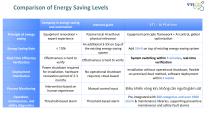
Comparison of Energy Saving Levels
Open the catalog to page 10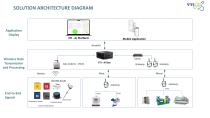
SOLUTION ARCHITECTURE DIAGRAM Application Display Wireless Data Transmission and Processing End-to-End Signals Temperature Sensor Level Sensor Vibration Sensor Environmental Sensor
Open the catalog to page 11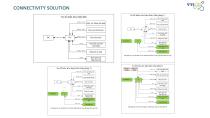
CONNECTIVITY SOLUTION
Open the catalog to page 12
Optimalcombination! Step 1: Build high-accuracy models at the device level endless possibilities with 100,000+ combinations Simulation Model — Building a Virtual World HVAC System Model Conduct trial calculations on over 100,000+ combinations within the virtual model to find the optimal solution that "approaches the system's energy-saving limit".
Open the catalog to page 13
STEPS TO ESTABLISH AN OPTIMAL MODEL Step 1: High-precision modeling of supply equipment Red dot is predicted value Blue dot is actual value
Open the catalog to page 14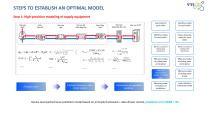
Principle model Cop model for each chiller Device-level performance prediction model based on principle framework + data-driven control, prediction error RMSE < 3%
Open the catalog to page 15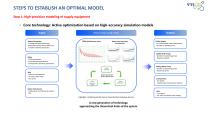
STEPS TO ESTABLISH AN OPTIMAL MODELStep 1: High-precision modeling of supply equipment• Core technology: Active optimization based on high-accuracy simulation models System Parameters ■ Cooling and heating flow rate, temperature and pressure difference ■ Outdoor weather parameters Chiller performance curve Water pump and piping characteristics ■ Pump operating parameters ■ Cooling tower operating parameters ( \ Chiller System ■ Set chilled water outlet temperature ■ Number of operating units ( \ Chilled Water Pump ■ Number of operating pumps ■ Air valve, water valve /-\ Cooling Water Pump ■ Number...
Open the catalog to page 16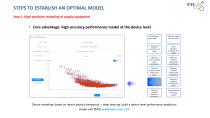
Step 1: High-precision modeling of supply equipment Cold flow model for each chiller COP model for each chiller Mild flow model for each chiller Efficiency model of chilled water * ' Efficiency model of chilled water pump group Approach temperature model of cooling tower Efficiency model of modular air conditioner * ' Power allocation model for each chiller Efficiency model of cooling water —distribution Efficiency model of cooling water _pump group Efficiency model of cooling tower group Load calibration forecasting model performance prediction Device modeling: based on device physics framework...
Open the catalog to page 17All VTI Corp catalogs and technical brochures
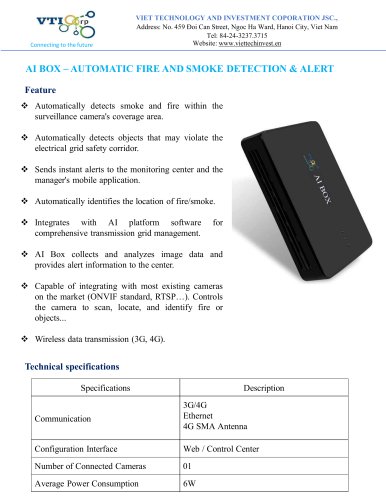 AI Box
3 Pages
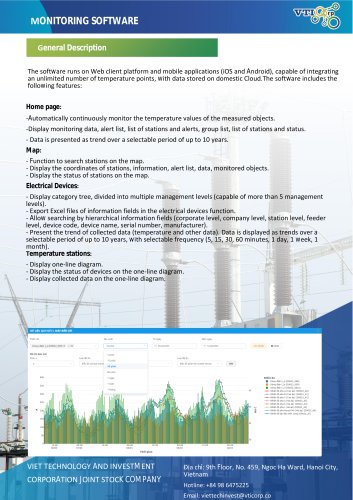 Monitoring Software
2 Pages
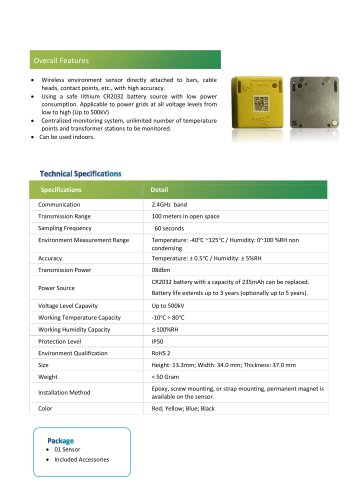 TBR22-BE
2 Pages
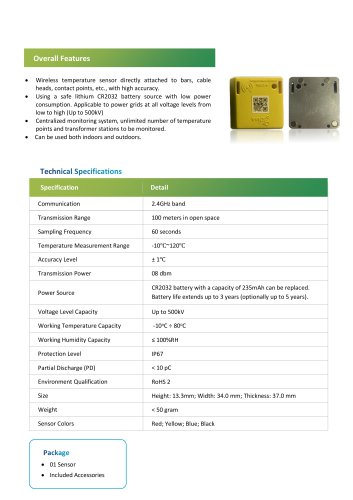 TBR22-BT
2 Pages
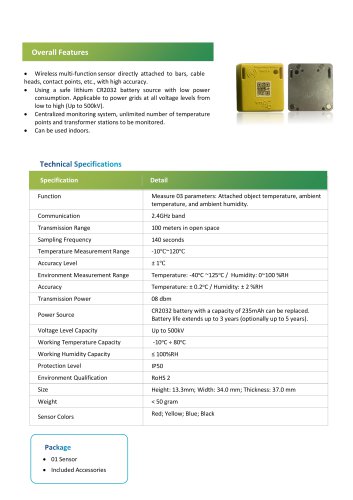 TBR22-BTE
2 Pages
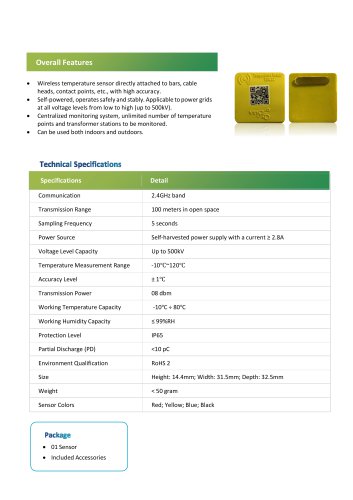 TBR22-ST
2 Pages
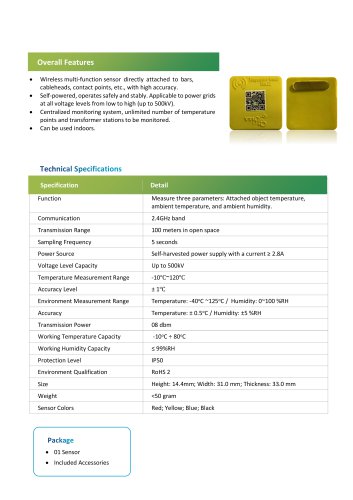 TBR22-STE
2 Pages
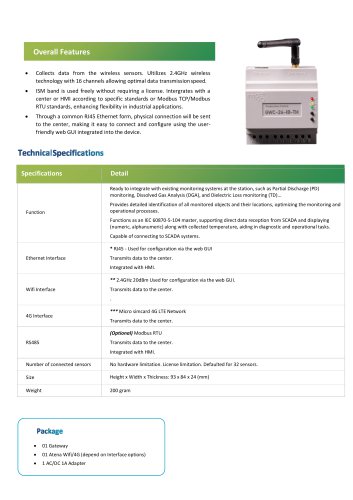 Datasheet Gateway
2 Pages
 Industrial Monitoring System
23 Pages
 Frofile VTI
34 Pages

- Communication gateway
- Waterproof temperature sensor
- Industrial gateway
- Fieldbus gateway
- Ethernet gateway
- Humidity and temperature probe
- Serial gateway
- Relative humidity and temperature sensor
- Wireless gateway
- Threaded temperature sensor
- Real-time monitoring module
- RS-485 gateway
- IP65 temperature transducer
- Waterproof humidity and temperature sensor
- Temperature monitoring module
- Continuous monitoring module
- Modbus RTU gateway
- Online monitoring module
- 4G gateway