
- Catalogs
- VTDRIVssE Technology Limited
- VTdrive Technical note Reducing harmonics caused by variable speed drives(VSD)

VTdrive Technical note Reducing harmonics caused by variable speed drives(VSD)

VTdrive Technical note Reducing harmonics caused by variable speed drives(VSD)
- 12-pulse Rectifier: Uses two 6-pulse rectifiers for smoother current waveform.
- 18-pulse and 24-pulse Rectifiers: Use multiple 6-pulse rectifiers, requiring special transformers and complex cabling.
Catalog excerpts
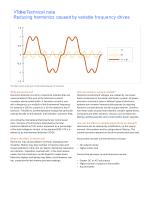
VTdriveTechnical note Reducing harmonics caused by variable frequency drives 1.5 -1.5 The total current as the sum of the fundamental and 5 th harmo nic. What are harmonics? Harmonic distortion is a form of electrical pollution that can cause problems if the sum of the harmonic currents increases above certain limits. A harmonic current is one with a frequency at a multiple of the fundamental frequency, for instance a 250 Hz current on a 50 Hz network is the 5 th harmonic. The 250 Hz current represents energy that cannot be used by devices on the network. It will therefore convert to heat. According the International Electrotechnical Commission (IEC), the level of harmonics is described by the total harmonic distortion (THD) and is expressed as a percentage of the total voltage or current. In the standard IEEE 519 it is refered to as total demand distortion (TDD). What is the effect of harmonics? Harmonics may cause cables to overheat, damaging their insulation. Motors may also overheat or become noisy and torque oscillations in the rotor can lead to mechanical resonance and vibration. Capacitors overheat with, in the most severe cases, the risk of explosion as the dielectric breaks down. Electronic displays and lighting may flicker, circuit breakers can trip, computers fail and meters give false readings. How are harmonic currents created? Harmonic currents and voltages are created by non-linear loads connected on the power distribution system. All power electronic converters used in different types of electronic systems can increase harmonic disturbances by injecting harmonic currents directly into the supply network. Common non-linear loads include motor starters, variable speed drives, computers and other electronic devices such as electronic lighting, welding supplies and uninterruptible power supplies. How can the effect of variable speed drives be reduced? Harmonics can be reduced by modifications to the supply network, drive system and by using external filtering. The current harmonics depend on the drive construction and load. Factors that increase current harmonics include: − No network choke − Higher motor load Factors that decrease current harmonics include: − Greater DC or AC inductance − Higher number of pulses in the rectifier − Active rectifier
Open the catalog to page 1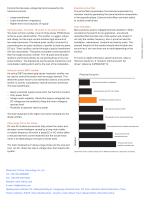
− Larger transformer − Lower transformer impedance − Higher short circuit capacity of supply Using 6-pulse, 12-pulse, 18-pulse or 24-pulse rectifier The most common rectifier circuit in three-phase PWM-drives is the six-pulse diode rectifier. This rectifier is rugged, robust and cheap, but the input current contains high amounts of low order harmonics. The twelve-pulse rectifier is formed by connecting two six-pulse rectifiers in parallel to feed the same DC bus. These rectifiers are fed through a special transformer with two secondaries. This gives a smoother current waveform than the single...
Open the catalog to page 2All VTDRIVssE Technology Limited catalogs and technical brochures
 VS5 Solar pump inverter
3 Pages
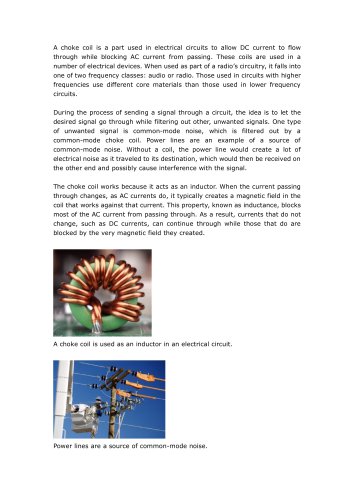 VTdrive What is a Choke Coil
2 Pages















Archived catalogs

- Electronic filter
- Passive electronic filter
- Frequency inverter
- Variable frequency drive
- AC electronic filter
- Wire-wound resistor
- Solar DC/AC inverter
- 3-phase AC drive
- Three-phase electronic filter
- 3-phase frequency converter
- Three-phase DC/AC inverter
- DC/AC inverter for industrial applications
- Band-pass electronic filter
- EMI filter
- Housed resistor
- Compact frequency inverter
- IP20 frequency inverter
- Digital output frequency inverter
- Motor frequency converter