


whitepaper Upright-Altair

whitepaper Upright-Altair
The whitepaper discusses a technology demonstration by Altair, Click2Cast, HBM nCode, and voxeljet, showcasing advancements in mould making through 3D printing combined with simulation-driven design. This approach aims to enhance performance and efficiency in high-performance castings, maintaining the same weight while achieving 3-5 times the stiffness, suitable for mass production.
The process integrates design optimization, fatigue analysis, casting, and 3D printing to address lightweight design challenges. The use of voxeljet's 3D printing for moulds accelerates production and offers significant design freedom, enabling complex cast designs that are mechanically stronger without additional weight.
A milled billet aluminum upright (wheel carrier) was used to demonstrate the process. The goal was to redesign the component to maintain mass while significantly improving performance, particularly stiffness, which is crucial for road-holding performance. The original design was optimized for performance rather than manufacturing needs.
Using Altair's OptiStruct and Inspire tools, the design space was defined, and severe load cases were applied. The optimization resulted in a part with the same material amount but increased stiffness by 3-5 times, depending on the load case.
Fatigue simulation was conducted using nCode DesignLife, incorporating a 35-hour loading schedule from various road conditions. This analysis predicted fatigue damage by assembling stress histories for all wheel carrier locations.
Click2Cast was used to test manufacturability and optimize the component design, avoiding defects and reducing design-production iterations. It also simulated the mold filling process and thermal solidification to create an efficient manufacturing method.
Voxeljet used CAD data to produce plastic models with PMMA, offering low ash content and excellent burn-out characteristics for investment casting. The 3D printed models provide high dimensional accuracy and surface finish, allowing for complex designs at a lower cost without tooling investment.
The integrated process of optimization, fatigue analysis, casting simulation, and 3D printing demonstrates significant potential for improving performance in lightweight designs without compromising weight goals.
Catalog excerpts

weight · sametimes stiffer · 3 - 5 for mass production · capable WHITEPAPER 3D Printing for Innovative Mould Making Combined with Simulation Driven Design Inspiration Push the Limits for High Performance Castings Altair, Click2Cast, HBM nCode, and voxeljet present a technology demonstration that stands out with dramatic performance improvements and the solid potential for serial manufacturing and mass production. Bringing design optimization, fatigue analysis, casting, and 3D printing together addresses the challenges of lightweight design and enables the creation of an innovative design and manufacturing process that enhances performance and efficiency. „When it comes to speed and capabilities for serial production you might want to look at this process. It marks the “rebirth” of one of the oldest manufacturing process available – casting! The new process includes moulds made with 3D printing, an entirely new approach to mould making. By using the voxeljet 3D printing process, mould making is dramatically faster and the design freedom this process offers is great. 3D printing the patterns and moulds, is potentially the only way we can achieve this level of cast complexity. To leverage the design freedom 3D printing offers to full capacity, the design for the printed piece comes from simulation tools, which provide structural inspiration and enable the assessment of manufacturability and durability. The result we have received is very promising: the component is now 3-5 times stiffer (depending on the load case) than the original design without having to add weight. Another great advantage of this approach is, that the manufacturing process is already well established, certified in various industries and is suitable for mass production.“ Tobias King, Director Marketing & Applications, voxeljet AG THE TECHNOLOGY DEMONSTRATOR Using a milled billet aluminum upright (wheel carrier) to demonstrate the process, designers and engineers from the companies focused on creating a new shape for the wheel carrier that would be equal in mass but would perform significantly better than the original. The wheel carrying component is subject to deflections and deformations under load, which significantly impact the road-holding performance of the entire suspension. Stiffness of the component is critical. The original design, driven more by manufacturing needs, was now reworked for
Open the catalog to page 1
TOPOLOGY OPTIMIZATION WITH INSPIRE Topology optimization process with solidThinking Inspire First, the design space was defined using Inspire, a concept design and optimization tool based on Altair’s OptiStruct optimization solver. Then the most severe load cases, such as hard braking, maximum cornering, and driving over bumps, were applied to the model. After running the optimization, which also took manufacturability into account, the result was a part with exactly the same amount of material (now aluminum cast) but distributed in such a way as to increase stiffness by a factor of 3-5, depending...
Open the catalog to page 2All Voxeljet catalogs and technical brochures
 High Speed Sintering
2 Pages
 Inorganic-Direct-Binding
2 Pages
 machine-data-sheet-vx200
1 Page
 voxeljet 3D printer
1 Page
 VX200 HSS
2 Pages
 Servicebrochure_2018
6 Pages
 plastic parts
1 Page
 Imagebrochure
20 Pages
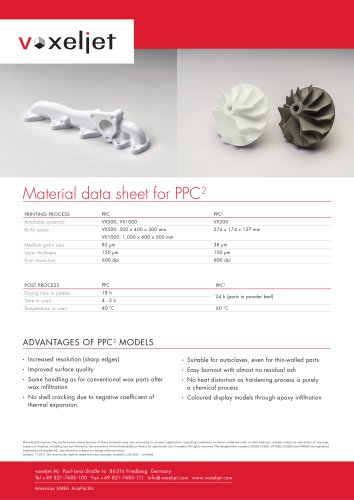 Material data sheet for PPC²
2 Pages
 Investment casting
1 Page
 Material-data-sheet
1 Page


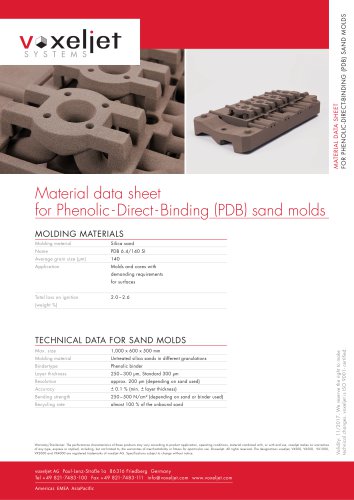


Archived catalogs
 Servicebroschure
6 Pages
 VX200
VX2001 Page
 VX500
VX5001 Page
 VX2000
1 Page
 VX4000
1 Page
- Additive manufacturing machine
- Industrial 3D printer
- Plastic additive manufacturing machine
- Prototyping 3D printing machine
- High-performance 3D printer
- Large-format 3D printer
- High-speed 3D printer
- PA 3D printer
- 3D printer for the aerospace industry
- 3D printer for the automotive industry
- Mold manufacturing 3D printer
- Continuous operation 3D printer
- Multi-material 3D printer
- 3D printer for the electronics industry
- BJ 3D printer
- Ceramic 3D printer
- Sand 3D printer