
- Catalogs
- Viessmann Werke GmbH & Co KG
- Local energy production from biowaste


Local energy production from biowaste

Local energy production from biowaste
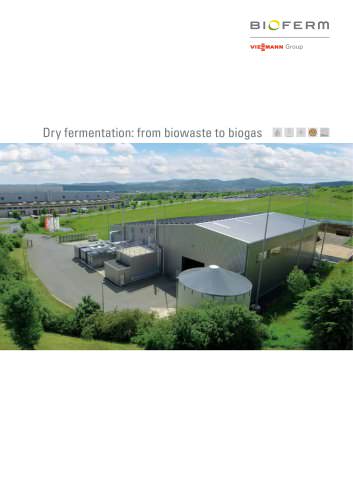
The document outlines the BIOFerm system, which transforms organic waste into biogas. In Germany, a significant portion of residential waste is organic, offering substantial potential for energy conversion. The system is particularly effective for biowaste and landscape conservation materials, which are often composted or landfilled instead of being used for energy generation.
BIOFerm utilizes dry fermentation technology suitable for non-pumpable feedstock such as biowaste, green matter, and solid manure. The system is designed to handle impurities without requiring pre-treatment of biomass. It operates using a batch process in garage-shaped digesters, achieving high gas yields with up to 60% methane content. The anaerobic process has a retention time of about 28 days and includes a percolate system to enhance fermentation.
The system is applicable for local authorities, restaurants, canteens, and the food industry. It produces biogas that can be stored and used flexibly, reducing reliance on fossil fuels and energy imports. Additionally, it creates jobs in rural areas and provides agricultural benefits through the use of fermentation residues as fertilizers.
The BIOFerm system includes a mixing hall, exhaust system with biofilter, gas dome, substrate storage, and percolate storage tank. It features a robust substrate barrier and digester gate for secure operation. The system is modular, TÜV-approved, and designed for high operational reliability.
For heterogeneous biowaste, hybrid systems combining wet and dry fermentation are used to maximize resource utilization. These systems balance seasonal variations and improve efficiency in processing and electricity generation.
Schmack Biogas provides comprehensive technical and biological services, including remote monitoring and laboratory analysis, to ensure high plant performance and reliability. The company offers complete operational management to minimize costs and maximize output.
The BIOFerm system represents a sustainable and efficient solution for biowaste management, offering environmental benefits and economic viability through advanced technology and comprehensive support services.
Installed output: 190 kW (electrical)
Throughput: 4,500 tons of landscape conservation material annually
Number of digesters: 4
Digester dimensions: 20 x 7 x 4.50 meters
Construction started: September 2009
Commissioning: August 2010
The site includes both dry and wet fermentation plants with gas upgrading and power-to-gas installations.
Installed output: 1 MW (electrical)
Throughput: 40,000 tons of biowaste and household refuse annually
Number of digesters: 11
Digester dimensions: 30 x 7 x 5 meters
Construction started: July 2011
Commissioning: February 2013
Installed output: 1.8 MW (electrical)
Throughput: 40,000 tons of biowaste and 3,000 tons of food waste annually
Number of digesters: 14
Digester dimensions: 30 x 7 x 5 meters
Construction started: February 2012
Commissioning: July 2013
Installed output: 4 MWGas
Throughput: 30,000 tons of biowaste and 15,000 tons of energy crops annually
Number of digesters: 8
Digester dimensions: 35 x 6.75 x 5 meters
Construction started: May 2013
Commissioning: August 2014
Viessmann Group is a leading manufacturer of systems for heating, cooling, and decentralized power generation. As a family-run business, it emphasizes innovation, environmental responsibility, and sustainability. The company aims to meet its energy needs sustainably and has reduced CO2 emissions by 80% at its headquarters.
Viessmann offers a comprehensive range of products including boilers, combined heat and power generation, hybrid appliances, heat pumps, wood combustion technology, biogas production and upgrading plants, solar thermal, photovoltaics, and refrigeration systems.
Established: 1917
Employees: 11,500
Group turnover: 2.2 billion euros
Export share: 56%
Production companies: 22 in 11 countries
Sales presence: 74 countries with sales companies and branches, 120 sales offices worldwide
German Sustainability Award for Production/Brand/Resource Efficiency in 2009, 2011, and 2013.
Catalog excerpts
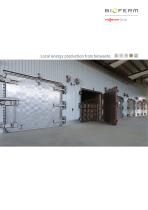
VIE|MANN Group Local energy production from biowaste 4>lll © 8
Open the catalog to page 1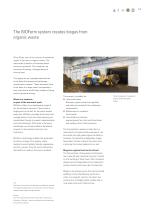
The BIOFerm system creates biogas from organic waste 30 to 40 per cent of the volume of residential waste in Germany is organic waste. The nationwide collection of biowaste offers enormous potential. This waste can be converted to energy in biogas plants at minimal cost. The largest as yet untapped potential lies in the field of biowaste and landscape conservation material. These elements have so far been to a large extent composted or sent unsorted to landfill sites instead of being used to generate energy. Waste is a resource – as part of the economic cycle BIOFerm offers a comprehensive range...
Open the catalog to page 3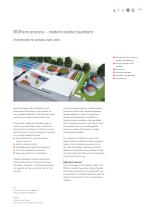
BIOFerm process – modern waste treatment Dry fermentation for stackable, organic solids Schmack Biogas offers the BIOFerm dry fermentation technology in its portfolio for non-pumpable feedstock. The demands made on the source material are extremely low. The process is ideal for stackable, organic solids, such as biowaste, green matter and solid manure containing up to 60 per cent dry matter content. Common features of industrial or municipal biowaste include: high proportion of impurities (plastic, wood, metal etc.) high dry matter content heterogeneous substrate composition not always separated...
Open the catalog to page 5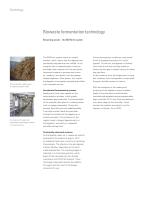
Biowaste fermentation technology Recycling waste – the BIOFerm system Dry fermentation: ideally suited The BIOFerm system works on a batch process, which means that the digesters are periodically emptied and then refilled. In the reception hall a wheeled loader mixes the stackable fresh material with the previously fermented material (a process also known as „seeding“) and feeds it into the garageshaped digesters. After approx. four weeks the digester is completely emptied and refilled with a seeded mixture. for organic and green waste The majority of the plant and measurement technology is located...
Open the catalog to page 6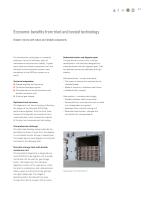
Economic benefits from tried and tested technology Greater returns with robust and reliable components Dry fermentation technology is constantly evolving in terms of efficiency, ease of maintenance and economic viability. A great many tried and tested components from the Schmack wet fermentation system were transferred to the BIOFerm system as a result. Technical adaptation Garage digester roof structure Optimised drainage system Percolate tank as round fermenter with double membrane roof External gas storage Optimised roof structure The digester‘s roof has no housing, following the design of...
Open the catalog to page 7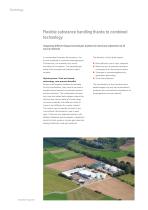
Flexible substance handling thanks to combined technology Integrating different biogas technologies enables the maximum exploitation of all source materials In conventional biowaste fermentation, the source substrate is extremely heterogeneous. Furthermore, the material input varies according to the season. The expected gas yields from biowaste are therefore highly variable. Hybrid system: Tried and tested technology, new process benefits Since not all biogenic residues are suitable for dry fermentation, they have to be used in socalled hybrid systems (combined wet and dry fermentation). The combination...
Open the catalog to page 8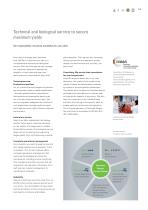
Technical and biological service to secure maximum yields Our responsibility: maximum availability for your plant Even after the biogas plant has been built, BIOFerm customers can rely on a comprehensive technical and biological service. With the Schmack service concept, our customers secure the operational reliability of their plant and keep their performance at a permanently high level. Technical service: Professional and fast For us, customer service begins long before any component wears or needs replacement – through qualified advice, preventative maintenance and appropriate planning by our...
Open the catalog to page 9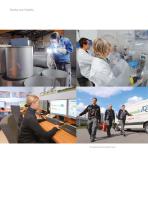
Our specialists ensure a perfect result
Open the catalog to page 10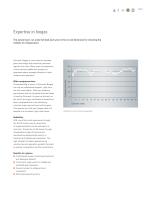
Expertise in biogas The actual hours run under full load each year is the crucial dimension for checking the viability of a biogas plant. Schmack Biogas is committed to standard plant technology and extensive processbi logical know-how. Many years of experience in both sectors enable the company to guarantee above average utilisation to both investors and operators. Reliability With round the clock supervision through the EUVIS control centre, downtime of supported plants can be reduced to a minimum. Prevention of idle times through scheduled and specific service and maintenance deployments result...
Open the catalog to page 11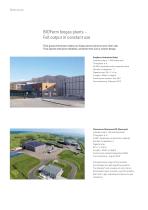
BIOFerm biogas plants – Full output in constant use Their good performance makes our biogas plants stand out year after year. They operate with great reliability, whatever their size or system design. Sogliano Ambiente (Italy) Installed output: 1 MW (electrical) Throughput p. a.: 40 000 t biowaste and household refuse Number of digesters: 11 Digester size: 30 x 7 x 5 m (Length x Width x Height) Construction started: July 2011 Commissioning: February 2013 Viessmann Biomasse KG (Germany) Installed output: 190 kW (electrical) Throughput p. a.: 4 500 t (landscape conservation material) Number of...
Open the catalog to page 12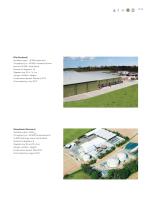
Fife (Scotland) Installed output: 1.8 MW (electrical) Throughput p.a.: 40 000 t biowaste (brown bins) and 3 000 t food waste Number of digesters: 14 Digester size: 30 x 7 x 5 m (Length x Width x Height) Construction started: February 2012 Commissioning: July 2013 Stausebach (Germany) Installed output: 4 MWGas Throughput p.a.: 30 000 t/a biowaste and 15 000 t/a Energy crops (combi-plant) Number of digesters: 8 Digester size: 35 x 6.75 x 5 m (Length x Width x Height) Construction started: May 2013 Commissioning: August 2014
Open the catalog to page 13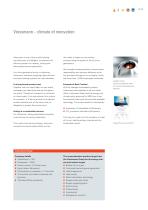
Viessmann – climate of innovation Viessmann is one of the world's leading manufacturers of intelligent, convenient and efficient systems for heating, cooling and decentralised power generation. As a third generation family run business, Viessmann has been supplying highly efficient and clean heating systems for many decades. the needs of today are met without compromising the quality of life of future generations. We consider climate protection, environmental responsibility and resource efficiency to be key priorities throughout our company, which has more than 11,500 employees worldwide. 2009/2011/2013:...
Open the catalog to page 15All Viessmann Werke GmbH & Co KG catalogs and technical brochures
 Vitocal 150-A/151-A
20 Pages
 Vitocal 200-A
4 Pages
 Vitodens 200-W
4 Pages
 Vitodens-222-F
4 Pages
 Vitodens 050-W
4 Pages
 Product Range Overview
20 Pages
 Photovoltaic systems
20 Pages
 Hybrid solutions
24 Pages
 Gas condensing technology
40 Pages
 Oil condensing technology
32 Pages
 Etanomics
16 Pages
 Wood boilers
42 Pages
 Heat pumps
72 Pages
 DHW cylinder Vitocell
36 Pages
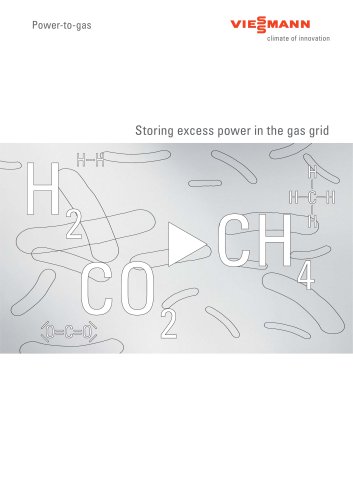 Power to gas
4 Pages
 Mechanical ventilation systems
36 Pages
 Thermal solar systems
34 Pages
 Gas processing plants
16 Pages
 Power-generating heating systems
24 Pages
 Wood boilers from 8 to 170 kW
42 Pages
 Gas condensing technology
48 Pages
 Fuel cell boiler
16 Pages
 Solutions generating energy
24 Pages
 Heat pumps up to 2000 kW
40 Pages
 CHP units for heat and power
20 Pages
 Biogas upgrading plants
20 Pages
 Energy from the sun
46 Pages
 Heating with wood
56 Pages
 Heating with oil
72 Pages
 VITOTWIN 300-W
4 Pages
 DHW cylinders Vitocell
32 Pages
 Micro CHP boiler
12 Pages
 A perfect climate for your home
20 Pages
 Power from the sun
20 Pages
 Heating with gas
74 Pages










Archived catalogs

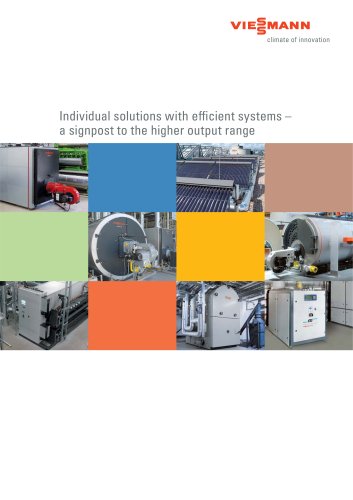
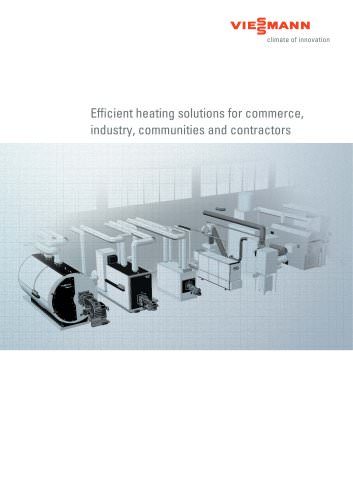
- Photovoltaic solar panel
- Monocrystalline silicon solar panel
- Infrared heater
- Superheated water boiler
- Steam boiler
- Gas boiler
- Electric power radiant heater
- Industrial radiant heating circuit
- Industrial boiler
- Compact boiler
- Three-pass boiler
- Fuel oil boiler
- Fuel cell
- Natural gas boiler
- Condensing boiler
- Water/water heat pump
- Reversible heat pump
- Electric water heater
- Hydrogen fuel cell
- Heat exchanger water heater