
- Catalogs
- Ventilatorenfabrik Oelde
- Hardfacing on High Strength Steel for Lightweight Wear Protected Structural Materials

Hardfacing on High Strength Steel for Lightweight Wear Protected Structural Materials
Hardfacing on High Strength Steel for Lightweight Wear Protected Structural Materials
Wear and corrosion are significant issues for industrial components, leading to economic losses, particularly in Germany where they account for 2-4% of GDP. Industrial fans, exposed to abrasive dust, require frequent maintenance. Traditional solutions like pre-fabricated wear-plates are heavy and expensive.
Challenges with Conventional Methods
Conventional welding methods such as Plasma Transferred Arc (PTA) and Gas Metal Arc Welding (GMAW) introduce high heat, which can degrade the mechanical properties of high-strength steels, limiting their use in stress-bearing applications.
Innovative Hardfacing Techniques
Modern controlled dip transfer (short arc) welding processes reduce heat input, preserving the mechanical properties of high-strength steels like S960. This method provides effective wear protection while maintaining structural integrity.
Experimental Setup
Hardfacing was applied to S960QL steel using metal-cored wire-based Fe-alloys with a weave-bead technique, achieving a coating thickness of 2-2.5 mm. Metallographic analysis revealed a refined distribution of hard phases, enhancing wear resistance.
Results and Analysis
Wear tests according to DIN 50332 standards showed improved erosion resistance. The FeCrNbVBC material exhibited additional vanadium carbide phases, reducing gaps between hard phases and enhancing durability.
Conclusion
The controlled dip transfer welding process effectively hardfaces high-strength steels, providing a lightweight, durable solution for wear protection in industrial applications.
This document evaluates the performance of different welding processes and materials in terms of wear resistance, focusing on the controlled dip transfer (short arc) welding process versus the gas metal-arc welding (GMAW) process.
Specifications and Procedures
The study involved a test setup with a compressed air supply, injector, and sampling system. Abrasives were directed to the injector at a 10° blast angle using cement dust, with variable parameters such as primary pressure, mass flow, and distance between the sample and injector outlet.
Findings
The controlled dip transfer welding process demonstrated superior wear resistance compared to the GMAW process, due to its specific microstructure formation that reduces carbide dissolution and increases wear resistance under fine-erosive loads. The innovative materials used with this process significantly extend component life.
Performance Comparison
High-performance wear-resistant systems were evaluated, showing that the controlled dip transfer process offers substantial improvements in wear resistance and longevity over conventional methods. For example, the NiCrBSi + WSC alloy significantly reduced wear.
Lightweight Construction Potential
The document highlights the potential for lightweight construction through reduced coating thickness and minimized heat-affected zones, preserving base material properties. The controlled dip transfer process allows direct hardfacing of structural components, eliminating the need for composite wear-plates.
Conclusion
The controlled dip transfer welding process, combined with new wear-resistant alloys, provides an effective and economical alternative to traditional Ni-based alloys, enhancing structural lightweight goals and offering optimal protection against erosive loads.
Acknowledgments
The research was funded by the Federal Ministry of Economics under the ZIM cooperation project.
References
The document cites various studies and publications related to metal matrix composites, wear protection, and welding processes.
Catalog excerpts
Innovations from Venti Oelde Hardfacing on High Strength Steel for Lightweight Wear Protected Structural Materials
Open the catalog to page 1
Prof. Dr.-Ing. Volker Wesling, ISAF, Technische Universitat Clausthal, Clausthal-Zellerfeld; Dr.-Ing. Rolf Reiter, ISAF, Technische Universitat Clausthal, Clausthal-Zellerfeld; Dipl.-Ing. Lukas Lau, ISAF, Technische Universitat Clausthal Clausthal-Zellerfeld; Marvin Hecht, M. Sc., ISAF, Technische Universitat Clausthal, Clausthal-Zellerfeld; Dr.-Ing. Frank Schreiber, DURUM VerschleiRschutz GmbH, Willich; Dipl.-Ing., Dipl.-Wirtsch.-Ing. Ivo Kupka, Ventilatorenfabrik Oelde GmbH, Oelde; Dipl.-Ing. Thomas Gandt, Ventilatorenfabrik Oelde GmbH, Oelde Wear and tear on machines and plants results in billions...
Open the catalog to page 2
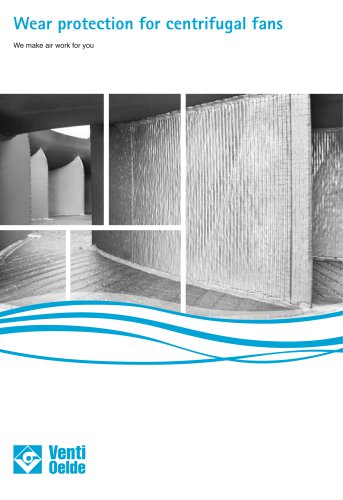
1 Introduction Wear and corrosion are significant factors in the failure and breakdown of components in the industrial sector. In Germany, downtime and repair work cause losses amounting to 2 - 4 % of the Gross Domestic Product (GDP), averaging about 85 billion Euros [1]. In view of these enormous costs, researchers are continuously in search of new materials capable of withstanding the loads better and longer and, thereby, reducing costs. Industrial fans, also, are affected by wear during their service life, necessitating regular maintenance and repair work. One way to reduce the occurring wear,...
Open the catalog to page 3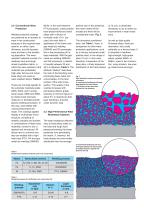
2.2 Conventional Wear Protection Welded protective coatings are preferred as an answer to wear in fan construction, because of the required wear reserve, or rather, layer thickness, and the dynamic wear and tear to the hardfac-ing deposition. The wear-resistant materials consist of a relatively hard and tough mixed crystalline matrix, in which the wear-resistant, hard materials are embedded. High-alloy ferrous and nickel base alloys are used as wear-resistant alloys. Table 2. These are normally applied to the substrate materials grade S235, S355, and in exceptional cases, S690 and S960, by metal-cored...
Open the catalog to page 4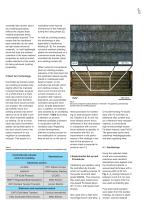
Table 4 Selected controlled dip transfer (short arc) welding processes acc. to manufacturer [10] Fig. 4 Structural component coating Fe-base + Cr-Boride + VC applied by controlled dip transfer (short arc) welding process controlled dip transfer (short arc) welding processes, without the original base material properties being unacceptably impaired. This means that the hardfaced base materials can be used as high-stress structural materials, i.e. both lightweight structural aims are realized (retention of the base material properties) as well as considerable extension of the useful life being...
Open the catalog to page 5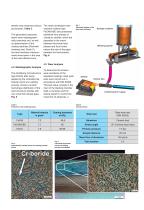
density was measured using a pycnometer, Table 5. The generated composite layers were metallographi-cally examined and, as well as determination of the coating hardness (Rockwell hardness test, Scale C), low-load hardness measurements were taken in the area of the heat-affected zone. The newly developed wear-resistant material type FeCrNbVBC also possesses additional hard phases of vanadium carbide, which are deposited in the matrix between the boride hard phases and thus further reduce the size of the gaps between the hard phases, Fig. 6. Fig. 7 Schematic diagram of the blast wear test setup...
Open the catalog to page 6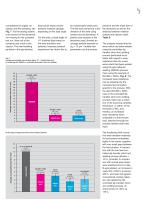
6 7 compressed air supply, an injector and the sampling, see Fig. 7. Via the dosing system, a set amount of the abrasives, non-varying for the complete test run, flows out of the container and is led to the injector. The free-travelling particles in the gas-bearing blast cause impact and/or abrasive material damage, depending on the load angle. For the tests, a blast angle of 10° (inclined blast wear) on the weld transition was selected, because practical experience has shown this to be a particularly weak point. The test was carried out in the direction of the weld using cement dust as abrasives....
Open the catalog to page 7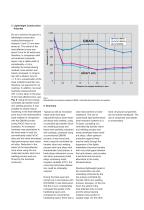
5 Lightweight Construction Potential So as to achieve the goal of a lightweight construction, coating thicknesses of between 2 and 2.5 mm were aimed at. The extent of the heat-affected zones was about 3 mm for all welds and, therefore, in comparison with conventional composite layers, had a stable width of considerably < 5 mm, whereby the stress bearing residual cross-section was clearly increased. In conjunction with a dilution zone of < 1.5 mm, a preservation of the base material properties can, therefore, be assumed for all coatings. In addition, low-load hardness measurements (HV 1) were...
Open the catalog to page 8
8 9 7 Our thanks to the following The work was funded by the Federal Ministry of Economics within the framework of a ZIM (Central Innovation Program – Medium-sized Business Sector) cooperation project. The authors express their sincere thanks for this support. 8 Literature [1] Theisen, W.: „Metal Matrix Composites“ widerstehen dem Verschleiß: Walzen aus Pulver. In: Klein, S. (Hrsg.), RUBIN (2004), Bochum, Sonderheft, S. 90-95. [2] Fa. Ventilatorenfabrik Oelde GmbH [3] Schnick, T.; Schreiber, F.; Wenz, T.: Verschleißschutz durch Fülldraht- und Plasma-Pulver-Auftragschweißen. In: Wielage, B. (Hrsg.),...
Open the catalog to page 9
Industrial fans Dust collection and process air cleaning plants Exhaust air treatment plants Ventilatorenfabrik Oelde GmbH P.O. Box 37 09 D-59286 Oelde Phone: +49252275-0 Fax: +49252275-250 [email protected] www.venti-oelde.com Ventilating, heating and air conditioning plants Recycling and waste processing plants Surface technology
Open the catalog to page 10All Ventilatorenfabrik Oelde catalogs and technical brochures
 Air with method
16 Pages
 Industrial Centrifugal Fans
18 Pages
 Large and special fans
28 Pages
 Industrial filters
16 Pages
 High-pressure fans
10 Pages
 Exhaust, filter and convey
28 Pages
- Drying system
- Radial fan
- Solids separator
- Air circulation fan
- Centrifugal classifier
- Dust collector
- Continuous drying system
- Single shaft shredder machine
- Cooling fan
- Air blast drying system
- Recycling plant
- Filter dust collector
- Particle separator
- Hot air dryer
- Cardboard shredder
- Cartridge dust collector
- Dryer for the chemical industry
- Dewatering system with belt conveyor
- Drying fan