


MINIPRO Catalog - Tools for Small Bores (Threading, Grooving, Boring)

MINIPRO Catalog - Tools for Small Bores (Threading, Grooving, Boring)
Document Analysis Summary
The provided document is heavily corrupted or improperly encoded, containing numerous non-standard characters, control codes, and fragmented text. Due to this, it is not possible to extract coherent technical information, specifications, procedures, standards, or recommendations.
1. Specifications and Parameters
- References to various parameters and measurement units are present but lack clear context.
- Numerical data and possible calibration or operational thresholds are mentioned, though details are obscured.
- Indications of tabulated or structured data exist but are illegible.
2. Procedures and Instructions
- Hints of procedural steps or operational guidelines appear, possibly related to equipment setup or testing.
- Mentions of control points or checkpoints suggest quality assurance processes, but specifics are unclear.
3. Standards and Norms
- References to industry or regulatory standards are indicated by codes or abbreviations.
- Compliance requirements or recommended practices are implied but not extractable.
4. Data Tables and Graphical Elements
- Segments suggest the presence of tables or charts with numerical and symbolic data.
- The corrupted text prevents reliable interpretation of these data elements.
5. Limitations and Recommendations
- Some fragments imply operational limitations or constraints, possibly environmental or equipment-related.
- Recommendations or best practices are hinted at but not clearly articulated.
Conclusion
The document’s corrupted state prevents comprehensive analysis or meaningful summarization. It appears to be a technical manual or specification sheet involving parameters, procedures, standards, and data tables. Access to a clean, properly encoded version is necessary for accurate interpretation and extraction of critical information.
All Vargus catalogs and technical brochures
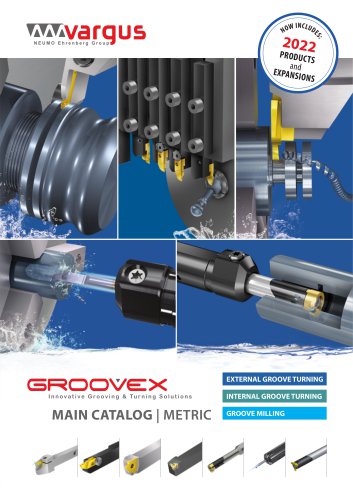 GROOVEX Main Catalog
220 Pages
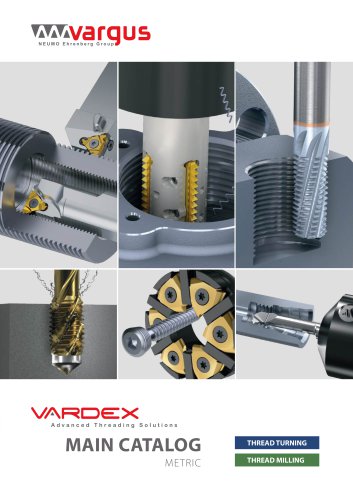 VARDEX Main Catalog
532 Pages
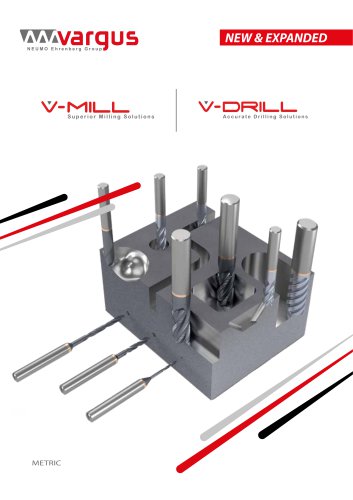 V-Mill and V-Drill
88 Pages
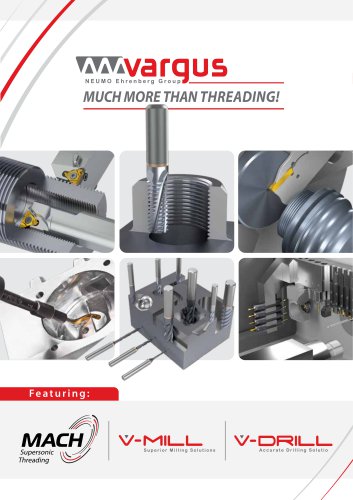 Vargus Focus
8 Pages
Archived catalogs
 VARDEX Mini-3 IC 5.0
12 Pages
 The Touch Finishing
20 Pages
 RedLine Thick Thread Turning Inserts
16 Pages
 VARDEX Mega Line
20 Pages
 VARDEX Industrial Solutions
20 Pages
 Spotlight 2011-2012
6 Pages
 Spotlight 2010 - NEW Products
6 Pages
 RedLine Thread Turning Inserts
8 Pages
 Thread Milling Handbook
30 Pages
 VARGUS Threading Products
4 Pages


- Milling tool
- Chuck
- Solid milling cutter
- Drilling tool
- Steel milling cutter
- Solid drill bit
- Metal milling cutter
- Clamping milling cutter
- Milling cutter with cylindrical shank
- Grade
- End mill
- Cast iron milling cutter
- Solid carbide milling cutter
- Ball nose milling cutter
- Multi-purpose drilling tool
- Coated milling cutter
- High-performance milling cutter
- Tungsten carbide drill bit
- Milling chuck
- Machining tool holder