
- Catalogs
- TURALI HOLDING
- Industrial Hoses

Industrial Hoses

Industrial Hoses
The Polimer Kauçuk Engineering Department is dedicated to R&D in material development and component design, equipped with testing and verification facilities. The laboratory is accredited under EN ISO/IEC 17025:2005.
The company holds multiple certifications including DEKRA - ISO/TS 16949:2002, DS - EN ISO 9001:2008, DS - EN ISO 14001:2004, and DS - OHSAS 18001:2008. Product certifications include LLOYD'S REGISTER, AMECA, MSHA, ABS, GOST-R, TSE, LUXCONTROL, UL, CERISIE, RST, TÜV, and KIWA.
The document categorizes industrial hoses by application, such as water, sewer & road cleaning, fire fighting, air-gas, welding, hot water, steam, hot air blower, material handling, food, oil & petroleum, chemical, cable protection, steel mill, silicone, oil rigs platform, and petroleum dispensing, with specific product codes and applications.
Details include outer and inner diameters, working pressure, vacuum, bending radius, and temperature tolerances. Custom colors and diameters are available upon request.
Swaged fittings are used in industrial applications, particularly for petroleum suction and discharge, providing an integrated unit to prevent leakage and blowing.
The helix wire is terminated before the hose end for easy coupling, reinforced with rubber and textile for strength.
The document discusses hose ends and couplings, emphasizing reinforcement with rubber and textiles for pressure resistance. The spiral ends a few turns before the end to facilitate coupling.
The hose end is built around a nipple and vulcanized to prevent leakage and bursting. The process involves enlarging the hose end to fit the fitting's diameter, with the helix wire terminated at the enlarged end.
Reinforcement textiles and metal reinforcements are embedded inside the rubber molded bead. A reattachable swivel metal flange is placed behind the rubber bead, ensuring easy connection without additional gaskets.
- Vulcanized built-in flange systems prevent hose bursting or leaking.
- Bolted clamps fasten the nipple and external clamps to the hose.
- The hose end is tapered to form a nozzle, with reinforcement extended to the nozzle's end.
- Hose ends are sealed with rubber for protection and durability.
Proper reinforcement and sealing techniques are crucial to prevent leakage and ensure hose system durability. The systems provide easy connections without additional gaskets.
- Materials: Made from natural and synthetic rubber, reinforced with high tensile synthetic textile and steel helix wire for certain models.
- Cover: Weather and abrasion-resistant synthetic rubber, with smooth or corrugated finishes.
- Temperature Range: Operates from -25°C to +70°C (-13°F to +158°F).
- General Water Discharge: Suitable for gardening and general water discharge services.
- Medium Pressure Water: Used in industrial and construction services requiring medium pressure.
- Layflat Water Hose: Designed for agricultural and industrial water discharge applications.
- Water Suction and Discharge: Used in industrial and construction services for both suction and discharge of water.
- Complies with standards such as TS 2420, EN ISO 1403, and ISO 1307.
- Marking is done via transfer tape or embossed methods.
- Working Pressure (WP): Varies by model, ranging from 3 bar (44 PSI) to 20 bar (290 PSI).
- Burst Pressure (BP): Typically three times the working pressure.
- Vacuum Rating: Some models are rated for vacuum conditions up to -0.92 bar.
- WLP110: Low pressure water hose for general use.
- EGE-7: Medium pressure water hose for industrial applications.
- WLF131: Layflat water hose for agricultural and industrial use.
- WSD141KARADENIZ-10: Water suction and discharge hose for industrial and construction services.
The document outlines various types of hoses designed for different applications, primarily focusing on air and pneumatic tools. The hoses are made from oil-mist resistant natural and synthetic rubber, reinforced with high tensile synthetic textile or steel wire, and covered with abrasion, ozone, and weather-resistant smooth rubber. They are suitable for medium to heavy-duty services, especially in mines, quarries, and construction.
The hoses are categorized based on their duty level (light, medium, heavy) and specific applications such as air transfer, pneumatic tools, and multipurpose use. Each category specifies the inner diameter (ID), outer diameter (OD), working pressure (WP), burst pressure (BP), and weight per meter.
The hoses comply with ISO 1307 and other relevant standards, ensuring they operate effectively within specified temperature ranges (-40°C to +120°C) and pressure limits. Markings are either embossed or ink-jetted for identification.
The document recommends selecting hoses based on specific application needs, considering factors like pressure requirements and environmental conditions. Options for antistatic covers and flame resistance are available upon request.
The tables provide detailed specifications for each hose type, including dimensions, pressure ratings, and weight. For example, the 'SKY-20' medium-duty air hose has a working pressure of 20 Bar (290 PSI) and is suitable for pneumatic tools in harsh environments.
- Temperature range: -40°C to +120°C
- Pressure range: 10 to 40 Bar
- Compliance with ISO 1307
- Options for antistatic and flame-resistant features
- Suitable for air, oil, cold/hot water, and non-aggressive chemicals.
The document provides detailed specifications for various types of hoses used in industrial applications. These hoses are primarily made of EPDM rubber, known for its resistance to abrasion, heat, ozone, and weather conditions. The hoses are reinforced with high tensile synthetic textile and, in some cases, steel wire helix.
The hoses are designed for the delivery and suction of hot water with very light chemical content. They are suitable for use in environments with high ambient temperatures, such as steel mills and foundries.
The hoses comply with ISO 1307 standards and are marked with transfer tape or embossed for identification. They are designed to operate within a temperature range of -40°C to +125°C (-40°F to +257°F).
The document recommends using these hoses for industrial applications involving hot water and light chemicals. Specific types of hoses are also suitable for steam services at specified pressures.
The tables provide dimensions (ID, OD), working pressure (WP), burst pressure (BP), weight, and other specifications for each hose size. The hoses are available in various sizes, ranging from 3/8" to 10" in diameter, with working pressures typically at 10 bar (145 PSI) and vacuum ratings of -0.92 bar.
- Material: EPDM rubber with high tensile synthetic textile reinforcement.
- Temperature Range: -40°C to +125°C.
- Applications: Suitable for hot water delivery and suction in industrial settings.
- Compliance: ISO 1307 standards.
- Marking: Transfer tape or embossed for identification.
The document outlines the specifications for various types of steam hoses made from EPM rubber, which is resistant to saturated steam, abrasion, heat, oil, ozone, and weather. The hoses are reinforced with high tensile synthetic textiles or steel wire cords and are designed for general industrial use, including chemical plants, steel mills, refineries, and shipyards. The hoses are available in different sizes and are capable of handling different maximum working pressures and temperatures, as specified by ISO and BS standards.
Instructions for cleaning and maintaining the steam hoses are provided. The hoses can be washed and sterilized with detergents or steam cleaned at temperatures up to 120°C (248°F) for short periods. It is recommended to leave the hose empty after use to prevent damage.
The hoses comply with various international standards, including ISO 6134 and BS 5342, which specify the construction and performance requirements for steam hoses. The document also mentions compliance with FDA and European requirements for certain hose types.
Selection of the appropriate steam hose should consider factors such as manual handling, frequency of use, pressure, temperature, and external conditions. Proper installation and storage are crucial to prevent damage and ensure safety. Operators are advised to use protective gear to prevent burns from steam splash-back.
Regular inspection and maintenance are essential to ensure the safe operation of steam hoses. Signs of wear, such as blisters, cuts, leaks, or kinks, should prompt immediate removal from service. Proper coupling and storage practices are emphasized to extend the hose's service life.
The document provides detailed guidelines for the selection, installation, and maintenance of steam hoses. It emphasizes the importance of choosing hoses specifically designed for steam applications, marked clearly for such use. Regular inspections are necessary to detect signs of wear, such as tube hardening, which may require coupling removal for thorough inspection.
Contact with steam is hazardous and can cause severe injuries or death. Proper selection, installation, and maintenance of steam hoses are crucial for operator safety. Users must wear appropriate protective gear, including gloves, boots, and safety glasses. The workspace should be clear of hazards, and hoses should be depressurized immediately after use.
Steam hoses deteriorate over time, necessitating regular inspections to ensure safety and efficiency. Signs of wear include blistering, cuts, steam leakage, and excessive bending. Hoses showing these signs should be removed from service immediately.
The document includes a table detailing the operating pressure and temperature of saturated steam, providing essential data for safe hose operation.
The document outlines the specifications for hot air blower hoses, including temperature resistance (-40°C to +200°C, intermittent to 240°C) and construction materials (heat-resistant EPDM rubber, high tensile synthetic textile). These hoses are designed for transferring hot and dry air from compressors to tank trucks.
The hoses comply with ISO 1307 standards and are marked with transfer tape or embossed for identification. The document provides detailed specifications for various hose sizes, including internal and external diameters, working pressure, and burst pressure.
The document outlines the specifications for various types of rubber hoses used for cleaning and blasting metal, stone, and concrete surfaces. These hoses are made from abrasion-resistant, antistatic natural rubber and high tensile synthetic textiles. They are designed to be resistant to abrasion, ozone, and weather conditions.
The hoses are used in applications involving the discharge of dry cement and abrasive powders, as well as for suction and discharge of dry bulk materials such as sand, gravel, and dry cement. The document specifies the use of these hoses in blasting machines for cleaning surfaces.
The abrasion loss value is specified according to DIN 53516 standards, with options for values ≤ 35 mm3 upon request and ≤ 60 mm3 as a standard option. The hoses comply with ISO 1307 standards and are marked using transfer tape or embossed methods.
The document recommends using these hoses for specific industrial applications due to their high resistance to environmental factors and mechanical stress. The hoses are reinforced with steel wire helix and antistatic copper wire for enhanced durability.
The tables provide detailed measurements for hose dimensions, including inner diameter (ID), outer diameter (OD), working pressure (WP), burst pressure (BP), and weight per meter. These specifications are crucial for selecting the appropriate hose for specific industrial applications.
The hoses are designed to operate within a temperature range of -40°C to +70°C (-40°F to +158°F). They are suitable for high-pressure applications with a working pressure of up to 10 Bar (145 PSI) and a burst pressure of up to 435 PSI.
The document outlines specifications for various types of hoses used in industrial applications. These hoses are designed for suction and discharge of dry bulk materials, plaster and grout spraying, concrete pumping, and vibration applications. The hoses are made from abrasion-resistant antistatic natural rubber, high tensile synthetic textiles, and steel wire reinforcements. They are resistant to ozone and weather conditions and are suitable for temperatures ranging from -40°C to +70°C (-40°F to +158°F).
The hoses are marked using transfer tape or embossed methods. They are designed to handle specific working pressures (W.P.) and burst pressures (B.P.) as indicated in the tables. The hoses are available in various diameters and lengths, with specific weight and vacuum ratings.
The hoses comply with ISO 1307 standards and have an abrasion loss value according to DIN 53516 ≤ 60 mm³. The document provides detailed dimensions and specifications for coupling and gaskets, adhering to PN 10-DIN 2576 standards.
The hoses are used for various applications including the suction and discharge of dry bulk materials like sand, gravel, and dry cement, spraying plaster and grout, high-pressure concrete pumping, and concrete vibration. They are designed to be easily assembled in application lengths and can be supplied with specific couplings upon request.
The tables provide detailed specifications for each hose type, including inner diameter (ID), outer diameter (OD), working pressure (WP), burst pressure (BP), weight per meter, and vacuum ratings. The tables also include specific codes for different hose sizes and coupling dimensions.
For optimal performance, it is recommended to select the appropriate hose type based on the specific application requirements, considering factors such as pressure, temperature, and material compatibility. Regular inspection and maintenance are advised to ensure longevity and safety.
The document outlines specifications for various types of hoses used for potable water delivery and milk delivery. These hoses are designed to meet FDA and European requirements, with temperature ranges from -40°C to +70°C for potable water hoses and up to +80°C for milk delivery hoses. The hoses are made from special synthetic rubber that is non-toxic, food-grade, and resistant to taste and odor.
Sanification procedures are specified for the hoses, allowing for cleaning with steam at a maximum of 120°C for 15 minutes or with caustic soda (5%) at a maximum of 50°C for 15 minutes.
The hoses comply with ISO 1307 standards and are marked using transfer tape or embossed methods. They are designed to be weather, ozone, and abrasion-resistant.
The potable water hoses are used for the discharge and suction of potable water, while the milk delivery hoses are used for the discharge of milk, suitable for use on tank trucks or tank wagons.
The tables provide detailed dimensions and pressure ratings for each hose size, including inner diameter (ID), outer diameter (OD), working pressure (WP), burst pressure (BP), and weight per meter. For example, a 3/4" potable water hose has an ID of 19 mm, an OD of 30 mm, a WP of 10 bar, and a BP of 30 bar.
The document outlines various types of hoses designed for foodstuff delivery and suction. These hoses are made from non-toxic, taste and odour-free materials such as natural rubber and UHMW-PE. They are reinforced with high tensile synthetic textiles and steel wire helix, making them resistant to weather, ozone, and abrasion. The hoses meet FDA and European requirements and are suitable for temperatures ranging from -40°C to +80°C (-40°F to +176°F).
The hoses are intended for the discharge and suction of foodstuffs like water, fruit juices, and wine. They are not recommended for oily or fatty foods. Some hoses are specifically designed for high alcohol content liquids (up to 99°), making them ideal for breweries and distilleries.
The hoses can be sanitized at a maximum of 110°C for 15 minutes with steam or at 40°C for 15 minutes with caustic soda (5%). For hoses handling high alcohol content, the maximum temperature for steam is 130°C.
The hoses comply with ISO 1307 standards and are marked with transfer tape or embossed for identification. They are available in various sizes with different working pressures (W.P.) and burst pressures (B.P.).
- White color, non-toxic, taste and odour-free.
- High tensile synthetic textile reinforcement.
- Weather, ozone, and abrasion-resistant synthetic rubber.
- Suitable for foodstuff discharge and suction, especially in breweries and distilleries.
- Options available for hoses with PE helix upon request.
Not suitable for oily or fatty food products. The document provides detailed specifications for different hose sizes, including inner diameter (ID), outer diameter (OD), working pressure (WP), burst pressure (BP), and weight per meter.
The document outlines specifications for oil discharge hoses with a working pressure of 10 Bar (145 PSI). The hoses are designed for the delivery and suction of petroleum products with an aromatic content of up to 50%. They are resistant to oil, petrol, weather, ozone, abrasion, and sea water.
The hoses are made from black NBR (Nitrile Butadiene Rubber) which is oil and petrol resistant. They feature high tensile synthetic textile reinforcement, steel wire helix, and antistatic copper wire.
The standard operating temperature range is -35˚C to +70˚C (-31˚F to +158˚F), with optional ranges extending to -55˚C to +80˚C (-67˚F to +176˚F).
The hoses comply with ISO 1307 standards. Marking can be done using transfer tape or embossing.
The document provides detailed dimensions and performance metrics for various hose sizes, including inner diameter (ID), outer diameter (OD), working pressure (WP), burst pressure (BP), and weight per meter. The hoses are available in sizes ranging from 3/4" to 8".
These hoses are suitable for the suction and discharge of petroleum products, making them ideal for use in the oil and petroleum industry.
Conductive tubes are available upon request to meet specific application needs.
The document outlines the specifications for various types of hoses used in fuel and oil applications. These hoses are made from special synthetic rubber materials such as NBR (Nitrile Butadiene Rubber) and CSM (Chlorosulfonated Polyethylene), which are resistant to oils, fuels, flame, abrasion, ozone, heat, and weather conditions. The hoses are reinforced with high tensile synthetic textiles and galvanized wire braids to enhance durability and performance.
The hoses are designed for the delivery of transmission oil, fuel oil, gasoline, and other petroleum products. They are suitable for use in internal combustion engines, lubrication, and greasing services. Specific applications include fuel transfer in petrol pumps and service stations, accommodating regular, premium gasoline, and diesel.
The hoses comply with various international standards such as DIN 73379 Type 2B, TS EN 1360, and ISO 1307. These standards ensure the hoses meet specific requirements for temperature resistance, pressure ratings, and material quality.
The document provides detailed measurements for hose dimensions (ID, OD), working pressure (WP), burst pressure (BP), and weight per meter. Temperature ranges are specified for different hose types, with some capable of operating between -54°C to +85°C.
For optimal performance, it is recommended to select hoses based on the specific application requirements, considering factors such as temperature range, pressure ratings, and material compatibility with the fluids being transferred. Marking options include embossed, inkjet, or transfer tape for easy identification and compliance verification.
The document outlines specifications for various EPDM (Ethylene Propylene Diene Monomer) hoses used for chemical delivery and suction. These hoses are designed to be resistant to chemicals, weather, ozone, and abrasion. They are suitable for a wide range of chemicals, sea, and industrial water.
- Temperature Range: -40°C to +120°C (-40°F to +248°F)
- Pressure: Working Pressure (WP) of 10 Bar (145 PSI) and 16 Bar (232 PSI) for different models
- Reinforcement: High tensile synthetic textile, steel wire helix, and antistatic copper wire
- Marking: Transfer tape or embossed
- ISO 1307
- TS EN 12115 TYPE D
When ordering, it is important to specify the working conditions such as fluid characteristics, concentration, and working temperature. Customizations in diameters, pressures, colors, cover types, and double steel wire helix are available upon request.
The hoses are suitable for discharge and suction of a wide range of chemicals, sea, and industrial water. They are designed to handle various environmental conditions and are available in different sizes and specifications to meet specific industrial needs.
The document includes detailed tables listing the inner diameter (ID), outer diameter (OD), working pressure (WP), burst pressure (BP), weight, and other specifications for different hose sizes ranging from 3/4" to 4".
The document provides detailed specifications for various types of hoses used in steel mills and foundries. These include Carbon Blower Hose, Nonflammable-Cooling Hose, and Glass Fibre Cover Cooling Water Hose. Each type of hose is described with its inner diameter (ID), outer diameter (OD), working pressure (WP), burst pressure (BP), weight, and other relevant parameters.
The hoses are designed for specific applications such as carbon blower applications, cooling water transfer, and discharge of cooling water in high ambient temperatures. The document specifies the materials used for the tube, reinforcement, and cover of each hose type, emphasizing their resistance to abrasion, ozone, weather, heat, and steam.
The hoses conform to ISO 1307 standards, with temperature ranges specified for each type. For example, the Carbon Blower Hose operates between -40˚C to +70˚C, while the Nonflammable-Cooling Hose can withstand temperatures from -40˚C to +150˚C.
Reinforcement typically involves high tensile synthetic textile and antistatic copper wire, while covers are made from abrasion-resistant synthetic rubber or EPDM rubber, often with glass fiber for additional heat resistance.
The tables provide detailed measurements and performance metrics for each hose size, including pressure ratings and weight per meter. These are crucial for selecting the appropriate hose for specific industrial applications.
Options for higher temperature resistance (up to 1200˚C) are available upon request, indicating customization possibilities for extreme conditions.
The document outlines specifications for hoses used in offshore oil rigs. The hoses are designed for the discharge of heavy-duty petroleum products with up to 50% aromatic content. They are made of black, fuel, and oil-resistant NBR (Nitrile Butadiene Rubber) with high tensile synthetic textile reinforcement and antistatic copper wire. The cover is resistant to oil, fuel, sea water, flame, weather, and ozone.
The hoses are suitable for the discharge of various oil products and water. They are marked with transfer tape or embossed with the specification details, including working pressure (W.P.) and burst pressure (B.P.).
The hoses comply with ISO 1307 standards and are operational within a temperature range of -35˚C to +80˚C (-31˚F to +176˚F).
- Inner Diameter (ID) and Outer Diameter (OD) are specified in mm and inches.
- Working Pressure (WP) and Burst Pressure (BP) are provided in bar and psi.
- Weight per meter (g/m) and minimum bend radius (LBR/r) are also detailed.
These hoses are recommended for use in environments where resistance to oil, fuel, sea water, flame, weather, and ozone is critical. They are suitable for both oil and water discharge applications.
Catalog excerpts

Industrial Hoses Industrie Schläuche Tubi Industriali Tuyaux Industriels
Open the catalog to page 1
Research &Development - Quality # Polimer Kauçuk Engineering Department is conducted R&D activities for material development and component design, testing and in-house verification facilities. # Extremely skilled and experienced engineers are focused on research and development projects # Polimer Kauçuk Engineering Laboratory performs as a test laboratory and accredited according to EN ISO/IEC 17025:2005
Open the catalog to page 6
QUALITY SYSTEM AND CERTIFICATION SYSTEM CERTIFICATIONS DS - EN ISO 9001:2008 DS - EN ISO 14001:2004 DS - OHSAS 18001:2008 DEKRA - ISO/TS 16949:2002 T RKAK - TS EN ISO/IEC 17025:2005 PRODUCT CERTIFICATIONS TSE LLOYD S REGISTER AMECA (Automotive Manufacturers Equipment Compliance Agency, Inc.) (Mine Safety and Health Administration) (American Bureau of Shipping) GOST-R LUXCONTROL UL RST T V CERISIE KIWA
Open the catalog to page 7
Product Name Medium Pressure Water Layflat Water High Pressure Layflat Water Water Suction & Discharge Heavy Duty Water Suction & Discharge Water Suction & Discharge - CORRUGATED Water Suction & Discharge - FLAT CORRUGATED Water Suction & Discharge - CHANNELED Tank Cleaning Hose Artificial Snow Water • Wasser • Acqua • Eau Sewer & Road Cleaning • Kanal- und Straßenreinigung • Lavaggio Fognatura & Strada • Hydrocurage & Route SEW22K/200 Sewer Jetting KUKA - COUPLINGS KUKA - COUPLINGS Sweeper Hose Vacuum Truck Hose S.E. Medium Duty S&D CORRUGATED EXT. HELIX (-30 oC) S.E. Medium Duty S&D CORRUGATED...
Open the catalog to page 8
Product Name Welding (Oxygen-Acetylene) Welding (Oxygen-Acetylene) Welding (Oxygen-Acetylene) Welding • Schweißen • Saldatura • Soudure WH210 Hot Water • Heisswasser • Acqua Calda • Eau Chaude LL/HH160 Hot Water S&D FLAT CORRUGATED Glass Fibre Cover Hot Water Textile Steam Textile Steam ISO 6134-1B - Oil Resistant Cover Steam • Dampf • Vapore • Vapeur Steel Wire Reinforced Steam 200 C Steel Wire Reinforced Steam 210 C ISO 6134-2A o Steel Wire Reinforced Steam 210 C OIL RESISTANT COVER-ISO 6134-2B Dairy Steam-Wash Hot Air Blower • Heißluft- Kompressor • Aria Calda • Air Chaud HABH507 Material...
Open the catalog to page 9
Product Name Material Handling • Abriebfeste Schläuche • Prodotti Abrasivi • Produits Abrasifs ABPT070 Abrasion S&D Pararub CORRUGATED Abrasion S&D Pararub CHANNELED Material Handling Rubber Beaded End with Flange Food • Lebensmittel Schläuche • Prodotti Alimentari • Produits Alimentaires FDPW811 Potable Water Delivery Milk Delivery Milk Suction & Delivery Milk & Vegetable Oil Delivery Beer & Wine Delivery Foodstuff Delivery UHMW-PE Foodstuff S&D UHMW-PE FLAT-CORRUGATED Abrasive Food • Abriebfester Lebensmittelschläuche • Prodotti Abrasivi Alimentari • Produits Abrasifs Alimentaires ABFL248 Light...
Open the catalog to page 10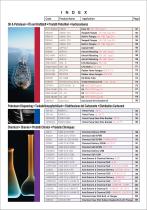
Product Name Oil & Petroleum • Öl und Kraftstoff • Prodotti Petroliferi • Hydrocarbures DOH 459/460 LIMAN Swaged Flanges EN 1765 Type S10 Built-In Flanges EN 1765 Type S10 Swaged Flanges EN 1765 Type S15 Built-In Flanges EN 1765 Type S15 Aircraft Refueling EN 1361 Type B Aircraft Refueling EN 1361 Type C Aircraft Refueling EN 1361 Type E Rubber Hose Autogas ECE R 110 Rubber Hose Autogas ECE R 67 Galvanized Wire Braided Oil Petroleum Dispensing • Tankstellenzapfschläuch • Distribuzione del Carburante • Distribution Carburant OPL441 POMPA SWB+ Petrol Pump UL -54 C Petrol Pump Steel Wire Braided...
Open the catalog to page 11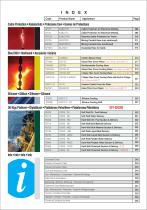
Product Name Cable Protection • Kabelschutz • Protezione Cavi • Gaines de Protections CP137 Cable Protection for Electrical Welding Cable Protection for Electrical Welding Electrical Cable Protection for Trains Mining Conduit Hose (non reinforced) Mining Conduit Hose (reinforced) Insulating Hose for Cable Carbon Blower Hose Steel Mill • Stahlwerk • Acciaieria • Aciérie CBH701 Glass Fibre Cover Water Out. Temp. up to 600 C Nonflammable-Cooling Hose Glass Fibre Cover Cooling Water Out. Temp. up to 600 OC O 2 Glass Fibre Cover Cooling Water Out. Temp. up to 600 C OSTRO FLANGED 2 Glass Fibre Cover...
Open the catalog to page 12
Symbols/Symbols/Simboli/Symboles INNER DIAMETER INNENDURCHMESSER DIAMETRO INTERNO DIAMETRE INTERIEUR CUFFED END MUFFEN MANICOTTI MANCHETTE OUTER DIAMETER AUSSENDURCHMESSER DIAMETRO ESTERNO DIAMETRE EXTERIEUR VACUUM VAKUUM ASPIRAZIONE DEPRESSION WORKING PRESSURE BETRIEBSDRUCK PRESSIONE D’ESERCIZIO PRESSION DE SERVICE BENDING RADIUS BIEGERADIUS RAGGIO CURVATURA RAYON DE COURBURE PRESSION D’ECLATEMENT MASSE LINEAIRE Tolerances/Toleranzen Tolleranze/Tolérances OTHER COLOURS AND DIAMETERS AVAILABLE UPON REQUEST. AUF ANFRAGE KÖNNEN VERSCHIEDENE FARBEN UND MASSE PRODUZIERT WERDEN. DIVERSI COLORI E DIMENSIONI...
Open the catalog to page 13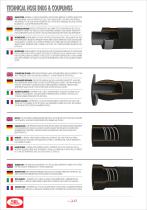
TECHNICAL HOSE ENDS & COUPLINGS SWAGED FITTINGS GENERALLY, USED ON INDUSTRIAL APPLICATIONS, ESPECIALLY PETROLEUM SUCTION AND DISCHARGE, AS AN ALTERNATIVE TO BUILT-IN FLANGED HOSES. THE NIPPLE AND FERRULE ARE SWAGED TO THE HOSE AS AN INTEGRATED UNIT. IN THIS WAY, PROBLEMS, SUCH AS LEAKAGE BLOWING ETC. CAN BE PREVENTED EFFECTIVELY. EINGEPRESSTE KUPPLUNGEN DIESES SYSTEM BESTEHT AUS EINER STÜTZE UND EINER HÜLSE, DIE ALS INTEGRIERTE EINHEIT AUF DEN SCHLAUCH AUFGEPRESST WERDEN. DIESE EINHEIT VERSCHAFFT EINE AUßERORDENTLICHE HALTKRAFT, DIE DAS HERAUSDRÜCKEN DER KUPPLUNG VERHINDERT. RACCORDI PRESSATI...
Open the catalog to page 14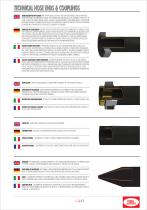
TECHNICAL HOSE ENDS & COUPLINGS RUBBER BEADED ENDS WITH FLANGES THE REINFORCING TEXTILE AND AN ADDITIONAL CIRCULAR METAL REINFORCEMENT IS EMBEDDED INSIDE THE RUBBER MOLDED BEAD AS AN INTEGRAL PART OF THE HOSE. A REATTACHABLE SWIVEL METAL FLANGE IS PLACED BEHIND THE RUBBER BEAD. THIS SYSTEM PROVIDES AN EASY CONNECTION WITHOUT ANY ADDITIONAL GASKETS AND NO CONTACT BETWEEN FLANGES AND TRANSPORTED PRODUCTS (RUBBER TO RUBBER). ENDWULSTE MIT FLANSCHRINGEN UM DEN SCHLAUCH MIT DER ENDWULSTE VERBINDEN ZU KÖNNEN, MUSS DIE FLANSCHE JUSTIERT WERDEN, JEDOCH OHNE DEN SCHLAUCH VERDREHEN ZU MÜSSEN. DIES LIEGT...
Open the catalog to page 15All TURALI HOLDING catalogs and technical brochures
 HYDRAULIC HOSE
27 Pages
 GENERALBROCHURE
28 Pages
 Brass fittings
28 Pages
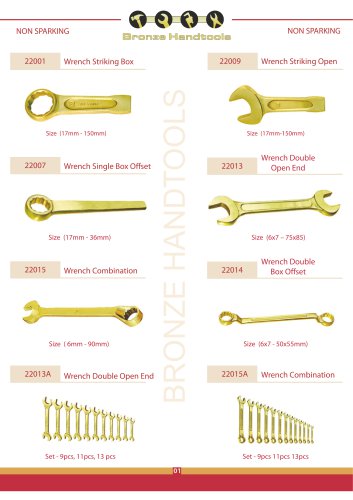 Bronze handtools
16 Pages
 Hydraulic Hose Catalog
27 Pages
 Steel Pipe and Metal Product
52 Pages
 Hydraulic Flange Split
28 Pages
 Hydraulic Fittings Catalog
140 Pages

