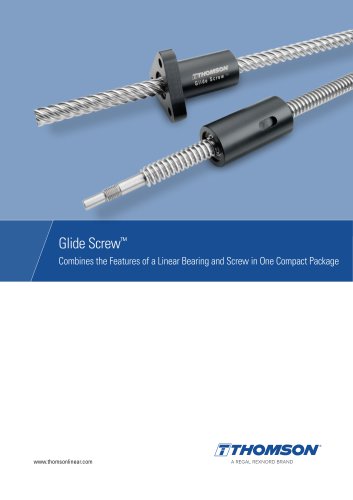
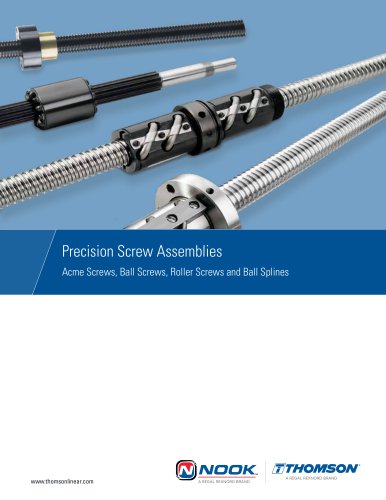
Overview: The document provides a comprehensive guide on precision screw assemblies, focusing on Acme Screws, Ball Screws, Roller Screws, and Ball Splines. It highlights the advantages of choosing Nook/Thomson for linear motion solutions, emphasizing their extensive product offerings, customization capabilities, and global application experience.
Quality Assurance: Nook/Thomson ensures high-quality products through rigorous design and testing processes. They employ advanced quality tools such as Design for Six Sigma, APQP, and FEA. The company is ISO-9001-2008 certified and complies with aerospace and medical device quality requirements.
Acme Screws: Nook/Thomson manufactures precision acme screws using thread rolling, milling, and grinding processes. These screws are available in various materials and sizes, offering options for different applications. The document details the specifications for rolled, milled, and ground acme screws, including material types, thread classes, and lead accuracy.
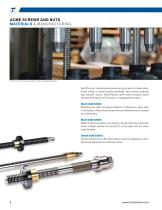
Materials and Manufacturing: The document outlines the materials used for acme screws and nuts, including alloy and stainless steel for screws, and bronze and plastic for nuts. It provides specifications for tensile strength, hardness, and friction coefficients.
Thread Forms: The document explains different acme thread forms, including General Purpose, Centralizing, and Stub Acme threads. It discusses the advantages of centralizing threads in preventing wedging under side loads.
Testing and Validation: Nook/Thomson employs various testing systems to ensure product reliability and performance. These include efficiency and torque measurement, functional testing, and overload/proof testing. The company also offers custom-engineered test instrumentation.
Conclusion: Nook/Thomson provides a robust solution for precision screw assemblies, backed by extensive experience, rigorous quality assurance, and a wide range of product offerings. Their commitment to quality and innovation makes them a trusted partner in the industry.
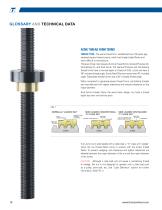
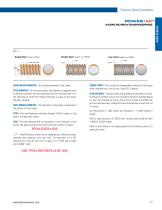
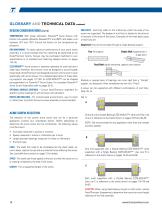
Specifications: The document provides detailed specifications for Acme screws, including definitions of pitch, lead, and screw starts. The pitch is the axial distance between threads, and the lead is the axial distance the
nut advances in one revolution of the screw. The lead is calculated as the pitch multiplied by the number of starts.
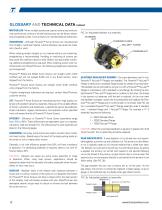
Procedures: Instructions are given for adjusting backlash using PowerAc™ No-Lash™ Flanges, which involve rotating slotted flanges to minimize lash. The document also describes the use of wear-indicator nuts to monitor wear and the importance of maintaining proper lubrication for optimal screw performance.
Standards and Tolerances: The document outlines lead accuracy, straightness tolerances, and efficiency ranges for PowerAc™ Acme Screws. Lead accuracy affects the actual travel distance, while straightness tolerances ensure the screw's alignment. Efficiency varies based on nut material and lubrication.
Recommendations: Recommendations include using matched lead screws for synchronized movement, selecting appropriate end fixity for screw support, and considering environmental factors like temperature and contamination. The document advises consulting with Nook/Thomson for specific requirements like surface coatings and matched lead sets.
Load Definitions and Considerations: Various load types are defined, including static, dynamic, tension, compression, thrust, overturning, and side loads. The document emphasizes the importance of considering these loads in design and provides formulas for calculating driving torque and column strength.
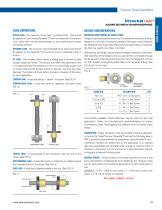
Design Considerations: The document discusses the importance of proper mounting and pinning of Acme flanges, lubrication intervals, and the selection of appropriate screw and nut combinations based on load, speed, length, and end fixity. It also highlights the need for straightening screws during machining and the use of protective boots or bellows in contaminated environments.
Figures and Charts: The document includes figures illustrating screw starts, adjustable backlash nut assemblies, and load types. Charts provide data on set screw sizes, column strength, and critical speed for different screw configurations.
Specifications and Requirements: The document outlines the specifications for selecting an Acme screw for an automatic part feeder application. Key requirements include a 5,000 lb load supported on linear bearings, 36 inches of travel completed in 10 seconds, and positioning accuracy of ±1/4 inch. The bearing support is undecided.
Critical Speed: Critical speed is the speed that excites the natural frequency of the screw, which can lead to resonance. It varies with diameter, unsupported length, end fixity, and rpm. The maximum speed should be limited to 80% of the calculated critical speed to avoid resonance.
Procedure for Screw Selection: The document provides a step-by-step procedure for selecting a screw based on critical speed and column strength, including calculations for axial force, travel rate, and unsupported length.
Components and Assembly: The assembly includes a plastic Acme nut, steel flange, and EZZE-MOUNT™ bearing blocks. The overall length of the assembly is calculated to be 45.98 inches.
Charts and Tables: The document includes charts for critical speed and column strength, as well as tables for quick reference on Acme inch screws and nuts, detailing screw sizes, nut selection, load ratings, and efficiency.
Overview: The document provides detailed technical specifications and guidelines for trapezoidal screw assemblies, including their construction, materials, and performance characteristics. It also covers ball screws and their applications.
Specifications: The document outlines various trapezoidal screw sizes, including Tr 20×4, Tr 26×6, Tr 40×7, Tr 55×12, and Tr 65×12. Each size has specific lead accuracy, standard lengths, and load capacities. The lead accuracy for trapezoidal screws is ±6.25 μm/25 mm, and they are available in standard lengths of 900 mm, 1800 mm, and 3600 mm.
Materials and Construction: Trapezoidal screws are made from stainless steel and are paired with bronze or plastic nuts. The document specifies the use of bronze nuts for higher temperature ranges (-9° to +177° C) and plastic nuts for lower ranges (-9° to +79° C). The screws feature a centralizing thread form to prevent wedging and binding.
Performance and Efficiency: The document provides efficiency percentages and torque requirements for raising loads with different screw and nut combinations. For example, a Tr 20×4 screw with a bronze nut has an efficiency of 35% and requires 1.818 N-m torque to raise 1 kN.
Engineering Considerations: The document includes guidelines on maximum static load, slenderness ratio, and critical speed for trapezoidal screws. It emphasizes the importance of considering these factors in design to ensure optimal performance and safety.
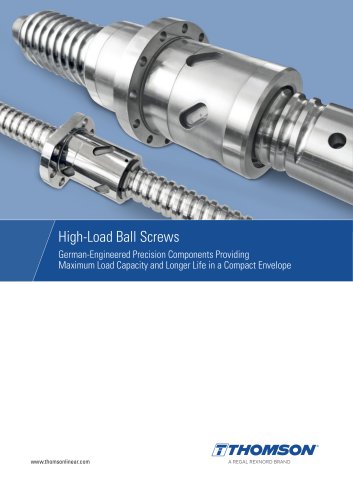
Ball Screws: Ball screws are highlighted as an efficient alternative to acme screws, offering improved load transfer and motion conversion. The document introduces various ball screw assemblies and their applications, such as in solar trackers.
Conclusion: The document serves as a comprehensive guide for engineers designing with trapezoidal and ball screw assemblies, providing essential data on specifications, materials, and performance metrics.
Ball Screw Engineering Overview: The document provides a detailed explanation of ball screw components, including the ball nut, bearing ball circuit, return guide, load carrying balls, and land diameter. These components are essential for the operation and efficiency of ball screws.
Key Terminology and Specifications: The document defines key terms such as ball circle diameter, root diameter, pitch, lead, and lead accuracy, which are crucial for understanding ball screw specifications.
Load Definitions and Considerations: Different types of loads are defined, including static, dynamic, tension, compression, overturning, and side loads. The document emphasizes the importance of understanding these loads for proper ball screw application.
Installation and Maintenance Procedures: Guidelines for transferring ball nuts from shipping arbors, installing SEL, SAR, and SAG ball nuts, and ensuring proper lubrication are provided. The document stresses the importance of lubrication for extending ball screw life.
Design and Mounting Considerations: Details on mounting and pinning ball nut flanges, proper ball nut orientation, and the use of preloading to enhance system stiffness are discussed. The document also covers the importance of straightness and the effects of temperature on ball screw performance.
Additional Features and Options: Optional features such as surface coatings, wiper kits, and protective boots for contaminated environments are mentioned. The document also highlights the material specifications for PowerTrac™ ball screws and nuts.
Technical Data and Calculations: Technical data includes driving and holding torque calculations, temperature operating ranges, and end machining recommendations. The document provides formulas and examples to assist in these calculations.
Conclusion: The document serves as a comprehensive guide for understanding, selecting, and maintaining ball screw assemblies, emphasizing the importance of precision, proper installation, and regular maintenance to ensure optimal performance.
Specifications and Calculations: The document provides formulas for calculating driving torque (Td) and holding torque (Th) for ball screws, considering load (P), screw lead (L), and ball bearing screw efficiency (e). It also includes material specifications for different series of stainless steel and alloy steel screws, detailing hardness, tensile strength, and finish.
Ball Screw Selection: Selection involves five factors: load, speed, length between bearings, life expectancy, and end fixity type. Load considerations include static, dynamic, and external forces. Speed is determined by the screw's rpm and lead. Life expectancy is linked to dynamic load ratings, and end fixity affects the screw's support and rigidity.
Critical Speed and Column Strength: Critical speed is the speed at which the screw's natural frequency is excited, influenced by diameter, length, end fixity, and rpm. Column strength is the screw's ability to withstand compression without buckling, calculated using the root diameter and distance between nut and load-bearing support.
Application Example: An example is provided for selecting a ball screw for a CNC milling machine, detailing steps to calculate axial force, travel rate, and unsupported length. It also discusses end fixity and selecting a screw based on critical speed and column strength.
Charts and Tables: The document includes charts for life expectancy and column strength, guiding the selection of ball screws based on load and travel requirements. It emphasizes the importance of lubrication for extending screw life.
Specifications: The document provides detailed specifications for ball screws, including maximum travel rates, screw lengths, and critical speeds. It includes a chart that outlines the maximum travel rate in inches per minute against the maximum length between bearings. The chart is divided into sections labeled A, B, C, and D, which correspond to different end fixity conditions.
Procedures: To determine the appropriate screw length, one must find the intersection point of the travel rate and screw length on the chart and select a screw that is above and to the right of that point. The document also provides guidelines for selecting screws within 60% of the theoretical critical speed.
Standards and Recommendations: The document recommends that the maximum speed should be limited by a DN value of 3,000, regardless of screw length. It also advises that the speed indicated by the curves is 80% of the theoretical critical speed.
Components and Services: Nook/Thomson offers ball screw and nut assemblies that are easy to install and require only a power source. These assemblies are available for quick delivery and can be configured and downloaded online. The document also details the E-1000SP Ball Screw Lubricant, which provides protection and long oil life for both rolled and precision ground thread ball screws.
Safety Features: The document describes the Integral Safety Ball Nut, which includes a secondary safety thread to prevent free-fall in case of ball loss. This feature is crucial in applications where failure could result in injury or death.
Assembly and Mounting Options: Various mounting options are detailed, including universal mounts, flange mounts, and motor mounts. The document provides dimensions and part numbers for different configurations.
Key Data from Tables: The tables provide part numbers, lead sizes, and dimensions for different ball screw assemblies. They also include information on the maximum speed and length for each configuration.
Conclusion: This document serves as a comprehensive guide for selecting and installing ball screw assemblies, providing detailed specifications, safety features, and mounting options to ensure optimal performance and safety.
Overview: The document provides detailed specifications and configurations for Twin-Lead Ball Screw Assemblies and Power-Trac Ball Screw Assemblies. It includes information on sizes, materials, load ratings, and customization options for ball screws and nuts.
Specifications: The document lists various screw sizes with their corresponding diameters, leads, root diameters, and maximum lengths. It specifies the materials used, such as 4150 and stainless steel, and provides load ratings for dynamic and static conditions.
Procedures: Instructions are given for ordering custom lengths and machined ends. The document advises consulting a sales engineer for availability and using the Twin-Lead Reference Number System for part number completion.
Standards and Norms: The screws are manufactured following ISO certified procedures, ensuring high quality and precision. The document notes that not all precisions and materials are available for all sizes.
Recommendations: For applications requiring specific configurations, the document suggests contacting Nook/Thomson for custom machining. It also highlights the benefits of using SRT screws for higher speeds and longer life compared to acme type lead screws.
Key Data from Tables: The tables provide detailed measurements and load ratings for various screw and nut configurations. They include information on ball circle diameters, lead sizes, and torque requirements for raising loads.
Critical Information: The document emphasizes the importance of selecting the correct nut direction and end configurations for optimal performance. It also outlines the use of different bearing supports and mounting options.
Overview: This document provides detailed specifications and dimensions for various ball screws and nuts, focusing on the Power•Trac series. It includes information on different models, their load capacities, dimensions, and accessories.
Specifications: The document lists ball screws with varying ball circle diameters and leads, indicating the precision and application suitability of each model. Load capacities are provided for each model, highlighting the strength and durability of the screws.
Procedures and Recommendations: The document specifies standard screw lengths available, with custom cut lengths up to 24 feet, emphasizing the flexibility in application. Some models feature an integral safety thread, enhancing safety and reliability in operation.
Accessories and Additional Features: Various flange and wiper configurations are detailed, which are important for maintaining cleanliness and reducing wear.
Conclusion: The document serves as a comprehensive guide for selecting and understanding the specifications of Power•Trac ball screws and nuts, providing essential information for engineers and technicians in the field of precision screw assemblies.
Overview: The document provides detailed specifications and options for precision rolled ball screws and nuts, specifically focusing on the XPR series by Nook/Thomson. It includes information on assembly, preload conditions, and various configurations available for different applications.
Specifications: The document lists various ball screw diameters and leads, along with their corresponding dynamic and static load ratings, root diameters, and torque requirements. It highlights the differences between PRN and SSN style ball nuts, noting the preload conditions and the potential need for SGT ground ball screws for full preload requirements.
Standard Lengths and Customization: Standard screw lengths are provided, with options for custom cut lengths up to 12 feet. The document emphasizes the availability of custom machining to meet specific design requirements if standard assemblies do not fit the application.
Ball Nut Dimensions and Accessories: Detailed dimensions for ball nuts, including helix, preload, dynamic and static load capacities, spring rates, and nominal ball diameters, are provided. The document also includes information on nut weights, torque to raise 1 lb, and flange wiper configurations.
SGT Ball Nuts: The document describes SGT standard ground thread screws, which are available in various diameters and lengths. These screws are made from high carbon alloy steel and are designed for applications requiring precise positioning and repeatability. They come with internally preloaded nuts and can be fully machined and assembled for convenience.
Applications: Precision ball screws are used in various tooling applications, including CNC welding machines and laser marking systems, due to their smooth operation and precise control.
Overview: This document provides detailed specifications and configurations for precision ground ball screws and nuts, primarily used in aerospace applications. It includes technical data on various models, their load ratings, dimensions, and other critical parameters.
Specifications: The document lists multiple ball screw models with specific details such as diameter, lead, dynamic and static load ratings, root diameter, and torque required to raise 1 lb. These specifications are crucial for selecting the appropriate ball screw for specific applications.
Ball Nut Configurations: The configurations are tailored to meet application requirements, with options for preloaded nuts and internal return nuts. The document provides a quick reference guide for different nut configurations, including their dynamic and static load capacities.
Standard Screw Lengths: Standard lengths are provided, with custom cut lengths available up to specified maximums. This flexibility allows for adaptation to various installation requirements.
Ball Nut Dimensions: Detailed dimensions for ball nuts are provided, including helix, preload, dynamic and static load capacities, spring rate, number of balls per circuit, nominal ball diameter, nut weight, and torque to raise 1 lb. These dimensions are essential for ensuring compatibility with specific mechanical systems.
Accessories and Flanges: The document includes information on ball nut accessories and flange dimensions, which are integral to the installation and operation of the ball screws. Flanges are described with specific measurements and configurations to ensure proper fit and function.
Key Data from Tables: The tables provide a comprehensive overview of the technical specifications for each model, including load ratings, dimensions, and weight. This data is critical for engineers and designers to make informed decisions about the appropriate components for their systems.
Precision Screw Assemblies Overview: Precision ground ball screws and nuts are critical components in mechanical systems, offering high efficiency and load capacity. The document provides detailed specifications and applications for both ball screws and planetary roller screws.
Ball Nut Specifications: The document lists various ball nut models with specifications such as helix preload, dynamic and static load capacities, spring rate, and torque requirements. Key parameters include ball diameter, nut weight, and screw weight. Accessories like flanges and wipers are also mentioned.
Planetary Roller Screws: Planetary roller screws (NRS) are highlighted for their ability to convert rotary motion into axial force. They are preferred in demanding applications due to their high efficiency and load capacity. Applications include aerospace, machine tools, and high-force
actuators.
Design and Application: NRS screws are made from high-strength materials, with options for preloaded and non-preloaded configurations. The document discusses the importance of material selection and preload in achieving desired performance.
Calculation and Selection: The document provides formulas for calculating dynamic and static load ratings, theoretical life, and equivalent load. It emphasizes the importance of safety factors and preload in ensuring system reliability.
Rigidity and Load Capacity: Rigidity is a function of several parameters, including nut and screw shaft rigidity. The document provides formulas for calculating total system rigidity and equivalent load.
Critical Speed and Efficiency: Critical speed calculations are essential for determining the maximum rotational velocity of roller screws. Efficiency and driving torque are also discussed, with formulas provided for calculating torque requirements.
Lubrication and Maintenance: Proper lubrication is crucial for the longevity of roller screws. The document outlines the use of grease and oil, with recommendations for maintenance intervals based on application demands.
Accuracy and Installation: NRS screws are manufactured to ISO quality standards, with accuracy classes defined by allowable error. Proper handling and installation are emphasized to prevent radial loads and ensure system longevity.
Reference Number System: The document concludes with a reference number system for identifying specific roller screw configurations based on diameter, lead, and other parameters.
Overview of EZZE-MOUNT™ Bearing Mounts: EZZE-MOUNT™ bearing blocks are precision-engineered components designed for use with ball screws and acme screws. They are available in single and double bearing configurations, with options for base mount and flange mount versions.
Specifications and Definitions: The document provides definitions for terms such as standard ends, land diameter, root diameter, journal, straightness, annealing, end fixity, locknut threads, undercuts and radii, and concentricity. Approval drawings for custom ends or special dimensions are also discussed.
Machined Ends and Bearing Supports: Various types of machined ends are available, including those with and without keyways, and for single or double bearing supports. Standard ends are designed for quick delivery and compatibility with common application requirements.
Tables and Data: The document includes detailed tables listing nominal diameters, lead, end codes, and types of mounts available for different screw sizes. These tables provide a quick reference for selecting the appropriate bearing support based on application needs.
Conclusion: EZZE-MOUNT™ bearing mounts offer versatile and precise solutions for supporting screws in various applications. The document provides comprehensive specifications, definitions, and options for customization to meet specific requirements.
Overview: The document provides detailed technical specifications and guidelines for EZZE-MOUNT™ and PowerTorq™ products, focusing on flange mount bearing supports, ball splines, and precision screw assemblies. It includes tables with part numbers, dimensions, and other critical parameters for selecting and using these components in various applications.
Specifications: The document lists various EZZE-MOUNT™ and EZF part numbers with corresponding dimensions and specifications such as Nema frame size, bolt circle diameter, and keyway details. These specifications are crucial for ensuring compatibility and proper installation in mechanical systems.
Procedures: Instructions are provided for transferring outer races from shipping arbors and for proper lubrication practices. The document emphasizes the importance of maintaining lubrication to achieve the predicted service life of ball splines.
Standards and Recommendations: The document outlines the critical speed calculations for ball splines, recommending that maximum speed be limited to 80% of the calculated value to avoid resonance. It also discusses the importance of considering bearing and locknut capacities when selecting bearing supports for high axial loads.
Key Data from Tables: The tables provide detailed measurements for various EZZE-MOUNT™ and EZF models, including dimensions like AA, BB, T, U, S, Y, W, AK, AJ, and TAP. These measurements are essential for ensuring the correct fit and function of the components in specific applications.
Technical Terms: Definitions for terms such as active circuits, return guides, ball circle diameter, land diameter, root diameter, and critical speed are provided to aid in understanding the technical aspects of ball spline assemblies.
Critical Parameters: The document highlights the importance of proper lubrication, critical speed limitations, and the selection of appropriate inner and outer races based on torque and life expectancy requirements.
Conclusion: The document serves as a comprehensive guide for engineers and technicians involved in the selection and installation of EZZE-MOUNT™ and PowerTorq™ components, providing essential specifications, procedures, and recommendations to ensure optimal performance and longevity.
Overview: The document provides technical specifications and details for Thomson's ball splines and precision screw assemblies. It includes information on product dimensions, performance metrics, and contact details for various global offices.
Specifications: The document lists various models of ball splines, such as HPR6900, HPR8943, and HPR8944, detailing their dynamic and static torque capacities, nominal sizes, ball diameters, and weights. It also specifies the maximum custom inner race lengths and the number of balls per outer race.
Performance Metrics: The performance of each model is categorized by dynamic and static torque values, with high-performance models like HPR8946 and HPR8947 offering higher torque capacities.
Standard Inner Race Lengths: The document outlines standard inner race lengths available for different models, with options for customization upon contacting customer service.
Contact Information: Contact details for Thomson offices across the USA, Europe, Asia, and South America are provided, including phone numbers, fax numbers, and email addresses for customer support and inquiries.
Recommendations: Users are advised to contact customer service for longer lengths and to determine the suitability of products for specific applications.








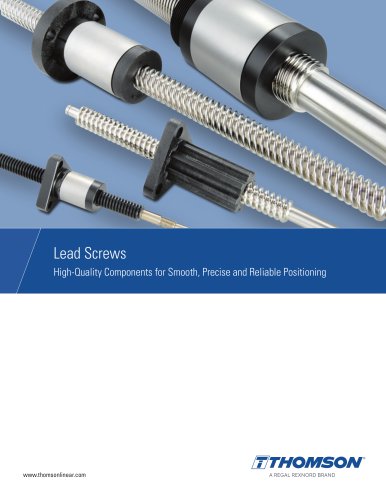 Lead Screws
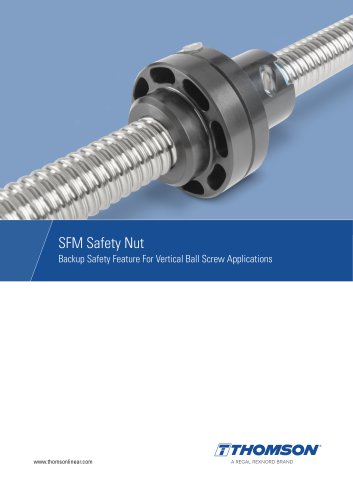 SFM Safety Nut
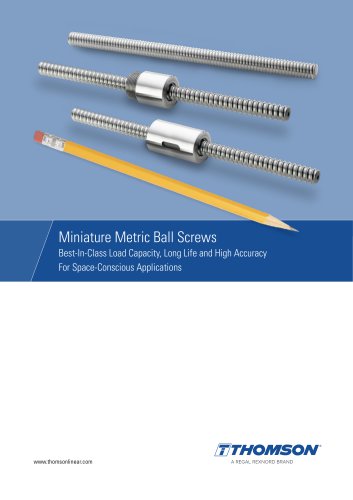 Miniature Metric Ball Screws
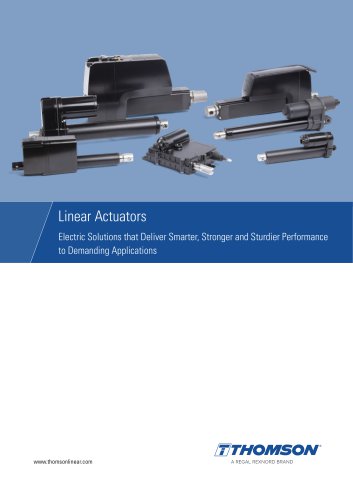 Linear Actuators
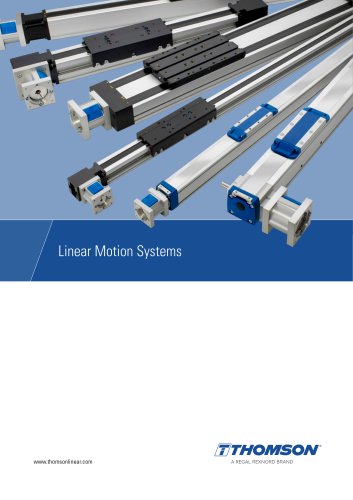 Linear Motion Systems
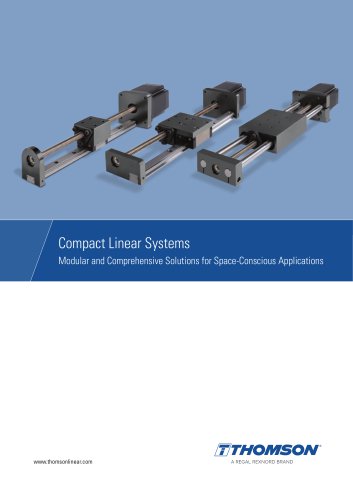 Compact Linear Systems
 Miniature Lead Screws
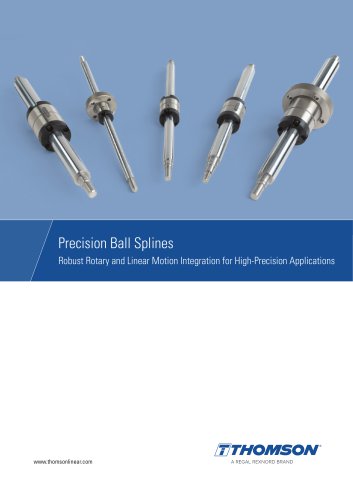 Precision Ball Splines
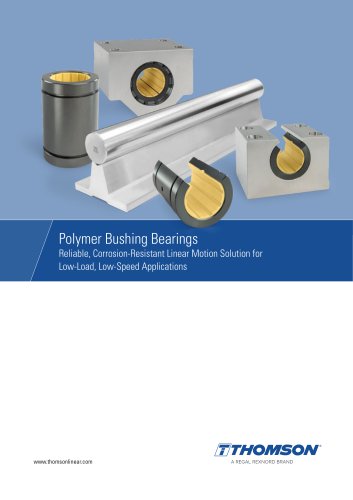 Polymer Bushing Bearings
 LC Series Lifting Columns
 Worm Gear Screw Jacks MULI/JUMBO
 Electrak® Throttle Actuator
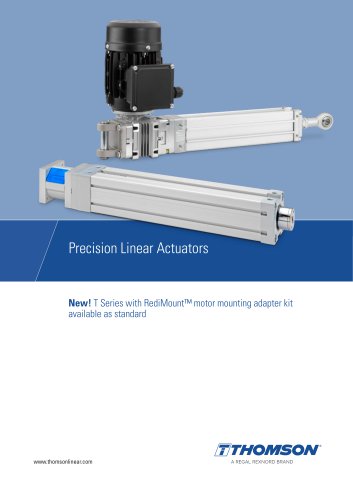 Precision Linear Actuators
 Medical Motion Optimized