
- Catalogs
- Terasaki (Europe) Circuit Breaker
- Power Factor Correction_2013

Power Factor Correction_2013

Power Factor Correction_2013
The document focuses on the importance of proper design in electrical installations to minimize waste and optimize energy costs. Power-factor correction is emphasized as a crucial method for achieving energy savings by reducing energy losses, voltage drops, and installation costs.
Power factor is defined as the ratio of active power (P) to apparent power (S). The document discusses the necessity of reactive power (Q) in electrical equipment and the importance of considering apparent power in installation design.
Low power factor loads require more apparent power, leading to increased voltage drops and losses. Energy providers impose penalties for excessive reactive power consumption. Power-factor correction capacitors are used to compensate for inductive currents, thereby improving the power factor.
The document outlines methods of power-factor correction:
- Individual Power Factor Correction: Suitable for constant loads like transformers and large motors, using capacitors in parallel.
- Centralized Power Factor Correction: Ideal for installations with varying loads, using automatic regulators to adjust capacitor banks.
Guidelines are provided for calculating the reactive power needed for centralized power-factor correction, using initial and desired power factor values. A table provides coefficients for calculating reactive power based on active power and power factors.
1. Power Factor Correction Examples
Examples include calculations for capacitive power needed to correct power factors for specific installations.
2. Power Factor Calculation for Three-Phase Asynchronous Motors
Recommendations for power-factor correction capacitors connected to motors.
3. Power Factor Calculation for Transformers
Use of capacitors to compensate for magnetizing current in transformers.
4. Effects of Harmonics
Harmonics can cause waveform distortions, leading to increased losses and potential resonance issues.
5. Harmonic Analysis
Fourier analysis is used to decompose non-sinusoidal waveforms into sinusoidal components.
Details on power-factor correction capacitors by Enerlux, including construction technology, service conditions, and handling of harmonics. Capacitors are designed to improve performance and reliability, with features like self-healing and overpressure safety devices.
Capacitors are designed to operate within specific voltage levels, compliant with standards. Overvoltages should not exceed certain limits during the capacitor's lifespan.
Details on the construction and operational parameters of capacitors, including temperature considerations and safety requirements.
Products meet safety and quality standards, with emphasis on environmental protection and non-toxic components.
Guidelines for storing and handling capacitors to avoid mechanical stress.
Recommendations for specific contactors and protection devices to limit over-currents.
Specifications for ambient temperature and installation conditions for power factor correction equipment.
Guidance on addressing voltage increases due to harmonics and selecting components with appropriate voltage ratings.
Details on construction technology, installation guidelines, and technical specifications for capacitors.
Ensure compatibility of regulator delay time with capacitor discharge time and proper installation to prevent failures.
Emphasizes careful selection and installation of capacitors to prevent failures due to harmonics and resonance.
Technical specifications and installation guidelines for various series of automatic power-factor correction equipment, designed for industrial applications.
Details on rated voltage, frequency, capacitance tolerance, and other technical parameters for capacitors and power-factor correction equipment.
Information on the construction of capacitors and power-factor correction equipment, including materials and design features.
Instructions for proper installation and maintenance of power-factor correction equipment.
Suitable for medium to large-scale industrial power-factor correction in networks with harmonic distortion.
Custom characteristics available upon request, including different tuning frequencies and harmonic distortion allowances.
Description of an automatic power factor regulator with microprocessor management, designed to handle distorted signals and manage capacitor steps efficiently.
Details on the regulator's operating parameters, functions, and compliance with standards.
Catalog excerpts
Innovators in Protection Technology
Open the catalog to page 1
l’aiuto del sole il controllo dell’energia help of the sun energy control l’energia necessaria per realizzare i nostri prodotti proviene dal nostro impianto fotovoltaico the energy needed to manufacture our products originates from our photovoltaic plant il controllo dell'energia energy control
Open the catalog to page 2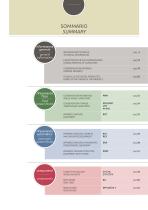
SOMMARIO SUMMARY informazioni generali CARATTERISTICHE DEI CONDENSATORI CHARACTERISTICS OF CAPACITORS GUIDA ALLA SCELTA DEL PRODOTTO GUIDE TO THE CHOISE OF THE PRODUCT rifasamento fisso INFORMAZIONI TECNICHE TECHNICAL INFORMATION CONSIDERAZIONI GENERALI GENERAL REMARKS general information automatic power-factor componenti components CONDENSATORI TRIFASE THREE-PHASE CAPACITORS APPARECCHIATURE A PARETE WALL-MOUNTED EQUIPMENT APPARECCHIATURE A PAVIMENTO FREESTANDING EQUIPMENT APPARECCHIATURE CON FILTRI EQUIPMENT WITH FILTERS rifasamento automatico APPARECCHIATURE EQUIPMENT fixed power-factor CONDENSATORI...
Open the catalog to page 3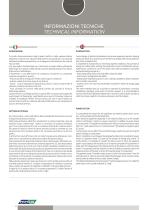
INFORMAZIONI TECNICHE TECHNICAL INFORMATION Il corretto dimensionamento degli impianti elettrici e delle apparecchiature utilizzatrici consente una riduzione degli sprechi ma soprattutto una razionale utilizzazione dell’energia elettrica, con conseguente ottimizzazione dei costi ad essa correlati. Una prerogativa fondamentale per minimizzare la spesa relativa all’acquisto dell’energia è la riduzione delle perdite a partire dalla generazione fino alla distribuzione ed utilizzazione. Il rifasamento è una delle azioni che consentono di ottenere un consistente risparmio energetico in quanto: - limita...
Open the catalog to page 4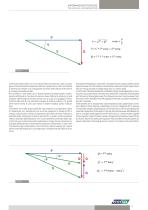
INFORMAZIONI TECNICHE TECHNICAL INFORMATION A parità di potenza attiva un carico a basso fattore di potenza causa una maggiore richiesta di potenza apparente alla rete rispetto ad un carico con fattore di potenza più elevato con conseguente aumento delle cadute di tensione e di conseguenza delle perdite. Per contenere i costi relativi ad un dimensionamento degli impianti di distribuzione effettuato in funzione di utenze a basso fattore di potenza, gli enti erogatori dell’energia prevedono penali con lo scopo di scoraggiare l’assorbimento dalla rete di una quantità eccessiva di potenza reattiva,...
Open the catalog to page 5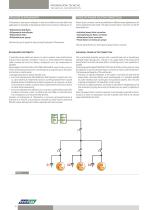
INFORMAZIONI TECNICHE TECHNICAL INFORMATION TYPES OF POWER FACTOR CORRECTION Il rifasamento può essere realizzato in diverse modalità a seconda delle varie applicazioni e necessità; le tipologie di rifasamento si possono distinguere in: • Rifasamento distribuito • Rifasamento centralizzato • Rifasamento misto • Rifasamento per gruppi Power factor correction can be accomplished in different ways depending on the various applications and needs. The types of power factor correction can be differentiated into: • Individual power factor correction • Centralized power factor correction • Mixed power...
Open the catalog to page 6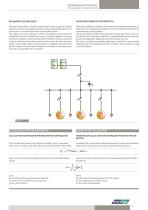
INFORMAZIONI TECNICHE TECHNICAL INFORMATION RIFASAMENTO CENTRALIZZATO CENTRALIZED POWER FACTOR CORRECTION Particolarmente adatto in impianti caratterizzati da varie utenze con tempi di utilizzo discontinui; viene solitamente attuato nelle vicinanze della cabina di trasformazione o in vicinanza del quadro generale dell’impianto. Tale sistema, che viene realizzato mediante l’installazione di più batterie di condensatori inserite o disinserite per mezzo di appositi regolatori automatici del fattore di potenza, risulta particolarmente flessibile in quanto consente di adattarsi continuamente ed autonomamente...
Open the catalog to page 7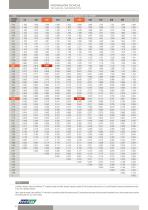
INFORMAZIONI TECNICHE TECHNICAL INFORMATION cosφ cosφ’ da raggiungere / cosφ’ to reach iniziale initial
Open the catalog to page 8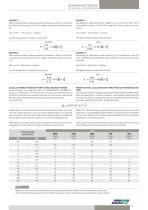
INFORMAZIONI TECNICHE TECHNICAL INFORMATION ESEMPIO 1: Determinazione della potenza capacitiva necessaria a rifasare a cosφ’ 0,92 un impianto che assorbe 132 kW, con cosφ in assenza di rifasamento pari a 0,6. EXAMPLE 1: Calculating the capacitative power needed for p.f. correction to cosφ’ 0.92 of an installation drawing 132 kW, with a cosφ of 0.6 with no power factor correction. La potenza apparente richiesta varierà quindi The apparent power required will then vary ESEMPIO 2: Determinazione della potenza capacitiva necessaria a rifasare a cosφ’ 0,95 un impianto che assorbe 630 kW, con cosφ...
Open the catalog to page 9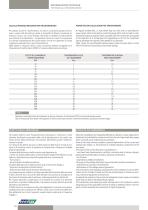
INFORMAZIONI TECNICHE TECHNICAL INFORMATION CALCOLO POTENZA RIFASANTE PERTRASFORMATORI Per quanta concerne i trasformatori, nei casi in cui gli stessi possano funzio- nare a vuoto (cicli discontinui), esiste la necessita di rifasare la potenza as- sorbita a vuoto o con carico limitato inserendo in parallelo al trasformatore una batteria di condensatori; i condensation hanno lo scopo di compensare la corrente magnetizzante del trasformatore che serve a generare il campo magnetico necessario per il suo funzionamento. Nella tabella 3 vengono indicati i valori di potenza reattiva consigliati per...
Open the catalog to page 10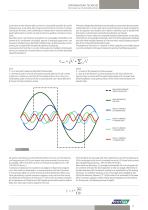
INFORMAZIONI TECNICHE TECHNICAL INFORMATION La tensione di rete distorta dalle correnti non sinusoidali assorbite dai carichi inquinanti può, a sua volta, dare origine ad armoniche di corrente in componenti di per sé lineari, come condensatori e resistori ed in macchine elettriche, quali trasformatori e motori nei quali si inducono perdite e vibrazioni meccaniche. Secondo Fourier, ogni fenomeno periodico non sinusoidale è ottenibile come somma di più componenti sinusoidali, ognuna di ampiezza opportuna e con frequenza multipla intera dell’onda fondamentale, caratterizzata da una frequenza pari...
Open the catalog to page 11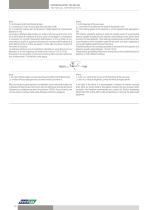
INFORMAZIONI TECNICHE TECHNICAL INFORMATION dove f1 è la frequenza dell’onda fondamentale SCC è la potenza di corto circuito della rete (espressa in VA) QC è la potenza reattiva del condensatore o della Batteria di condensatori (espressa in var) Le soluzioni utilizzate dalla Enerlux per evitare tali inconvenienti sono costituite dall’impiego di reattanze di blocco capaci di proteggere i condensatori e consentire un corretto rifasamento dell’impianto; il loro principio di funzionamento è quello di spostare la frequenza di risonanza dell’impianto al di sotto dell’armonica di ordine più basso in...
Open the catalog to page 12All Terasaki (Europe) Circuit Breaker catalogs and technical brochures
 Contactors
16 Pages
 DIN Modular Protection
2 Pages
 Moulded Case Circuit Breakers
203 Pages
 TemPower 2 ACB Catalogue
80 Pages
Archived catalogs
 POWER FACTOR CORRECTION_2019
2 Pages
- Circuit breaker
- Current circuit breaker
- Film capacitor
- Cylindrical capacitor
- Power contactor
- AC circuit breaker
- Self-healing capacitor
- Filter capacitor
- Molded case circuit breaker
- Industrial capacitor
- DIN rail circuit breaker
- Multipole contactor
- Switchboard
- Screw terminal capacitor
- Polypropylene film capacitor
- Modular circuit breaker
- 4-pole contactor