


BLDC Vs. PMDC

BLDC Vs. PMDC
- Brushless DC: Features a permanent magnet on the rotor and windings on the stator. Requires an electric controller.
- Brushed DC: Has windings on the rotor/armature and a permanent magnet on the stator. Does not require a controller.
- Torque: Brushless DC motors are suitable for high torque applications, while brushed DC motors are suitable for low torque applications.
- Speed: Brushless DC motors offer a higher speed range due to the absence of mechanical limitations from brushes/commutators. Brushed DC motors have a lower speed range due to these limitations.
- Life Expectancy: Brushless DC motors typically last 10,000 to 20,000 hours, whereas brushed DC motors last 2,000 to 5,000 hours depending on application and duty cycle.
- Efficiency: Brushless DC motors can achieve up to 90% efficiency, while brushed DC motors typically achieve 60-70% efficiency.
- Maintenance: Brushless DC motors require little to no maintenance, whereas brushed DC motors require periodic maintenance, including brush replacement.
- Heat Dissipation: Brushless DC motors have superior thermal characteristics, resulting in better heat dissipation compared to brushed DC motors.
- Noise: Brushless DC motors generate low electric noise, while brushed DC motors emit audible noise during rotation.
- Cost: Brushless DC motors have higher manufacturing costs compared to brushed DC motors.
- Brushless DC: More suitable for normal controlled environments.
- Brushed DC: Can operate in more extreme environments due to the lack of electronics.
- Brushless DC: Used in fuel controls, missile fin actuators, dental tools, respirators, R/C model airplanes, pumps, robotics, electric and hybrid vehicles, medical equipment, lawn mowers, factory automation, and gate operators.
- Brushed DC: Used in printers, toys, semiconductor equipment, packaging machines, automotive motors, wheelchairs, medical equipment, electric toothbrushes, vacuum cleaners, hair dryers, drill screwdrivers, and gate operators.
Catalog excerpts

CONSTRUCTION CONSTRUCTION FEATURES / PERFORMANCE FEATURES / PERFORMANCE Permanent magnet on rotor Permanent magnet on stator Electric controller is required Suitable for high torque applications Suitable for low torque applications Higher speed range due to no mechanical limitation imposed by brushes/commutator Typical life expectancy 10,000 to 20,000 hours Lower speed range due to mechanical limitations on the brushes BENEFITS / COMPARISON BENEFITS / COMPARISON Typical life expectancy is 2000 to 5000 hours depending on the application and duty cycle Typically 60-70% efficiency Commutation Method Electronic commutation requiring a driver/controller Uses mechanical commutator to reverse the polarity of the armature electromagnet Brushless design requires little to no maintenance Heat Dissipation Superior thermal characteristics results in better heat dissipation Periodic maintenance is required; can replace brushes for extended life if necessary Internal rotor construction results in limited heat dissipation Low electric noise generation Brushes emit audible nose during rotation Higher manufacturing cost Lower manufacturing cost Operation environment More suitable for normal controlled environments Fuel Controls, missile fin actuators, dental tools, respirators, R/C model airplanes, pumps, robotics, electric and hybrid vehicles, medical equipment, lawn mowers, factory automation, and gate operators Can operate in more extreme environments due to the lack of electronics Printers, toys, semiconductor equipment, packaging machines, automotive motors, wheelchairs, medical equipment, electric toothbrushes, vacuum cleaners, hair dryers, drill screwdrivers and gate operators
Open the catalog to page 1
All Telco catalogs and technical brochures
 IntelliGreen® 48
1 Page
 IntelliGreen® 100
1 Page
 comGreenAire® UB
1 Page
 FAN & BLOWERS
1 Page
 TELCO GEAR
6 Pages
 ECM Motors
1 Page
 DC Motor - PMDC
1 Page
 DC Motors - Coreless
2 Pages
 BLDC Motor - NEMA
1 Page
 BLDC Motor - Micro
1 Page
 AC Motor
1 Page
 Line Cord (Assembly)
2 Pages
 Modular Jack
3 Pages
 ECM Pump
1 Page
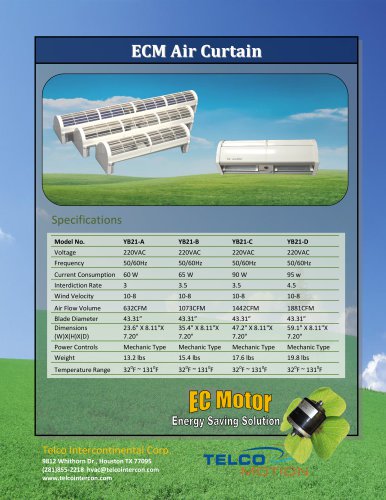 ECM Air Curtain
1 Page
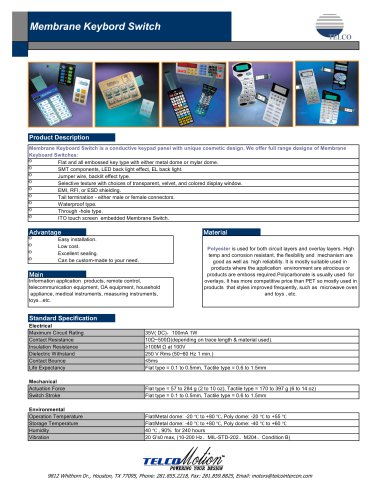 Membrane Switch
1 Page
 Touch Screen
9 Pages
 Gearbox
8 Pages
 DC Fan
2 Pages
 AC Fan
1 Page
 Non-Captive Shaft Actuator
2 Pages
 External Actuator
2 Pages
 Linear Actuator
7 Pages
 Amplifier
10 Pages
 Parallel Shaft Gearmotor
25 Pages
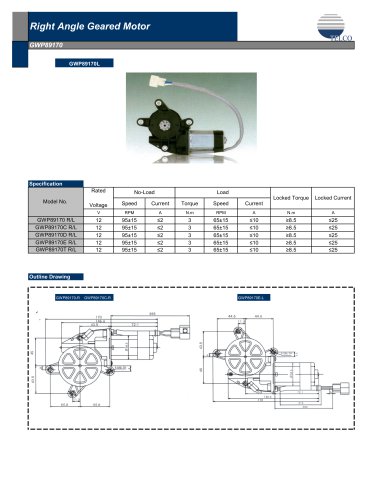 Right Angle Gearmotor
25 Pages
 NEMA Frame AC
26 Pages
 PM Stepper
50 Pages
 NEMA BLDC
5 Pages
 Outer Rotor Motor
7 Pages
 Brushless DC Motor
1 Page
 Axial Fan Motor
1 Page
 TelcoMotion
4 Pages
 Right Angle Gearmotor
25 Pages
 Industrial Grade PMDC
5 Pages
 PSC Motor
24 Pages


Archived catalogs
 Micro DC Gearmotor Catalog
11 Pages
 Coreless DC Motor Catalog
6 Pages
 Micro Brushless DC Motors
13 Pages


- Electromotor
- Compressor stage
- Air compressor
- Synchronous motor
- Stationary compressor
- Alternating current motor
- Multipole motor
- Industrial compressor
- Electric gearmotor
- Asynchronous motor
- EC motor
- Electromotor for industrial applications
- Three-phase motor
- 24 V motor
- Servo-motor
- Direct current gear-motor
- 4-pole motor
- Air blower
- Compact electromotor