
- Catalogs
- Techno Optis Co., Ltd.
- Next generation

Next generation

Next generation
Next-generation displays such as OLED, Mini-LED, and Micro-LED are being actively developed for superior performance compared to traditional LCDs. These technologies are particularly suitable for applications like head-up displays, micro projectors, and augmented reality.
1. Gradient Mura
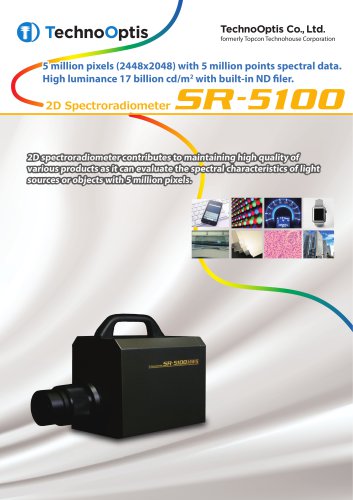
Gradient Mura refers to the variation in brightness across a display. It is crucial to evaluate gradation characteristics, as unevenness can affect color display quality. High precision tools like the 2D spectroradiometer SR-5100 are used to identify and address these irregularities.
2. Individual Differences of Subpixel
Subpixel variations can lead to differences in luminance and color output, impacting display quality. Spectroscopic measurement is necessary to accurately assess these differences, which are critical for OLED, Mini-LED, and Micro-LED displays.
3. Mura in Subpixel
Mura defects at the subpixel level can be caused by variations in film thickness and quality. High magnification microscopy combined with spectroradiometry can evaluate these irregularities, essential for maintaining display quality.
4. Color Mixture (Light Leaking from Bank Material)
Light leakage from bank materials can cause color mixing issues, where light from one subpixel affects neighboring ones. Spectroscopic analysis helps in evaluating and mitigating these effects.
5. Residual Image (Burn-in)
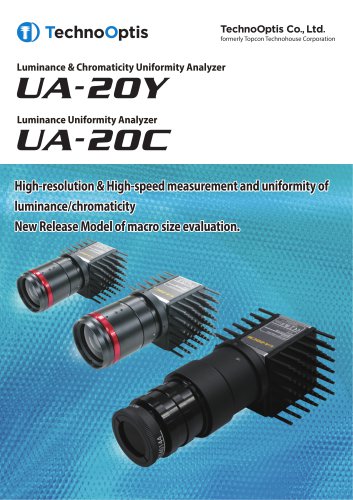
Burn-in occurs when a static image leaves a residual impression on the display. High-speed measurement tools like the UA-20 are used to evaluate and manage this issue efficiently.
6. High Precision and Speed Measurement in Production Line
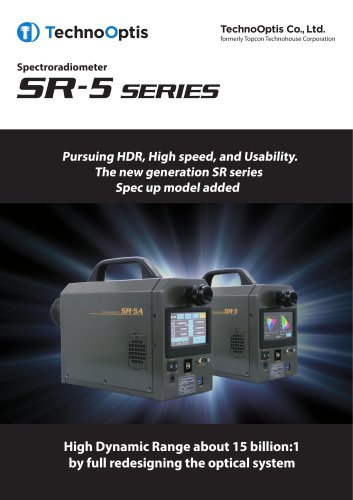
For production lines, high-speed and precise measurement of display gradations is essential. The SR-5 series spectroradiometer offers a high-speed mode that significantly reduces measurement time while maintaining precision.
7. Organic EL Display Standard
The evaluation methods for Organic EL Displays are standardized by JEITA, ensuring consistent quality and performance across the industry.
Catalog excerpts

Next-generation displays (OLED/Mini-LED/Micro-LED) Evaluation and analysis for quality defectsEvaluation and analysis example 1. Gradient Mura 2. Individual differences of subpixel 4. Color mixture (light leaking from bank material) 6. High precision and speed measurement in production line 7. Organic EL display standard
Open the catalog to page 1
Introduction The organic EL displays are growing as a next-generation displays, but also Micro LED display, Quantum dot display have been developed actively. Existing LED that wavelength is from 300 to 350 μm level have already spread to the market as digital signage displays. By miniaturizing LED chips to 100 - 200 μm level (Mini LED), under 100μm level or nm level, the displays with performance superior to LCD and OLED displays are also active developed by many research institutes and companies. These are also said most suitable devices for new application to project the image into the air...
Open the catalog to page 2
•Spectral comparison of OLED each subpixels Fig.8 OLED subpixels Red emitting •Spectral comparison of Micro-LED each subpixels Along with the miniaturization of subpixels, the demand for pixel level measurement is increasing. Looking at Fig.16, it turns out there is a difference in spectroscopy of the OLED pixel. This is caused by the difference in film thickness and film quality distribution, and film thickness and film quality are caused by evaporation or metal mask misalignment. In order to satisfy the requirement for evaluation of sub-pixel in-plane irregularity, it can be evaluated using...
Open the catalog to page 3
4. Color mixture (light leaking from bank OLED layer The general bank material of OLED is currently a transparent type for reducing outgas, and leaking light G R B and reflection due to light passing through a bank defect or a bank are occurring(Fig.22). For example, Bank material when only red (R) is displayed, light leaks to neighboring subpixel and green (G) and blue (B) also will emit TFT array light. Fig. 23 shows the luminance (pseudo color) with a general 2D luminance meter (XYZ filter method) Glass when only the emission of red (R), but it can only distinguish red (R) emission. Fig.22...
Open the catalog to page 4
When the OLED display has been lit for a given length of time, even if switching to the next screen, the previous image will remain in a slightly displayed state. After displaying gray on a screen, black and white image is displayed for 10 seconds, and when it is evaluated how long the residual image existed after returning to gray again on the screen, it took about 2 minutes to return to the original gray image(Fig.40, 41). In order to evaluate the fluctuation of the residual image by sampling inspection of quality control etc., it is necessary to have a measuring instrument that can be measured...
Open the catalog to page 5
TechnoOptishttps://www.techno-optis.com/en TechnoOptis Co., Ltd. formerly Topcon Technohouse Corporation 4F, Imas Itabashi BASE, 2-4-1, Sakashita, Itabashi-ku, Tokyo 174-8580 JAPAN Phone : +81-3-3558-2666 Fax : +81-3-3558-4661 E-mail : [email protected] URL : https://www.techno-optis/en techno optis Printed in Japan 2026 05 E6
Open the catalog to page 6All Techno Optis Co., Ltd. catalogs and technical brochures
 Optical measurement
6 Pages
 Automotive
8 Pages
 AR/VR
AR/VR8 Pages
 SR-5100
8 Pages
 UA-20
UA-206 Pages
 UA-10A
4 Pages
 UV Radiometer UVR-300
4 Pages
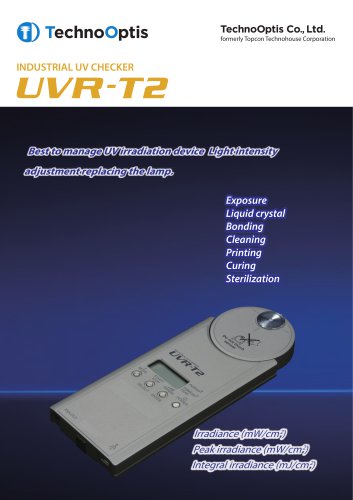 Industrial UV Checker UVR-T2
4 Pages
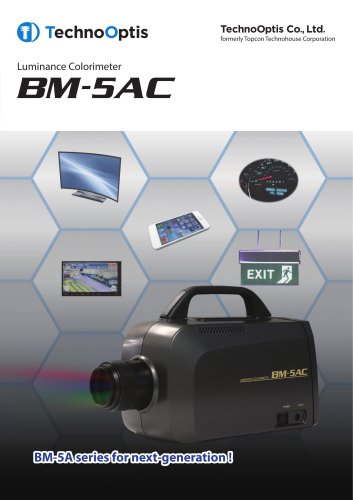 Luminance Colorimeter BM-5AC
4 Pages
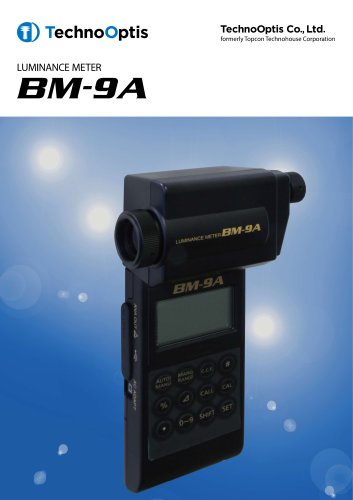 BM-9A
BM-9A4 Pages
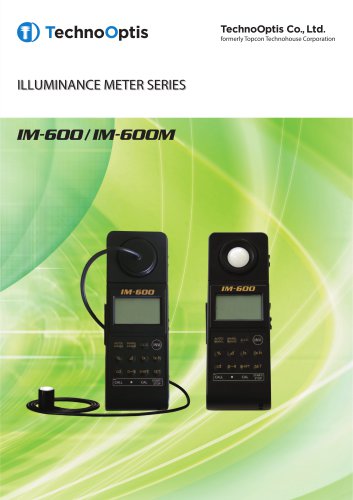 IM-600
4 Pages
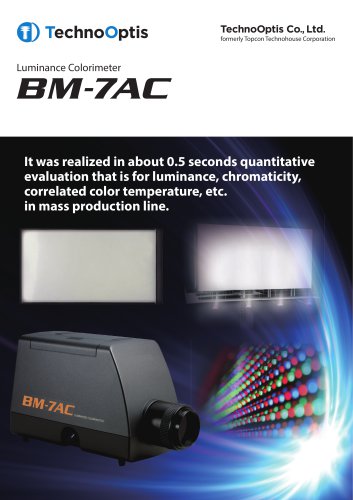 Luminance Colorimeter BM-7AC
4 Pages

Archived catalogs
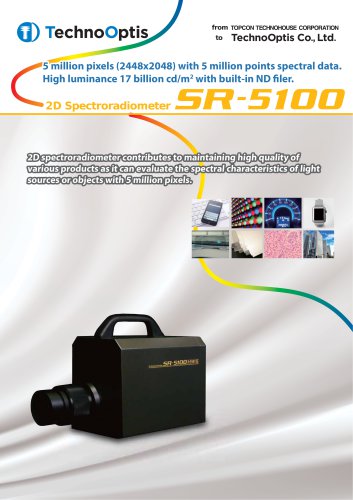 Spectroradiometer SR-5100
8 Pages
- Automation software solution
- Management software solution
- Process software
- Windows software
- Control software
- Measurement software
- Compact analyzer
- Quality control analyzer
- Inspection software
- Calibration software
- Printing software
- Colorimeter
- Photometer
- Imaging software
- Electric software
- Color software
- Inspection analyzer
- Color analysis colorimeter
- Measurement spectroradiometer