
- Catalogs
- TA Instruments
- VAPOR SORPTION ANALYSIS


VAPOR SORPTION ANALYSIS

VAPOR SORPTION ANALYSIS
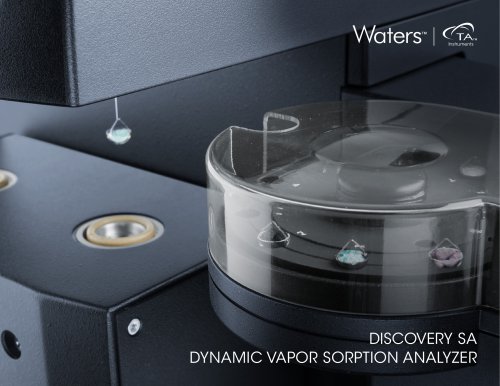
The Q5000 SA is a compact, user-friendly sorption analyzer designed for precise analysis of materials under controlled temperature and relative humidity (RH) conditions. It integrates a high-sensitivity thermobalance, an innovative humidity generation system, a multi-position autosampler, and advanced software.
Technology and Design
The Q5000 SA features a temperature-controlled thermobalance and a humidity control chamber with mass flow controllers for precise RH control from 0 to 98%. The system includes semispherical quartz, metal-coated quartz, and optional platinum pans for various analysis needs. The thermobalance ensures accurate weight-change detection, critical for gravimetric sorption analysis.
Autosampler
The autosampler allows automated analysis of up to 10 samples with quartz crucibles or 25 samples with optional trays. It automates all aspects of sample testing, enhancing productivity through Advantage™ software.
Sorption Analysis Techniques
The Q5000 SA performs isotherm and Isohume™ experiments, allowing for complex protocols with step changes in temperature and RH. The software supports kinetic analysis, isosteric heat of adsorption, and surface area calculation.
Applications
- Humidity Verification: Uses deliquescent salts to verify humidity levels, conforming to ASTM E2551.
- Morphological Stability: Analyzes changes in pharmaceutical materials under humidity, such as glass transition and crystallization.
- Hydrate Formation: Identifies hydrate formation through isotherm analysis.
- Packaging Film Analysis: Compares moisture adsorption/desorption rates of packaging materials.
- Amorphous Structure Evaluation: Quantifies amorphous content in drug formulations.
- Small Sample Analysis: Suitable for small pharmaceutical samples, providing accurate results with minimal material.
Performance Specifications
The Q5000 SA offers a dynamic range of 100 mg, weighing accuracy of ±0.1%, and sensitivity of <0.1 µg. It operates within a temperature range of 5 to 85°C with RH control accuracy of ±1% RH. The autosampler accommodates various sample pans, enhancing versatility.
Catalog excerpts

VAPOR SORPTION ANALYSIS
Open the catalog to page 1
Sensitive Measurements, Precise RH Control The patented Q5000 SA delivers the performance and reliability required in a leading sorption analyzer in a compact, user-friendly design. The Q5000 SA is designed for manual or automated sorption analysis of materials under controlled conditions of temperature and relative humidity (RH). Its design integrates our high-sensitivity, temperature-controlled thermobalance with an innovative humidity generation system, multi-position autosampler, and powerful Advantage™ software with technique-specific programs and Platinum™ features
Open the catalog to page 2
The Q5000 SA is a compact, benchtop instrument that delivers the performance and reliability required in a leading sorption analyzer designed for the study of materials under controlled conditions of temperature and relative humidity. Its modern, user-friendly design features a high sensitivity, temperature-controlled thermobalance, an innovative humidity generation system, a 10-position autosampler, and our latest Advantage™ software with Platinum™ features. Humidity Control Chamber The patented design features a pair of mass flow Sample Chamber controllers that accurately meter and proportion...
Open the catalog to page 3
GRAVIMETRIC VAPOR SORPTION ANALYSIS GENERAL PRACTICE Vapor Sorption analysis is an established technique for determining the effect on materials of exposure to controlled conditions of temperature and humidity. Isotherm and Isohume™ experiments are the most commonly performed analyses. All TA Instruments sorption analyzers perform a range of essential sorption experiments such as time-courses, isotherms (constant temperature, variable RH), and isohumidity (Isohume™) experiments (constant RH, variable temperature). Complex protocols with step changes in temperature and RH can be defined and saved...
Open the catalog to page 4
The Q5000 SA Thermal Advantage Platinum software has a built-in humidity verification feature and deliquescence method that allows the user to determine the humidity level in the Applications Humidity Verification purge gas at a fixed temperature. The method conforms to ASTM E2551. reaches a critical level or deliquescence point. At a given temperature and that specific %RH, the hygroscopic material suddenly starts absorbing any available moisture resulting in rapid increase of weight until the salt dissolves. Humidity Verification: 75.60%. Expected Sodium Chloride Deliquescence Point 75.30% ±...
Open the catalog to page 5
Weight Change (%) Amorphous Anhydrous The figure to the right contains the experimental results demonstrating the formation of a hydrate. The hydrate formation is characterized by a plateau in the desorption branch of the isotherm. In this example the hydrate is formed at around 45% RH. The sample adsorbs about 4.5% by weight water and does not lose the water of hydration until the RH is lowered below 25%. This hydrate would be considered as a labile or unstable hydrate. Pharmaceutical scientists are often interested in determining the amount of amorphous material in a drug formulation. As the...
Open the catalog to page 6
Temperature Controlled Thermobalance Dynamic Range Weighing Accuracy Weighing Precision Sensitivity Baseline Drift1 Signal Resolution Temperature Control Temperature Range Isothermal Stability Relative Humidity Control Range Accuracy Autosampler - 10 samples** Platinum™ Software Sample Pans Quartz or Metal-Coated Quartz 180 pL Platinum 100 pL Aluminum Sealed Pan 20 pL Over 24 hours at 25°C and 20 % RH with empty metal coated quartz pans Optional tray accommodates 25 samples for use with platinum and sealed aluminum pans
Open the catalog to page 7
© 2019 TA Instruments. All rights reserved.
Open the catalog to page 8All TA Instruments catalogs and technical brochures
 DIL_805
9 Pages
 TA-Instruments-DIL-Brochure-EN
25 Pages
 TA-Instruments-HR-Brochure-EN
50 Pages
 TA-Instruments-HP-Brochure-EN
34 Pages
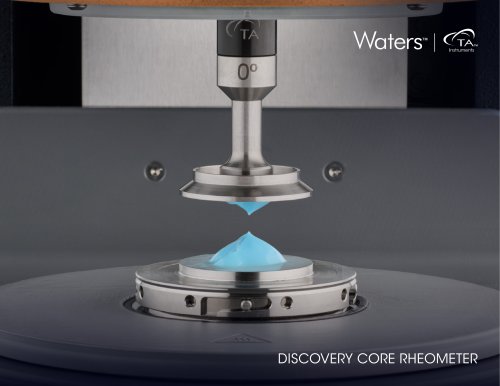 TA-Instruments-DCR-Brochure-EN
26 Pages
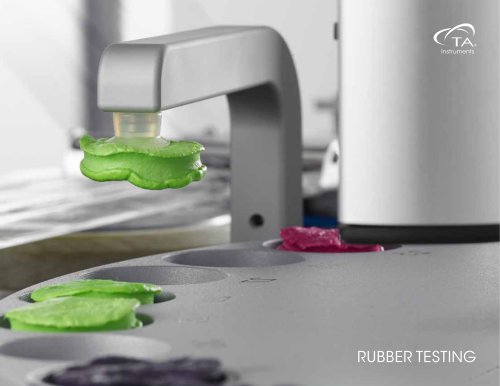 ta_rubber_testing
19 Pages
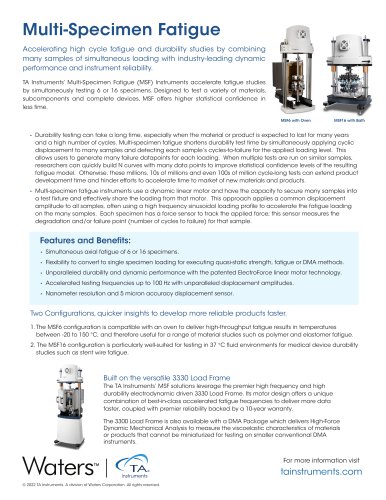 MSF-Cutsheet
2 Pages
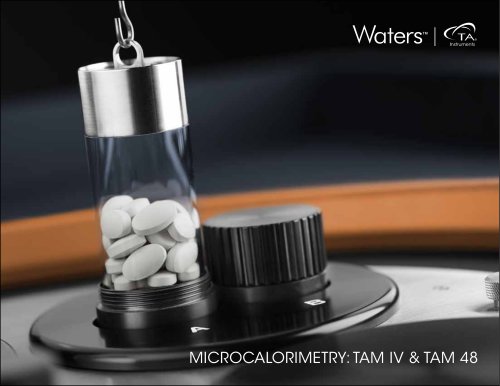 BROCH-TAM-lV
49 Pages
 BROCH-HT-VIS-413
11 Pages
 BROCH-EF-DMA3200
13 Pages
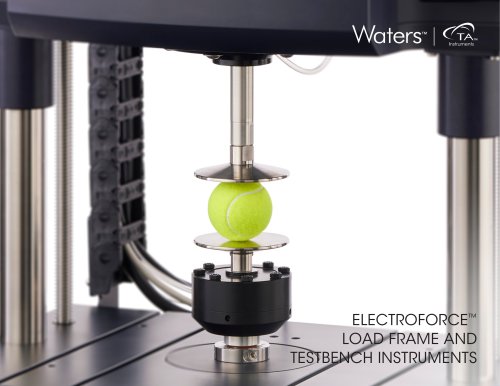
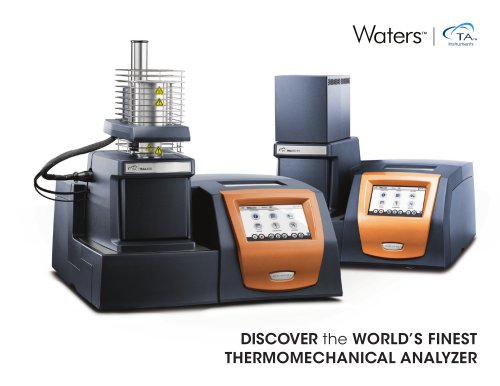
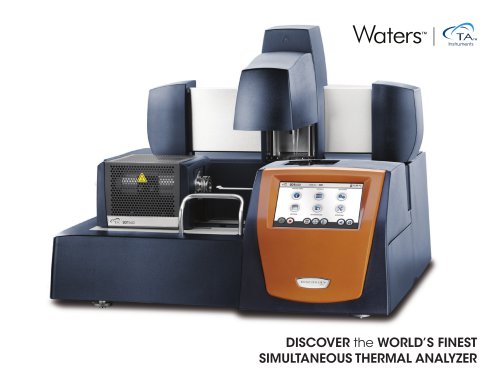
Archived catalogs
 Thermal Analysis
68 Pages
 Microcalorimetry
60 Pages
 Discovery DSC Brochure
14 Pages
 Discovery TGA Brochure
19 Pages
 VTI-SA+
6 Pages
 ARES-G2 RHEOMETER
16 Pages
 Nano DSC and DSC Auto
14 Pages
 MICROCALORIMETRY: TAM IV & 48
48 Pages
 TAM AIR ISOTHERMAL CALORIMETRY
23 Pages
 AIR CHILLER SYSTEM
4 Pages
 ARES-G2 RHEOMETER
36 Pages
 HIGH PERFORMANCE TGA SYSTEMS
26 Pages
 BROCH-DSDT
28 Pages
 IsoSORP®
13 Pages
 RUBOTHERM SERIES DYNTHERM® TGA
22 Pages
 Discover DSC SYSTEMS
20 Pages
 DMA
DMA23 Pages
 RSA-G2 SOLIDS ANALYZER
28 Pages
 RUBBER TESTING
19 Pages
 TMA
TMA15 Pages
 MICROCALORIMETRY: ITC & DSC
44 Pages
 ISOTHERMAL CALORIMETRY
34 Pages
 DILATOMETRY
13 Pages
 TGA
TGA26 Pages
 SDT
SDT28 Pages
 DMA 3200 - High Force DMA
13 Pages
 Discovery Hybrid Rheometer
23 Pages
 Discovery SA
17 Pages
 Broch DHR Accessories
73 Pages
 HEATING MICROSCOPE - HSM
2 Pages
 HEATING MICROSCOPE - HSML
2 Pages
 RSDSC-DSC-ITC
54 Pages
 DCR_series
16 Pages
 ElectroForce™ Apex 1
6 Pages
 DILATOMETRY PUSH-ROD AND OPTICAL
23 Pages


- Test machine
- Measuring device
- TA Instruments gas analyzer
- Concentration analyzer
- Automation software solution
- Monitoring analyzer
- Analysis software solution
- Liquids analyzer
- Test stand
- Process software
- TA Instruments automatic analyzer
- Real-time software
- Microscope
- Computer-aided design software
- Material test machine
- Automated testing machine
- Cloud-based software
- Indentation hardness tester
- Control software
- TA Instruments benchtop analyzer