Overview: The Silvent Compressed Air Blowing Handbook offers a detailed examination of the use of compressed air across various industries, emphasizing the advantages of Silvent's advanced
air nozzle technology over traditional open pipe systems. The document is organized to address industry-specific challenges, technological advancements, and product specifications.
Key Sections:
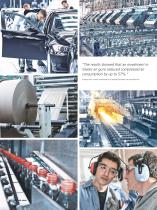
- Customer Base: Silvent caters to a wide range of industries, including automotive, paper, steel, packaging, manufacturing, and beverages, with prominent clients such as BMW, Coca-Cola, and Toyota.
- Industry Challenges and Solutions: The handbook identifies six major industry problems, such as energy consumption and noise pollution, and presents Silvent's solutions, which include significant reductions in air consumption and noise levels.
- Advanced Air Nozzle Technology: Silvent's patented technology focuses on creating a laminar air stream, reducing noise by 50% and air consumption by at least 30%, thereby enhancing safety and efficiency.
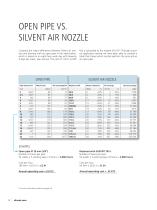
- Comparison with Open Pipe Systems: A detailed comparison highlights the cost savings and efficiency improvements when using Silvent air nozzles instead of open pipes, with potential annual savings illustrated through practical examples.
- Company Background: Silvent, founded in response to noise issues in Swedish factories, has become a leader in compressed air technology, emphasizing research and development to improve workplace safety and energy efficiency.
- Product Information: The handbook includes detailed specifications and applications for air nozzles, air knives, safety air guns, and silencers, along with technical data on blowing properties and energy consumption.
Conclusion: Silvent's commitment to innovation and quality has positioned it as a key player in the compressed air industry, offering solutions that not only meet but exceed industry standards for safety, efficiency, and environmental impact.
Introduction to Compressed Air Blowing: Compressed air is often perceived as a low-cost energy source, but it is actually one of the most expensive. Silvent's nozzles can reduce air consumption by up to 50%, conserving energy in applications like cleaning, drying, and cooling.
Noise and Hearing Loss: 70-80% of hearing loss in manufacturing is due to compressed air. Silvent's nozzles reduce noise levels by 8-10 dB(A), minimizing the risk of tinnitus and hearing loss.
Efficiency of Air Pipes: Many installations use over-dimensioned pipes, wasting energy. Silvent offers a range of nozzles that adapt to specific tasks, reducing energy consumption.
Noise vs. Blowing Force: High noise levels do not equate to strong blowing force. Silvent's technology reduces noise without sacrificing force, cutting noise by 50% through reduced turbulence.
Safety Concerns with Air Guns: Most air guns are unsafe, risking fatal accidents. Silvent's safety guns prevent blockage and comply with global safety standards.
Improving Work Environments: Compressed air doesn't have to mean a noisy environment. Silvent's nozzles halve noise levels, improving workplace conditions and performance.
Adaptation of Air Guns: Different tasks require different air guns. Silvent provides a wide range of safety air guns tailored to specific needs.
Risks of Compressed Air: Compressed air can cause eye injuries from particles. Silvent's safety shields prevent particles from reaching the operator's eyes, complying with OSHA guidelines.
Understanding Sound and Noise: Sound is pressure variations in the air, measured in decibels (dB). Noise is undesirable sound, often harmful to hearing. Reducing workplace noise is beneficial for health and productivity.
Impact of Noise: Noise can have psychological, masking, and physical impacts, including hearing damage, stress, and reduced concentration. Preventive measures are essential to mitigate these effects.
Hearing Loss and Related Conditions: Hearing loss often leads to difficulties in understanding conversations, especially in noisy environments or large groups. It is typically a gradual process, making early detection challenging. The brain compensates by using other senses, such as lip-reading, which can delay recognition of the impairment. Hearing loss is usually permanent and can only be partially compensated by devices like hearing aids.
Tinnitus: Tinnitus is the perception of sound without external noise, often experienced as buzzing or ringing. It can accompany noise damage or occur independently of measurable hearing loss. The exact cause is unknown, but it may involve damaged hair cells sending false signals to the brain. Tinnitus can be temporary or permanent and is exacerbated by stress and fatigue. While there is no cure, treatments can provide relief.
Hyperacusis and Sound Distortion: Hyperacusis is an increased sensitivity to sound, making moderately loud noises uncomfortable. Sound distortion involves perceiving sounds with reduced quality, such as diplacusis, where a single tone is heard as two discordant tones.
Noise and Hearing Damage: Noise exposure can lead to irreversible hearing damage. High frequencies are affected first, followed by speech frequencies. Noise damage can cause auditory sensations without stimulation, leading to mental strain. Adaptation to noise is possible, but it comes at a cost to hearing health.
Laws and Regulations: The EU Directive 2006/42/EC and OSHA Regulations 1910.95 govern permissible workplace noise levels. The EU requires minimizing noise exposure through technological advances, while OSHA sets a maximum exposure limit of 90 dB(A) for eight hours. NIOSH recommends a lower limit of 85 dB(A) to reduce hearing damage risk. Regulations vary by country, with some adopting stricter standards.
Proposed Measures: Sound level measurement involves using a sound level meter and dosimeter to assess noise exposure. An action plan should be developed based on noise mapping, involving employee input. Measures may include noise source enclosure, machinery replacement, and sound insulation. Hearing protection is less effective due to discomfort and communication challenges.
Silvent Technology: Silvent technology reduces noise from compressed air by dividing air into smaller streams, increasing sound frequency beyond human perception. This technology minimizes turbulence and noise while maintaining blowing force. Silvent's patented designs have received international recognition for reducing noise and power consumption.
Summary: Noise is defined as undesirable sound, with workplace exposure limits set between 85 and 90 dB(A) for eight hours. A 3 dB(A) increase halves permissible exposure time, while a 10 dB reduction is perceived as halving sound level. Noise is a significant environmental issue, impacting psychological, masking, and physical aspects, including hearing loss, tinnitus, and hyperacusis.
Sound Level Measurement: A sound level meter measuring in dB(A) is used to assess sound pressure levels. Measurements are taken by positioning the microphone one meter from the sound source at a 90° angle. This process helps determine if noise levels exceed 85 dB(A), which can be harmful.
Compressed Air Overview: Compressed air is atmospheric air compressed to a higher pressure, primarily consisting of oxygen and nitrogen. It is a widely used energy source in industries, produced on-site, and requires adherence to quality and cost-efficiency standards.
Operational Costs: Producing compressed air is energy-intensive, with electricity accounting for about 70% of the total cost over ten years. Efficiency improvements can lead to significant savings, as leakage and heat loss are common issues.
Cost Calculation: To determine the cost of compressed air, measure the energy consumed by the compressor and the volume of air produced. This helps calculate the cost per cubic meter, though it excludes investment and maintenance costs.
Measuring Air Consumption: Monitoring air consumption is crucial for cost control and efficiency. Regular checks can identify leaks and inefficiencies, allowing for targeted improvements.
Efficiency Improvements: Optimizing compressor use, selecting appropriate equipment, and reducing pressure can enhance efficiency. Replacing open pipe systems with efficient nozzles and using electric tools where possible can also reduce costs.
Risks and Safety: Compressed air poses risks due to its high pressure. Proper training and adherence to safety regulations, such as those by OSHA and SUVA, are essential to prevent accidents. Safety measures include using protective equipment and ensuring equipment meets regulatory standards.
Regulations: OSHA and SUVA have specific regulations for compressed air use, including pressure limits and protective measures. The EU Machinery Directive also outlines safety requirements for machinery components.
Safety Guidelines: To ensure safety, never aim compressed air at people, use protective gear, regularly check equipment for leaks, and follow proper procedures when disconnecting hoses.
Specifications and Safety Guidelines: Ensure air flow is not obstructed by bending hoses; use shutoff valves instead. Open valves carefully to check for faulty connections. Keep air hoses off the floor to prevent tripping hazards and damage. If possible, position hoses at ceiling height. Treat compressed air and components as professional tools, ensuring proper and safe handling.
Applications: Air nozzles are used for cleaning, drying, cooling, ejecting, and sorting. Silvent 707 L and 209 L nozzles are highlighted for optimal efficiency and noise reduction.
Choosing the Right Air Nozzle: Selecting the correct air nozzle is crucial for safety, noise reduction, effectiveness, and cost-efficiency. Consider factors such as blowing force, pattern, material, and dimensions. Blowing force is measured in newtons (N) and is essential for application performance. Blowing patterns vary from broad air jets to concentrated streams. Materials range from stainless steel to advanced polyamides, each suitable for different environmental conditions.
Product Overview: The catalog provides a comprehensive list of air nozzles, categorized by the diameter of the open pipes they replace. Each product entry includes specifications such as blowing force, air consumption, sound level, and material. Notable products include SILVENT 973, 209 L, and 512, each designed for specific industrial applications.
Technical Features: SILVENT nozzles are designed to reduce noise and air consumption significantly compared to open pipe systems. Products comply with OSHA safety regulations and EU Machine Directive noise limitations. Patented designs ensure efficient air flow and reduced environmental impact.
Additional Information: Detailed technical specifications and options for accessories are available on the Silvent website. The catalog emphasizes the importance of integrating Silvent technology in demanding industrial environments.
Overview: The document provides detailed specifications and features of various air nozzles manufactured by Silvent. These nozzles are designed for different industrial applications, focusing on noise reduction, air consumption efficiency, and compliance with safety regulations.
Specifications: Each nozzle is described with specific parameters such as blowing force, air consumption, sound level, blowing pattern, connection type, dimensions, material, and maximum temperature. The nozzles are made from materials like zinc, stainless steel, EPDM, and Zytel, catering to different environmental and application needs.
Key Features: The nozzles are designed to reduce noise significantly (up to 78%) and save air/costs (up to 55%). They comply with EU Machine Directive noise limitations and OSHA safety regulations. The document highlights the patented designs that optimize air flow and minimize noise.
Applications: The nozzles are suitable for a variety of applications including drying, cooling, cleaning, and transporting. They are used in industries with specific requirements such as high temperatures, corrosive environments, and hygienic conditions.
Product Variants: The document lists several nozzle models, each with unique features and specifications. Models include SILVENT 921, 961, 971, 209, 801, 700 M, 1011, 920 A, 9002W, 973, 703, and 703 L, among others. Each model is tailored for specific industrial needs, offering different blowing patterns like flat, wide, concentrated, and Laval.
Accessories and Alternatives: The document mentions various accessories and alternative models available for each nozzle, providing flexibility and customization options for different industrial setups.
Conclusion: Silvent's air nozzles are engineered to enhance efficiency and safety in industrial applications. Their innovative designs ensure optimal performance while adhering to stringent noise and safety standards.
Overview: This document provides detailed specifications and applications for various SILVENT air nozzles, highlighting their energy efficiency, noise reduction, and compliance with safety standards. Each nozzle is designed for specific industrial applications, offering unique blowing patterns and materials to suit different needs.
SILVENT 804: Part of the SILVENT SOFT™ series, this nozzle is made from EPDM rubber to prevent scratches. It uses patented Laval technology for a high blowing force while maintaining a scratch-free surface. Ideal for industries where equipment must remain undamaged. Complies with EU Machinery Directive and OSHA regulations.
SILVENT 404 L: Designed for a broader air cone and high blowing force, suitable for ejection of parts and other applications like drying and cooling. Made from zinc, it meets OSHA safety standards and EU noise limitations.
SILVENT 2005: An aluminum nozzle with aerodynamic slots, offering a strong and quiet air stream. It provides a significant blowing force with low sound levels and energy consumption, adhering to EU and OSHA standards.
SILVENT 705: Made entirely of stainless steel, this nozzle is designed for high blowing forces, suitable for industries like steel mills. It withstands high temperatures and complies with safety and noise regulations.
SILVENT 9005W: An energy-efficient flat nozzle made from Zytel, offering a strong blowing force at low noise levels. It features a unique design for optimal air entrainment and is ideal for applications requiring a wide air cone.
SILVENT 705 L: A stainless steel Laval nozzle that optimizes compressed air use, reducing turbulence and noise. Suitable for high-temperature environments, it meets EU and OSHA standards.
SILVENT 707 L: Similar to the 705 L, this nozzle offers a higher blowing force and is designed for applications requiring concentrated air streams.
SILVENT 407 L: Provides high blowing force and range, ideal for steel mills and foundries. Made from zinc, it offers significant noise reduction and cost savings.
SILVENT 808: Another member of the SILVENT SOFT™ series, this EPDM rubber nozzle combines high blowing force with a scratch-free design, using Laval technology.
SILVENT 710: A
stainless steel nozzle with aerodynamic slots, offering extremely high blowing forces for demanding environments like glass works and steel mills.
SILVENT 710 L: Features a Laval nozzle design for optimal air use and noise reduction, suitable for high-force applications.
SILVENT 412 L: Offers high blowing force and range, made from zinc, and is suitable for heavy-duty industrial applications.
SILVENT 715 C: Designed for concentrated force applications, this nozzle features aerodynamic slots to enhance air velocity and force.
Overview: This document provides detailed specifications and descriptions of various air nozzles manufactured by SILVENT, focusing on their design, performance, and compliance with safety and noise regulations. The nozzles are designed for different industrial applications, offering noise reduction and air/cost savings.
Specifications: Each nozzle is described with specific parameters such as blowing force, air consumption, sound level, blowing pattern, connection type, dimensions, material, and maximum temperature. The nozzles are made from materials like stainless steel and Zytel, ensuring durability and performance under high temperatures.
Key Products:- SILVENT 715 C: Stainless steel nozzle with a concentrated blowing pattern, offering 45.0 N blowing force and 311 Nm3/h air consumption. It reduces noise by 80% and saves 42% in air/cost.
- SILVENT 9015W: A flat nozzle made of Zytel, providing 45.0 N blowing force with 228.0 Nm3/h air consumption, achieving 87% noise reduction and 57% air/cost savings.
- SILVENT 735 LA: An adjustable Laval nozzle with a blowing force of 127.0 N and air consumption of 768 Nm3/h, offering 78% noise reduction and 34% air/cost savings.
- SILVENT 910: A back-blow nozzle for cleaning inside pipes, with a blowing force of 5.5 N and air consumption of 38 Nm3/h, achieving 73% noise reduction and 59% air/cost savings.
Compliance and Safety: All nozzles comply with OSHA safety regulations and EU Machine Directive noise limitations, ensuring safe and efficient operation in various industrial environments.
Applications: The nozzles are suitable for applications in industries such as glassworks, steel mills, food processing, and woodworking, where high blowing force and noise reduction are critical.
Conclusion: SILVENT's range of air nozzles offers innovative solutions for industrial air blowing needs, focusing on efficiency, safety, and environmental compliance.
Overview: The document provides detailed technical specifications and descriptions of various air nozzles and air knives produced by Silvent. These products are designed for industrial applications requiring efficient air blowing, cooling, and drying solutions.
1. SILVENT 475 L: This product features a unique double nozzle ring for maximum cleaning and drying efficiency. It is suitable for materials with diameters of 100 to 205 mm and complies with EU and OSHA noise standards. Key specifications include a blowing force of 148.9 N, air consumption of 948 Nm3/h, and a sound level of 104 dB(A).
2. SILVENT F 1: A
cooling nozzle utilizing FRIGUS technology for spot cooling in machining operations. It offers adjustable air consumption and cold fraction, with a sound level of 76 dB(A). The nozzle is compact and easy to install, with a temperature reduction capability of up to 55°C.
3. SILVENT Air Knives: The document describes various air knife models, including the SILVENT 300™ series, which are customized solutions for specific applications. These air knives are designed to optimize air consumption and noise levels while providing effective blowing force. The SILVENT 300 Z+ is a modular system allowing for customizable lengths and blowing forces.
4. Standard Air Knife Models: Several standard models, such as the SILVENT 378, 366, and 396, are discussed. These models are made from materials like stainless steel and zinc, suitable for different industrial environments. They offer varying blowing forces, air consumption rates, and noise levels, all compliant with safety regulations.
5. Recommendations and Best Practices: The document emphasizes the importance of selecting the right air knife model based on specific application needs, such as blowing distance and angle. It also highlights the benefits of using SILVENT products, including noise reduction and air/cost savings.
Overview: The document provides detailed specifications and applications for various SILVENT safety air guns and air knives, designed for industrial use. These tools are engineered to comply with OSHA safety standards and EU Machine Directive noise limitations, offering noise reduction and air/cost savings.
SILVENT 306 L: This air knife features six 209 L nozzles, creating a broad air curtain suitable for applications like air cleaning and paint drying. It offers a blowing force of 20.4 N, air consumption of 102 Nm3/h, and a sound level of 85 dB(A). The material is zinc, and it operates at a maximum temperature of 70°C.
SILVENT 007-L: Equipped with a Laval nozzle, this safety air gun is ideal for general blowing tasks. It provides a blowing force of 3.5 N in booster position and 1.6 N in variable position, with noise levels of 82 dB(A) and 75 dB(A) respectively. The nozzle is made of stainless steel.
SILVENT 007-P: Designed with a PEEK nozzle to prevent scratching, this gun is suitable for sensitive applications. It offers a blowing force of 2.4 N in booster position and 1.8 N in variable position, with a sound level of 79 dB(A).
SILVENT 007-MJ4: This model features a micro-nozzle for high precision and low energy consumption, reducing air consumption by up to 75%. It maintains a noise level of 76 dB(A) with a blowing force of 0.9 N.
SILVENT 008-L: Fitted with a zinc Laval nozzle, this gun is suitable for sweeping large areas. It provides a blowing force of 2.9 N in booster position and 1.6 N in variable position, with noise levels of 77.5 dB(A) and 75 dB(A) respectively.
SILVENT 0971: This safety gun features a small flat nozzle of stainless steel, offering a blowing force of 3.3 N in booster position and 1.6 N in variable position, with noise levels of 81 dB(A) and 75 dB(A) respectively.
SILVENT 500-S: Equipped with a stainless steel nozzle, this ergonomic safety gun is designed for tough conditions. It provides a blowing force of 3.2 N and a sound level of 81 dB(A).
SILVENT 59002W: This model features an energy-efficient flat nozzle made of Zytel, offering a blowing force of 6.0 N and a sound level of 80 dB(A). It is designed for efficient surface cleaning without scratching.
Applications: The document outlines various applications for these air guns, including cleaning of small parts, general blowing, and cleaning of larger objects and floors. Each model is tailored for specific tasks, ensuring optimal performance and safety.
Overview: This document provides detailed specifications and descriptions of various safety air guns and nozzles offered by Silvent. These products are designed to enhance safety and efficiency in industrial applications by reducing noise and air consumption while maintaining high blowing force.
Specifications: The document lists several models of safety air guns, each with specific features such as blowing force, air consumption, sound level, and nozzle material. For example, the SILVENT 500-R features a Laval nozzle made of EPDM rubber, offering a blowing force of 4.0 N and a sound level of 81.1 dB(A). The SILVENT 5920, with a flat zinc nozzle, provides a blowing force of 5.5 N and a sound level of 81 dB(A).
Procedures and Recommendations: The document emphasizes the importance of selecting the appropriate air gun model based on the application requirements, such as noise reduction and air/cost savings. It also highlights the availability of extension pipes in various lengths to enhance the reach and safety of the air guns.
Standards and Compliance: All products comply with OSHA safety regulations and EU Machine Directive noise limitations, ensuring they meet international safety and noise standards.
Key Features: The air guns are designed with features like noise reduction, air/cost savings, and ergonomic handles for user comfort. The document also mentions the use of patented Laval technology for efficient air flow and reduced risk of scratches on equipment.
Alternatives and Accessories: The document lists alternative models and accessories available for each air gun, allowing customization based on specific needs. For instance, the SILVENT 520 Flexgun offers a bendable hose for hard-to-reach areas, and the SILVENT BG-007 is designed for cleaning blind holes with minimal noise.
Conclusion: Silvent's range of safety air guns and nozzles are engineered to provide high performance while ensuring user safety and compliance with regulatory standards. The document serves as a comprehensive guide for selecting the right product for various industrial applications.
Overview: The document provides detailed specifications and features of various high-force safety air guns manufactured by Silvent. These air guns are designed to comply with OSHA safety regulations and EU Machine Directive noise limitations, offering powerful blowing force with reduced noise and energy consumption.
Specifications: Each air gun model is described with specific details such as order number, blowing force, air consumption, sound level, blowing pattern, connection type, and nozzle material. For example, the SILVENT 2973 model has a blowing force of 9.5 N, air consumption of 58 Nm3/h, and a sound level of 86 dB(A).
Noise Reduction and Air/Cost Savings: The document highlights the noise reduction capabilities and air/cost savings of each model. For instance, the SILVENT 2050-S model offers a noise reduction of 62% and air/cost savings of 37%.
Extension Pipes: The air guns are available with extension pipes in various lengths, allowing customization based on specific needs. The lengths range from 100 mm to 2000 mm, depending on the model.
Safety Features: The air guns are equipped with features like "dead man's grip" for safety, ergonomic grips, and thumb regulation for ease of use. These features ensure user safety and comfort during operation.
Patented Technology: The document emphasizes the patented technology used in the design of the air guns, such as the Laval nozzle, which optimizes compressed air usage while maintaining low noise levels.
Silencers and Noise Management: The document discusses the importance of using silencers to manage noise levels in manufacturing environments. It introduces Silvent's patented safety silencers with warning indicators to prevent clogging and ensure optimal performance.
Conclusion: Silvent's high-force safety air guns are designed for industrial applications requiring powerful blowing force with minimal noise and energy consumption. The products are suitable for various industries, including glass, paper, and steel mills, and are compliant with international safety standards.
Overview: The document provides detailed information on Silvent's safety silencers, focusing on their specifications, functionalities, and benefits in industrial compressed air systems. It highlights the importance of selecting the right silencer to minimize machine stoppage, reduce industrial accidents, and prioritize noise control measures.
Specifications: The safety silencers are designed with an outer and inner diffuser to effectively muffle noise and manage backpressure. They feature a two-chamber system that decreases backpressure and exposes new filter surfaces as needed. The document includes a table listing the maximum flow capacities of different silencer models in both SI and American units, emphasizing the importance of choosing a silencer with adequate flow capacity to avoid unnecessary backpressure.
Product Features: Each silencer model, such as SIS-03 and SIS-10, is described with specific details including noise reduction levels, air flow capacity, sound levels, connection types, dimensions, and materials used. The SIS-03 model, for example, offers noise reduction of 30-35 dB(A) and features a patented warning system for early detection of high backpressure.
Technical Specifications: The document outlines the technical data based on laboratory measurements, including feed pressure, blowing force, air consumption, sound level, blowing pattern, and air velocity. It provides guidelines on maximum working pressure, thread standards, and air supply requirements to ensure optimal performance of the air nozzles and silencers.
Recommendations: The document advises on the importance of selecting silencers with appropriate flow capacities for sensitive applications and provides a comprehensive table for air supply requirements based on the number of nozzles and line diameter. It also emphasizes the need for proper installation using sealing washers, adhesives, or thread tape to ensure effective operation.





 swepro tools catalog