
- Catalogs
- Suzhou Bearing Factory Co Ltd.
- Drawn Cup Needle Roller Bearings,Full Complement

Drawn Cup Needle Roller Bearings,Full Complement

Drawn Cup Needle Roller Bearings,Full Complement
Overview
This document provides detailed technical specifications for drawn cup needle roller bearings with full complement, focusing on various bearing designations, dimensions, load ratings, limiting speeds, lubrication types, and weights.
Main Sections and Content
1. Bearing Designations and Dimensions
The document lists multiple bearing designations (both current and original codes) along with their boundary dimensions in millimeters. Key dimensions include shaft diameter (Fw), outer diameter (D), and width (C). These dimensions are critical for selecting the appropriate bearing for specific shaft sizes and applications.
2. Load Ratings
Each bearing is characterized by dynamic (Cr) and static (Cor) basic load ratings, expressed in Newtons (N). These ratings indicate the bearing's capacity to withstand operational loads without failure. Dynamic load rating (Cr) relates to the bearing's ability to endure variable loads during rotation, while static load rating (Cor) refers to the maximum load the bearing can sustain when stationary.
3. Limiting Speeds
The document specifies limiting speeds for each bearing under two lubrication conditions: grease lubrication and oil lubrication. Limiting speed is the maximum rotational speed (in rpm) at which the bearing can operate safely without excessive heat or wear. Typically, oil lubrication allows for higher limiting speeds compared to grease lubrication.
4. Weight
Each bearing's weight is provided in kilograms, which is important for design considerations related to mass and inertia in mechanical systems.
5. Lubrication Types
The bearings are categorized by lubrication type: grease lubrication and oil lubrication. This distinction affects the limiting speed and operational performance of the bearings.
Key Data Highlights
- Shaft diameters range from approximately 7.938 mm to 35 mm and beyond.
- Dynamic load ratings vary widely, from around 3,500 N to over 60,000 N depending on bearing size and design.
- Static load ratings also vary, with some bearings rated up to approximately 50,000 N or more.
- Limiting speeds under grease lubrication typically range from 2,300 rpm to 6,100 rpm, while oil lubrication speeds can reach up to 9,500 rpm or higher.
- Weights range from a few grams (0.0035 kg) to over 0.2 kg for larger bearings.
Summary of Critical Parameters and Recommendations
- Select bearings based on shaft diameter compatibility and required load ratings.
- Consider lubrication type carefully, as it significantly impacts limiting speed and bearing life.
- Use dynamic and static load ratings to ensure the bearing can handle expected operational stresses.
- Account for bearing weight in system design to manage inertia and balance.
Conclusion
This technical data sheet serves as a comprehensive reference for engineers and designers selecting drawn cup needle roller bearings. It provides essential parameters to ensure proper bearing selection for mechanical reliability, performance, and longevity.
Catalog excerpts
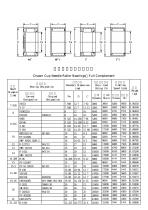
冲压外圈满针滚针轴承 Drawn Cup Needle Roller Bearings,Full Complement 轴径 Shaft Diameter (mm) 轴承代号 Bearing Designation 现行代号 Current Designation 基本额定负荷 Basic Load Rating (N) 极限转速 Limiting Speed (rpm) 动Cr 静Cor 脂润滑 油润滑 Dynamic Static Grease Oil 外形尺寸 Boundary Dimensions (mm)
Open the catalog to page 1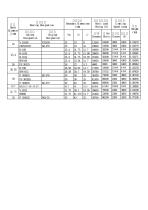
基本额定负荷 Basic Load Rating (N) 极限转速 Limiting Speed (rpm)
Open the catalog to page 2All Suzhou Bearing Factory Co Ltd. catalogs and technical brochures
 Inner Ring
4 Pages


- Steel bearing
- Ball bearing
- Radial bearing
- Friction clutch
- Stainless steel bearing
- High-speed bearing
- Cylindrical roller bearing
- Deep groove ball bearing
- Bearing with cage
- Combined bearing
- Spring clutch
- Needle bearing
- Flange bearing
- Large bearing
- Transmission bearing
- Roller thrust bearing
- High-rigidity bearing
- Cylindrical roller thrust bearing