
- Catalogs
- STXI Motion GmbH
- TIM Integrated Servo Motor

- Products
- Catalogs
- News & Trends
- Exhibitions
TIM Integrated Servo Motor
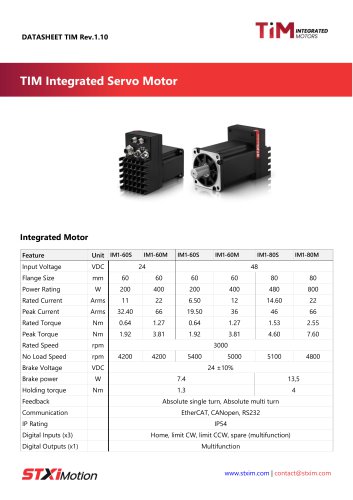
TIM Integrated Servo Motor
Catalog excerpts
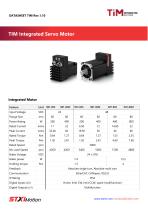
Integrated Motor
Open the catalog to page 1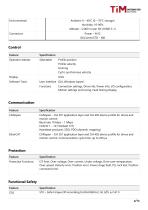
Altitude: <2,000 m (per IEC 61800-5-1) Power - M12 IO/Comm/STO - M8
Open the catalog to page 2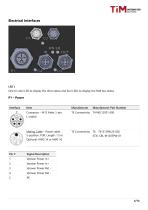
Electrical Interfaces LED's One bi-color LED to display the drive status and four LEDs to display the field bus status Connector - M12 Male, 5-pin, L-coded
Open the catalog to page 7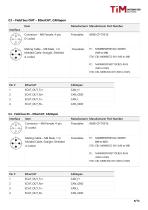
C3 – Field bus OUT – EtherCAT, CANopen Item Manufacturer Manufacturer Part Number D-coded Mating Cable – M8 Male, 1 m Molded Cable, Straight, Shielded C4 - Field bus IN – EtherCAT, CANopen Interface Manufacturer Manufacturer Part Number D-coded Mating Cable – M8 Male, 1 m Molded Cable, Straight, Shielded
Open the catalog to page 9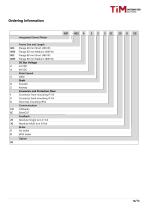
Frame Size and Length 60M Flange 60 mm Medium (400 W) 80S Flange 80 mm Short (480 W) Rated Speed Connector and Protection Class 1 Connector front mounting IP 54 5 Connector back mounting IP 54 20 Absolute Single turn 21 bit 30 Absolute Multi turn 24 bit
Open the catalog to page 12All STXI Motion GmbH catalogs and technical brochures
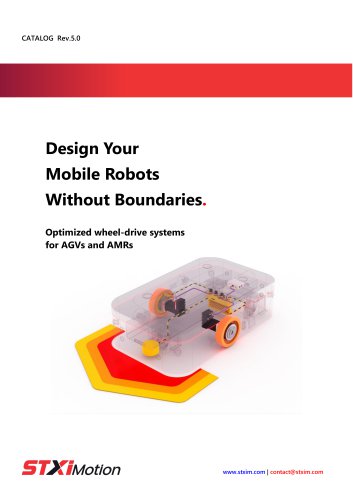 Mobile Motion System
66 Pages
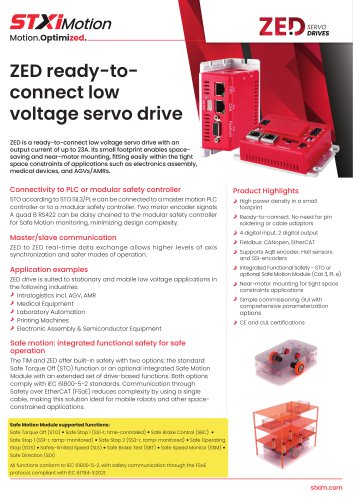 ZED low voltage servo drive
2 Pages
- Electromotor
- DC electromotor
- Servo-motor
- Servo-amplifier
- Stepper motor
- DC servo-amplifier
- Fieldbus servo-drive
- Controller servomotor
- IP65 motor
- IP65 servomotor
- Ultra-compact servomotor
- DC servo-motor
- Motor with built-in encoder
- Compact servo-amplifier
- CANopen servo-amplifier
- Servomotor with built-in encoder
- 24 V servo-motor
- 48 V servo-motor
- Servo-drive with safety function
- Integrated-drive motor