
- Catalogs
- Stanelle Silos + Automation GmbH
- Pinch valve

Pinch valve

Pinch valve
- Operating pressure: 6 bar for DN 100, 4 bar for DN 125 - 200
- Control pressure: Approximately 2 bar higher than operating pressure
- Control air port: G 1/4”
- Connection: Flange, DIN 2576, PN 10
- Housing: Aluminium, with cast iron as an option
- Sleeve: NR
- Free flow without constrictions or clog points
- No dead spots
- No leaks
- No clogs
- No appreciable pressure loss
- Easy-to-replace sleeve
- Other sizes available upon request
Catalog excerpts
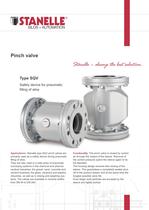
Pinch valve Stanelle – always the best solution Type SQV Safety device for pneumatic filling of silos Applications: Stanelle type SQV pinch valves are primarily used as a safety device during pneumatic filling of silos. They are also used in a wide array of pneumatic conveying systems in the chemical and pharmaceutical industries; the gravel, sand, concrete and cement business; the glass, ceramics and plastics industries, as well as in dosing and weighing systems. The valves are available in nominal widths from DN 40 to DN 200. Functionality: The pinch valve is closed by control air through the impact of the sleeve. Removal of the control pressure opens the sleeve again to its full diameter. The housing design ensures free closing of the sleeve. This guarantees a completely sealed shutoff of the product stream and at the same time the longest possible valve life. Even larger solid particles are encased by the sleeve and tightly locked.
Open the catalog to page 1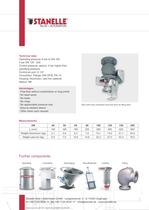
Technical data: Operating pressure: 6 bar to DN 100, 4 bar DN 125 - 200 Control pressure: approx. 2 bar higher than operating pressure Control air port: G 1/4” Connection: Flange, DIN 2576, PN 10 Housing: Aluminium, cast iron optional Sleeve: NR Advantages: · Free ow without constrictions or clog points · No dead spots · No leaks · No clogs · No appreciable pressure loss · Easy-to-replace sleeve · Other sizes upon request SQV with hose connection and lock lever for filling silos Measurements: DN 40 50 65 80 100 125 150 200 L (mm) 155 165 185 225 280 350 420 560 Weight Aluminium (kg) 3,1 3,9 5,3...
Open the catalog to page 2All Stanelle Silos + Automation GmbH catalogs and technical brochures
 Product catalog
128 Pages
 Silo-Components
12 Pages
 Flow-bow
4 Pages
 Overpressure and vacuum flap
2 Pages
 Discharge vibrating cage
2 Pages
 Connex
2 Pages
 Slide gate valves
4 Pages
 Loading spouts
10 Pages
 Dedusting technology/Filters
12 Pages