

LDRS
LDRS
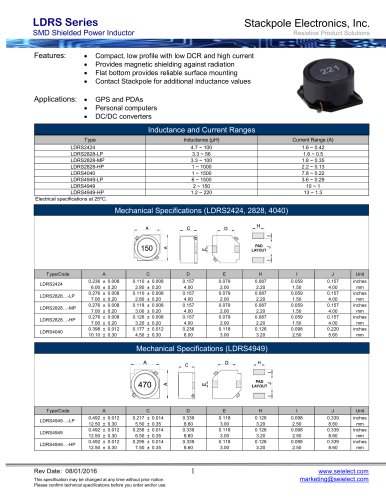
- Compact and low-profile design.
- Low DCR and high current capacity.
- Magnetic shielding against radiation.
- Flat bottom for reliable surface mounting.
- Custom inductance values available upon request.
- GPS and PDAs.
- Personal computers.
- DC/DC converters.
Catalog excerpts
LDRS Series SMD Shielded Power Inductor Features: Resistive Product Solutions Compact, low profile with low DCR and high current Provides magnetic shielding against radiation Flat bottom provides reliable surface mounting Contact Stackpole for additional inductance values GPS and PDAs Personal computers DC/DC converters Inductance and Current Ranges Type inches mm inches mm inches mm inches mm inches mm Rev Date: 08/01/2016 This specification may be changed at any time without prior notice. Please confirm technical specifications before you order and/or use.
Open the catalog to page 1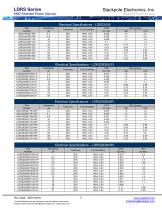
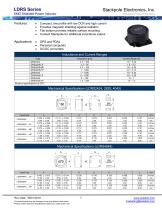
LDRS Series SMD Shielded Power Inductor Resistive Product Solutions Test Condition Test Condition Test Condition Rev Date: 08/01/2016 This specification may be changed at any time without prior notice. Please confirm technical specifications before you order and/or use. Test Condition www.seielect.com marketing@s
Open the catalog to page 2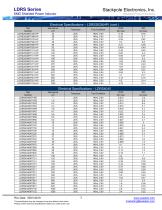
LDRS Series SMD Shielded Power Inductor Resistive Product Solutions Test Condition Rev Date: 08/01/2016 This specification may be changed at any time without prior notice. Please confirm technical specifications before you order and/or use. Test Condition www.seielect.com marketing@seielec
Open the catalog to page 3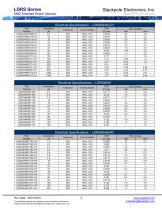
LDRS Series SMD Shielded Power Inductor Resistive Product Solutions Test Condition Electrical Specifications – LDRS4949 Tolerance Test Condition Electrical Specifications – LDRS4949(HP) Tolerance Test Condition Rev Date: 08/01/2016 This specification may be changed at any time without prior notice. Please confirm technical specifications before you order and/or use. www.seielect.com marketing@sei
Open the catalog to page 4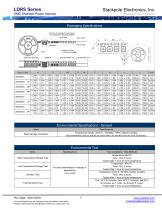
LDRS Series SMD Shielded Power Inductor Resistive Product Solutions Packaging Specifications Type / Code Inches mm Inches mm Inches mm Inches mm Inches mm Inches mm Inches mm Inches mm Environmental Specifications - General Items Shelf Storage Conditions Temperature range: 25±3°C. Humidity: <80% relative humidity. Recommended product should be used within six months from the time of delivery. Environmental Test Items Test Conditions / Test Methods No case deformation or change in appearance. Δ L/L ≤10% Temperature 85±2°C Time: 48 ± 2 hours Tested after 1 hour at room temperature Temperature -40±2°C...
Open the catalog to page 5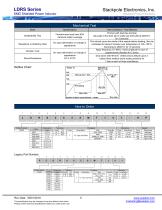
LDRS Series SMD Shielded Power Inductor Resistive Product Solutions Mechanical Test Items Solderability Test Terminal area must have 90% minimum solder coverage Resistance to Soldering Heat No case deformation or change in appearance Vibration Test Test Conditions / Test Methods Product with lead-free terminal Dip pads in flux then dip in solder pot (SnCuNi) at 245±5°C for 3 seconds Flux should cover the whole of the sample before heating, then be preheated for about 2 minutes over temperature of 130~150°C. immersing to 260±5°C for 10 seconds Apply frequency 10~55Hz 1.5mm amplitude in each of...
Open the catalog to page 6All Stackpole Electronics catalogs and technical brochures






Archived catalogs
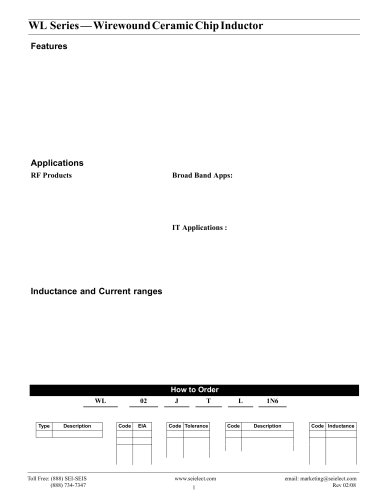 Wirewound Ceramic Chip Inductor
10 Pages
 Low Voltage Leaded Varistors
3 Pages
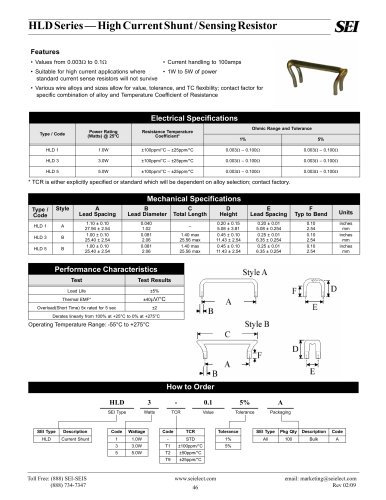 current-sense resistor
1 Page
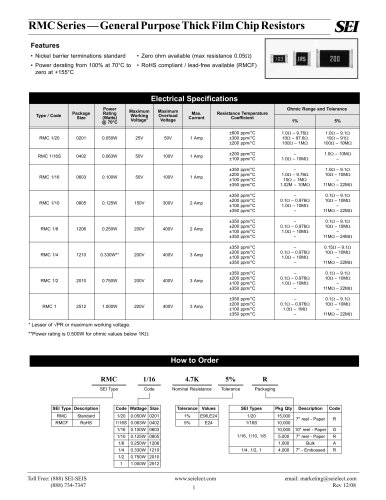 Thick Film Chip Resistors
2 Pages
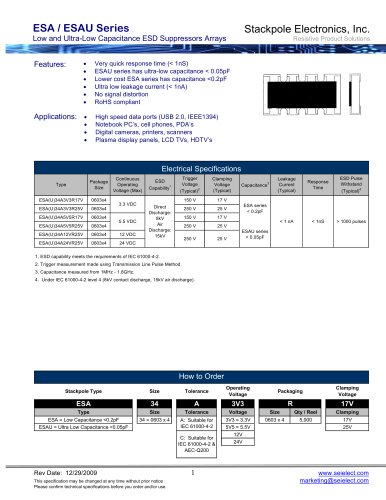
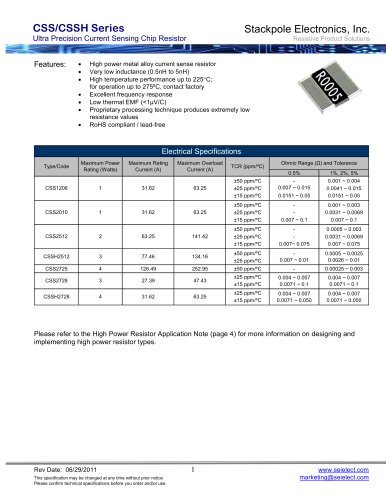
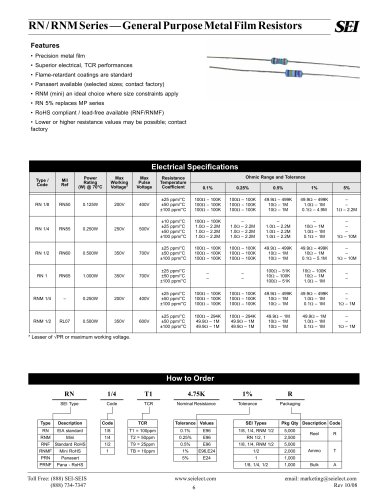


- Wire-wound resistor
- Board-mount resistor
- Power resistor
- Housed resistor
- Thin-film resistor
- Electronic inductor
- SMD resistor
- Thick-film resistor
- Ferrite inductor
- High-power resistor
- Voltage resistor
- High-voltage resistor
- Non-inductive resistor
- Ceramic-housed resistor
- Metal-film resistor
- Precision resistor
- Aluminum-housed resistor
- Electronic resistor
- Current-sense resistor
- Varistor