1. Catalogs
  2. STACEM
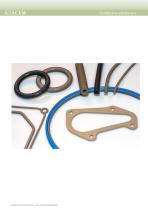
  3. Filled elastomers
video corpo

Filled elastomers

Filled elastomers
1 / 26 PagesView full catalog

Filled elastomers

Product catalog summary
Overview: The document provides comprehensive technical details on conductive elastomers, which are silicone-based materials filled with conductive particles. These elastomers are known for their excellent electromagnetic interference (EMI) shielding and thermal conductivity. A fluorinated version is available for enhanced resistance to hydrocarbons, oils, and solvents.
Applications and Advantages: Conductive elastomers are utilized in various fields such as GPS, waveguides, RF/HF electronic systems, aeronautics, military, medical, and 3G/LTE telecommunications. They offer EMC and watertight sealing, superior shielding effectiveness, and can operate over a wide temperature range. An adhesive option is available, either conductive or non-conductive.
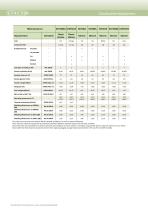
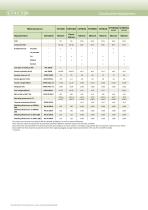
Material Specifications: The document details various filled elastomers with distinct characteristics including color, conductive filler type, available formats (extruded, co-extruded, cut, molded, bonded), volume resistivity, hardness, density, tensile strength, elongation, tear strength, and operating temperature. These materials are tested according to standards like MIL 83528 and ASTM.
Performance Metrics: Shielding effectiveness is measured at different frequencies (100MHz, 500MHz, 2GHz, 10GHz) with values typically ≥115 dB. Thermal conductivity and other mechanical properties are also specified.
Chemical Resistance: The document categorizes the chemical resistance of basic elastomers (Fluorinated silicone, Silicone, EPDM) into four levels: Excellent, Good, Acceptable, and Poor. It includes a detailed table of resistance ratings for various chemicals.
Storage Recommendations: Seals made from these materials should be stored in their original packaging at temperatures between 15°C and 25°C with 50% humidity to maintain their properties.
Important Notes: The document emphasizes that the provided information is for reference only and that actual performance should be verified in the final application environment. It also notes that the values were measured under specific laboratory conditions.
Fluid Compatibility Testing: The document lists various fluids and their compatibility with different elastomer materials (FS, SI, EPDM), rated on a scale indicating their effect on the elastomer. Tests were conducted under laboratory conditions, which may not reflect actual working conditions.
Fluid Volume Change: Data on the percentage change in volume of elastomers when immersed in different fluids (e.g., Kerosene, Skydrol LD4, Hydrocarbone) over various time intervals (1 min to 24 hours) is provided.
Recommended Compressions: Guidelines for compression percentages for different types of gaskets and profiles (plain gasket, solid profile, hollow profile, O-ring) are provided to ensure optimal sealing performance.
Flat Gaskets: Gaskets are manufactured from standard plate formats and can be customized according to specific drawings. Information on material, thickness, mixing batch number, and vulcanization quarter is included for traceability.
Connector Gaskets: Specifications for connector gaskets with square bases are detailed, including dimensions and standards compliance (e.g., MIL 83528, MIL C 38999).
O-Rings: Description and operation of O-rings, including their use in static and dynamic sealing systems. Construction parameters and assembly methods are outlined, emphasizing the importance of correct sizing and material selection.
Groove Design: Different groove designs (rectangular, trapezoid, triangular) are discussed, with recommendations for specific applications and considerations for swelling and thermal expansion.
Assembly Dimensions and Tolerances: The document references DIN 3771/5 standards for elastomers with a hardness of 70 IRHD, providing guidelines for assembly dimensions and tolerances.
Assembly Instructions: Before starting the assembly, ensure the following checks are completed: bevels are polished, machining residues are removed, sharp edges are protected, and lubricant compatibility is verified.
Recommendations for Assembly: O-rings should not be stretched more than 50% of their inside diameter and must not be rolled in their recess. Avoid using tools with sharp angles.
Specifications and Tolerances: Hardness is measured with a tolerance of ±5 Shore due to material and process variations. Dimensional tolerances follow DIN 3771/1 and ISO 3601/1 standards, while surface defects adhere to DIN 3771/4 and ISO 3601/3.
Conductive Elastomers: Tests are conducted under laboratory conditions, not representative of actual working conditions.
Extruded Seals: Manufactured by passing material through a die, followed by vulcanization. Tolerances for developed lengths and sections are standardized according to ISO-3302-1 and MIL-DTL-83528.
Bonding: Extruded gaskets can be bonded using conductive adhesives or RTV insulators. Tolerances for full O-rings and D gaskets are ±0.008".
Dimensional Data: Tables provide detailed measurements for various part numbers, including groove width and height, with specified tolerances.
Specifications: The document provides detailed specifications for various parts and materials, including dimensions in millimeters and inches, material types, and specific characteristics such as hardness, density, and breaking strength. It includes tables listing part numbers with corresponding measurements and material properties.
Procedures: The document outlines testing procedures carried out under laboratory conditions, noting that these conditions are not representative of actual working environments. It emphasizes the importance of testing seals in their final environment to ensure material conformity.
Standards and Norms: Various standards are referenced throughout the document, including ASTM and MIL standards, which specify testing methods and material properties. These standards ensure consistency and reliability in material performance.
Recommendations: Recommendations are provided for groove sizes to achieve optimal filling rates, with specific tolerances mentioned. The document also advises on storage conditions for seals to maintain their properties.
Material Characteristics: The document describes different types of elastomers, including conductive and non-conductive variants, with details on their composition, color, and mechanical properties. It highlights the use of silicone filled with copper silver particles for electromagnetic interference shielding.
Applications and Advantages: Examples of applications include waveguides and connector gaskets, with advantages such as resistance to crushing and excellent EMI shielding. The document also discusses the use of materials in environments requiring EMP survivability.
Key Data from Tables and Charts: The tables provide critical data on part dimensions, material properties, and performance metrics such as volume resistivity and shielding effectiveness across different frequencies. These data points are essential for selecting the appropriate materials for specific applications.
See more

Catalog excerpts

Filled elastomers-1

Conductive elastomers This information is for reference only, we can in no event be held responsible

 Open the catalog to page 1

Filled elastomers-2

Conductive elastomers This material is made from silicone filled with conductive particles. It provides excellent shielding against electromagnetic interference, and also seals the equipment. The nature of these fillers also allows them to act as a very good thermal conductor. A fluorinated version is also available in order to withstand contacts with hydrocarbons, oils and solvents. - GPS - Waveguide - RF/HF electronic systems - Aeronautics, military, medical - 3G/LTE Telecommunications - EMC and watertight - Excellent shielding effectiveness - Large temperature range Filled elastomers Fluoro...

 Open the catalog to page 2
Filled elastomers-3

Conductive elastomers Filled elastomers Fluoro silicone Fluoro silicone Conductive filler Available format : Load type according to MIL Volume resistivity (Ωcm) Operating temperature (°C) Thermal conductivity (W/mK) Shielding effectiveness at 100MHz (dB) Shielding effectiveness at 500MHz (dB) The values were measured according to MIL-DTL-83528C standard in our own or external laboratory. These measures allow the comparison of performance between different materials measured in the same conditions. Only a test of the seal assembled in its final environment and conditions of use for which it is...

 Open the catalog to page 3
Filled elastomers-4

Conductive elastomers Filled elastomers Standards Fluoro silicone Conductive filler Available format : Load type according to MIL Volume resistivity (Ωcm) Operating temperature (°C) Thermal conductivity (W/mK) Shielding effectiveness at 100MHz (dB) Shielding effectiveness at 500MHz (dB) The values were measured according to MIL-DTL-83528C standard in our own or external laboratory. These measures allow the comparison of performance between different materials measured in the same conditions. Only a test of the seal assembled in its final environment and conditions of use for which it is intended,...

 Open the catalog to page 4
Filled elastomers-5

Conductive elastomers Filled elastomers Fluoro silicone Fluoro silicone light grey Conductive filler Available format : Load type according to MIL Volume resistivity (Ωcm) Operating temperature (°C) Thermal conductivity (W/mK) Shielding effectiveness at 100MHz (dB) Shielding effectiveness at 500MHz (dB) The values were measured according to MIL-DTL-83528C standard in our own or external laboratory. These measures allow the comparison of performance between different materials measured in the same conditions. Only a test of the seal assembled in its final environment and conditions of use for...

 Open the catalog to page 5
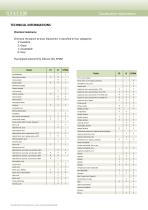
Filled elastomers-6

Conductive elastomers TECHNICAL INFORMATIONS Chemical resistance Chemical resistance to basic elastomers is classified in four categories: 3: Excellent 2: Good 1: Acceptable 0: Poor Fluorinated silicone (FS), Silicone (SI), EPDM Acetaldehyde Aluminium acetate Amyl acetate Butyl acetate Lead acetate Sodium acetate Vinyl acetate Ethyl acetate Isopropyl acetate Acetone Picric acid, melted Picric acid , in an aqueous solution Phosphoric acid, pure Stearic acid Sulphuric acid, concentration <10% Sulphuric acid, concentration 10 to 75% Sulphuric acid, concentrate 75 to 95% cold Sulphuric acid, concentrate...

 Open the catalog to page 6
Filled elastomers-7

Conductive elastomers Fluids Ethylic ether Methyl bromide Isopropyl ether Ethyl cellulose Butyl cellosolve Sodium carbonate Ethylene glycol Aluminium fluoride Calcium hydroxide Glycol chlorohydrin Chlorobenzene Aluminium chloride Ammonium chloride Barium chloride Benzyl chloride Calcium chloride Copper chloride Magnesium chloride Nickel chloride Potassium chloride Methyl chloride Sodium chloride Sulphur chloride Tin chloride Ethyl chloride Sulphur hexafluoride Ferric chloride Colouring agents produced from aniline Potassium cyanide Sodium cyanide Mercury chloride Hydrogen sulphide Sodium hypochlorite...

 Open the catalog to page 7
Filled elastomers-8

Conductive elastomers Fluids Ammonium nitrate Sodium nitrate Butyl oleate Diphenyl oxide Mesityl oxide Oxygen, cold Oxygen up to 250°C Oxygen above 250°C Ozone Sodium perchlorate Tetrachloroethylene Dinitrogen tetraoxide Sodium peroxide Zinc sulphate Ferric sulphate Barium sulphide Carbon sulphide Sodium sulphide Carbon tetrachloride Propylene oxide Sodium thiosulfate Phenylhydrazine Phorone Monobasic, dibasic and tribasic ammonium phosphate Monobasic, dibasic and tribasic sodium phosphate Fluid volume change Tributoxyethyl phosphate Tributyl phosphate Tricresyl phosphate Butyl phthalate Octyl...

 Open the catalog to page 8

Filled elastomers-9

Conductive elastomers FLAT GASKETS Gaskets are cut using a punch or a numerical control machine operating a cutting tool (oscillating or otherwise). We cut these gaskets from standard plate formats according to your drawings or in accordance with the standard drawings below. To ensure traceability, all these plates have a moulded tab displaying the following information: - Material - Thickness - Mixing batch number - Vulcanisation quarter Standard plates Thickness mm (inch) 0,8 (0,032) ±0,008" 11,8" x 11,8" plate Other dimensions and thicknesses on request Option: with conductive adhesive Note...

 Open the catalog to page 9
Filled elastomers-10

Conductive elastomers Connector gaskets with square bases Standards Part number Serie Serie Serie Serie I II III IV J001 These tests were carried out in laboratory conditions which are not representative of working conditions.

 Open the catalog to page 10

Filled elastomers-11

Conductive elastomers Sub-D Connector gaskets Part number Sealing washers Inside diameter mm (inch) Exterior diameter mm mm (inch) Part number example: xxxx 1.5 56TB01A W W : With conductive silicone transfer PSA Filled elastomers part number (p.12, 13, 14 and 15) Thickness (mm) Outside diameter x Inside diameter (in mm) or Stacem part number These tests were carried out in laboratory conditions which are not representative of working conditions.

 Open the catalog to page 11
Filled elastomers-12

Conductive elastomers O-RING Description An O-ring is an even seal in the shape of a torus with a circular cross-section. Its dimensions are defined by its inside diameter (d1) and its cross-section (d2). Operation O-rings are mainly housed in a rectangular recess. The DIN standard differentiates between two types of sealing system: static and dynamic. Elastomers are incompressible. Under pressure, they react in a similar way to fluids; they transmit the pressure of the forces that they are subject to in all directions. The shape of the O-ring which is initially circular, is distorted as it is...

 Open the catalog to page 12

All STACEM catalogs and technical brochures

  1. O-ring

    32  Pages

  2. V-rings

    5  Pages

  3. Quad rings

    13  Pages

  4. Back-up rings

    8  Pages

  5. Bonded seals

    5  Pages

  6. Aseptic-seals

    3  Pages

  7. Cut Seals

    3  Pages

  8. Thermal PAD

    27  Pages

  9. Knitted wire

    6  Pages

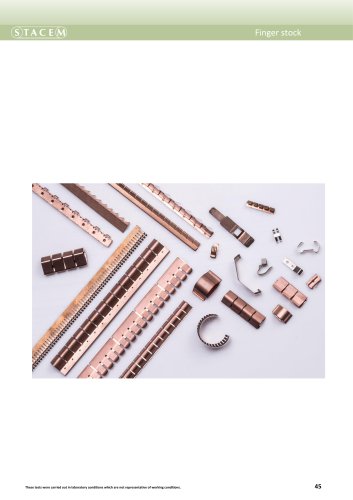
  10. Finger stock

    12  Pages

  11. Absorber

    19  Pages

Archived catalogs

*Prices are pre-tax. They exclude delivery charges and customs duties and do not include additional charges for installation or activation options. Prices are indicative only and may vary by country, with changes to the cost of raw materials and exchange rates.