
- Catalogs
- SPS electronic GmbH
- Ground Bond Test Probe PE 81


- Company
- Products
- Catalogs
- News & Trends
- Exhibitions
Ground Bond Test Probe PE 81
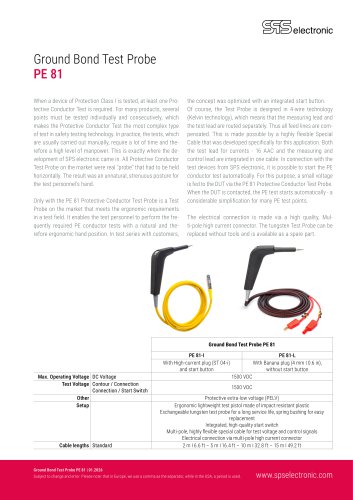
Ground Bond Test Probe PE 81
- Ergonomic Design: The PE 81 is the first test probe on the market that allows for a natural hand position, reducing strain on test personnel.
- Integrated Start Button: Optimized through customer feedback, the probe includes a start button for ease of use.
- 4-Wire Technology: Utilizes Kelvin technology to separate measuring and test leads, ensuring accurate compensation of feed lines.
- Automatic Test Start: The probe can automatically initiate the PE conductor test when the device under test (DUT) is contacted, simplifying the process.
- High-Quality Construction: Features a multi-pole high current connector and a replaceable tungsten test probe for durability and ease of maintenance.
- Operating Voltage: Maximum DC voltage of 1500 VDC.
- Setup: Ergonomic, lightweight test pistol made of impact-resistant plastic.
- Cable Lengths: Available in standard lengths of 2 m, 5 m, 10 m, and 15 m.
- PE 81-I: Includes a high-current plug (ST 04-i) and a start button.
- PE 81-L: Features a banana plug (4 mm) without a start button.
Catalog excerpts
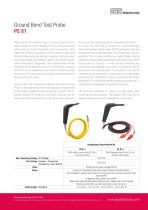
Ground Bond Test ProbePE 81 When a device of Protection Class I is tested, at least one Protective Conductor Test is required. For many products, several points must be tested individually and consecutively, which makes the Protective Conductor Test the most complex type of test in safety testing technology. In practice, the tests, which are usually carried out manually, require a lot of time and therefore a high level of manpower. This is exactly where the development of SPS electronic came in. All Protective Conductor Test Probe on the market were real "probe" that had to be held horizontally. The result was an unnatural, strenuous posture for the test personnel's hand. Only with the PE 81 Protective Conductor Test Probe is a Test Probe on the market that meets the ergonomic requirements in a test field. It enables the test personnel to perform the frequently required PE conductor tests with a natural and therefore ergonomic hand position. In test series with customers, the concept was optimized with an integrated start button. Of course, the Test Probe is designed in 4-wire technology (Kelvin technology), which means that the measuring lead and the test lead are routed separately. Thus all feed lines are compensated. This is made possible by a highly flexible Special Cable that was developed specifically for this application. Both the test lead for currents - 16 AAC and the measuring and control lead are integrated in one cable. In connection with the test devices from SPS electronic, it is possible to start the PE conductor test automatically. For this purpose, a small voltage is fed to the DUT via the PE 81 Protective Conductor Test Probe. When the DUT is contacted, the PE test starts automatically - a considerable simplification for many PE test points. The electrical connection is made via a high quality, Multi-pole high current connector. The tungsten Test Probe can be replaced without tools and is available as a spare part. Ground Bond Test Probe PE 81 | 01.2026 Subject to change and error. Please note: that in Europe, we use a comma as the separator, while in the USA, a period is used.
Open the catalog to page 1All SPS electronic GmbH catalogs and technical brochures
 Tool Carrier TW 05
1 Page
 Surge Tester ST 4000B
2 Pages
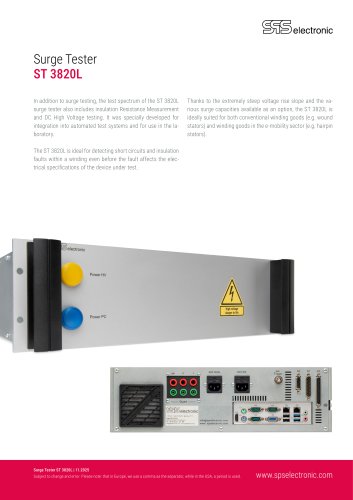 Surge Tester ST 3820L
2 Pages
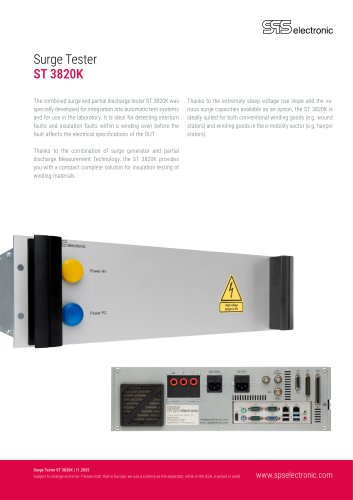 Surge Tester ST 3820K
2 Pages
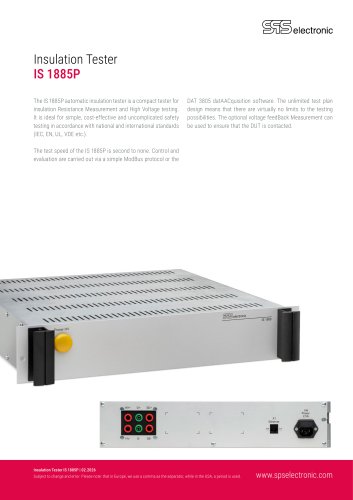 Insulation Tester IS 1885P
2 Pages
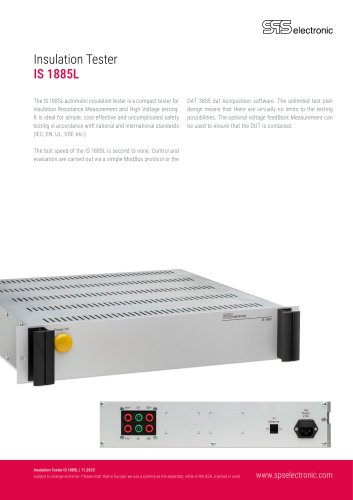 Insulation Tester IS 1885L
2 Pages
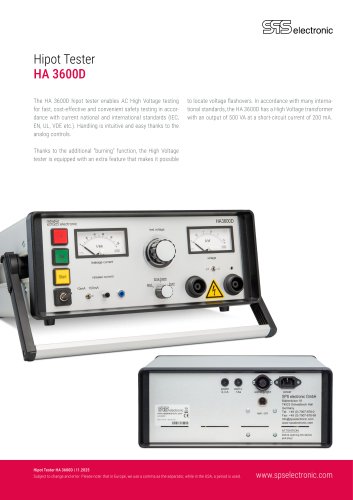 Hipot Tester HA 3600D
2 Pages
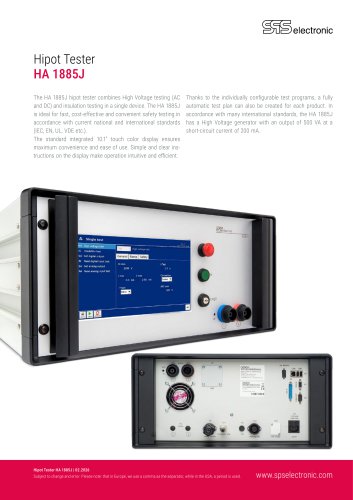 Hipot Tester HA 1885J
2 Pages
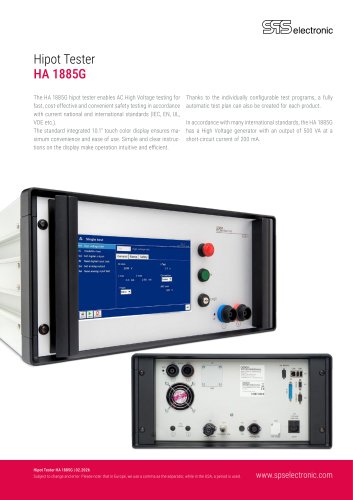 Hipot Tester HA 1885G
2 Pages
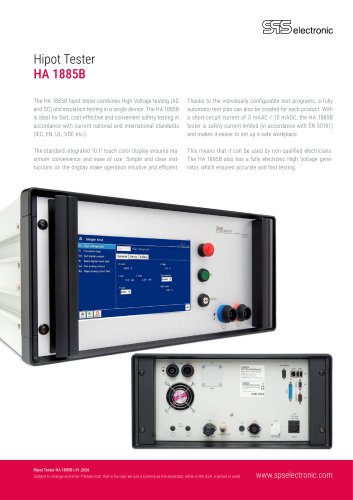 Hipot Tester HA 1885B
2 Pages
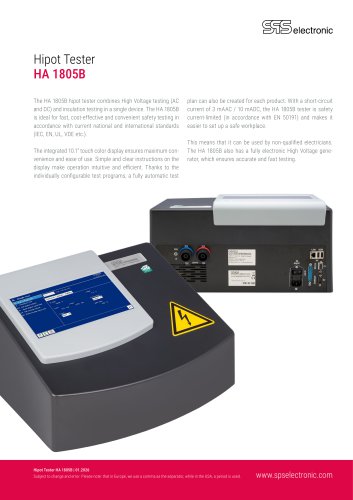 Hipot Tester HA 1805B
2 Pages
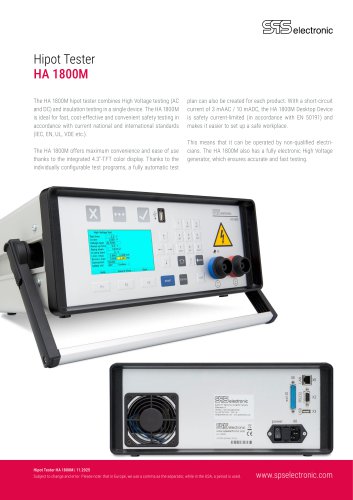 Hipot Tester HA 1800M
2 Pages
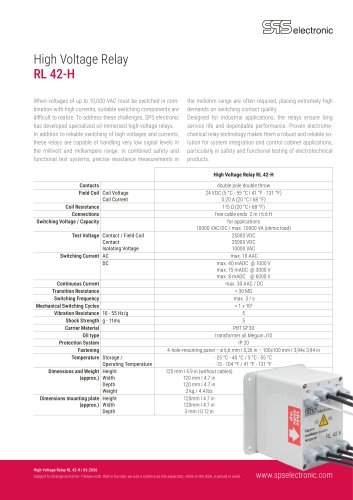
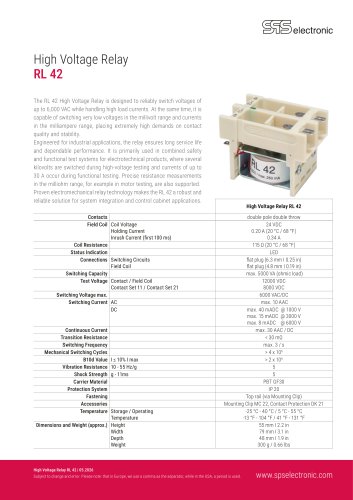 High Voltage Relay RL 42
1 Page
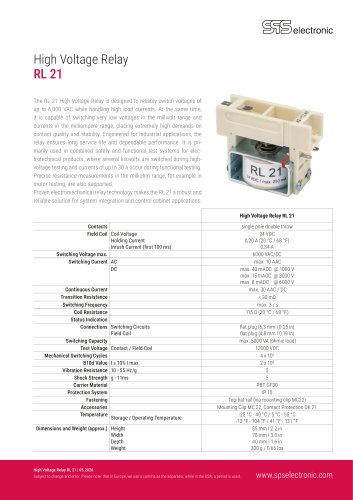 High Voltage Relay RL 21
1 Page
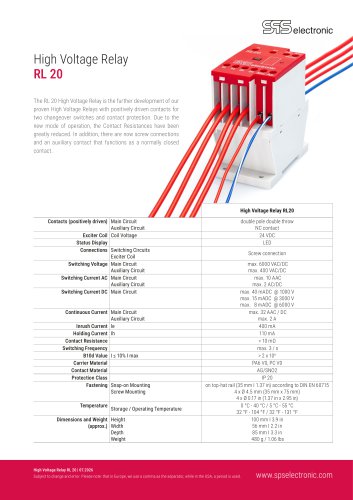 High Voltage Relay RL 20
1 Page
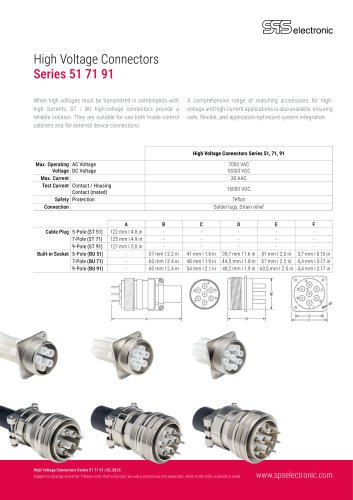
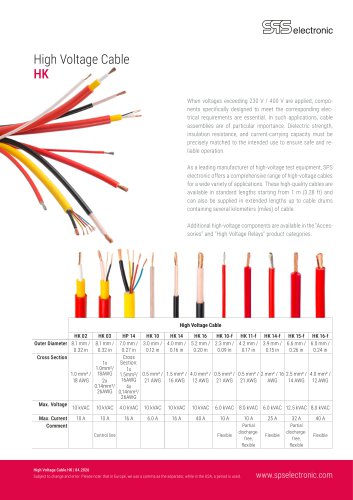 High Voltage Cable HK
1 Page
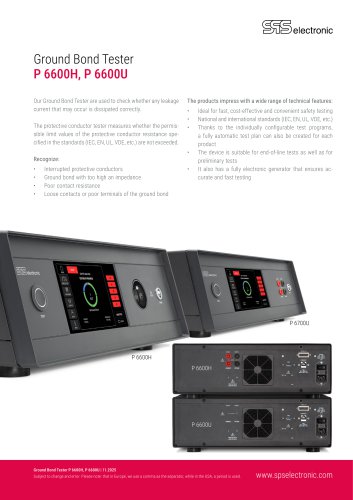
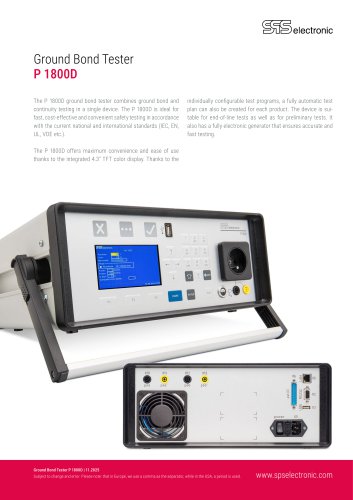 Ground Bond Tester P 1800D
2 Pages
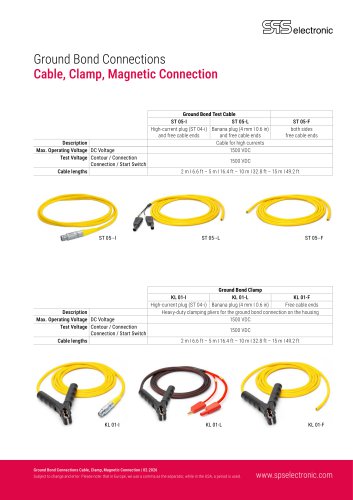
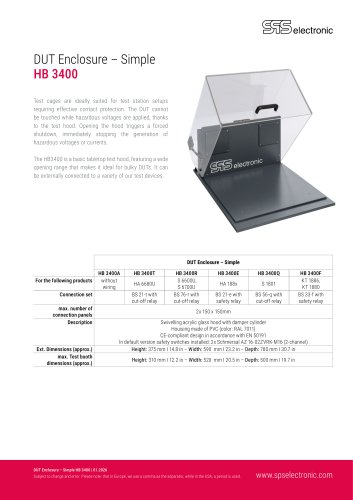
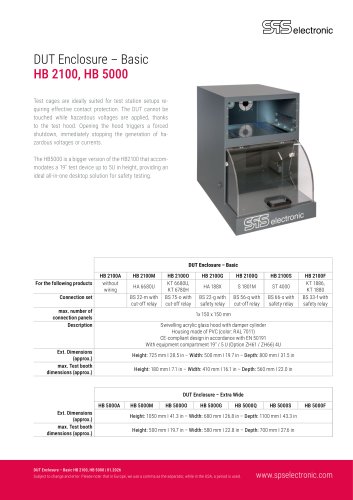

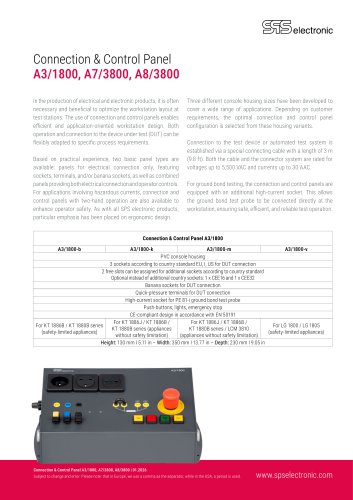
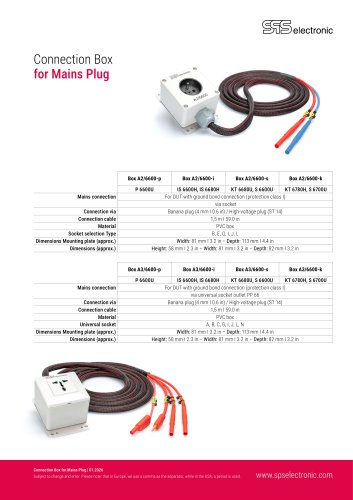
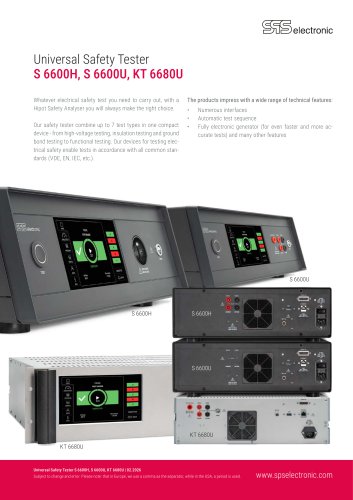
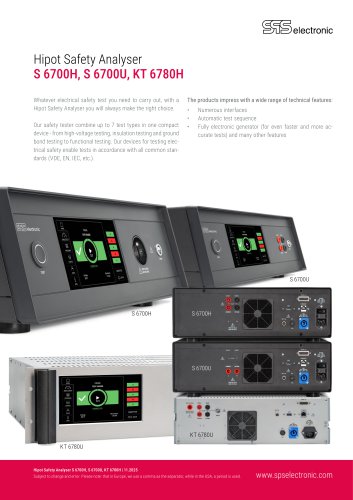
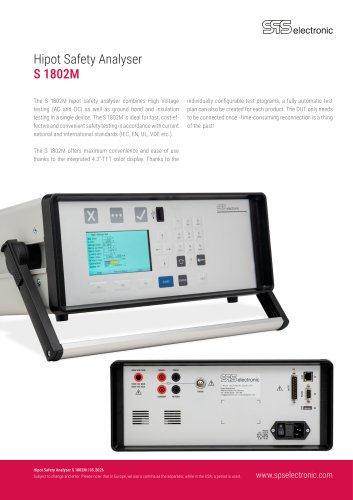
- Electrical cable
- SPS electronic rectangular enclosure
- Electrical power supply connector
- Test cabinet
- Test stand
- Power cable
- Clamping device
- Circular connector
- SPS electronic plastic enclosure
- Calibration system
- Socket electrical connector
- Terminal box
- Industrial connector
- Switching relay
- Quality control test cell
- Metal box
- Portable tester
- Male connector
- Wall-mounted splice box