
- Catalogs
- Spreitzer GmbH & Co. KG - Präzisionswerkzeuge
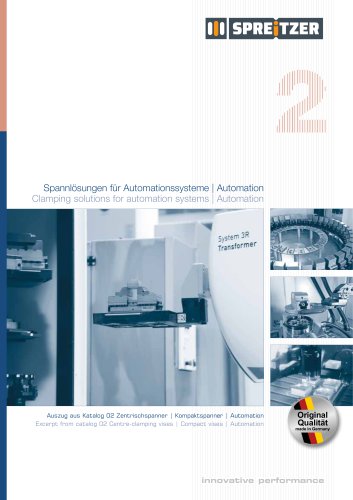
- Centre-clamping vises | Compact vises | Automation

- Company
- Products
- Catalogs
- News & Trends
- Exhibitions
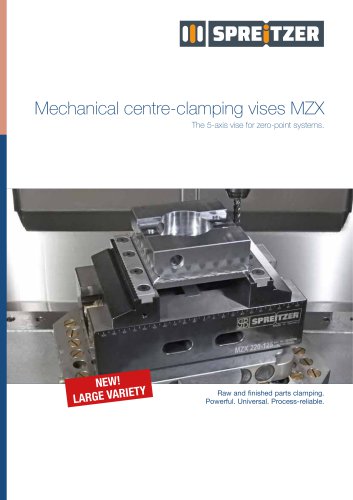
Centre-clamping vises | Compact vises | Automation
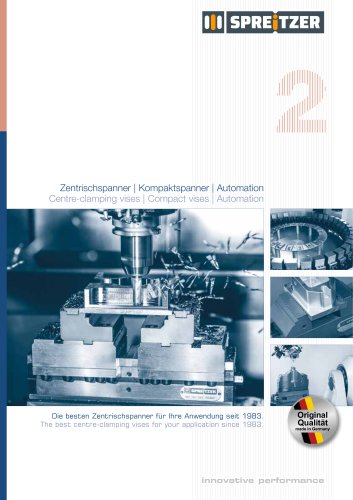
Centre-clamping vises | Compact vises | Automation
This document provides a comprehensive overview of SPREITZER's centre-clamping vises, compact vises, and automation solutions, emphasizing their innovative performance and quality since 1983. The document highlights the advantages of these products, including their ability to save time and money, reduce tool wear, shorten machining time, and improve quality.
The product range includes custom-made fixtures, universal fixturing and clamping systems, multi-sided machining with multiple-clamping, universal fixturing kits for measuring fixtures, ALUMESS fixturing systems, clamping tools for toolmaking and control, concentricity gages, bar-marking machines, magnetic clamping technology, vacuum clamping technology, and freeze clamping technology.
- Clamping Solutions: Various clamping solutions for automation systems, micro-machining, and rapid fixture applications.
- Raw Material Clamping: Ability to clamp raw materials without pre-stamping, offering cost-effective and reliable solutions with high clamping forces.
- Precision Clamping: Precision and stability of the clamping devices, ensuring high manufacturing quality with less vibration and distortion.
- Centre-Clamping Vises: Available in mechanical, pneumatic, hydraulic, and electromechanical versions with jaw widths ranging from 15 to 160 mm and lengths from 50 to 500 mm.
- Design and Stability: Features optimal accessibility, robust structure, and high clamping force, eliminating the need for pre-stamping.
- Connectivity and Cleaning: Offers universal clamping jaw interfaces and easy cleaning options, with all functional components protected from dirt.
The document advises on the required clamping force, recommending the use of a torque wrench to adjust the tightening torque based on various influencing factors such as workpiece geometry and material.
SPREITZER's centre-clamping vises are presented as a prime solution for conventional and CNC-machines, offering a unique variety of sizes and construction variants to meet diverse manufacturing needs.
The document provides a comprehensive overview of mechanical centre-clamping vises (MZU, MZQ, MZC) and their components, including locating elements and clamping jaws. Various models such as MZU 80-36, MZU 120-36, and others are listed with specific features like reversible stepped jaws and grip inserts.
The MZQ series is highlighted for its quick-change jaws, allowing jaw replacement within seconds without tools, reducing setup costs by over 80%. The series is designed for pallet automation and frequent retooling. Key features include a patented clamping jaw connection with a pull-down effect, an irreversible locking mechanism, and a solid, rigid base body optimized for 5-axis operations.
The vises are suitable for single-part and small series production, raw material clamping, and precision clamping. They are optimized for chip flow and can be used in both external and internal clamping scenarios.
The MZC series is noted for its massive, torsion-free construction, large clamping width, and high clamping force, making it ideal for multi-axis machining centers. The design ensures maximum accessibility to the workpiece and is available in open, semi-encapsulated, and fully encapsulated forms.
Both MZQ and MZC series offer high centering and repetition accuracy. They are made from tempered tool steel with surface-hardened and precision-ground functional surfaces.
The document suggests using sealing air connections to prevent the ingress of coolants and dirt, enhancing the longevity and reliability of the vises.
A range of accessories is available, including clamping jaws and center jaws. Customized mounting holes for zero-point systems are also offered as an option.
The document provides a comprehensive overview of mechanical centre-clamping vises (MZC and MZS series) and their applications. It includes detailed specifications, types, and order numbers for various models, highlighting their versatility and precision in clamping solutions.
- Types and Order Numbers: Lists different models such as MZC 220-80, MZC 280-100, and MZC 360-125, with options for reversible stepped jaws and custom configurations.
- Design and Material: Made from tempered tool steel, with surface-hardened and precision-ground functional surfaces.
- Accuracy: High centering and repetition accuracy, with centering accuracy of ±0.005 mm and repetition accuracy of 0.003 mm.
- Clamping Force: Varies by model, with forces ranging from 10,000 N to 70,000 N.
- Suitable for precision clamping, pallet handling, and both external and internal clamping.
- Used in single-part and small series production, high-quality milling, and automated systems.
- Customization: Options for central lubrication, long stroke function, and quick-change jaw systems.
- Industry 4.0 Certified: Offers individual additional functions for automated production systems.
- Includes various clamping jaws, center jaws, and general accessories, with specific pages referenced for detailed information.
The document emphasizes the high rigidity, optimal guiding characteristics, and large variety of the MZC and MZS series, making them universal solutions for precision parts and pre-machined workpieces.
- Specifications: The document outlines different types of centre-clamping vises, including pneumatic and hydraulic options. Key specifications such as clamping force, operating pressure, and dimensions are provided for various models (e.g., PZS 100-50 A, PZS 120-60 A).
- Functional Features: Several features are highlighted, including floating clamping position, spring activation, air sensor control, workpiece support cleaning, pressure holding function, clamping stroke monitoring, and clamping force monitoring. Each feature is associated with a specific order code for easy identification.
- Design and Construction: The vises are described as having a compact design with high centering and repetition accuracy. They are suitable for automation and feature optimized guiding characteristics, sealing air connections, and encapsulated designs to prevent contamination.
- Applications: The vises are suitable for large series production and can handle both external and internal clamping. They are designed for raw material clamping, precision clamping, and part handling.
- Customization and Accessories: The document emphasizes the availability of custom-made solutions and additional functions such as central lubrication, long stroke function, and quick-change jaw systems. Accessories like clamping jaws and adapter plates are also mentioned.
- Material and Finish: The vises are made from tempered tool steel with surface-hardened and precision-ground functional surfaces. The base jaws are adjusted to be clearance-free.
- Practical Advice: Tips are provided for using sealing air connections to prevent the ingress of coolants and dirt.
- Models such as PZS 100-50 A and PZS 120-60 A are detailed with dimensions, clamping force, and weight.
- Operating pressure and clamping force are linked, with adjustments necessary based on workpiece geometry and conditions.
The document describes the mechanical double vises MDU, which allow secure and precise clamping of two workpieces to a defined fixed stop. The special spindle mounting enables clamping of workpieces with up to 2 mm length difference. The reversible top jaws provide maximum flexibility and accessibility, especially on multi-axis machining centers. The vises feature a variable step form with three ground clamping steps, covering a wide clamping range.
The vises are available in open, semi-encapsulated, and fully encapsulated designs, optimized for chip flow. They are suitable for large series production and external clamping. Key strengths include the ability to clamp two workpieces against a fixed stop, a wide clamping range, and high flexibility.
The vises are used for raw material clamping, precision clamping, and pallet handling. They offer a pairing accuracy of 0.02 mm and are made from tempered tool steel with surface-hardened and precision-ground functional surfaces.
Each vise comes with operating instructions. The document also mentions compatibility with various clamping jaw types from the MZU series, ensuring 100% compatibility.
The document provides practical advice on using the vises, highlighting the compatibility of all clamping jaw types of the MZU series with the MDU double vise.
The document includes detailed technical specifications for various models of the MDU series, including dimensions, clamping width, clamping force, and weight.
Information on available accessories, such as clamping jaws and general accessories, is provided, with references to specific pages for more details.
The document describes conversion kits for center-clamping vises, allowing them to be converted into double vises. It includes instructions for easy installation in three steps.
The MSU series allows secure and precise clamping of workpieces to a fixed stop, with features similar to the MDU series, including a wide clamping range and high flexibility. The document also mentions the availability of mechanical-pneumatic and mechanical-hydraulic versions on request.
The document provides specifications for various models of mechanical compact vises (MSU), highlighting their dimensions, clamping force, and weight. The vises are available with reversible stepped jaws or soft block jaws, and additional sizes and assembly units can be requested. The design is optimized for chip flow, with options for semi-encapsulated or fully encapsulated configurations. Main applications include raw material clamping, precision clamping, and part handling.
Pneumatic compact vises allow for secure and precise clamping of workpieces, with the option for automation using industrial robots. Key features include short clamping time, high accuracy, and adjustable clamping width. The vises are made from tempered tool steel, with surface-hardened and precision-ground functional surfaces. The scope of delivery includes a pneumatic vise with operating instructions and a pair of soft clamping jaws. Additional features such as central lubrication and clamping force monitoring are available.
Hydraulic compact vises offer similar features to pneumatic vises, with the added benefit of hydraulic operation. They are suitable for large series production and can clamp from outside to inside or vice versa. The design includes a reproducible clamping jaw connection and optimized guiding characteristics.
These mechanical precision vises feature a pull-down jaw for exact machining of workpieces. They are compact and suitable for mounting on automation pallets. The vises offer precision clamping and are made from tempered tool steel with surface-hardened and precision-ground functional surfaces.
The MMS system allows for the positioning and clamping of multiple workpieces simultaneously, optimizing the work area of CNC machines. The system is modular and features clamping jaws with a pull-down effect. It is suitable for large series production and offers pairing accuracy of 0.02 mm.
These units provide maximum accessibility and holding power for 5- and multi-sided machining. They are compact and advantageous for mounting on automation pallets, requiring minimal clamping depth.
- Design and Features: Compact design suitable for automation pallets, with undercut jaws for secure holding. Requires only 3-5 mm clamping depth.
- Applications: Used for raw material clamping and pallet handling in both small and large series production.
- Specifications: Pairing accuracy of 0.02 mm, made of surface-hardened steel. Available in different sizes with specific dimensions and weights.
- Design and Features: Made of steel with cylindrical centering, ensuring uniform clamping force and high runout accuracy. Available with a base plate for easy mounting.
- Applications: Suitable for single-part and small series production, with options for external and internal clamping.
- Specifications: Various sizes with specific clamping widths, forces, and weights. Options for pneumatic or hydraulic operation.
- Design and Features: High precision, holding force, and rigidity. Suitable for horizontal and vertical mounting, with flexible design.
- Applications: Used in machining centers, prototyping, and metrology for single-part and small series production.
- Specifications: Repetition accuracy of <0.01 mm, made of surface-hardened steel. Available in various sizes with specific clamping ranges and tightening torques.
- Various accessories such as clamping jaws and conversion kits are available.
- Special sizes and versions can be requested.
The document provides detailed specifications for various clamping heads and manual chucks, including dimensions, clamping force, and materials used. The manual chuck MK is designed for powerful clamping of pre-machined and raw workpieces, with customizable collets made from high-strength aluminum. The clamping force is evenly distributed, making it suitable for thin-walled components. The maximum clamping force is 11 kN, applied axially.
The manual chuck allows for easy and quick replacement of collets, facilitating 5-sided machining. The mechanism is protected against dirt and coolant, and the chuck can be mounted on machine tables using a flanged base. The document also describes the use of an adapter plate for positioning the manual chuck on the ZPS 20 clamping unit.
The document emphasizes the importance of form-fitted clamping without deformation and recommends a minimum clamping depth of 2 mm. It also highlights the versatility of the clamping solutions for single-part and small series production, as well as external and internal clamping.
- Easy and quick replacement of collets
- Cost-efficient and form-fitted clamping
- Suitable for precision clamping and pallet handling
- High-strength materials used for durability
The document outlines various alternative clamping solutions, including magnetic clamping technology, vacuum chucks, and freeze clamping technology. Each solution is designed for specific applications, such as grinding, milling, and EDM, and offers benefits like high precision, distortion-free clamping, and minimal setup times.
The clamping solutions are suitable for a wide range of applications, including tool manufacturing, measuring and testing, and CNC machining centers. The document also mentions the availability of different sizes and versions upon request.
The universal fixturing and clamping system is a modular kit designed for flexible and cost-efficient use in the production of individual parts or small series. It is based on a system of holes available in three different grid types, allowing various basic, clamping, and positioning elements to be mounted according to application needs. The system supports multiple clamping for large batch production and allows for the reuse of elements.
- NC-Vise SIMPLINE: A precision high-pressure vise with a mechanical power intensifier, available in various jaw widths and lengths. It offers a universal jaw program.
- Multi-point Clamping System SIMPLINE: Facilitates clamping multiple workpieces on a machine table, with extendable clamping points and high repeatability due to serration on the rail and fixing elements.
A wide range of clamping jaws is available to meet different customer needs, including soft block jaws for machining and fitting on workpieces, step jaws for clamping finished parts, and grip jaws for raw material clamping. The jaws are designed to provide high holding force and protect the workpiece surface.
The document provides a detailed overview of suitable clamping jaws for various materials such as steel, heat-treated steel, casting, titanium, aluminum, and non-ferrous metals. It includes practical advice for achieving the best results based on material strength and surface conditions.
The document lists various clamping jaw models with their dimensions and order numbers, indicating availability in different sizes and materials like steel and rust-resistant steel. Custom sizes and materials such as aluminum, plastic, or brass are available upon request.
For optimal results, the document suggests using specific clamping jaws based on the material strength and application, such as using carbide-coated jaws for high-strength materials to increase friction and holding force without damaging the workpiece surface.
Special tool steel is used for the grip jaws, which are hardened and coated to enhance durability and performance. The coating protects against premature wear.
The delivery includes two grip jaws.
The mechanical centre-clamping vise MZE 220-80 is equipped with grip jaws designed for form-fit clamping of high-strength raw materials. The hardened surface of the jaws increases the holding force by deforming the workpiece surface during clamping.
Best results are achieved with workpieces having more than 1100 N/mm² material strength and a sturdy surface.
Various models of clamping jaws are available, each with specific dimensions and order numbers. Sizes can be customized upon request.
These jaws are used for clamping ground finished parts, offering high holding force due to increased friction. The workpiece surface remains undamaged.
These jaws allow for the clamping of cast, molded, and unparallel sawed workpieces, compensating for angular misalignments.
Hardened and grinded prism jaws are suitable for clamping round workpieces. Custom designs are available to meet specific customer requirements.
These jaws are compatible with standard and custom-designed jaws, allowing the use of short cutting tools, especially for small workpieces.
These jaws can be machined or fitted on the workpiece, available in steel, aluminum, plastic, or brass upon request.
Universal stepped jaws are reversible with three ground clamping stages, used for clamping finished parts or in the second setup.
Custom designs and additional sizes are available upon request to meet diverse customer needs.
- Grip Inserts: Designed for form-fit clamping of raw materials, these inserts have a hardened surface that increases holding force and are protected against wear. They are compatible with reversible stepped jaws and custom clamping jaws.
- Clamping Jaws for Three-Jaw Chuck (DBF): Available in different types such as stepped and soft jaws, made from hardened steel, and suitable for various DBF sizes.
- Customized Jaws: Tailored to specific workpieces using advanced manufacturing methods like 3D rapid prototyping and milling. Options include different materials and coatings.
- Customization Process: Involves sending 2D/3D data, selecting materials, choosing manufacturing methods, and receiving a detailed offer.
- Practical Advice: Carbide-coated jaws are recommended for mold and die production due to their higher friction factor and holding force.
- Base Cubes: Used to shorten the Z-movement of the machine spindle, allowing for non-collision use of short tools.
- Adapter Plates: Enable precise mounting of vises on machine or rotary tables, available for all sizes and variants.
- Grid Plates: Recommended with SPREITZER grid hole system for maximum flexibility, enhancing machine operating time with multiple setups.
The document lists various models of mechanical clamping devices and accessories, including MZS, MDS, MZR, MZE, MZU, MZQ, MZC, MDU, and MSU series. Each model is associated with specific dimensions and order numbers. The document also mentions long socket wrenches with ratchet functions for manual operation of center-clamping vises and clamping tools.
Robust torque wrenches are described, adjustable via a scale with protection against accidental changes. They trigger audibly and perceptibly upon reaching the set torque value and are immediately ready for use again. Various models are listed with different torque ranges and order numbers.
The document advises on the required clamping force, which depends on the tightening torque. It recommends using a torque wrench and adjusting the torque value based on factors like workpiece geometry and material.
Details on hydraulic aggregates are provided, emphasizing energy efficiency and environmental friendliness. The systems are customizable to match user requirements and include features like energy-saving accumulator charging circuits and monitoring functions.
The mechanical zero-point system ZPS is highlighted for its ability to reduce setup times and costs by up to 90%. It allows rapid changes of clamping devices with precise positioning and high holding force. The system is economical and improves manufacturing quality by reducing machine downtime and ensuring high repetition accuracy.
A sample calculation demonstrates significant cost savings with the ZPS, reducing setup time from 120 minutes to 8 minutes per shift, leading to annual savings of €19,625 per shift.
These units are designed for quick and efficient positioning and clamping of workpieces on machine tables. They offer high retraction and retention forces and are available in different sizes and configurations.
The document provides examples of applications for the mechanical zero-point system ZPS, including mounting examples and practical advice for increasing machine runtime in automated multi-axis machining centers.
- Doppelwinkel T-type Column: A structural component used in the setup.
- Centre-clamping Vise MZU: A vise used for centering and clamping workpieces on interchangeable pallets.
- Interchangeable Pallet WP: Pallets on which workpieces or fixtures are mounted, allowing for parallel setup during machining to increase machine uptime.
- 4-point Clamping Unit ZPS: A mechanical unit used for positioning and clamping workpieces on the interchangeable pallets.
- Interchangeable pallets are available in different sizes (e.g., WP 52 and WP 96) with specific dimensions and weights.
- Chucking spigots are required for clamping on the 4-point unit, available in various sizes and configurations (e.g., ZPS 52 and ZPS 96).
- Mechanical zero-point clamping systems with indexing grooves are used for time-optimized clamping, suitable for modular clamping solutions.
- Chucking spigots can be assembled using screws or nuts, with specific types for different centering requirements (e.g., ZPS NP, ZPS SW, ZPS ZU).
- Mounting sets are available for fastening clamping units on T-slots, including necessary components like clamping claws and screws.
- Clamping solutions are designed for automation systems, allowing automated loading and unloading of machining centers.
- SPREITZER offers modular clamping technologies for pallet automation, focusing on performance and economic efficiency.
- Custom mounting holes can be incorporated into change pallets upon request.
- Various sizes and versions of components are available upon request, catering to specific customer needs.
- Transmitting Units and Gateway: These units are installed in the machine's control cabinet and process data directly or indirectly. They feature 8 inputs and outputs with a 10m wireless range. The transmitting units send sensor signals wirelessly to the gateway.
- Wireless Sensoring Systems: These systems include sensors for pressure monitoring and position checks, installed on clamping devices inside machines. The receiver unit connects to the gateway and can forward signals to a WLAN network.
- Automation in Manufacturing: Automation is presented as a solution to challenges like shorter delivery times and global competition. It allows skilled workers to focus on complex tasks while maintaining 24/7 production.
- Profitability Calculations: The document includes sample calculations for production capacity and return on investment, comparing different levels of automation in CNC machines.
- Automatic Pallet Changer SP-APC 1: This compact system facilitates the automatic changing of clamping devices or pallets, offering easy installation and a fast return on investment. It features a small footprint and large glass doors for easy access.
- Automatic Pallet Changer SP-APC 2: This system offers maximum magazine capacity with a modular design, allowing for flexible expansion. It is suitable for various processing machines and is user-friendly.
- Inputs/Outputs: 8
- Wireless Range: 10m
- Machine Hour Rate: Varies based on automation level
- Investment Costs: Detailed for different systems
- Return on Investment: Calculated in weeks for different setups
The document provides detailed information about the Automatic Pallet Changer SP-APC 2 and related automation systems, highlighting their applications, specifications, and components. It emphasizes the modularity and adaptability of these systems to meet specific customer needs, and their compliance with Industry 4.0 standards.
The SP-APC 2 is designed for use with multi-axis machining centers and features large glass doors, a security glass door, and optional drying stations for pallets. It supports various pallet systems with specific dimensions and transfer weights, and can be configured with light or heavy magazines.
The system includes AC servomotors, a serial interface, pallet grippers, and racks. Accessories such as manual rails, setup stations, ID systems, and process control systems are available to enhance functionality.
This system offers user-friendly control of automation cells, managing order data and providing live status updates. It supports planning, controlling, and monitoring workflows, with features like chaotic magazine loading and priority management.
The document describes the use of workpiece grippers to automate CNC machines, offering cost-effective and easy installation solutions. Various gripper inserts are available for different applications, and the system supports pneumatic or cutting fluid operation.
The mobile robot system SP-MR 1 facilitates quick entry into robot automation, supporting flexible and fence-free operation. It is suitable for loading CNC machines and assembling components, with accessories like safety laser scanners and camera systems.
Tools for marking and cleaning workpieces during the manufacturing process are also discussed, emphasizing their integration into CNC machines for efficiency.
- Mobile Pallet Lifts: Designed for lifting and transporting automation pallets with a maximum load capacity of 150 kg to 300 kg, depending on the model. Features include a built-in charger, central brake and steering system, remote control, and safety clutch.
- Micro-Machining: Focuses on precision clamping solutions for small and sensitive workpieces, particularly in the watchmaking, jewelry, and medical technology industries.
- Clamping Systems: Includes a variety of mechanical, pneumatic, hydraulic, and electromechanical center-clamping vises, compact vises, and multiple clamping systems. Each type is designed for specific applications and offers unique features such as power operation and additional functions.
- Automation Solutions: The document highlights the importance of using original spare parts and recommends conducting repairs and maintenance at the Spreitzer factory to ensure optimal performance and minimize unplanned failures.
- Customer Application Checklist: Provides a comprehensive checklist for customers to specify their requirements, including machine type, workpiece material, machining operations, and automation needs.
- Accessories: A wide range of accessories is available, including locating elements, stops, fixing materials, and further accessories like universal extractors and torque wrenches.
- Zero-Point System: Describes the mechanical zero-point system (ZPS) for efficient and precise clamping, including profitability calculations and system design guidance.
Catalog excerpts
Zentrischspanner | Kompaktspanner | Automation Centre-clamping vises | Compact vises | Automation Die besten Zentrischspanner für Ihre Anwendung seit 1983. The best centre-clamping vises for your application since 1983. Original Qualität innovative performance
Open the catalog to page 1
Unsere Produkte 14 Tage kostenlos testen! Our products 14 days free trial! Überzeugen Sie sich selbst von den Vorzügen unserer Produkte und bestellen Sie kostenlos Produkte für 14 Tage zum Test. Convince yourself of the advantages of our products, order products for 14 days testing. Hinweise Tips Unsere Produktvideos finden Sie unter: www.spreitzer.de/media Our product videos, see: www.spreitzer.de/en/media-library/ Damit Sie immer aktuelle Zeichnungsdaten erhalten, haben wir ganz bewusst in diesem Katalog nur Einbaumaße angegeben. Detaillierte 3D-/2D-CAD-Zeichnungen in verschiedenen CAD-Formaten...
Open the catalog to page 2
Unser Produktprogramm Our product range Sondervorrichtungen Custom-made fixtures Universal-Spannsystem Universal fixturing and clamping system Zentrischspanner | Kompaktspanner | Automation Centre-clamping vises | Compact vises | Automation Mehrseitenbearbeitung mit Vielfachspannung Multi-sided machining with multiple-clamping Universal Mess- und Prüfbaukasten Universal fixturing kit for measuring fixtures ALUMESS – Spannsysteme ALUMESS – Fixturing systems Spannmittel für Werkzeugbau und Kontrolle Clamping tools for toolmaking and control Rundlaufprüfgeräte Concentricity gages Endlos-Stangen-Signiermaschine...
Open the catalog to page 3
Zentrischspanner | Kompaktspanner | Automation Centre-clamping vises | Compact vises | Automation Unsere innovativen Lösungen für Ihre moderne Fertigung. Our innovative solutions for your modern production. Zentrischspanner Centre-clamping vises Spannbacken Clamping jaws Kompaktspanner & Stationäre Spanntechnik Compact vises & Stationary workholding Seite/page 93 Zubehör Accessories Seite/page 193 Nullpunktspannsystem Zero point system Seite/page 213
Open the catalog to page 4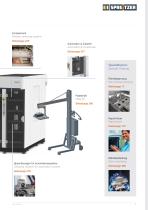
Funksensorik Wireless sensoring systems Seite/page 243 Automation & Zubehör Automation & Accessories Seite/page 247 Spezialthemen Special Themes Rohteilspannung Raw material clamping Seite/page 11 Palettenlift Pallet lift Seite/page 266 Rapid fixture Rapid fixture Seite/page 191 Spannlösungen für Automationssysteme Clamping solutions for automation systems Mikrobearbeitung Micro-machining Seite/page 268
Open the catalog to page 5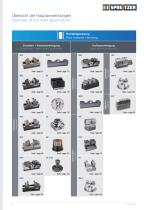
Rohteilspannung Raw material clamping GroGserienfertigung Large series production Einzelteil- / Kleinserienfertigung Single-part / small series productionMZR MMS MDS HZS Seite / page 22 Seite / page 112 DBF-P Seite / page 30 Seite / page 116 Seite / page 96 Seite / page 120 MZU DBF MMS EZC Seite / page 36 Seite / page 118 Seite / page 112 MZQ SK PZS Seite / page 42 Seite / page 123 Seite / page 64 MZC MK PZS2 Seite / page 48 Seite / page 127
Open the catalog to page 6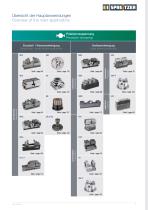
Übersicht der Hauptanwendungen Overview of the main applications Präzisionsspannung Precision clamping Einzelteil- / Kleinserienfertigung Single-part / small series production DBF Seite / page 76 DBF-P mechanisch mechanical hydraulisch hydraulic Großserienfertigung Large series production pneumatisch pneumatic Seite / page 107 DBF-P
Open the catalog to page 7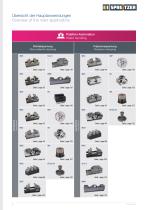
Seite / page 36 Seite / page 116 Seite / page 54 Seite / page 127 Seite / page 42 Seite / page 118^^^ Seite / page 94 Seite / page 132 Seite / page 48 Seite / page 123 Seite / page 96 Seite / page 94 Seite / page 127 Seite / page 104 Seite / page 96 Seite / page 132 Seite / page 110
Open the catalog to page 8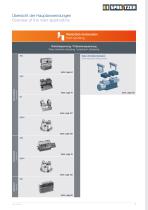
Übersicht der Hauptanwendungen Overview of the main applications Werkstück-Automation Part handling Rohteilspannung / Präzisionsspannung Raw material clamping / precision clamping PZS Backen-Schnellwechselsystem Quick-acting jaw change system pneumatisch pneumatic Seite / page 107 DBF-P hydraulisch hydraulic Seite / page 76 DBF-P elektrisch electric
Open the catalog to page 9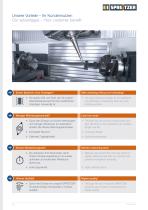
Unsere Vorteile – Ihr Kundennutzen Our advantages – Your customer benefit Sicher Spannen ohne Vorprägen! + Sie sparen Zeit und Geld, da mit unserer Werkstückspanntechnik kein zusätzliches Vorprägen notwendig ist. Weniger Werkzeugverschleiß! + You save time and money, as no additional pre-stamping is necessary with our workholding systems. Less tool wear! + Durch den Einsatz von kurzen Werkzeugen und weniger Vibrationen am Werkstück erzielen Sie höhere Werkzeugstandzeiten. + Through the use of short cutting tools and less vibration on the workpiece you achieve longer tool life. Kürzere Bearbeitungszeit!...
Open the catalog to page 10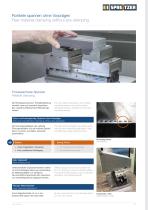
Rohteile spannen ohne Vorprägen Raw material clamping without pre-stamping Prozesssicheres Spannen. Reliable clamping. Die Rohteilspannung bzw. Rohteilbearbeitung erfordert neue und innovative Spannlösungen, speziell auf Mehrachsen-Bearbeitungszentren. The raw material clamping or raw material machining requires new and innovative clamping solutions, especially on multi-axis machining centres. Sicher und kostengünstig. Spannen ohne Vorprägen. Safe and cost-effective. Clamping without pre-stamping. Die hohe Eigensteifigkeit, das optimale Führungsverhältnis und die kraftvolle Spindel führen zu...
Open the catalog to page 11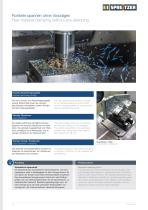
Rohteile spannen ohne Vorprägen Raw material clamping without pre-stamping Höchste Bearbeitungsqualität Highest machining quality Die hohe Zentrier- und Wiederholgenauigkeit unserer Spannmittel sowie das verzugsfreie Spannen ermöglichen unseren Kunden höchste Fertigungsqualität. The high centering and repetition accuracy of our clamping devices as well as distortion-free clamping enable our customers the highest manufacturing quality. Weniger Vibrationen Less vibrations Die stabile Ausführung ermöglicht sicheres Spannen und reduziert Vibrationen am Werkstück. Die optimale Zugänglichkeit zum Werkstück...
Open the catalog to page 12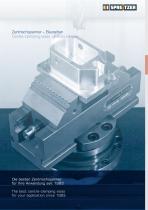
Zentrischspanner – Baureihen Centre-clamping vises – Model ranges Die besten Zentrischspanner für Ihre Anwendung seit 1983. The best centre-clamping vises for your application since 198
Open the catalog to page 13All Spreitzer GmbH & Co. KG - Präzisionswerkzeuge catalogs and technical brochures
 Product overview
24 Pages
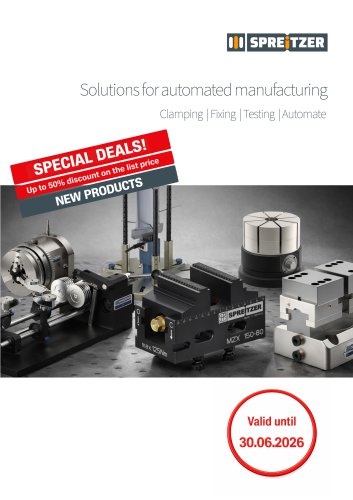 Campaign flyer
48 Pages
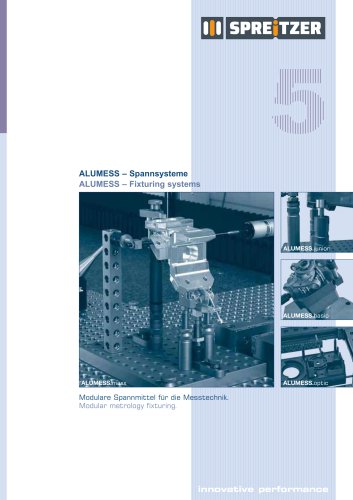 ALUMESS – Fixturing systems
285 Pages
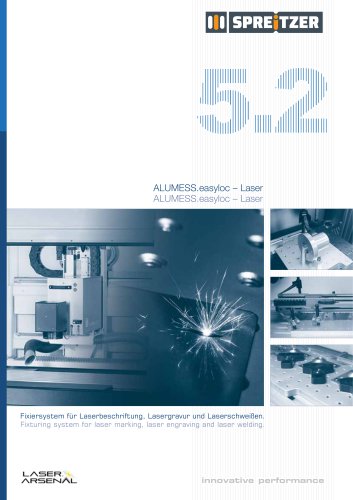 ALUMESS.easyloc - Laser
34 Pages
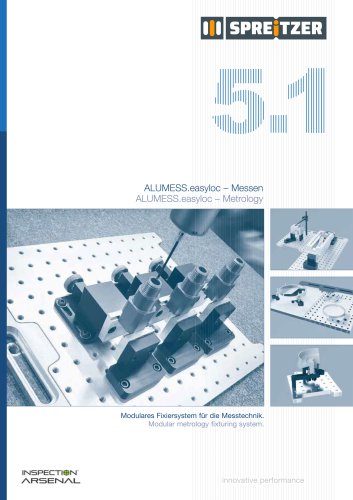 ALUMESS.easyloc - Metrology
44 Pages
 ER 32
ER 323 Pages
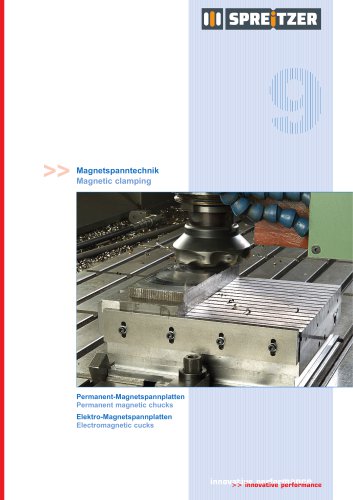 Magnetic clamping
64 Pages
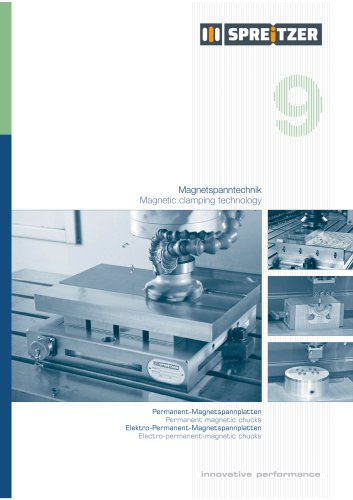 Flyer magnetic clamping
4 Pages
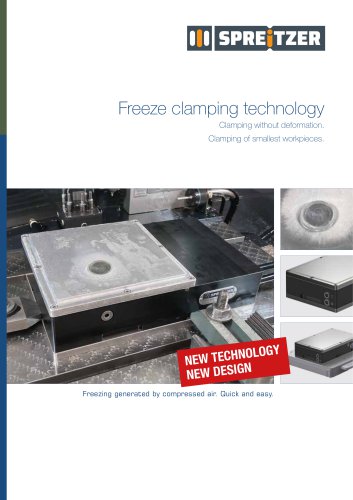 Freeze clamping technology
4 Pages
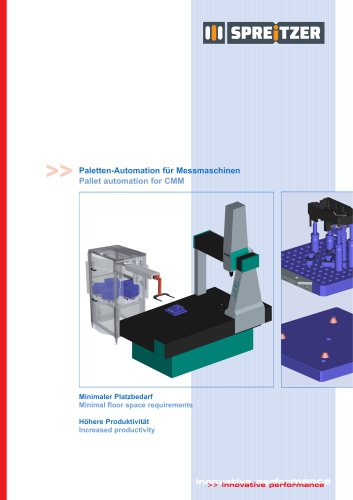 Pallet automation for CMM
2 Pages
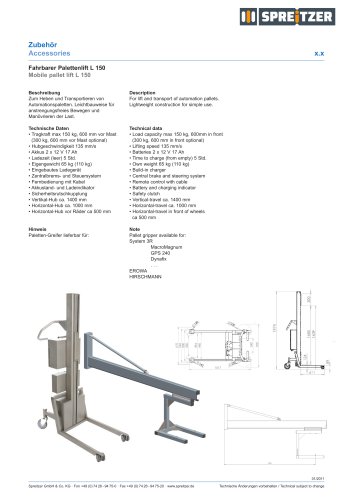 Mobile pallet lift
1 Page
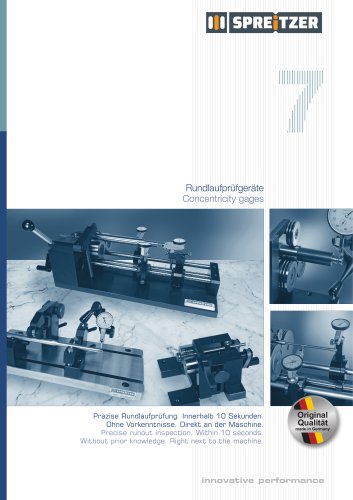 Concentricity gages
84 Pages
 Manufacturing-Alliance
12 Pages
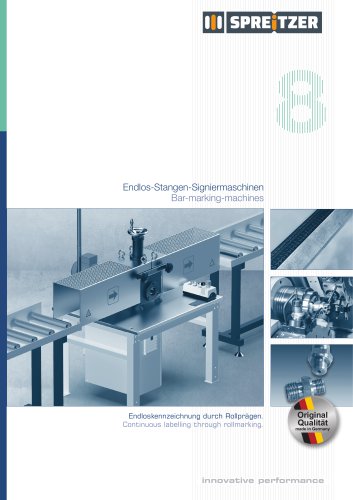 Bar-marking-machine
12 Pages
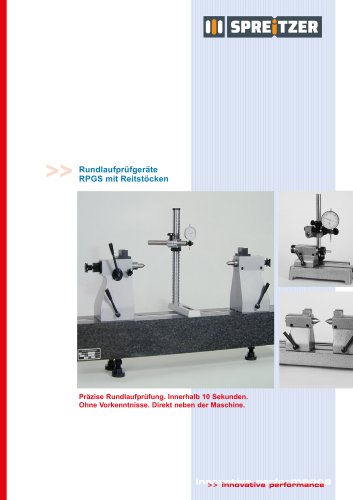 Concentricity gages RPGS
19 Pages




Archived catalogs
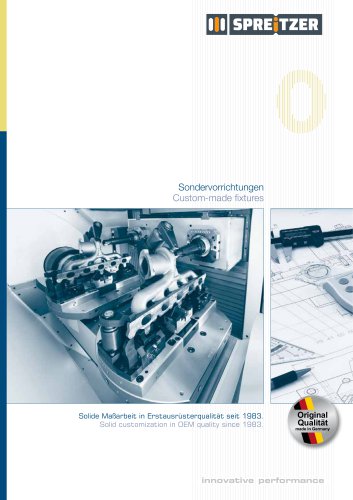 Custom-made fixtures
20 Pages
 Our new products 2014
4 Pages
 ALUMESS Basic starter sets
8 Pages
 ALUMESS Stick-Pad
1 Page
 Manual chuck SK
2 Pages
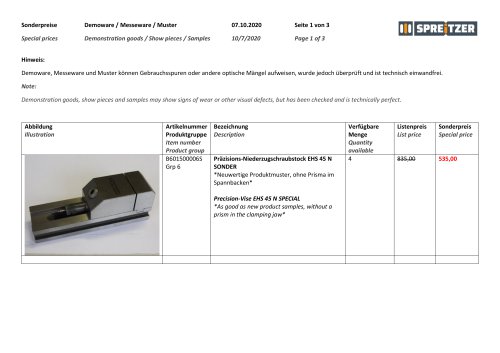 Sale offers
3 Pages
 SPREITZER Product ranges
24 Pages
 ALUMESS.easyloc clamping system
44 Pages
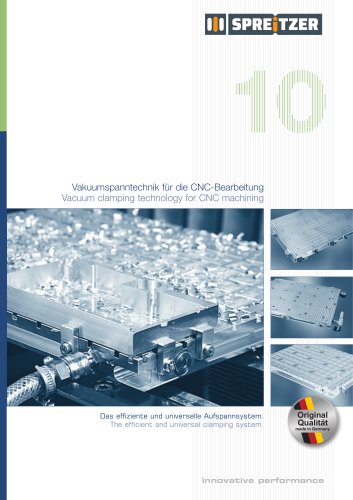
 Vacuum clamping technology
24 Pages
 ALUMESS - Ball
1 Page
 Magnetic clamping technology
46 Pages
 Vacuum clamping technology
8 Pages
 Concentricity gages
36 Pages


