


- Company
- Products
- Catalogs
- News & Trends
- Exhibitions
Automotive Manufacturing: ShockWatch RFID Case Study

Automotive Manufacturing: ShockWatch RFID Case Study
Catalog excerpts

Automotive Manufacturing: ShockWatch RFID Case Study
Open the catalog to page 1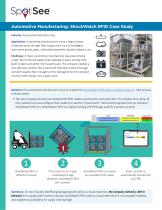
Automotive Manufacturing: ShockWatch RFID Case Study Industry: Automotive Manufacturing Application: Automotive manufacturers move a large number of delicate parts through their supply chain such as headlights, instrument panels, glass, calibrated equipment, brazed radiators, etc. Challenge: A major automotive manufacturer was experiencing a high rate of internal supply chain damage to parts moving from plant to plant and within their warehouses. The company needed a cost-effective solution that could track individual product damage and alert supply chain managers of the damage before the product...
Open the catalog to page 2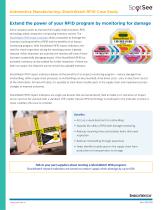
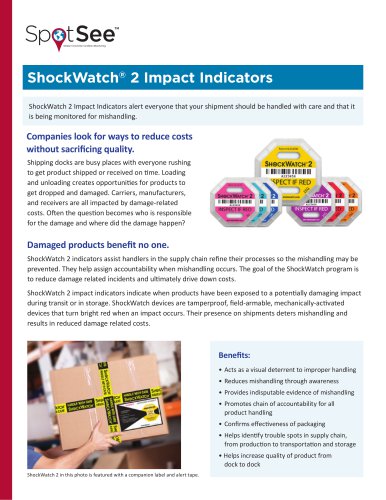
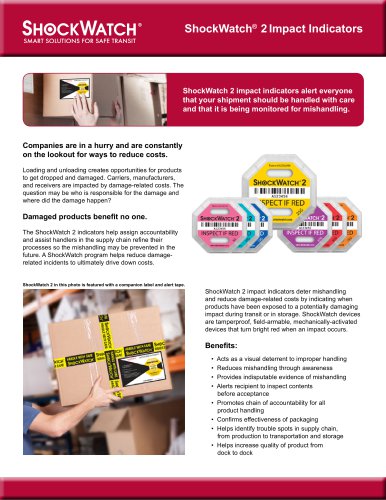
ShockWatch 2 Impact Indicators Automotive Manufacturing: ShockWatch RFID Case Study Extend the power of your RFID program byindicators alert everyone ShockWatch 2 impact monitoring for damage that your shipment should be handled with care Every company wants to improve their supply chain processes. RFID and that it is being monitored for mishandling. technology aided companies in improving inventory control. The ShockWatch RFID impact indicator allows companies to leverage the inventory tracking benefits of RFID and the benefits of an impact monitoring program. With and are constantly Companies...
Open the catalog to page 3All SpotSee catalogs and technical brochures
 HemoTemp® II Activator
11 Pages
 WarmMark Data Sheet
3 Pages
 ShockLog® 298 Overview
5 Pages


Archived catalogs
 TempU
TempU1 Page
 ShockWatch RFID Overview
2 Pages
 Forehead Thermometer
2 Pages
 Tilt Indicators
2 Pages
 ShockLog 248
2 Pages
 SpotSee® Tilt Indicators
2 Pages
 SpotBot 4G Plus Overview
3 Pages
 Blood Temp 10
1 Page
 SpotBot BLE
1 Page
 Temperature Recorders
2 Pages
 Cold Chain Indicators
2 Pages
 SpotBot Cellular
2 Pages
 Mag-2000
2 Pages
 ShockDot
2 Pages
 ShockLog Cellular
2 Pages
 ShockWatch Label
2 Pages
 ShockWatch Tube
2 Pages
 ShockWatch Flex
2 Pages
 OpsWatch Overview
3 Pages
 WarmMark Overview
2 Pages
 ColdMark
1 Page
 LOGIC Temperature Recorder
2 Pages
 SpotBot™ Cellular
2 Pages
 2018 ShockLog® 298 Overview
4 Pages
 2018 ShockTrak™ Overview
2 Pages
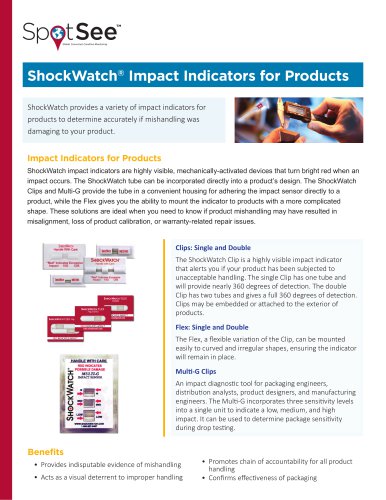 2018 ShockWatch Clip
2 Pages
 ShockDot Impact Indicator
2 Pages
 ShockWatch® MAG 2000
2 Pages
 ShockWatch® Flex
2 Pages
 OpsWatch
2 Pages
 ShockLog 208
2 Pages
 ShockWatch Labels
2 Pages
 Seafood Indicator
1 Page
 Impact Recorders
2 Pages
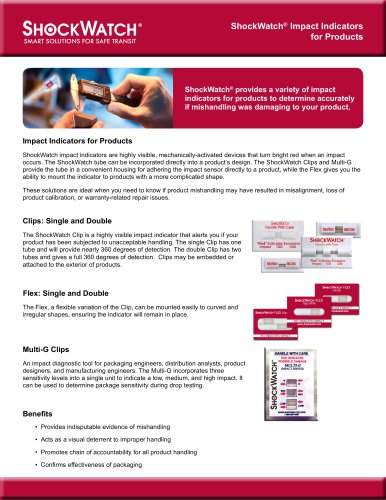 2016 ShockWatch Clip
2 Pages

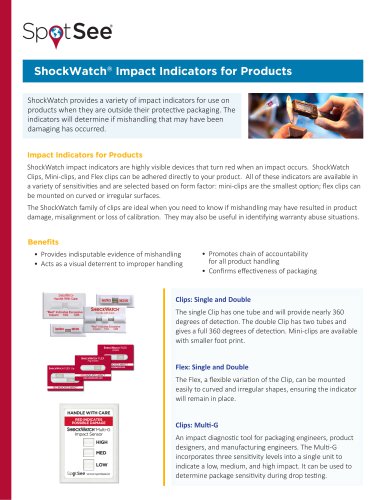


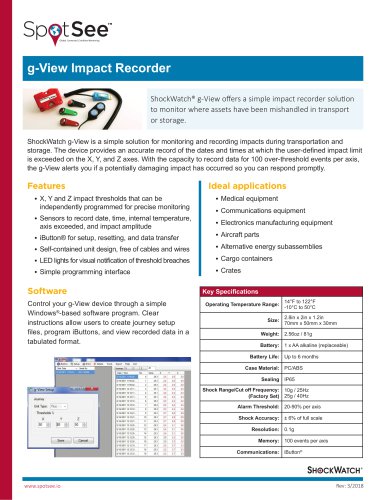

- Temperature probe
- Data logger
- Resistance temperature sensor
- Temperature datalogger
- USB datalogger
- Data-logger with screen
- Stainless steel temperature transducer
- Wireless datalogger
- Datalogger without display
- Battery-powered datalogger
- Monitoring datalogger
- RTD temperature sensor
- Datalogger with LCD display
- Precision temperature transducer
- Analog indicator
- Programmable datalogger
- Polymer tag
- Compact logger
- Temperature indicator
- Ink