


The Difference Between Disc Springs and Belleville Washers

The Difference Between Disc Springs and Belleville Washers
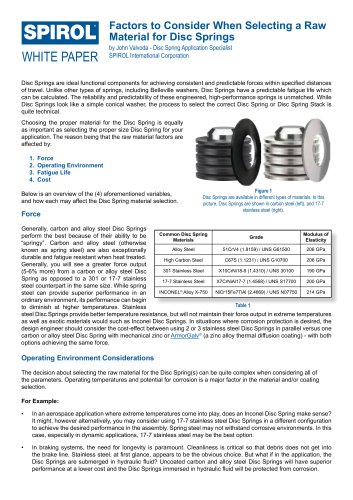
Disc Springs and Belleville Washers are conically shaped spring washers made from spring steels, designed for axial loading. They offer high force in compact areas compared to coil or wave springs. While often used interchangeably, there are technical and application differences between Disc Springs and Belleville Washers.
Technical Distinctions
- Disc Springs: Used in dynamic loading/cycling applications with predictable fatigue life. Commonly found in pressure controls, vehicle braking systems, and other applications requiring repeatable force-travel relationships.
- Belleville Washers: Primarily used in static applications, such as bolt fastening, where the load is static.
Material and Standards
- Disc Springs: Made from high carbon steel (<1.25mm) or alloy steel (≥1.25mm), with thickness ranging from 0.2mm to 14mm. Governed by DIN EN 16983 & 16984 standards.
- Belleville Washers: Typically thicker for a given outer diameter, governed by DIN 6796.
Application Recommendations
Choosing the right Disc Spring or configuration can be complex. It is advised to consult with Disc Spring Application Engineering experts to determine the optimal solution for specific applications.
Contact Information
SPIROL provides contact details for various international offices, offering support and expertise in Disc Spring applications.
Conclusion
Disc Springs provide innovative fastening solutions, reducing assembly costs and offering reliable performance in dynamic applications.
Catalog excerpts

WHITE PAPER The Difference Between Disc Springs and Belleville Washers by Nicholas Bunt, Product Specialist SPIROL International Corporation Disc Springs and Belleville Washers are both conically shaped spring washers typically made from spring steels and designed to be loaded axially. Both can provide a higher degree of force in a relatively compact area as compared to coil springs or wave springs. While the terms “Disc Springs” and “Belleville Washers” are often used interchangeably, there are some technical, design, and application differences between the two products: TECHNICAL DISTINCTIONS BETWEEN DISC SPRINGS AND BELLEVILLE WASHERS A defined list of standard Disc Spring sizes and associated load and deflection characteristics is available in DIN EN 16983 (formerly DIN 2093). Selecting the most appropriate Disc Spring or Disc Stack configuration can be challenging. It is recommended that designers partner with experts in Disc Spring Application Engineering to determine the optimum Disc Spring for a particular application. For information about fatigue life of Disc Springs, read the SPIROL White Paper:
Open the catalog to page 1
Innovative fastening solutions. Lower assembly costs. Technical Centres Slotted Spring Pins Coiled Spring Pins Solid Pins Ground Hollow Dowels Compression Limiters Dowel Bushings / Spring Dowels Rolled Tubular Inserts for Plastics Precision Washers Precision Shims & Thin Metal Stampings Disc Springs Installation Technology Parts Feeding Please refer to www.SPIROL.co.ufc for current specifications and standard product offerings. Europe SPIROL United Kingdom 17 Princewood Road Corby, Northants NN17 4ET United Kingdom Tel. +44 1536 444800 Fax. +44 1536 203415 SPIROL France Cite de I'Automobile ZAC...
Open the catalog to page 2All SPIROL catalogs and technical brochures
 SPIROL Corporate Brochure
12 Pages
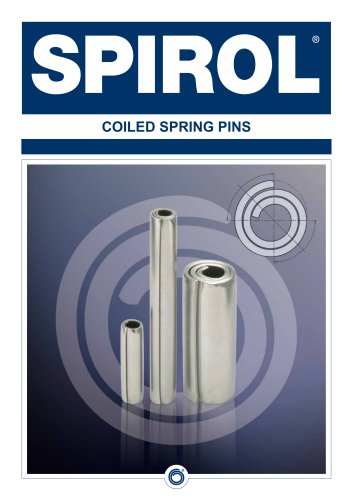 Coiled Spring Pins
24 Pages
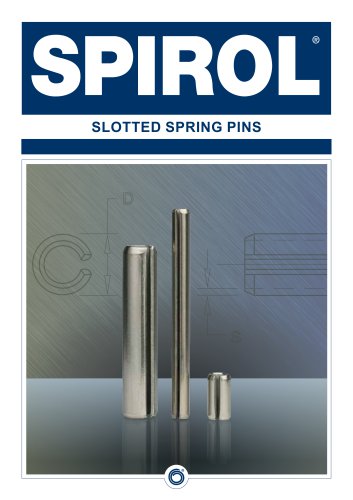 Slotted Spring Pins
16 Pages
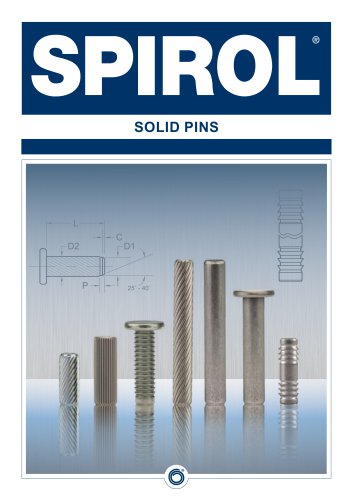 Solid Pins
12 Pages
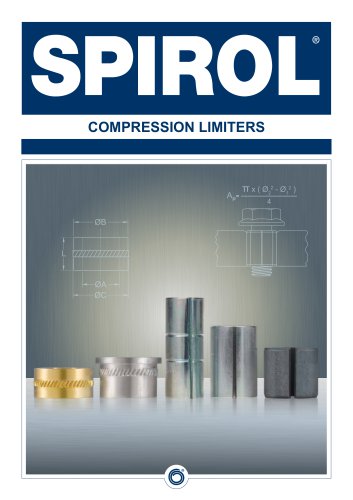 Compression Limiter Design Guide
20 Pages
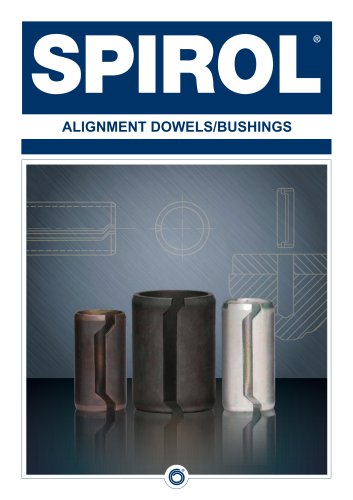 Alignment Dowels/Bushings
12 Pages
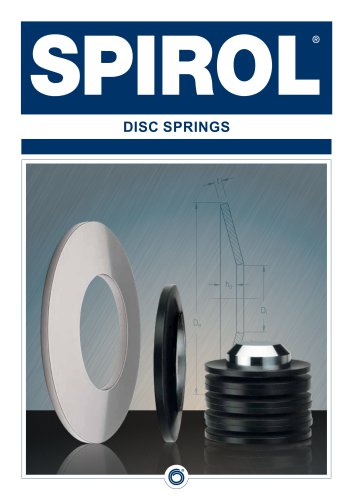 Disc Springs
20 Pages
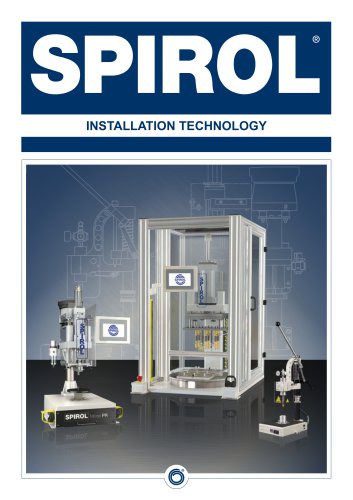 Installation Technology
8 Pages
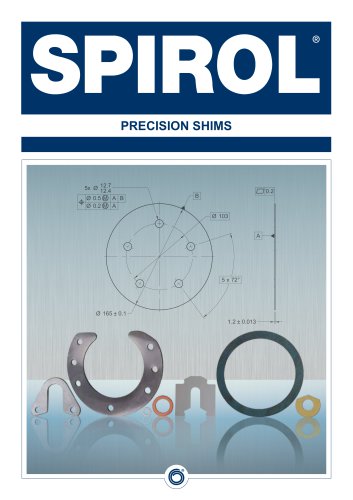 SPIROL Precision Shims
8 Pages
 Series 2000 Series 2000
4 Pages
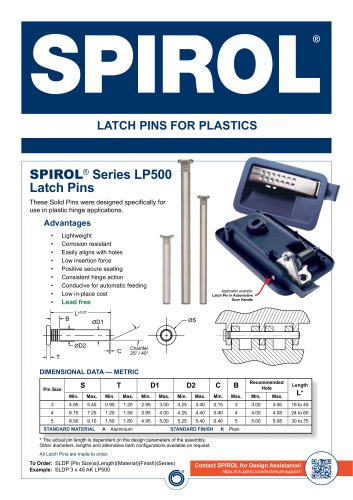 Latch Pins for Plastics
2 Pages
 Railroad Nuts - AAR Series
2 Pages
 Series RH600 Twist-Lok™ Pins
2 Pages
 Cosmestic Pins 550 series
2 Pages
 Medical Device Applications
2 Pages
 Aerospace Applications Flyer
2 Pages
 Tables Lift and Roll
2 Pages
 Tables Standard
2 Pages
 SPD, CXA, CXD, CXE CRD
2 Pages
 HC series HC series
2 Pages
 PH series PH series
2 Pages
 880 Series
2 Pages






- Chuck
- Feeder
- SPIROL metal insert
- SPIROL threaded insert
- Mounting machine
- Automated feeder
- SPIROL round insert
- Drilling chuck
- Metal washer
- Round washer
- SPIROL metal pin
- Automatic assembling machine
- Drilling tool holder
- Vibratory feeder
- Steel washer
- SPIROL brass insert
- SPIROL plastic insert
- Knurled insert
- SPIROL steel pin