- Catalogs
- SMAY sp. z o.o.
- PWIIS-EX cut-off explosion-proof dampers
PWIIS-EX cut-off explosion-proof dampers
PWIIS-EX cut-off explosion-proof dampers
Catalog excerpts
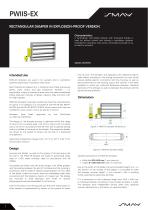
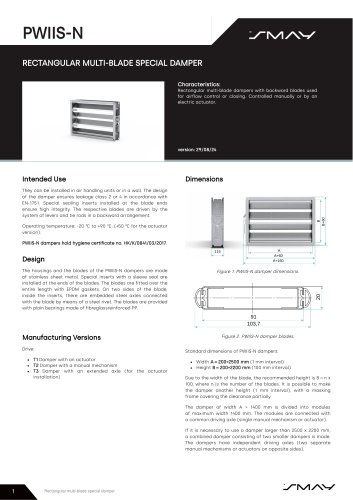
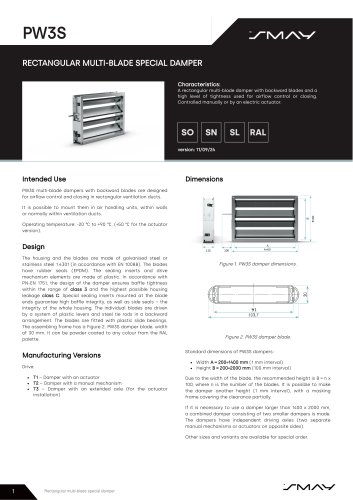
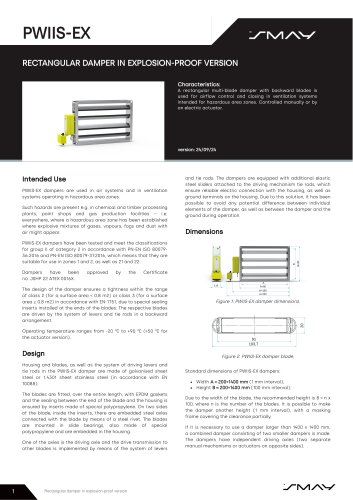
PWIIS-EX RECTANGULAR DAMPER IN EXPLOSION-PROOF VERSION Characteristics: A rectangular multi-blade damper with backward blades is used for airflow control and closing in ventilation systems intended for hazardous area zones. Controlled manually or by an electric actuator. PWIIS-EX dampers are used in air systems and in ventilation systems operating in hazardous area zones. Such hazards are present e.g. in chemical and timber processing plants, paint shops and gas production facilities – i.e. everywhere, where a hazardous area zone has been established where explosive mixtures of gases, vapours, fogs and dust with air might appear. and tie rods. The dampers are equipped with additional elastic steel sliders attached to the driving mechanism tie rods, which ensure reliable electric connection with the housing, as well as ground terminals on the housing. Due to this solution, it has been possible to avoid any potential difference between individual elements of the damper, as well as between the damper and the ground during operation. Dampers have been no. JSHP 22 ATEX 0016X. PWIIS-EX dampers have been tested and meet the classifications for group II of category 2 in accordance with PN-EN ISO 8007936:2016 and PN-EN ISO 80079-37:2016, which means that they are suitable for use in zones 1 and 2, as well as 21 and 22. Figure 1. PWIIS-EX damper dimensions. The design of the damper ensures a tightness within the range of class 2 (for a surface area < 0.8 m2) or class 3 (for a surface area ≥ 0.8 m2) in accordance with EN-1751, due to special sealing inserts installed at the ends of the blades. The respective blades are driven by the system of levers and tie rods in a backward arrangement. Operating temperature ranges from -20 °C to +90 °C (+50 °C for the actuator version). Design Housing and blades, as well as the system of driving levers and tie rods in the PWIIS-EX damper are made of galvanised sheet steel or 1.4301 sheet stainless steel (in accordance with EN 10088). The blades are fitted, over the entire length, with EPDM gaskets and the sealing between the end of the blade and the housing is ensured by inserts made of special polypropylene. On two sides of the blade, inside the inserts, there are embedded steel axles connected with the blade by means of a steel rivet. The blades are mounted in slide bearings, also made of special polypropylene and are embedded in the housing. One of the axles is the driving axle and the drive transmission to other blades is implemented by means of the system of levers Rectangular damper in explosion-proof version Figure 2. PWIIS-EX damper blade. Standard dimensions of PWIIS-EX dampers: Width A = 200÷1400 mm (1 mm interval), Height B = 200÷1400 mm (100 mm interval). Due to the width of the blade, the recommended height is B = n x 100, where n is the number of the blades. It is possible to make the damper another height (1 mm interval), with a masking frame covering the clearance partially. If it is necessary to use a damper larger than 1400 x 1400 mm, a combined damper consisting of two smaller dampers is made. The dampers have independent driving axles (two separate manual mechanisms or actuators on opposite s
Open the catalog to page 1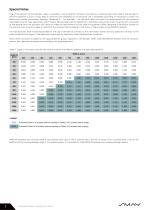
One of the versions of the damper makes it possible to use an electric actuator mounted on a shelf placed at the side of the damper to drive the damper. In such a case, keep in mind that the assembly as a functional unit is classified according to the group to which the device with poorer parameters belongs. Therefore, if - for example - an actuator does not meet the requirements for the products classified as the Ex-type equipment, which means devices approved for operation in hazardous area zones, then the entire unit consisting of the damper and that actuator also does not meet the requirements...
Open the catalog to page 2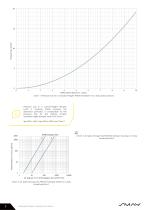
Chart 1. Pressure loss for a standard-height PWIIS-EX damper (in a fully open position). Pressure loss in a custom-height damper (with a masking frame covering the clearance partially) is comparable to the pressure loss for the nearest smaller standard height damper read from Chart 1. Δp (600 x 460) ≈ Δp (600 x 400) from Chart 1 Chart 3. Air leaks through the PWIIS-EX damper housing (in a fully closed position). Chart 2. Air leaks through the PWIIS-EX damper baffle (in a fully closed position). Rectangular damper in explosion-proof vers
Open the catalog to page 3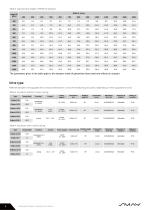
Table 2. Approximate weight of PWIIS-EX dampers.
Open the catalog to page 4
PWIIS-EX - Rectangular damper in explosion-proof version When ordering, please provide information as follows: PWIIS-EX - - x - T - Where: K Kinematics* p – Backward blades P Version* O - Blades and housing made of galvanised sheet metal N - Blades and housing made of stainless sheet metal A Damper inner clearance width [mm] B Damper inner clearance height [mm] N Drive type* 1 – With an actuator 2 - Manual mechanism KL EN 1751 leakage class* A2 - Housing: A, baffle: 2 (surface area A x B < 0.8 m²) A3 – Housing: A, baffle: 3 (surface area A x B ≥ 0.8 m²) B2 – Housing: B, baffle: 2 (surface area...
Open the catalog to page 5All SMAY sp. z o.o. catalogs and technical brochures
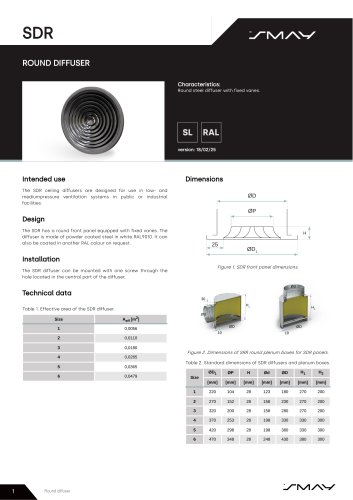 SDR - Round diffuser
2 Pages
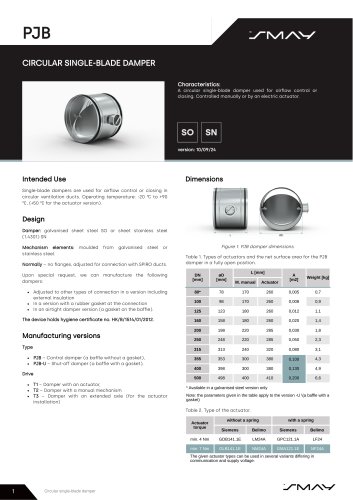 PJB single-blade air dampers
3 Pages
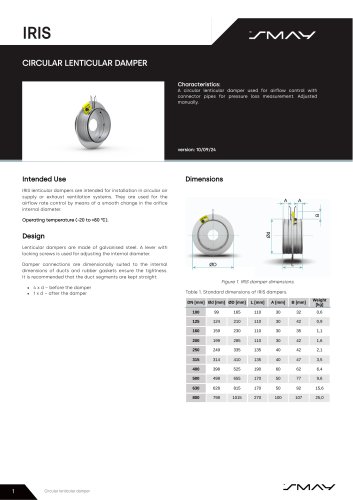 IRIS
IRIS2 Pages
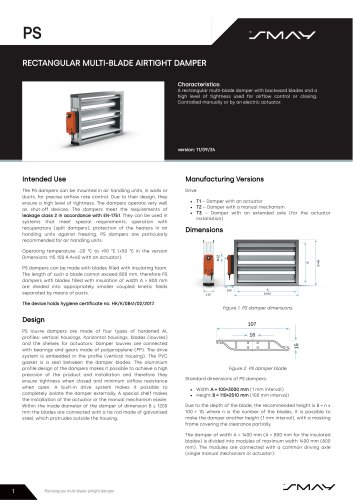 PS multi-blade dampers
5 Pages
 PWII Multi-blade dampers
5 Pages
 Type PWW multi-blade dampers
6 Pages
 SR Plenum boxes
4 Pages
 KEP/KEK Flexible connectors
2 Pages
 Brochure SMAY UK 2025
36 Pages
 SFL-M
SFL-M3 Pages
 NAF
NAF6 Pages
 KZ
KZ3 Pages
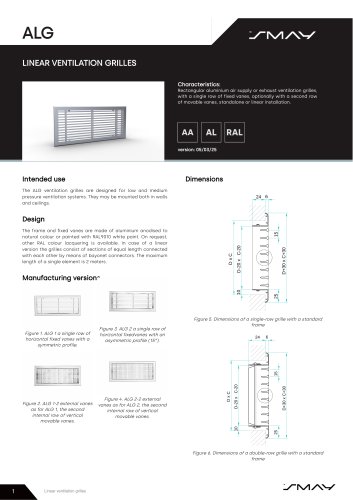 ALG
ALG5 Pages
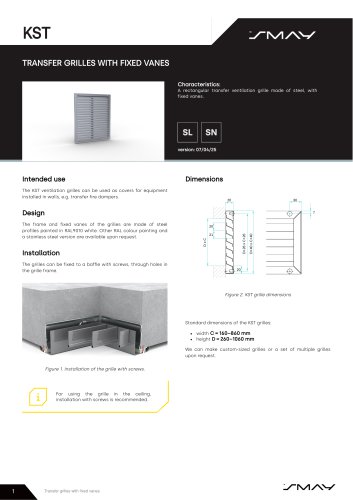 KST
KST3 Pages