


- Company
- Products
- Catalogs
- News & Trends
- Exhibitions
SITEMA electric Safety Brake KSE
1 /5Pages
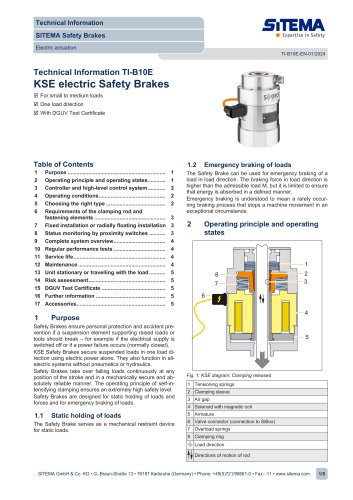
SITEMA electric Safety Brake KSE
1 /5Pages
Catalog excerpts
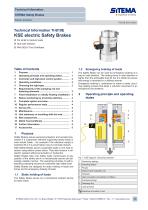
SiTEMA ■ Expertise in Safety 0 For small to medium loads 0 One load direction 0 With DGUV Test Certificate 7 Fixed installation or radially floating installation 3 Safety Brakes ensure personal protection and accident prevention if a suspension element supporting raised loads or tools should break - for example if the electrical supply is switched off or if a power failure occurs (normally closed). KSE Safety Brakes secure suspended loads in one load direction using electric power alone. They also function in allelectric systems without pneumatics or hydraulics. Safety Brakes take over falling loads continuously at any position of the stroke and in a mechanically secure and absolutely reliable manner. The operating principle of self-intensifying clamping ensures an extremely high safety level. Safety Brakes are designed for static holding of loads and forces and for emergency braking of loads. 1.1 Static holding of loads The Safety Brake serves as a mechanical restraint device for static loads. 1.2 Emergency braking of loads The Safety Brake can be used for emergency braking of a load in load direction. The braking force in load direction is higher than the admissible load M, but it is limited to ensure that energy is absorbed in a defined manner. Emergency braking is understood to mean a rarely occurring braking process that stops a machine movement in an exceptional circumstance. SITEMA GmbH & Co. KG • G.-Braun-StraRe 13 • 76187 Karlsruhe (Germany) • Phone: +49(0)721/98661-0 • Fax: -11 • www.sitema.com
Open the catalog to page 1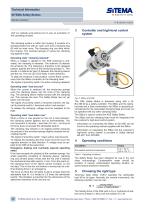
Visit our website www.sitema.com to see an animation of the operating principle. Table 1: Operating conditions The clamping system is within the housing. It consists of a clamping sleeve (2) with an outer cone and a clamping ring (8) with an inner cone. The clamping ring can slide within the housing. The overload springs (7) press the clamping ring against a stop. When a voltage is applied to the KSE (solenoid is activated), the clamping is released. The solenoid (4) attracts the armature (5). The clamping is therefore in the released position against the force of the tensioning springs (1)....
Open the catalog to page 2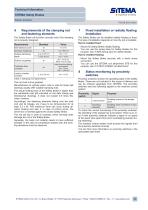
Table 2: Clamping rod requirements 6 Requirements of the clamping rod and fastening elements The Safety Brake will function correctly only if the clamping rod is properly designed. Manufacturers of cylinder piston rods or rods for linear ball bearings usually offer suitable clamping rods. The actual holding force of the Safety Brake is higher than the admissible load (M) indicated on the data sheets and dimensional drawings. It does not exceed 3.5 times this value, however. Accordingly, the fastening elements taking over the load (rod and its linkage, etc.) have to be dimensioned for at least...
Open the catalog to page 3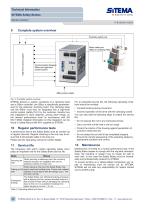
Table 3: Operating states and stress Fig. 3: Complete system overview SITEMA delivers a system consisting of a clamping head and a SiBox controller; the SiBox is specifically parameterized for the particular clamping head. The clamping head and the SiBox must then be integrated into a high-level control system (safety PLC) by the customer. Exactly how this integration is done depends, among other things, on the desired performance level (in accordance with EN ISO 13849). Detailed information on this integration can be found in Safety Manual BA-SH1 supplied by SITEMA. A performance test of the...
Open the catalog to page 4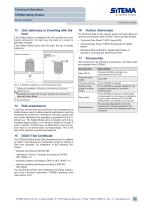
14 Risk assessment It must be ensured that the dimensions and arrangement of Safety Brakes used in safety-relevant applications meet the requirements of EN ISO 12100:2010 and also comply with any further standards and regulations applicable for the intended use. The Safety Brake alone principally cannot be a complete safety solution. It is however suitable to be part of such a solution. Furthermore, all attachments and connections have to be dimensioned correspondingly. This is the task of the machine manufacturer/operator. 15 DGUV Test Certificate The SITEMA Safety Brake (the mechanical part)...
Open the catalog to page 5All SITEMA catalogs and technical brochures
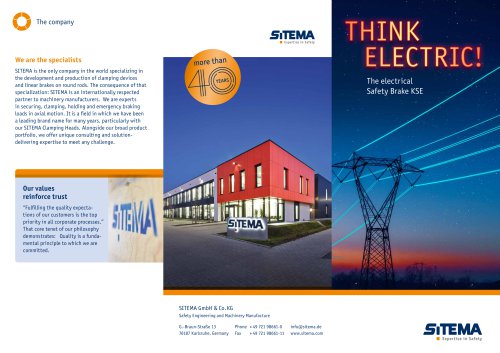 electric Safety Brake linear
2 Pages
 PowerStroke SITEMA
9 Pages
 SITEMA_Flyer_2020
2 Pages
 TI-S10 Safety Locks
4 Pages
 TI-A10
7 Pages
 TI-P30
1 Page
 SITEMA Applications
2 Pages
 Dimensions, type KRG
1 Page
 Dimensions, type KRP/T
1 Page
 Dimensions, type KRP
1 Page
 Dimensions, type KR, K
2 Pages
 SITEMA Safety Catchers
2 Pages
 SITEMA Locking Units KFH
6 Pages
 STB10 Rod Attachment STB
3 Pages
 F60 Dimensions, type KFHA
6 Pages
 Z10 - Auto Bleeder
3 Pages
 SITEMA Safety Locks KRG
1 Page
 SITEMA company
15 Pages
 Locking Units KFPC
3 Pages
 Locking units series KFPA
4 Pages


- Double-acting cylinder
- Lifting table
- Hydraulic cylinder
- Scissor lift table
- Pneumatic cylinder
- Stationary lift table
- Friction brake
- Hydraulic lift table
- Clamping device
- Industrial cylinder
- Standard cylinder
- ISO cylinder
- Electromagnetic brake
- Industrial control system
- Cylinder with piston rod
- Heavy load lift table
- Hydraulic clamping
- Monitoring control system