
- Catalogs
- SINGER Frères
- Singer Safety

Singer Safety

Singer Safety
This document provides a comprehensive overview of personal protective equipment (PPE) offerings, including specifications, historical background, company values, and product categories. It highlights the company's commitment to quality, innovation, and sustainability.
The company was founded over 100 years ago in Saint Omer, France, by Achille and Maurice Singer. Initially focused on harnesses and accessories, the company shifted to protective gloves post-World War II under the leadership of Maurice's sons, Michel and Etienne. The 1970s marked a strategic expansion into new products and global markets. The third generation, led by Laurent and Patrick, continued this growth in the 1990s.
The company emphasizes performance, respect, and integrity. It ensures all PPE products comply with European standards, focusing on aesthetics, comfort, and modernity. The company prioritizes customer satisfaction and sustainable development.
The company operates a 10,000 m2 logistics platform in Dunkirk, ensuring the availability of over 8 million items globally. It prides itself on expertise, high-quality products, and responsive service.
- Head Protection: Includes helmets, bump caps, and accessories.
- Eye Protection: Offers stylish and classic spectacles, goggles, and welding spectacles.
- Face Protection: Features welding hoods and face shields.
- Ear Protection: Comprises ear-muffs, ear-bands, and ear-plugs.
- Respiratory Protection: Includes half-masks, full face masks, and filters.
- Hand Protection: Offers synthetic, cotton, and leather gloves with various coatings and features.
- Foot Protection: Covers safety trainers, boots, and accessories.
- Body Protection: Includes clothing like parkas, jackets, vests, and high-visibility garments.
- Fall Arrest: Provides solutions for fall protection.
The document outlines compliance with European standards, ensuring all products meet safety and quality requirements.
The company is dedicated to providing reliable, durable, and safe PPE products, maintaining strong relationships with partners, and addressing environmental concerns through sustainable practices.
- Stylish Spectacles: Anti-fog and anti-scratch lenses with wraparound shape for protection. EN 166 and EN 170 certified. Lightweight at 23g.
- Classic Spectacles: Various models like EVASUR, EVAMED, and EVASUN with polycarbonate lenses, sideshields, and slip-resistant temples. EN 166 and EN 170 certified.
- Visitor Spectacles: EVALAB and EVASTAR series with large ventilated sidearms, clear polycarbonate lenses, and adjustable cords. EN 166 and EN 170 certified.
- Pivoting Frame Spectacles: EVALANKA and EVASPORT series with adjustable temples and anti-scratch lenses. EN 166 and EN 170 certified.
- Lens Cleaning and Cases: Polyester cleaning tissues, synthetic cases with belt attachments, and EVA cases for protection against dust and impact.
- Cords: Elastic cords with adjustable lengths and connectors for secure attachment to spectacles.
- Premium Safety Goggles: EVASAFE with double lens protection, anti-fog, and anti-scratch features. EN 166 and EN 170 certified.
- Quality Safety Goggles: EVAGUARD with panoramic lenses and optional visor for full face protection. EN 166 and EN 170 certified.
- Comfort Goggles: EVAFLEX and EVACANA with soft seals and adjustable headbands, suitable for prescription lenses. EN 166 certified.
- Welding Spectacles: EVASOUD and EVASTARN series with smoke lenses and removable headbands. EN 166, EN 169, and EN 175 certified.
- Welding Hoods: MS1190 and EVA300 with opto-electronic features and flip-up windows. EN 166, EN 175, and EN 379 certified.
- Face Shields: Various models like HG925N and EVA825 with mesh or polycarbonate visors for impact protection. EN 166 and EN 1731 certified.
- Comfort+ Ear-Muffs: Lightweight and ergonomic designs with high-density foam for noise reduction. EN 352-1 certified.
- Ear-Plugs: Corded and uncorded options with high SNR ratings for effective noise attenuation. EN 352-2 certified.
- Ear-Bands: Reusable headbands with single-use ear-plugs, offering moderate noise reduction. EN 352-2 certified.
- Driver Style Gloves: These gloves are made from full cow grain leather with options for cotton fleece or fur acrylic boa lining. They feature a shirred elastic back and a one-piece leather forefinger.
- Fine Handling Gloves: Made from sheep or goatskin leather, these gloves emphasize fineness and ergonomics, with features like elastic knitted wrists and leather vein patch protection.
- Canadian Style Gloves: These gloves use cow split leather with cotton lining and leather reinforcements, designed for durability and safety with features like safety cuffs.
- Electrical Over-Gloves: Designed to be worn over other gloves for additional protection, these gloves are made from grain leather and feature hook-and-loop adjustments.
- Welders Gloves: These gloves are made from cow split leather, often with fire-resistant treatments and aramid yarn stitching, designed to meet EN 12477 TYPE A standards for welding protection.
- Parkas: Various parkas are described, made from polyester with PU or PVC coatings, featuring removable hoods, multiple pockets, and reflective piping for visibility.
- Bomber Jackets: These jackets are made from ripstop polyester with PVC coating, featuring removable hoods and sleeves, and multiple pockets for utility.
- Bodywarmers: Made from polyester and cotton blends, these garments offer insulation with features like multiple pockets and elasticated waists.
- Sweatshirts and Sweaters: Made from polar fleece or polyester, these garments provide warmth and comfort with features like drawcord waists and knitted wrists.
- Softshell Jackets: These jackets are made from polyester and elastane blends, offering waterproof and breathable protection with features like removable hoods and reflective piping.
- Materials used include cow grain leather, sheep and goatskin leather, polyester, and cotton blends.
- Design features focus on ergonomics, durability, and specific protection needs like fire resistance and electrical safety.
- Compliance with standards such as EN 12477 TYPE A for welding gloves and EN ISO 11611 for protective sleeves.
VANCOUVE Softshell jacket is made from 94% polyester and 6% elastane with a polar fleece polyester lining. It features removable sleeves, multiple pockets, zip fastening, and reflective piping. Available in black, grey, and red, it offers waterproofing up to 8000 mm and breathability of 800 mvp.
These jackets are made from 100% polar fleece polyester with varying weights (280 gsm to 520 gsm). They include features like zip fastening, knitted wrists, and multiple pockets. Available in colors such as grey, blue, and black.
Work jackets and trousers are made from blends of cotton and polyester, offering features like multiple pockets, zip fastening, reflective piping, and reinforced knee pad pockets. They are available in various colors and sizes from S to 3XL.
These garments are designed for fire retardancy, made from cotton and carbon blends. They comply with standards like EN ISO 11611 and EN ISO 11612, offering protection against various risks. Available in colors like grey, orange, and blue.
Welding jackets, leggings, and aprons are made from cow split leather and aramid yarn, providing fire retardant protection. They meet EN ISO 11611 and EN ISO 11612 standards, ensuring safety during welding activities.
Rainwear includes jackets and trousers made from polyester, PVC, and polyurethane blends. They feature taped seams, attached hoods, and elasticated wrists, providing protection against rain. Available in colors like yellow, navy blue, and green.
- Materials: Most garments are made from a combination of PVC, polyester, and cotton, with specific coatings for waterproofing and visibility.
- Design Features: Common features include taped seams for waterproofing, attached hoods with drawcords, multiple pockets, zip fastenings, and retro-reflective tapes for visibility.
- Sizes: Available in a range of sizes from S to 4XL, depending on the garment type.
- Safety Ratings: Many items are classified under minor risks or specific safety standards such as EN ISO 14116 for flame spread.
- High Visibility Standards: Garments include retro-reflective tapes and are designed to meet high visibility requirements for safety in low-light conditions.
- Usage: The document suggests appropriate use cases for each garment, such as rainwear for wet conditions and high visibility clothing for environments requiring enhanced visibility.
- Maintenance: Recommendations for maintaining the integrity and functionality of the garments are implied through material descriptions and safety classifications.
- Product Variants: Each product is available in multiple color options, typically yellow and navy blue or orange and navy blue, to suit different visibility needs.
- Size and Quantity: Products are listed with size ranges and packaging quantities, indicating bulk availability for industrial use.
- Material Composition: Understanding the material composition is crucial for selecting the right garment for specific environmental conditions.
- Safety Features: Features like retro-reflective tapes and flame resistance are critical for ensuring user safety in hazardous environments.
Fall arrest systems are designed to prevent falls and ensure safety when working at heights. They consist of an anchor point, a connecting element with energy absorption, and a fall arrest harness. Key products include the HARRIMIX fall arrest harness and the CORTOPRO restraint lanyard. Users must consider fall factors and air drafts before use.
These systems allow users to perform tasks in supported or suspended positions but must be used in conjunction with fall arrest systems. Products like the WORKPRO and WORKLUX lanyards are essential for work positioning.
Anchoring devices provide secure attachment points for fall arrest systems. Options include the LINEA200 temporary anchoring system and the ANKABIM beam anchor. These devices are compliant with EN 795 standards.
Retractable fall arresters, such as the ARAWEB100 and ARAPRO, offer mobility and safety with features like shock-resistant cases and visible energy absorbers. They are suitable for use in specific fall factors and comply with EN 360 standards.
Mobile fall arresters like the STOPRO and STOPLUX provide flexibility and ease of use on ropes. They are compatible with specific rope types and comply with EN 353-2 standards.
Lanyards such as the CORTAB15 and TWINLUX15 are equipped with energy absorbers and connectors, ensuring safety during falls. They require a minimum air draft and comply with EN 355 standards.
Restraint lanyards like the CORTOLUX and CORTOPRO are designed to limit movement and prevent falls. They are made of durable materials and comply with EN 354 standards.
Harnesses such as the HARRICANA3 and HARRIWORK provide multiple connection points for various safety functions. They are adjustable and padded for comfort, complying with EN 358, EN 361, and EN 813 standards.
Connectors like the OVABASE and OVALUX are crucial for linking fall arrest equipment. They feature secure closures and comply with EN 362 standards.
Additional accessories include the TOOLFLEX tool holder and SACHYDRO waterproof bag, which support safety and convenience during work at heights.
The document also includes a buying guide for safety shoes, highlighting features like ergonomic insoles and ventilation systems for comfort and protection in various work environments.
The document lists several models of safety trainers, each with specific features such as composite shockproof toe caps, ergonomic insoles, and pierce-resistant midsoles. They comply with EN ISO 20345 standards, ensuring safety and comfort. Key models include INDRA, BARYO, and BOCA, each offering unique attributes like metal-free construction and flexible textile midsoles.
This section highlights high-cut, water-repellent footwear designed for construction environments. Models like ABYSS and FOGGIA feature ergonomic insoles and self-cleaning soles, with compliance to EN ISO 20345 standards. These shoes are designed for excellent grip and comfort, with features like energy-absorbing heels and waterproof membranes.
Industry-specific footwear includes models like MILAN and ETNA, which offer high resistance to heat and oil (HRO soles) and are designed for durability and comfort in industrial settings. They feature ergonomic insoles and flexible textile midsoles.
The boots section includes models like GR40 and BORN, designed for cold environments with features like acrylic fur lining and steel toe caps. They comply with EN ISO 20345 standards, ensuring protection against perforation and providing excellent grip.
Accessories such as removable antistatic soles and various types of socks are detailed, offering additional comfort and support for users.
This section describes foldable particulate respirators designed for comfort and ease of use. They feature exhalation valves, adjustable nosepieces, and are latex-free to prevent skin irritation. The respirators comply with EN 149 standards and are available in various protection levels (FPP1, FPP2, FPP3).
The document provides comprehensive information on safety footwear and respiratory protection, emphasizing compliance with international safety standards and highlighting features that enhance user comfort and protection.
The document describes several types of particulate respirators, including foldable and molded series, approved to EN 149 standards. Key features include adjustable headstraps, metal-free designs, and options with exhalation valves. Products are categorized by protection levels (FPP1, FPP2, FPP3) and are available in various packaging sizes.
A range of nitrile, latex, and vinyl gloves are detailed, highlighting features such as powder-free, non-sterile, and ambidextrous designs. Gloves are categorized by thickness, length, and compliance with food contact standards. They are designed for minor risks and are available in multiple sizes.
The document lists chemical protective coveralls made from different materials like microporous polypropylene and SMS fabric. These coveralls are designed for various risk levels and comply with multiple EN standards. They feature elasticated waists, wrists, and ankles, and are available in different sizes and colors.
The document explains the European regulation 2016/425, which governs PPE manufacturing and distribution. It outlines the responsibilities of manufacturers, employers, and employees in ensuring safety and compliance with standards. The regulation categorizes PPE into three categories based on risk levels and specifies the certification procedures for each.
The document provides an overview of the standards applicable to PPE, including the marking of frames for protective eyewear. It explains the significance of various symbols and codes used to indicate compliance with specific standards and the intended field of use.
The document categorizes eye protection based on mechanical strength, optical class, and filter protection class. It specifies standards such as EN 165 to EN 175, which cover vocabulary, specifications, optical and non-optical test methods, and filters for welding and ultraviolet protection. Markings on oculars indicate various attributes like filter code, optical class, and mechanical strength.
Standards for helmets include EN 397 for industrial safety helmets, EN 50365 for electrically insulating helmets, EN 812 for industrial bump caps, and EN 443 for firefighter helmets. Each standard specifies requirements for shock absorption, penetration resistance, and other protective features.
Hearing protection standards (EN 352 series) cover ear-muffs, ear-plugs, and ear-muffs mounted on helmets. The document provides guidelines on maximum exposure times to different noise levels and specifies acoustic fading requirements.
Respiratory protection is categorized by filter types and classes, with standards such as EN 136, EN 140, EN 143, and EN 149. These standards define requirements for full face masks, half-masks, and filtering half-masks against particles and gases.
The document outlines standards for protective gloves, including EN 420 for general requirements, EN 388 for mechanical risks, EN 374 for chemical and microorganism protection, and EN 407 for thermal risks. It provides classifications for resistance levels against various hazards.
A guide on chemical resistance is included, detailing the resistance of different glove materials to various chemicals. It emphasizes the importance of testing gloves under specific conditions to ensure safety.
The document serves as a comprehensive guide for selecting and understanding the standards and requirements for different types of PPE, ensuring safety and compliance in various industrial and hazardous environments.
- EN ISO 13688: General requirements for protective clothing.
- EN ISO 11611 & 11612: Protection against welding, heat, and flame.
- EN 342 & 14058: Protection against cold and cool environments.
- EN 343: Protection against bad weather.
- EN ISO 20471: High visibility clothing requirements.
- EN 943, 14605, 13982, 13034: Protection against chemicals.
- EN 14126: Protection against infective agents.
- EN 1073-2: Protection against radioactive contamination.
- EN 1149-5: Electrostatic properties.
- EN 353-1 & 353-2: Fall arresters on rigid and flexible anchorage lines.
- EN 354: Lanyards specifications.
- EN 355: Energy absorbers for fall protection.
- EN 358: Work positioning belts and lanyards.
- EN 360: Retractable type fall arresters.
- EN 361: Full body harnesses.
- EN 362: Connectors for fall protection systems.
- EN 363 & 365: General requirements for personal fall protection systems.
- EN 795: Anchor devices for fall protection.
- EN 813: Sit harnesses.
- EN ISO 20344: Test methods for footwear.
- EN ISO 20345: Safety footwear with toe protection against shocks and flattening.
- EN ISO 20346: Protective shoes with toe protection.
- EN ISO 20347: Occupational footwear without toe protection specifications.
- EN 61340-4-3: Electrostatic dissipative shoes.
- For body protection, ensure compliance with specific EN standards based on the risk environment (e.g., heat, chemicals, weather).
- Fall protection equipment must meet static and dynamic resistance requirements to ensure safety during falls.
- Foot protection should be selected based on the specific class and optional requirements like anti-puncture soles and water resistance.
Catalog excerpts

Helmet: ALPINO Spectacles: EVALORA Gloves: N10 Harness: HARRIWORK Jacket: VERNAM Jean: JEANS Shoes: ST400
Open the catalog to page 2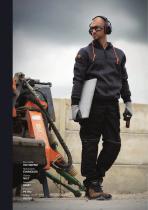
Ear-muffs: HG106PNR Spectacles: EVAMOUSS Gloves: NI57 Sweat-shirt: SAMY Trousers: PETRO Shoes: ABYSS
Open the catalog to page 4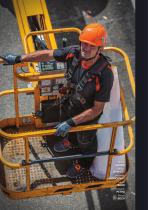
Helmet: ALPINO Gloves: GRIP157 Harness: HARRICANA1 T-shirt: SURO Trousers: PETRO Shoes: BOCA
Open the catalog to page 5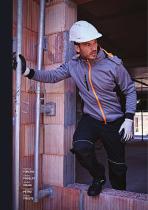
Helmet: FORCEW Gloves: PHD5LAT Jacket: VOLGA Trousers: PETRO Shoes: TRIESTE
Open the catalog to page 6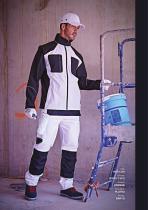
Cap: HG913W Gloves: NYM713PU Jacket: VANGOG Trousers: PLATRO Shoes: BARYO
Open the catalog to page 7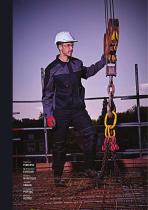
Helmet: FORCEW Spectacles: EVASUR Gloves: NYM15LG Jacket: VEGAS Trousers: PORTAC Shoes: ASTRO
Open the catalog to page 8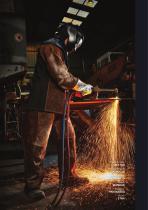
Welding mask: MS1190 Protective hood: PYROCAG Gloves: 50SIVAP15 Jacket: VEPSOUD Trousers: PANTASOUD Shoes: ETNA
Open the catalog to page 9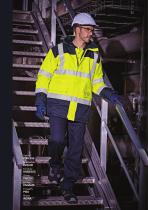
Helmet: FORCEW Spectacles: EVALOR Ear plug: HGB250C Gloves: PER200 Parka: PANAMA Trousers: PISA Shoes: INDRA
Open the catalog to page 10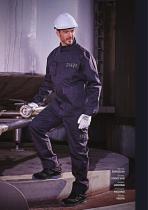
Helmet: FORCE2W Gloves: NYM13AS Jacket: VADONG Trousers: PADONG Shoes: INDRA
Open the catalog to page 11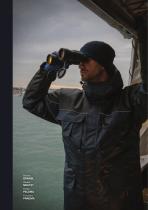
Beanie: BONABL Gloves: NSA15T Parka: PALAMA Trousers: PRAGMA
Open the catalog to page 12
Rainwear: VPLOCEAN Gloves: LAT830
Open the catalog to page 13
Ear-muffs: HG803G Jacket: VOLGA
Open the catalog to page 15
Our family history The story began over 100 years ago, in Saint Omer in northern France. Two brothers, Achille and Maurice Singer, invested in a tannery and began producing harnesses and accessories. In the aftermath of the Second World War, the factory was in ruins. The bombing might have finished off the family business were it not for the entrepreneurial spirit of its second generation, who took the fate of the operation into their hands. Maurice’s sons, Michel and Etienne, decided to invest in modern production tools to make protective gloves, mainly out of leather, to meet growing industry...
Open the catalog to page 17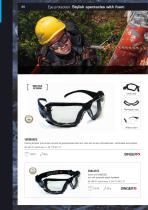
Eye protection: Stylish spectacles with foam WIDE FIELD OF VISION Inside view Removable foam Without foam EVAMOUSS Pivoting temples. Anti-scratch and anti-fog polycarbonate clear lens. Lens with an easy removable foam, comfortable and practical. EN 166 (FT, optical class 1). EN 170 (2C-1,2) EVALASTE Same as EVAMOUSS but with adjustable elastic headband. EN 166 (FT, optical class 1). EN 170 (2C-1,2)
Open the catalog to page 20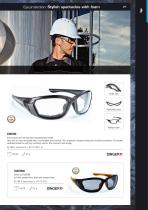
Eye protection: Stylish spectacles with foam Inside view Removable foam Without foam EVAFOM Anti-scratch and anti-fog clear polycarbonate lenses. Lens with an easy removable foam, comfortable and practical. Very ergonomic shape providing and excellent protection. Bi-injected ventilated sidearms with slip resistant inserts. Slip resistant nose bridge. EN 166 (F, optical class 1). EN 170 (2C-1,2) EVAFOMA Same as EVAFOM but with smoked lens, black and orange colour. EN 166 (F, optical class 1). EN 172 (5-2)
Open the catalog to page 21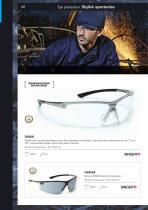
Eye protection: Stylish spectacles INNOVATION RESISTANCE AND LIGHT WEIGHT EVARUN Metallic-silver painted polycarbonate frame offers lightweight and durability. Single piece clear polycarbonate curved (7°) lens. TPR + polycarbonate temples. Anti-scratch lenses treatment. EN 166 (FT, optical class 1). EN 170 (2C-1,2) EVARUNA Same as EVARUN but with smoke lenses. EN 166 (FT, optical class 1). EN 172 (5-3,1)
Open the catalog to page 22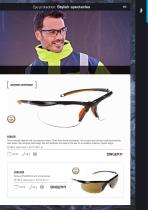
INCREDIBLY LIGHTWEIGHT EVALOR Thin bi-injected sidearms with slip-resistant inserts. Gloss finish frame and temples. Anti-scratch and anti-fog curved polycarbonate clear lenses. Slip resistant nose bridge. Fits with perfection the shape of the face for an excellent protection. Stylish design. EN 166 (F, optical class 1). EN 170 (2C-1,2) EVALORA Same as EVALOR but with smoke lenses. EN 166 (F, optical class 1). EN 172 (5-3,1) Eye protection: Stylish spectacles
Open the catalog to page 23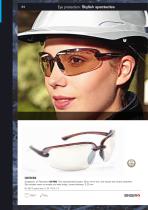
Eye protection: Stylish spectacles EVATREND Sunglasses. UV Resistance (UV 400). Slim polycarbonate temples. Silver mirror lens. Anti-fog and anti-scratch treatment. Slip resistant insert on temples and nose bridge. Lenses thickness: 2.20 mm. EN 166 (F, optical class 1). EN 172 (5-1.7)
Open the catalog to page 24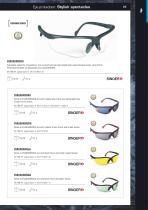
EVASHARK SERIES EVASHARKGCA Adjustable sidearms (4 positions). Anti-scratch and anti-fog treated clear polycarbonate lenses. Grey frame. Perforated temples for adjustable cord (ACCCORD2N). EN 166 (FT, optical class 1). EN 170 (2C-1,2) EVASHARKBBA Same as EVASHARKGCA but with metallic blue frame and fashionable blue smoke mirror lenses. EN 166 (FT, optical class 1). EN 172 (5-3,1). ISO12312-1. Class 3 EVASHARKMSA Same as EVASHARKGCA but with metallic brown frame and smoke lenses. EN 166 (FT, optical class 1). EN 172 (5-2). EVASHARKNJA Same as EVASHARKGCA but with black frame and amber coated lenses....
Open the catalog to page 25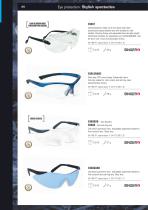
Eye protection: Stylish spectacles CAN BE WORN OVER PRESCRIPTION LENSES EVA07 Overspectacles made up of one piece wide clear antiscratch polycarbonate lens with protective sideshields. Pivoting frame and adjustable blue temples length. Perforated temples for adjustable cord (ACCCORD2N). Can be worn over most of prescription lenses. EN 166 (FT, optical class 1). EN 170 (2C-1,2) EVALUNABE Soft clear PVC nose bridge. Polyamide frame. Anti-slip sidearms. Anti-sratch and anti-fog clear polycarbonate lenses. EN 166 (FT, optical class 1). EN 170 (2C-1,2) EVA86AB - Anti-fog lens EVA86 - Not anti-fog...
Open the catalog to page 26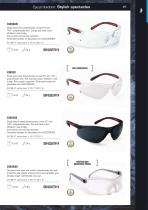
EVAORAN Single piece clear polycarbonate curved (9°) lens. TPR + polycarbonate lens. Orange and black colour. Molded-in nose bridge. Anti-scratch and anti-fog treatment. Perforated temples for adjustable cord (ACCCORD2N). EN 166 (FT, optical class 1). EN 170 (2C-1,2) VERY ENVELOPING EVARED Single piece clear polycarbonate curved (9°) lens. TPR + polycarbonate lens. Red and black colour. Molded-in nose bridge. Anti-scratch treatment. Perforated temples for adjustable cord (ACCCORD2N). EN 166 (FT, optical class 1). EN 170 (2C-1,2) EVAREDA Single piece smoked polycarbonate curved (9°) lens. TPR...
Open the catalog to page 27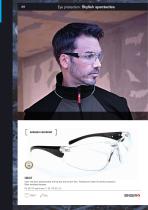
Eye protection: Stylish spectacles INCREDIBLY LIGHTWEIGHT EVALIT Clear one piece polycarbonate anti-fog and anti-scratch lens. Wraparound shape for perfect protection. Black ventilated temples. EN 166 (FT, optical class 1). EN 170 (2C-1,2)
Open the catalog to page 28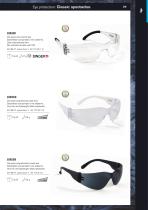
EVASUR One piece anti-scratch lens. Sideshields incorporated in the sidearms. Clear polycarbonate lens. Slip resistant temples with TPR. EN 166 (FT, optical class 1). EN 170 (2C-1,2) EVAMED One piece polycarbonate clear lens. Sideshields incorporated in the sidearms. Very thin and lightweight safety spectacles. EN 166 (FT, optical class 1). EN 170 (2C-1,2) EVASUN One piece polycarbonate smoke lens. Sideshields incorporated in the sidearms. Very thin and lightweight safety spectacles. EN 166 (FT, optical class 1). EN 172 (5-3,1) Eye protection: Classic spectacles
Open the catalog to page 29- Fabric clothing
- Mechanical protection protection gloves
- Polyester clothing
- Anti-slip safety shoes
- Cotton clothing
- Electrical protection safety shoes
- Mechanical protection safety shoes
- Work safety gloves
- Industrial safety gloves
- Anti-perforation safety shoes
- Anti-static safety shoes
- S3 safety shoes
- 10 protection gloves
- 9 protection gloves
- Waterproof clothing
- EN 388 safety gloves
- 8 protection gloves
- Waterproof safety shoes