
- Catalogs
- Siemens Low-voltage – Power distribution
- Switch disconnectors Technology primer Protecting, switching and disconnecting with switch disconnectors and fuses


- Products
- Catalogs
- News & Trends
- Exhibitions
Switch disconnectors Technology primer Protecting, switching and disconnecting with switch disconnectors and fuses

Switch disconnectors Technology primer Protecting, switching and disconnecting with switch disconnectors and fuses
- Switching between networks for critical loads like emergency power.
- Manual switching to alternative power sources for maintenance.
- Switching one feed-in to different loads.
- Reversing motor direction.
- 3LD and 3KD switch disconnectors for safe switching in industrial applications.
- LV HRC, SITOR, cylindrical, and DIAZED/NEOZED fuses for different protection needs.
- 3NP fuse switch disconnectors for all-pole switching with integrated protection.
The document outlines key specifications for electrical devices, including operational voltage, rated frequency, rated load, utilization category, and ambient temperature. It emphasizes the importance of the rated uninterrupted current (Iu), which is the maximum permissible current for continuous operation under defined conditions.
Devices are designed to withstand motor switching overload currents, ensuring they are overload-proof. The rated making capacity is the maximum current a device can switch on, while the rated breaking capacity is the maximum current it can switch off, both dependent on utilization category and operational voltage.
The document details the rated short-time withstand current (Icw), indicating thermal strength under short-term loads. The rated short-circuit making capacity (Icm) and breaking capacity (Icn) describe the maximum short-circuit currents a device can handle without damage. The conditional rated short-circuit current (Ig) is the prospective current a device can disconnect with a back-up fuse.
Published by Siemens AG in 2020, the document includes a disclaimer about the availability of technical options and advises defining required features on a case-by-case basis. Comprehensive support is available through Siemens' online resources.
Catalog excerpts

Switch disconnectors Technology primer Protecting, switching and disconnecting with switch disconnectors and fuses
Open the catalog to page 1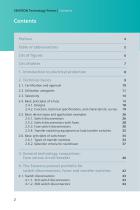
Contents Preface List oftables 1. Introduction to electrical protection 8 2.4. Basic principles of a fuse 18 2.4.2. Function, technical specifications, and characteristic curves 19 2.5. Basic device types and application examples 26 2.5.2. Switch disconnectors with fuses 28 2.5.3. Fuse switch disconnectors 30 2.5.4. Transfer switching equipment or load transfer switches 32 2.6. Basic principles of switchover 34 2.6.1. Types of transfer switches 34 2.6.2. Selection criteria for switchover 37 3. General technology comparison: Fuse versus circuit breaker 40 4. The Siemens product portfolio for switch...
Open the catalog to page 2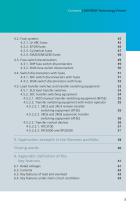
4.2.4. DIAZED/NEOZED fuses 4.3. Fuse switch disconnectors 4.3.1.3NP fuse switch disconnectors 4.3.2. 3NJ4 fuse switch disconnectors 4.4. Switch disconnectors with fuses 4.4.1.3KF switch disconnectors with fuses 4.4.2. 3NJ6 switch disconnectors with fuses 4.5. Load transfer switches and transfer switching equipment 4.5.1. 3LD load transfer switches 4.5.2. 3KC transfer switching equipment 4.5.2.1.3KC0 manual transfer switching equipment (MTSE) 4.5.2.2. Transfer switching equipment with motor operator 4.5.2.2.1.3KC3 and 3KC4 remote transfer switching equipment (RTSE) 4.5.2.2.2. 3KC6 and 3KC8 automatic...
Open the catalog to page 3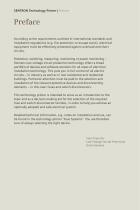
SENTRON Technology Primer | Preface Preface According to the requirements outlined in international standards and installation regulations (e.g. fire protection or escape stairs), electrical equipment must be effectively protected against overload and short circuits. Protection, switching, measuring, monitoring or power monitoring – Siemens low-voltage circuit protection technology offers a broad portfolio of devices and software solutions for all areas of electrical installation technology. This puts you in full control of all electric circuits – in industry as well as in non-residential and...
Open the catalog to page 4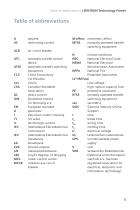
Table of Abbreviations | SENTRON Technology Primer ATC automatic transfer control device ATSE automatic transfer switching equipment CCC China Compulsory Association DC direct current fur Normung e.V. EN European standard I electrical current intensity Commission IEV International Electrotechnical LRS Lloyd's Register of Shipping MCC motor control center MCCB molded case circuit M effect mesomeric effect MTSE manually operated transfer switching equipment N neutral conductor NEC National Electrical Code NEMA National Electrical Manufacturers Association NFPA National Fire Protection Association...
Open the catalog to page 5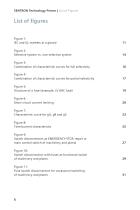
SENTRON Technology Primer | List of Figures List of figures Figure 1: IEC and UL markets at a glance 11 Figure 2: Selective system vs. non-selective system 14 Figure 3: Combination of characteristic curves for full selectivity 16 Figure 4: Combination of characteristic curves for partial selectivity 17 Figure 5: Structure of a fuse (example: LV HRC fuse) 19 Figure 6: Short-circuit current limiting 20 Figure 7: Characteristic curve for gG, gR and gS 23 Figure 8: Time/current characteristic 25 Figure 9: Switch disconnectors as EMERGENCY-STOP, repair or main control switch of machinery and plants...
Open the catalog to page 6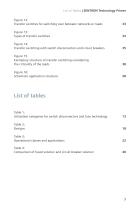
List of Tables | SENTRON Technology Primer Figure 12: Transfer switches for switching over between networks or loads 33 Figure 13: Types of transfer switches 34 Figure 14: Transfer switching with switch disconnectors and circuit breakers 35 Figure 15: Exemplary structure of transfer switching considering the criticality of the loads 38 Figure 16: Schematic application structure 58 List of tables Table 1: Utilization categories for switch disconnectors and fuse technology 13 Table 3: Operational classes and applications 22 Table 4: Comparison of fused solution and circuit breaker solution 40
Open the catalog to page 7
SENTRON Technology Primer | Introduction to Electrical Protection 1. Introduction to electrical protection When dealing with electricity, safety has top priority. According to the requirements outlined in international standards and installation regulations, every qualified electrician must effectively protect electrical equipment, in particular cables and conductors, against overload and short circuits by implementing suitable (protective) measures. Preferably, such protection is achieved with the use of suitable switching/protective devices, which will automatically disconnect defective circuits...
Open the catalog to page 8
Technical Basics | SENTRON Technology Primer 2. Technical basics Various factors play a decisive role in the selection of the right switching and protection device. First and foremost is the choice of a basic device from the various switch disconnectors, fuse switch disconnectors, switch disconnectors with fuses and changeover switches. In the next step, the technical data and specifications are most relevant. For better understanding, these key features are explained in more detail in the appendix. Finally, it must be ensured that the approval requirements of the respective country or area of...
Open the catalog to page 9
SENTRON Technology Primer | Technical Basics 2.1. Certification and approval The use of electrical equipment for switchgear and controlgear assemblies is regulated by the legislation of the corresponding country. The most important technical features of low-voltage fuses and switchgear are codified in the standards of the International Electrotechnical Commission (IEC) based in Geneva. Even beyond Europe, devices in accordance with the IEC standard are used in Asia, South and Central America and Australia. The European standards (EN) are generally identical to those of the IEC. In some cases,...
Open the catalog to page 10
Technical Basics | SENTRON Technology Primer Figure 1: IEC and UL markets at a glance
Open the catalog to page 11
SENTRON Technology Primer | Technical Basics 2.2. Utilization categories Utilization categories are a “combination of specified requirements related to the condition in which the switching device or the fuse fulfills its purpose, selected to represent a characteristic group of practical applications” (International Electrotechnical Vocabulary – IEV 441-17-19). Utilization categories subdivide the various switching tasks (applications), whereby there are different test conditions for each category. Utilization categories provide the user with orientation in the selection of low-voltage controlgear...
Open the catalog to page 12All Siemens Low-voltage – Power distribution catalogs and technical brochures
 The 3VA molded case circuit breaker.
676 Pages


Archived catalogs
 Catalog LV 10 - 2014
1108 Pages
 Sentron protection devices
12 Pages
 SIVACON S8
42 Pages
 LV11
LV11204 Pages
 MCBs
MCBs2 Pages
 Catalog LV 16 - UL-/IEC-Products
324 Pages
 Catalog LV 36 - Circuit Breakers 3VT
276 Pages
 Catalog LV 35 - Air Circuit Breakers
68 Pages
 LV 50 - SIVACON
121 Pages
 ET B1 N - BETA
132 Pages
 LV 56 - SIVACON S4
165 Pages
 Add-On - ET B1 AO
117 Pages
 ET D1 - DELTA
416 Pages
 GAMMA Building Management Systems
300 Pages





- Measuring device
- Surge protector
- Single-pole switch
- Junction block
- Switching relay
- DIN rail lightning arrester
- Class II surge protector
- SIEMENS disconnect switch
- Screw connection terminal block
- Digital gauge
- Outdoor housing
- Low-voltage lightning arrester
- DIN rail-mounted terminal block
- Modular housing
- Power distribution box
- IP65 housing
- Fuse box
- Rocker switch
- Multipole disconnect switch