
- Catalogs
- Shimadzu France
- On-line LC-GC×GC-MS/MS: A Powerful Unified Separation-science Tool


On-line LC-GC×GC-MS/MS: A Powerful Unified Separation-science Tool

On-line LC-GC×GC-MS/MS: A Powerful Unified Separation-science Tool
Catalog excerpts

Technical Report On-line LC-GC×GC-MS/MS: A Powerful Unified Separation-science Tool In-depth Analysis of a Very Complex Mixture Mariosimone Zoccali1, Peter Q. Tranchida1, Paola Dugo1, 2, Luigi Mondello1, 2 A b s tra c t: This Technical Report demonstrates the potential of the on-line combination of high performance liquid chromatography (HPLC), cryogenically modulated comprehensive two-dimensional gas chromatography (GC×GC), and triple quadrupole mass spectrometry (MS/MS). The selectivity of the HPLC dimension enabled the separation of chemical classes; each fraction, transferred to the GC×GC instrument via a syringe-based interface, was subjected to a specific programmed temperature vaporizer (PTV) GC×GC-MS/MS untargeted or targeted analysis. Keywords: liquid-gas chromatography, comprehensive gas chromatography, triple quadrupole mass spectrometry 1 . I n tro d u ctio n The detailed characterization, or untargeted analysis, of very complex mixtures of organic volatiles (and semi-volatiles) represents one of the main challenges in the field of analytical chemistry. Sample complexity, as such, is not only related to a potentially high number of constituents (e.g., ≥ 1000), but also to the range of different chemical classes (from apolar to highly polar) and concentration levels (from trace amounts to highly concentrated). In terms of mass spectrometry (MS) unit-mass devices such as single quadrupole (quad MS) or low-resolution time-of-flight (LR ToF MS) are sufficient for the scopes of an untargeted experiment. In a targeted experiment, the analyst has an a priori knowledge of the name and number of solutes requiring investigation. In targeted GC-MS experiments, the use of quad MS, LR ToF MS, high-resolution (HR) ToF MS and triple quadrupoles (MS/MS) is popular. Consequently, the satisfactory profiling of a very complex mixture would require: 1) enhanced separation power; 2) high selectivity; 3) increased sensitivity; 4) wide dynamic range. High-resolution gas chromatography (GC) methods, such as comprehensive 2D GC (GC×GC), are advisable for the untargeted analysis of a complex sample. The combination of GC×GC, with quad MS, LR ToF MS, HR ToF MS, and MS/MS systems generates very powerful analytical tools that can be employed in both untargeted and targeted applications. However, as will be seen, the separation power of comprehensive 2D GC is often unsufficient, and many co-elutions still occur at the end of the analytical process. Fig. 2 TIC-GC×GC-MS chromatogram of coal tar 1 Department of Pharmaceutial Sciences and Health Products, University of Messina 2 Chromaleont S. r
Open the catalog to page 1
Probably, the best choice to improve selectivity, due to the high number of stationary phases, is the exploitation of an HPLC preseparation step. HPLC is very useful for the performance of polaritybased separations (e.g., hydrocarbons, aromatic constituents); after, simplified fractions can be subjected to a GC-based analysis, injecting large sample volumes, enabling the detailed analysis of complex samples. The potential of the novel LC-GC×GC-MS/MS combination was evaluated in the analysis of a highly challenging sample, namely coal tar (Figs. 1-2). The normal-phase LC step was successful in...
Open the catalog to page 2
Full scan mode I) non aromatic hydrocarbons were transferred from 1.35 to 1.85 min (175 |jL) II) aromatic compounds (with and without S) were transferred from 1.85 to 7.00 min (1802 jL) III) oxygenated compounds were transferred from 8.95 to 14.10 min (1802 jL) Scan speed : 20,000 u/sec Acquisition frequency : 33 Hz Ion source temperature : 250°C Interface temperature : 280°C MRM mode Argon (200 kPa) was employed as collision gas For MRM transitions and collision energies see Fig. 5 3-3. GCxGC analysis I) non aromatic hydrocarbons (Fig. 3) Split ratio 200:1 for 1 min, then splitless for...
Open the catalog to page 3
4 . R e s u l ts a n d D iscu ssio n As can be observed in the figures, the pre-separation step was very useful in generating simplified sub-samples of coal tar, which is an extremely complex sample. The purification step made quali/quantitative analysis easier. All the fractions were analyzed in the full-scan mode; moreover, the second fraction was analyzed in the MRM mode for the determination of the sulphur compounds. Fig. 8 MRM LC-GC×GC-MS/MS chromatogram of DBT isomers Finally the third fraction containing the oxygenated compounds was analyzed in the full scan mode. A positive off-set of...
Open the catalog to page 4All Shimadzu France catalogs and technical brochures
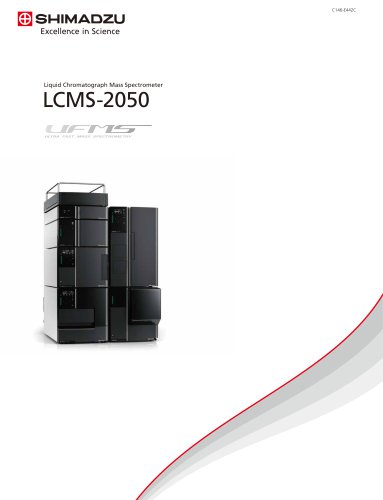 LCMS-2050
16 Pages
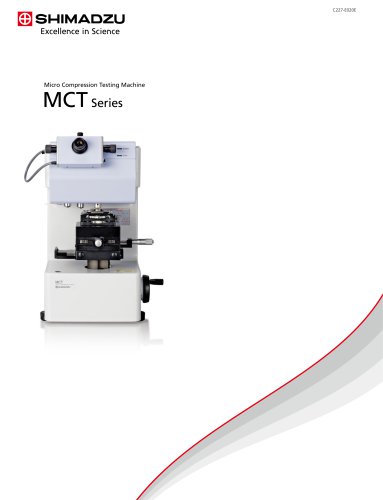 MCT Series
12 Pages
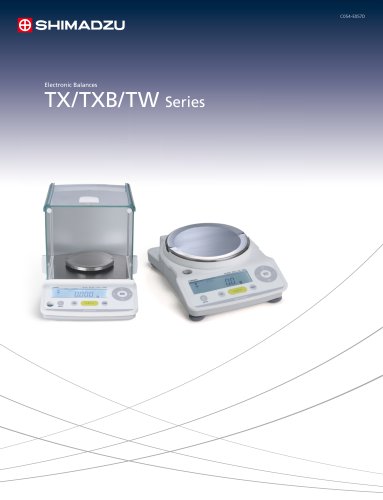 TX/TXB/TW Series
8 Pages
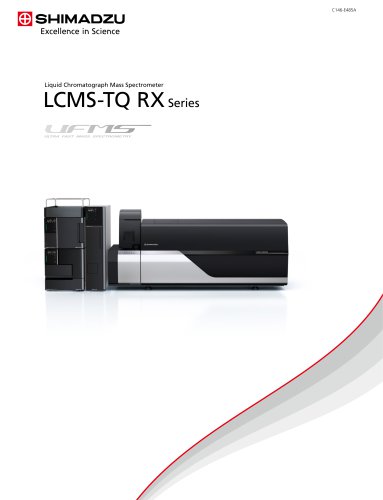 LCMS-TQ RX Series
16 Pages
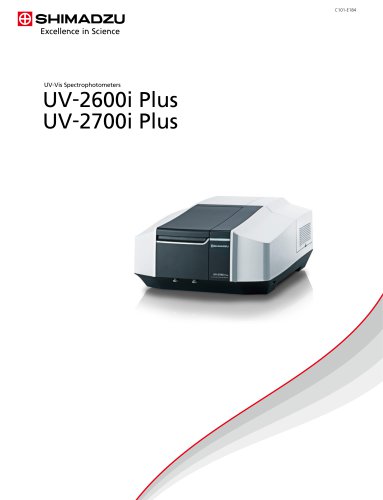 UV-2600i Plus /UV-2700i Plus
20 Pages
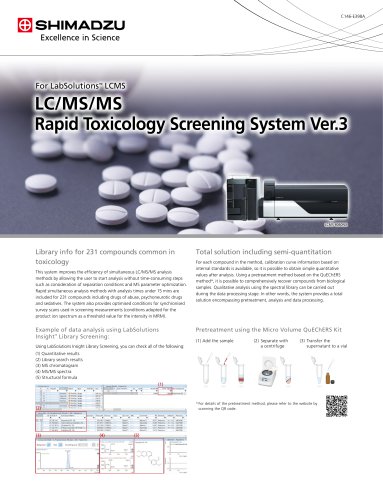 LC/MS/MS
2 Pages
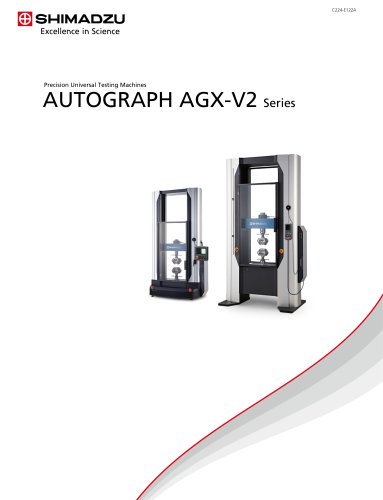 AUTOGRAPH AGX-V2 Series
28 Pages
 Metabolomics Product Portfolio
24 Pages
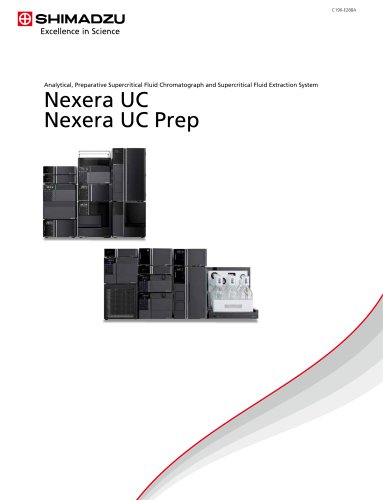 Nexera UC/Nexera UC Prep
20 Pages
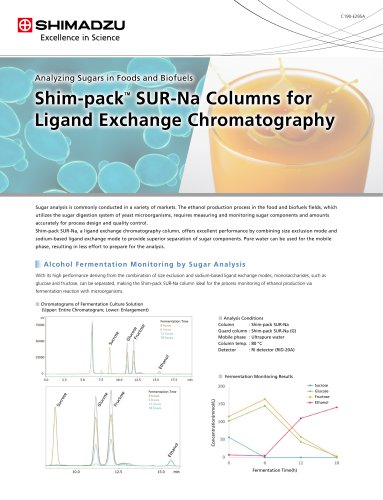 Shim-pack ™ SUR-Na Columns
2 Pages
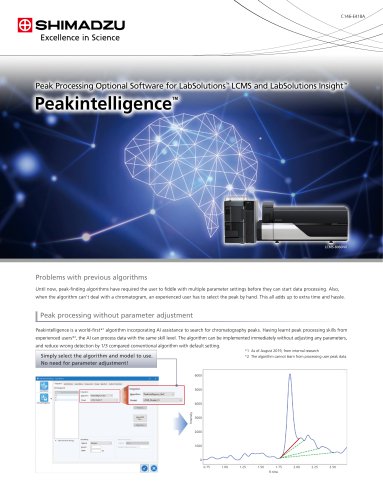 Peakintelligence
2 Pages
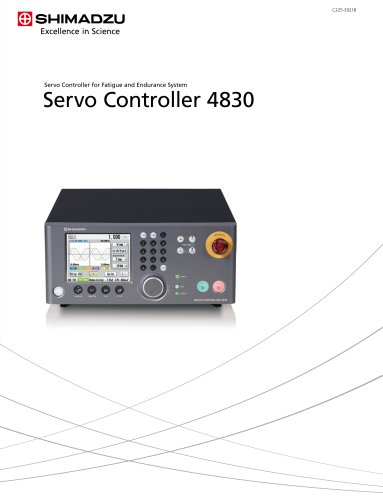 Servo Controller 4830
12 Pages
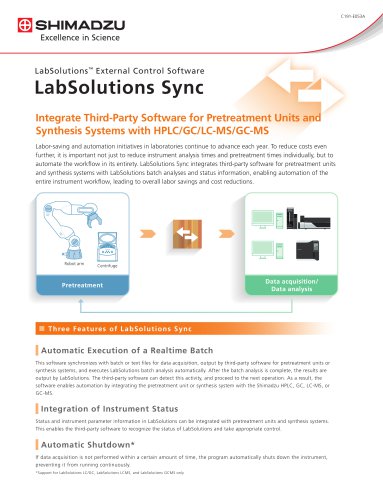 LabSolutions Sync
2 Pages
 LabSolutions Detect
8 Pages
 SALD-7500nano
16 Pages
 Multimodal Imaging System
4 Pages
 LCMS Family Brochure
12 Pages
 FluxEdge GC Systems
8 Pages
 Xslicer SMX-1010/1020
16 Pages
 LC/MS/MS MRM
2 Pages
 LC/MS/MS
2 Pages
 TRViewX
8 Pages
 UW/UX Series
4 Pages
 LCMS-8060
20 Pages
 QC Reporter
6 Pages
 OneSight
4 Pages
 TD-30 Series
12 Pages
 Nexis GC-2030
20 Pages
 ATX/ATY series
4 Pages
 MOC63u
6 Pages
 UHPLC Nexera X2
20 Pages
 TOC-L
TOC-L16 Pages
 RF-6000
24 Pages
 iMScope Trio
28 Pages
 ICPE-9800 series
20 Pages
 UV-3600 Plus
26 Pages
 EDX-7000/8000
24 Pages
 Capillary GC-2010 Plus
24 Pages
 GCMS QP2010 Ultra
24 Pages
 LCMS-IT-TOF
16 Pages
 Headspace Sampler HS-20
8 Pages
 BW-K/BX-K Series
2 Pages
 Catalog MOC 120H
4 Pages
 ELB SERIES
2 Pages
 TW TWC SERIES
8 Pages
 AUW-D/AUW/AUX/AUY Series
8 Pages
 Catalog UW-Series
6 Pages
 Catalog AU-Series
8 Pages
 MDGC-2010 system
1 Page


Archived catalogs
 TOC-4110
1 Page
 Catalogue HMV-2 Series
8 Pages
 Shimadzu FTIR Overview
4 Pages
 Shimadzu Software Overview
8 Pages
 Shimadzu GC/GCMS Overview
6 Pages
 Shimadzu LC/LCMS Overview
12 Pages
 Shimadzu X-ray Fluorescence
2 Pages


- Shimadzu testing machine
- Digital imager
- Visible imager
- Test cabinet
- CMOS camera module
- Industrial camera module
- Concentration analyzer
- Management software solution
- Monitoring analyzer
- Shimadzu analysis software
- Infrared imager
- Automatic analyser
- Temperature test chamber
- Real-time software
- Microscope
- Shimadzu material testing machine
- Shimadzu automatic testing machine
- Indentation hardness tester
- Solids analyser
- Shimadzu spectrometer