
- Catalogs
- Shimadzu France
- Multi-Dimensional GC/GCMS System MDGC/GCMS Series


Multi-Dimensional GC/GCMS System MDGC/GCMS Series

Multi-Dimensional GC/GCMS System MDGC/GCMS Series
The Multi-Dimensional GC/GCMS System (MDGC/GCMS Series) is engineered for high-performance analysis with user-friendly operation facilitated by the MDGCsolution software. It enhances efficiency and simplifies maintenance with various optional systems.
- Multi-Deans Switching: This mechanism minimizes retention time fluctuations, improving reproducibility and separation capabilities.
- High Reproducibility: Deactivation processing ensures peak reproducibility and quantitative accuracy, even for high-polarity alcohols.
- Advanced Flow Control: AFC and APC provide precise control over pressure and flow rates, ensuring consistent analytical conditions.
- Petroleum Products: Analyzing gasoline, light oil, and kerosene.
- Aromas: Analyzing foods, beverages, and optical isomers.
- Environmental Samples: Detecting harmful components.
- Fine Chemical Products: Identifying impurities in raw materials.
The MDGC/GCMS system can be configured with various detectors and pretreatment systems, such as FID, FPD, headspace samplers, and thermal desorption systems.
The system employs dual columns with specific temperature and pressure settings to achieve high separation capabilities. The dual-oven system allows for better separation by maintaining optimal temperatures for each column.
Designed for easy maintenance, the system allows simple part replacement and switching between MDGC and conventional GC/GCMS modes. The MDGCsolution software enhances operability by enabling intuitive setting of analytical conditions and switching timings.
The chromatogram section lists compounds such as α-pinene, β-pinene, sabinene, limonene, linalool, terpinen-4-ol, and α-terpineol, with their retention times and signal intensities.
- Switching Method: Multi-Deans switching based on pressure difference.
- Switching Element: Deactivation processed, usable up to 350°C.
- Carrier Gas Control: Electronic control via AFC and APC.
- Connectable Columns: Capillary columns with inner diameters from 0.1 to 0.53 mm.
- Temperature Range: Column oven temperature from {Room temperature + 4°C} to 350°C; connected heater temperature from 50°C to 350°C.
- Connectable Detectors: GCMS, FID, FPD, TCD, ECD, FTD, with others available by special order.
- Sample Introduction System: Includes AOC-20i, TD-20, Turbomatrix HS, AOC-5000, etc.
- Carrier and Switching Gas: High-purity helium, nitrogen, argon with a maximum pressure of 970 kPa.
- Software: MDGCsolution, GCsolution, GCMSsolution, compatible with Windows Vista and XP, requiring a minimum of 512 MB memory.
- Operating Environment: Constant temperature between 18°C to 28°C, humidity 40% to 70%.
- Power Supply: 4,600 VA (100V, 115V), 6,200 VA (230V).
- Size: Dimensions for GC/GCMS are 1,385 (W) × 440 (H) × 530 (D) mm, excluding PC.
The document includes a diagram showing a system setup with a GCMS instrument, control PC, and rotary pump.
The document is intended for research use only and not for diagnostic procedures. It is provided "as is" without warranty, and Shimadzu disclaims liability for any damages related to its use.
Catalog excerpts

Multi-Dimensional GC/GCMS System
Open the catalog to page 1
MDGC/GCMS Series Multi-Dimensional GC/GCMS System A multi-dimensional GC/GCMS system performs separation using two columns that have different characteristics. The system has a mechanism in which the components that are insufficiently separated in the first column they pass through (the "1st column") are introduced ("heart-cut") to a second, different column (the "2nd column"). This enables analysis with a level of separation that cannot be attained in conventional single-column analysis. In addition, the precise flow-switching technology, which is supported by a high-precision digital flow controller,...
Open the catalog to page 2
AuxPress Monitor Detector Only one peak is visible Detector Flow diagram of Standby mode AuxPress Monitor Detector Minute peak separated Switch to 2nd column Chromatogram Obtained with 2nd Column (Detector: MS) Chromatogram Obtained with 1st Column (Monitor Detector: FID) Flow diagram of Cut mode Analysis of Optical Isomers of Limonene in Commercial Lemon Water
Open the catalog to page 3
Outstanding Retention Time Stability In the past, samples have been introduced to columns using the switching mechanism known as Deans switching. However, this system results in such problems as a reduced recovery rate and fluctuations in the retention time. The MDGC/GCMS series system incorporates multi-Deans switching, a new mechanism that significantly reduces the likelihood of fluctuations in the retention times of eluted components, even if switching is performed several times. Pressure P-ΔP2 Shift in Retention Time Multi-Deans Switching Standby (1st DET) No Shift in Retention Time 1.5 Comparison...
Open the catalog to page 4
Handling Quantitative Analysis with Deactivation Processing Chromatogram Obtained with 1st Column The multi-Deans switching mechanism in the MDGC/GCMS series uses a capillary method with a low dead volume. Since the internal surface has been subjected to deactivation processing, even in the analysis of alcohols with a high polarity, the peak form is the same as that obtained in GC analysis. For this reason, a superior level of peak reproducibility is attained, and analysis with a high level of quantitative accuracy is possible. Also, even after the multi-Deans switching mechanism performs heart-cutting,...
Open the catalog to page 5
Superior Intuitive Operability Structure analysis Quality control GC-GCMS System GC-GC System Excellent Peak Picking Capability The majority of the work involved in MDGC analysis consists of determining the analytical conditions and switching timing that allow the target components to be separated. For this reason, the software's operability has a great influence on work efficiency. The MDGC control software package, MDGCsolution, makes it possible to set the analytical conditions for both the 1st GC and 2nd GC or GCMS together. As a result, it is not necessary to switch between several different...
Open the catalog to page 6
Hig h - P re cisio n Flo w C o ntrol with AFC In the analysis of complex samples, because high-separation performance is required, the MDGC/GCMS series uses a dual-oven system consisting of two GC instruments of high-separation capability set up in parallel. With a single-oven system, at the time the peak to be heart-cut is eluted from the 1st column, the temperature of the column oven is often already high. In this state, even with the separation capability of the 2nd column, the results are lower than would be possible if the temperature of the column oven had been low at the time of introduction...
Open the catalog to page 7
Greater Ease of Maintenance Si m pl e P a r t R e p l a c e m e n t The switching element is secured to the front of the GC oven at the top, making it easy to replace columns and change connections to detectors and pretreatment systems. Also, stainless steel ferrules with high heat resistance are used for the column connections, so the additional tightening required with conventional Vespel ferrules is not necessary, and burning does not occur. SilTite Ferrule Switching Element Si m pl e S w i t c h i n g t o C o n v e n tio n a l GC /GC MS When not using the MDGC-2010 as an MDGC system, changing...
Open the catalog to page 8
MDGCsolution Software package GCsolution Software package NIST Library Printer MDGCsolution Software package Printer GCsolution A W i de Va r i e t y o f O p t i on a l S y ste ms In addition to GCMS, various other detectors, such as an FID or FPD, can be used with the MDGC/GCMS-2010. For example, a headspace sampler and thermal desorption system can be connected and controlled as a pretreatment system. MDGC GCMS Pretreatment system SPME injector Headspace sampler Thermal desorption system* (TD-20) *Available by special order. MDGC/GCMS Series Multi-Dimensional GC/GCMS System
Open the catalog to page 9
Petroleum Analysis Bat c h A n a l y s i s o f O x y g e n a te d C o mp o n e n ts in Ga so lin e With gasoline, a large number of hydrocarbon peaks are eluted, making it difficult to completely separate oxygenated compounds, such as the alcohols that have been added in recent years, using GC-FID. Improving separation using MDGC analysis enables the analysis of components for which separation and quantitation would be difficult using conventional FID. The analysis of the 13 components specified by ASTM D 4815-99* is described below. *Standard Test Method for Determination of MTBE, ETBE, TAME,...
Open the catalog to page 10
Fragrance Analysis Bat c h A n a l y s i s o f F r a g r a n ce C o mp o n e n ts in E sse n tia l Oil Aromatic analysis, in which large numbers of matrices are contained in the samples, is a field where MDGC analysis demonstrates its effectiveness. Combining nonpolar and polar columns enables the separation of aromatic components and impurity substances. Also, because no fatty acid esters with high boiling points are introduced into the polar column, the analysis time is reduced. 1 Fatty acid esters 1 Limonene 2 Linalool 3 Ethyl Linalool 4 Citnellol Acetate 5 Nerol 6 Cashmeran 1st Column Oven...
Open the catalog to page 11
Switching method Multi-Deans switching (flow channel switching based on pressure difference) Switching element Switching element subjected to deactivation processing (can be used at temperatures up to 350°C) Electronic control based on AFC Electronic control based on APC Connectable columns Capillary columns with inner diameter of 0.1 to 0.53 mm (If the detector is a GCMS, the outlet flow rate must not exceed 15 mL/min.) Column oven temperature Temperature of connected heater Connectable detectors GCMS, FID, FPD, TCD, ECD, FTD (Other detectors must be ordered specially.) Sample introduction system...
Open the catalog to page 12All Shimadzu France catalogs and technical brochures
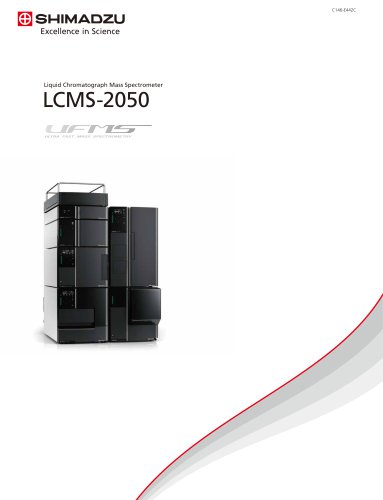 LCMS-2050
16 Pages
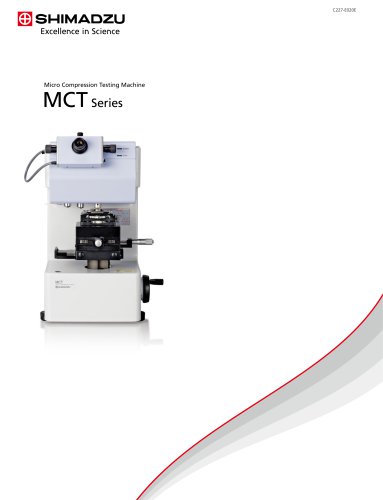 MCT Series
12 Pages
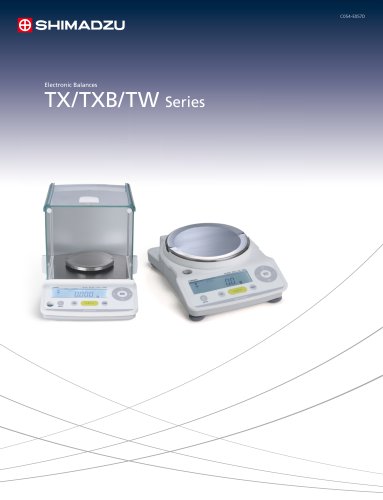 TX/TXB/TW Series
8 Pages
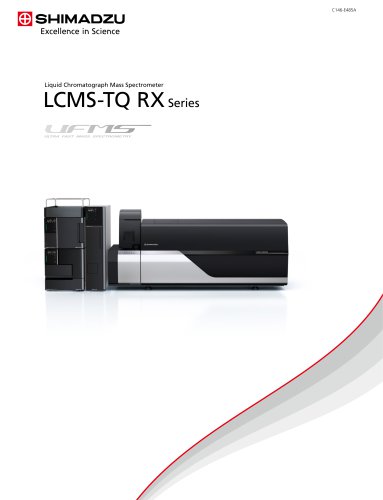 LCMS-TQ RX Series
16 Pages
 UV-2600i Plus /UV-2700i Plus
20 Pages
 LC/MS/MS
2 Pages
 AUTOGRAPH AGX-V2 Series
28 Pages
 Metabolomics Product Portfolio
24 Pages
 Nexera UC/Nexera UC Prep
20 Pages
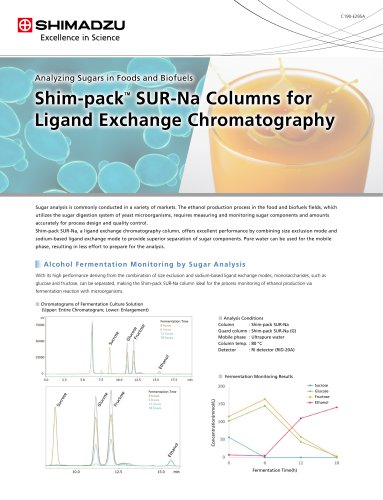 Shim-pack ™ SUR-Na Columns
2 Pages
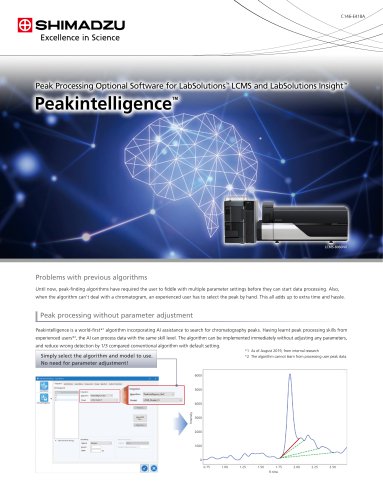 Peakintelligence
2 Pages
 Servo Controller 4830
12 Pages
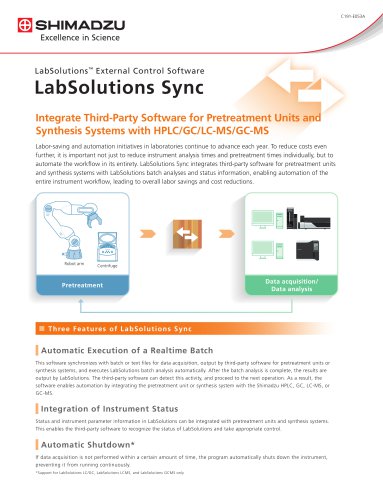 LabSolutions Sync
2 Pages
 LabSolutions Detect
8 Pages
 SALD-7500nano
16 Pages
 Multimodal Imaging System
4 Pages
 LCMS Family Brochure
12 Pages
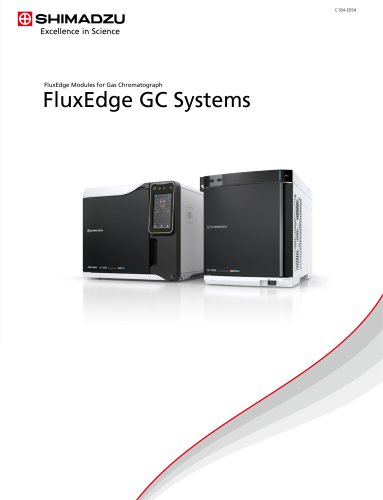 FluxEdge GC Systems
8 Pages
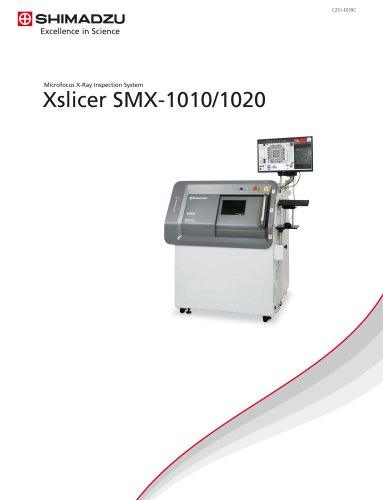 Xslicer SMX-1010/1020
16 Pages
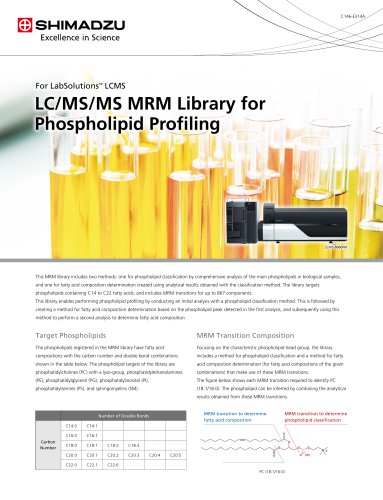 LC/MS/MS MRM
2 Pages
 LC/MS/MS
2 Pages
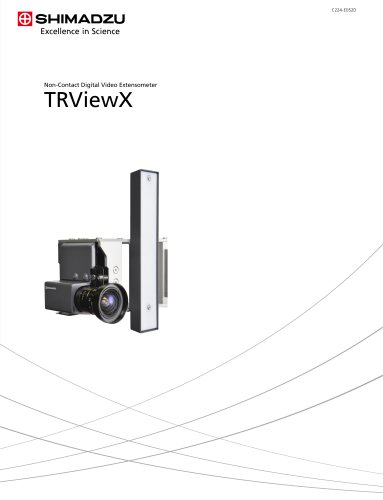 TRViewX
8 Pages
 UW/UX Series
4 Pages
 LCMS-8060
20 Pages
 QC Reporter
6 Pages
 OneSight
4 Pages
 TD-30 Series
12 Pages
 Nexis GC-2030
20 Pages
 ATX/ATY series
4 Pages
 MOC63u
6 Pages
 UHPLC Nexera X2
20 Pages
 TOC-L
TOC-L16 Pages
 RF-6000
24 Pages
 iMScope Trio
28 Pages
 ICPE-9800 series
20 Pages
 UV-3600 Plus
26 Pages
 EDX-7000/8000
24 Pages
 Capillary GC-2010 Plus
24 Pages
 GCMS QP2010 Ultra
24 Pages
 LCMS-IT-TOF
16 Pages
 Headspace Sampler HS-20
8 Pages
 BW-K/BX-K Series
2 Pages
 Catalog MOC 120H
4 Pages
 ELB SERIES
2 Pages
 TW TWC SERIES
8 Pages
 AUW-D/AUW/AUX/AUY Series
8 Pages
 Catalog UW-Series
6 Pages
 Catalog AU-Series
8 Pages
 MDGC-2010 system
1 Page


Archived catalogs
 TOC-4110
1 Page
 Catalogue HMV-2 Series
8 Pages
 Shimadzu FTIR Overview
4 Pages
 Shimadzu Software Overview
8 Pages
 Shimadzu GC/GCMS Overview
6 Pages
 Shimadzu LC/LCMS Overview
12 Pages
 Shimadzu X-ray Fluorescence
2 Pages


- Shimadzu testing machine
- Digital imager
- Visible imager
- Test cabinet
- CMOS camera module
- Industrial camera module
- Concentration analyzer
- Management software solution
- Monitoring analyzer
- Shimadzu analysis software
- Infrared imager
- Automatic analyser
- Temperature test chamber
- Real-time software
- Microscope
- Shimadzu material testing machine
- Shimadzu automatic testing machine
- Indentation hardness tester
- Solids analyser
- Shimadzu spectrometer