
- Catalogs
- Shimadzu France
- Metabolomics Product Portfolio


Metabolomics Product Portfolio
Metabolomics Product Portfolio
Catalog excerpts

Selection Guide Metabolite Analysis
Open the catalog to page 1
Expanding Metabolomics Metabolomics refers to an array of techniques used to comprehensively detect and analyze various metabolites formed in vivo during biological activity. The qualitative and quantitative changes in metabolites reflect the ever-changing biological phenomena and are widely used for diagnosis, biomarker discovery, and drug discovery research. In recent years, metabolomics has been used in the food industry to improve taste and quality and to develop functional foods. It is also used in the biotechnology industry to improve fermentation and biofuel productivity. Shimadzu supports...
Open the catalog to page 2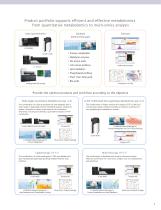
Product portfolio supports efficient and effective metabolomics from quantitative metabolomics to multi-omics analysis Mass Spectrometers Database (Method Packages) • Primary metabolites Q-TOF LC/MS • Metabolic enzymes • D/L amino acids • Cell culture profiling Multivariate Analysis • Lipid mediators • Phospholipid profiling • Short chain fatty acids • Bile acids Imaging Mass Microscope Provide the optimal products and workflow according to the objective Wide Target Quantitative Metabolomics (pp. 4–5) The combination of triple-quadrupole MS and database with a wide range of registered primary...
Open the catalog to page 3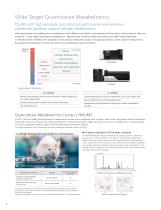
Mass spectrometers are widely used in metabolomics with different techniques used depending on the object to be measured. Here, we introduce a "wide target quantitative metabolomics" approach that combines highly quantitative and stable triple-quadrupole LC-MS/MS and GC-MS(/MS) with databases for the primary metabolites analysis. This approach allows a wide range of metabolites to be analyzed simultaneously without the need to set complicated analysis conditions. Volatile Non-volatile Instrument Features Permits comprehensive measurement of several hundred compounds in a single measurement Standard...
Open the catalog to page 4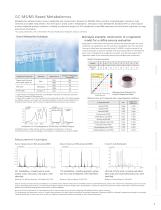
Metabolomics samples contain various metabolites and contaminants. Because GC-MS(/MS) offers excellent chromatographic resolution, high sensitivity and stable measurement, this technique is widely used in metabolomics. Shimadzu's Smart Metabolites Database offers a wide range of primary metabolite analysis conditions, enabling simultaneous analysis of 475 metabolites using MRM measurement and efficient acquisition of large amounts of information. *For sample pretreatments, refer to Pretreatment Procedure Handbook for Metabolites Analysis (C146-E323). Smart Metabolites Database ■ Analysis example:...
Open the catalog to page 5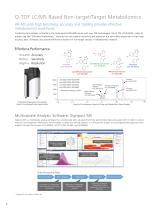
Q-TOF LC/MS Based Non-target/Target Metabolomics HR-MS with high sensitivity, accuracy and stability provides effective metabolomics workflows. Combining technologies cultivated in the triple quad LCMS-8000 series with new TOF technologies, the Q-TOF LCMS-9030, under its product tag line "Effortless Performance", features not only superior sensitivity and resolution but also stable acquisition of high-mass accuracy data. Shimadzu also provides effective solutions for non-target analysis in metabolomics research. Effortless Performance Greater Accuracy Better Sensitivity Higher Resolution LCMS-9030...
Open the catalog to page 6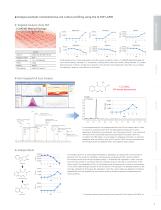
• Targeted Analysis Using SIM LC/MS/MS Method Package for Cell Culture Profiling A SIM analysis of the culture supernatant using the analysis conditions listed in "LC/MS/MS Method Package for Cell Culture Profiling" resulted in 27 compounds, including amino acids and vitamins, being detected. It is evident that kynurenine, ornithine, and alanine increased as the cultivation time progressed, while there was a tendency for tryptophan, arginine, and methionine to decrease. • Non-targeted Full Scan Analysis C11H12N2O4 (N'-formyl kynurenine) Difference from the theoretical value: -0.3 mD Difference...
Open the catalog to page 7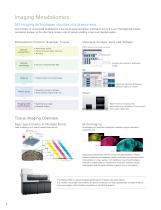
Imaging Metabolomics MS-imaging technologies visualize vital phenomena One limitation of conventional metabolomics is the loss of spatial distribution information due to the use of homogenized samples. Localization analysis, on the other hand, utilizes a slice of sample, enabling a more multi-faceted analysis. Pretreatment Protocol (Example: Tissue) Statistical Analysis Tools and iMLayer Section preparation Section mounting • Fresh frozen section • Section thickness: About 10±5 µm • No fixing (Hierarchical Cluster Analysis) Grouping by similarity of distribution images • Use of a conductive glass...
Open the catalog to page 8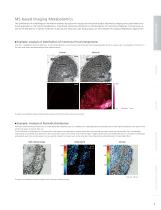
MS-based Imaging Metabolomics Mass spectrometers The combination of morphological information obtained by optical microscopy and functional analysis obtained by imaging mass spectrometry has found application in the field of metabolomics. In particular, obtaining information on the distribution of functional metabolites in living tissue, as well as the distribution of specific molecules in agricultural, food and crude drug products are key examples of imaging metabolomics applications. ■Example: Analysis of Distribution of Functional Food Components Strictinin, a polyphenol found in green tea,...
Open the catalog to page 9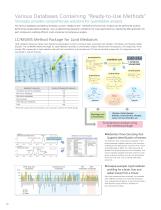
Various Databases Containing “Ready-to-Use Methods” Shimadzu provides comprehensive solutions for quantitative analysis The various databases provided by Shimadzu contain "Ready-to-Use" methods and know-how. Analysis can be performed without performing complicated procedures, such as determining separation conditions for mass spectrometry or optimizing MS parameters for each compound, enabling efficient multi-component simultaneous analysis. LC/MS/MS Method Package for Lipid Mediators Lipid mediators (bioactive lipids) have important physiological functions and have been associated with allergies,...
Open the catalog to page 10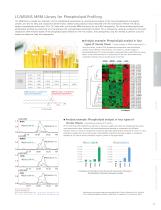
This MRM library includes two methods: one for phospholipid classification by comprehensive analysis of the main phospholipids in biological samples, and one for fatty acid composition determination created using analytical results obtained with the classification method. The library targets phospholipids containing C14 to C22 fatty acids, and includes MRM transitions for up to 867 components. This library enables performing phospholipid profiling by conducting an initial analysis with a phospholipid classification method. This is followed by creating a method for fatty acid composition determination...
Open the catalog to page 11All Shimadzu France catalogs and technical brochures
 LCMS-2050
16 Pages
 MCT Series
12 Pages
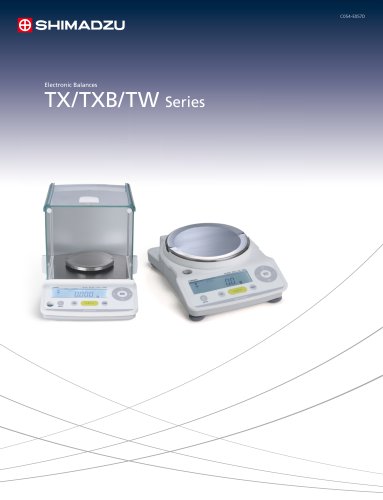 TX/TXB/TW Series
8 Pages
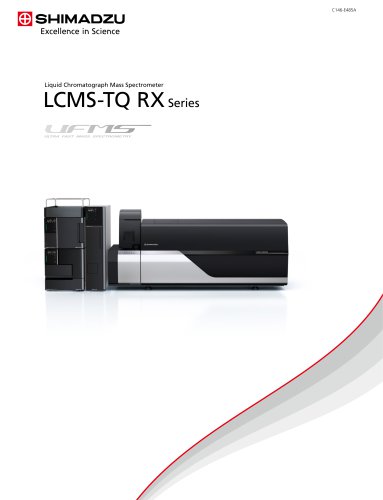 LCMS-TQ RX Series
16 Pages
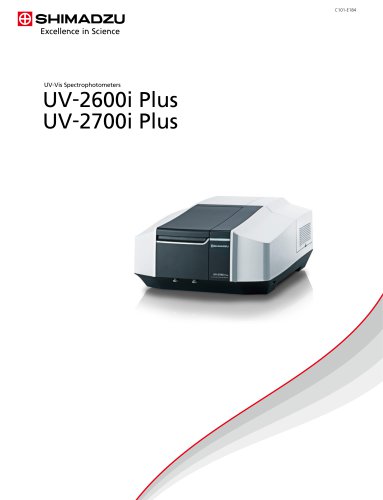 UV-2600i Plus /UV-2700i Plus
20 Pages
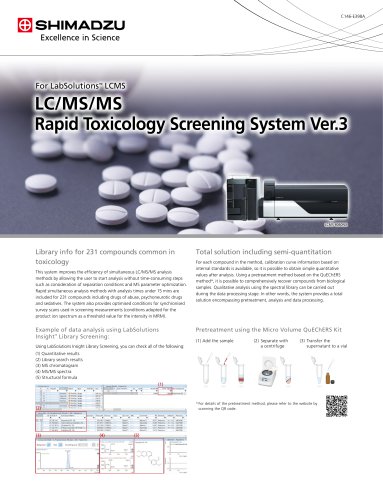 LC/MS/MS
2 Pages
 AUTOGRAPH AGX-V2 Series
28 Pages
 Nexera UC/Nexera UC Prep
20 Pages
 Shim-pack ™ SUR-Na Columns
2 Pages
 Peakintelligence
2 Pages
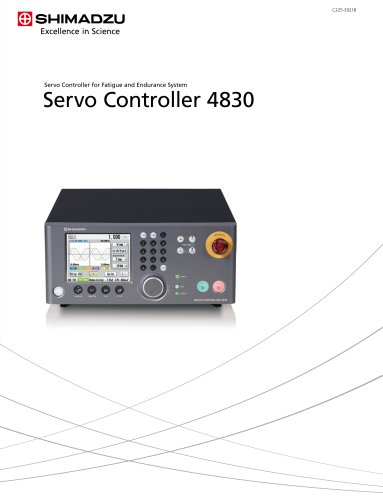 Servo Controller 4830
12 Pages
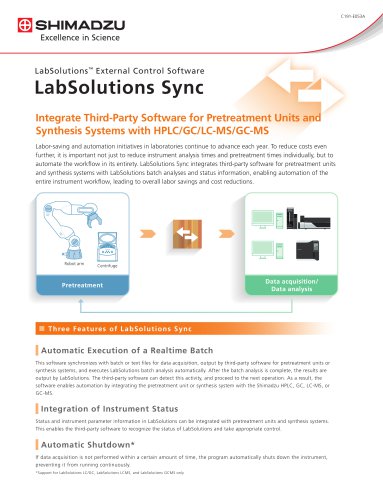 LabSolutions Sync
2 Pages
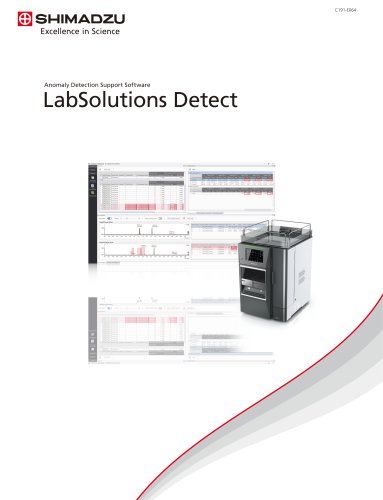 LabSolutions Detect
8 Pages
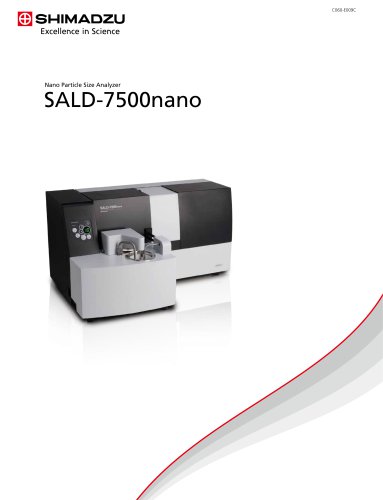 SALD-7500nano
16 Pages
 Multimodal Imaging System
4 Pages
 LCMS Family Brochure
12 Pages
 FluxEdge GC Systems
8 Pages
 Xslicer SMX-1010/1020
16 Pages
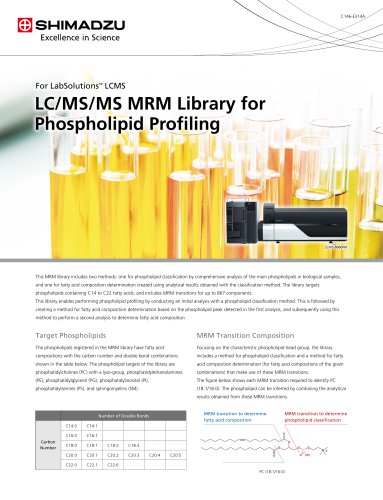 LC/MS/MS MRM
2 Pages
 LC/MS/MS
2 Pages
 TRViewX
8 Pages
 UW/UX Series
4 Pages
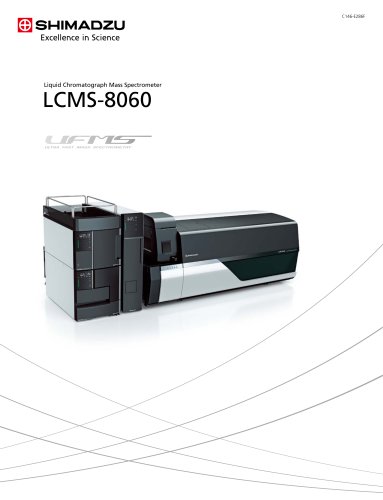 LCMS-8060
20 Pages
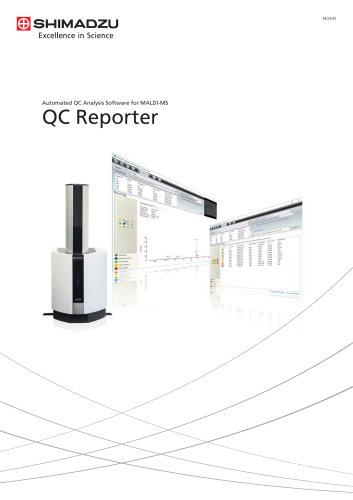 QC Reporter
6 Pages
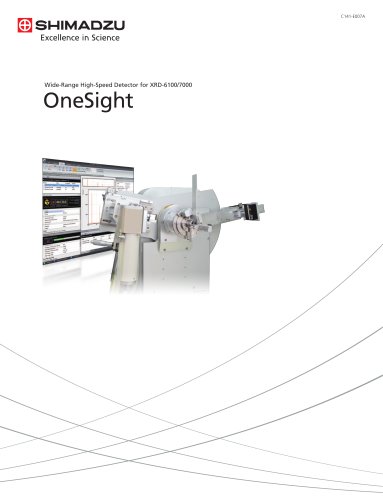 OneSight
4 Pages
 TD-30 Series
12 Pages
 Nexis GC-2030
20 Pages
 ATX/ATY series
4 Pages
 MOC63u
6 Pages
 UHPLC Nexera X2
20 Pages
 TOC-L
TOC-L16 Pages
 RF-6000
24 Pages
 iMScope Trio
28 Pages
 ICPE-9800 series
20 Pages
 UV-3600 Plus
26 Pages
 EDX-7000/8000
24 Pages
 Capillary GC-2010 Plus
24 Pages
 GCMS QP2010 Ultra
24 Pages
 LCMS-IT-TOF
16 Pages
 Headspace Sampler HS-20
8 Pages
 BW-K/BX-K Series
2 Pages
 Catalog MOC 120H
4 Pages
 ELB SERIES
2 Pages
 TW TWC SERIES
8 Pages
 AUW-D/AUW/AUX/AUY Series
8 Pages
 Catalog UW-Series
6 Pages
 Catalog AU-Series
8 Pages
 MDGC-2010 system
1 Page


Archived catalogs
 TOC-4110
1 Page
 Catalogue HMV-2 Series
8 Pages
 Shimadzu FTIR Overview
4 Pages
 Shimadzu Software Overview
8 Pages
 Shimadzu GC/GCMS Overview
6 Pages
 Shimadzu LC/LCMS Overview
12 Pages
 Shimadzu X-ray Fluorescence
2 Pages


- Shimadzu testing machine
- Digital imager
- Visible imager
- Test cabinet
- CMOS camera module
- Industrial camera module
- Concentration analyzer
- Management software solution
- Monitoring analyzer
- Infrared imager
- Automatic analyser
- Temperature test chamber
- Real-time software
- Shimadzu automatic testing machine
- Shimadzu material testing machine
- Indentation hardness tester
- Solids analyser