
- Catalogs
- Shenzhen Ruicom Technology Co., Ltd.
- RUICOM VTS6D CAN-Output Vibration Inclination Sensor


- Company
- Products
- Catalogs
- News & Trends
- Exhibitions
RUICOM VTS6D CAN-Output Vibration Inclination Sensor
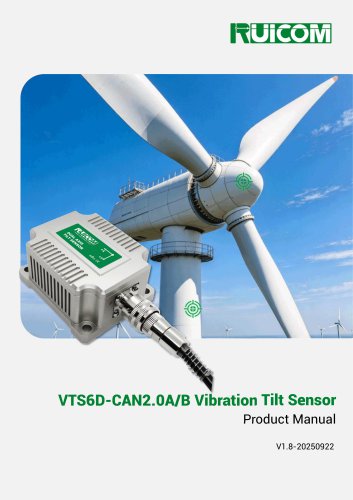
RUICOM VTS6D CAN-Output Vibration Inclination Sensor
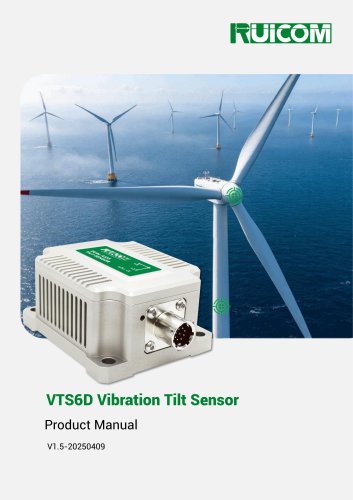
The VTS6D-CAN2.0A/B is a high-performance vibration tilt sensor developed by Ruicom Technology for precise inclination measurement. It undergoes extensive calibration and testing to ensure accuracy and stability across various temperatures. The sensor supports CAN2.0A and CAN2.0B protocols, facilitating integration with industrial systems. It features a non-contact measurement design, robust EMC protection, and high resistance to shock and vibration, making it suitable for harsh environments.
Key Features
- Measurement range: ±1° to ±60°
- Resolution: 0.0007°
- Dual-axis measurement
- IP67 protection rating
- Output options: CAN2.0A/CAN2.0B
Main Applications
- Wind Power Generation Monitoring
- Bridge and Dam Monitoring
- High-Speed Rail Track Monitoring
- Satellite Communication Vehicles
- Geological Equipment Tilt Monitoring
- Rail Track Ranging and Leveling
Performance Parameters
The sensor offers various measurement ranges with consistent resolution and accuracy. It features a rapid response frequency and configurable output rates. It complies with EMC standards and has high shock and vibration resistance.
Electrical Parameters
The sensor operates within a voltage range of 9-36V and has low operating current. It functions effectively in temperatures ranging from -40°C to +85°C.
Ordering Information
Models are defined by measurement range, output protocol, and installation orientation. For example, VTS6D10-C2-H indicates a ±10° range, CAN 2.0A protocol, and horizontal mounting.
Operating Principle
The sensor uses a capacitive pendulum to measure inclination, with changes in capacitance indicating tilt. It requires latitude configuration for accuracy.
Vibration Measurement
Vibration parameters include frequency, velocity, and displacement, derived from data analysis. These are used for reference due to the irregular nature of vibrations.
Interface Definition
The sensor uses a 7-core cable for power and CAN communication, with specific pin definitions for connection.
Product Dimensions
The enclosure measures L95×W70×H42mm, with mounting dimensions of L71×W56×8mm, using M6 screws.
Indicator Light Function
A red status indicator shows power and communication status.
Communication Protocol
The sensor supports CAN 2.0 protocol with configurable node IDs, baud rates, and output rates. It allows setting of relative zero points and filtering durations. Latitude configuration is also supported, with specific command formats for each setting.
Catalog excerpts
VTS6D-CAN2.0A/B Vibration Tilt Sensor Product Manual V1.8-20250922
Open the catalog to page 1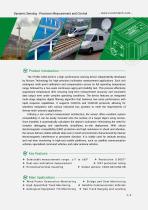
Product Introduction The VTS6D-CAN2.0A/B is a high-performance sensing device independently developed by Ruicom Technology for high-precision inclination measurement applications. Each unit undergoes multi-point calibration and compensation across its full operating temperature range, followed by a two-week continuous aging and stability test. This process effectively suppresses temperature drift, ensuring long-term measurement accuracy and consistent data output even under complex operating conditions. The device features an integrated multi-stage adaptive digital filtering algorithm that balances...
Open the catalog to page 2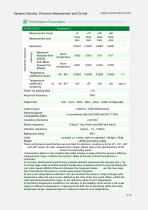
Dynamic Sensing ■ Precision Measurement and Control Measurement range Measurement axis Maximum Absolute Error S (MAXE) *< Root Mean Square Error (RMSE) Temperature coefficient of zero Power-on startup time Response frequency Output rate Output signal Electromagnetic compatibility (EMC) Insulation resistance Shock resistance Vibration resistance 100g @ 11 ms, three-axis (half-sine wave) Waterproof rating Cable Includes a 2-meter cable as standard / Weight <194g Weight <425g (excluding cable) These performance specifications are provided for reference, covering only the ±5°, ±10°, ±30°, and ±60°...
Open the catalog to page 3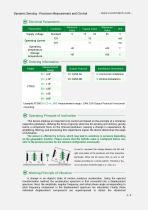
Dynamic Sensing ■ Precision Measurement and ControlElectrical Parameters Parameters Example:VTS6D10-C2-H: ±10° measurement range / CAN 2.0A Output Protocol/ horizontal mounting. This device employs an imported core control unit based on the principle of a miniature capacitive pendulum. Utilizing the force of gravity, when the tilt-sensing unit inclines, gravity exerts a component force on the internal pendulum, causing a change in capacitance. By amplifying, filtering, and processing this capacitance signal, the device determines the angle of inclination. The sensor is affected by G-force, which...
Open the catalog to page 4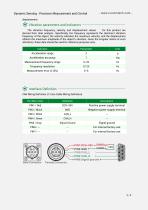
The vibration frequency, velocity, and displacement values for this product are derived from data analysis. Specifically, the frequency represents the dominant vibration frequency of the object; the velocity indicates the maximum velocity; and the displacement reflects the maximum amplitude of the object's vibration. Given the irregular nature of such vibrations, these data should be used for reference purposes only.
Open the catalog to page 5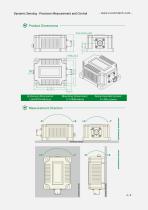
Dynamic Sensing ■ Precision Measurement and Control Enclosure dimensions: Mounting dimensions: Recommended screws: Measurement Direction
Open the catalog to page 6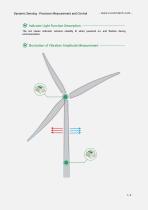
Dynamic Sensing · Precision Measurement and Control Indicator Light Function Description The red status indicator remains steadily lit when powered on, and flashes during communication. illustration of Vibration Amplitude Measurement
Open the catalog to page 7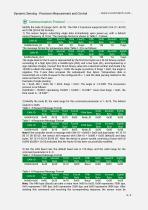
Dynamic Sensing ■ Precision Measurement and ControlCommunication Protocol Modify the node ID (range: 0x01 -0x7F). The CAN 2.0 protocol supports both 2.0A (11 -bit ID) and 2.0B (29-bit ID) formats. 1) The sensor begins outputting angle data immediately upon power-up, with a default output frequency of 10 Hz. The message format is shown in Table 1 -1 below: First Second Third Fourth Fifth Sixth Seventh Eighth Byte_Byte Byte Byte Byte Byte Byte Byte 0x580+Node_ID XL XM XH Xsign YL YM YH Ysign The message format for temperature data (Table 1 -2) is as follows: First Second Third Fourth Fifth Sixth...
Open the catalog to page 8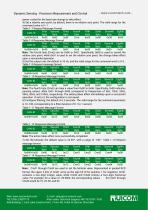
Dynamic Sensing ■ Precision Measurement and Control power-cycled for the baud rate change to take effect. 4) Set a relative zero point; by default, there is no relative zero point. The valid range for the command value is 0-1. Table 1 -7 Request Message Format First Second Third Fourth Fifth Sixth Seventh Eighth Byte Byte Byte Byte Byte Byte Byte Byte Table 1 -8 Response Message Format First Second Third Fourth Fifth Sixth Seventh Eighth Byte Byte Byte Byte Byte Byte Byte_Byte Note: The fourth byte (Cmd) can be 0x00 or 0x01. Specifically, 0x00 is used to cancel the relative zero point, while...
Open the catalog to page 9All Shenzhen Ruicom Technology Co., Ltd. catalogs and technical brochures





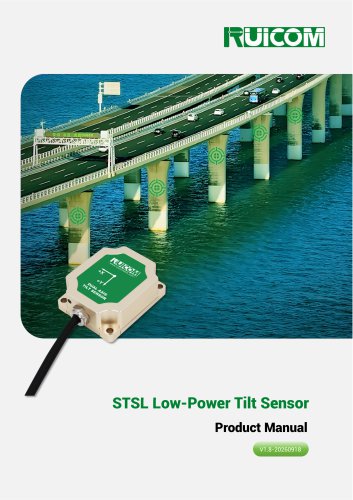
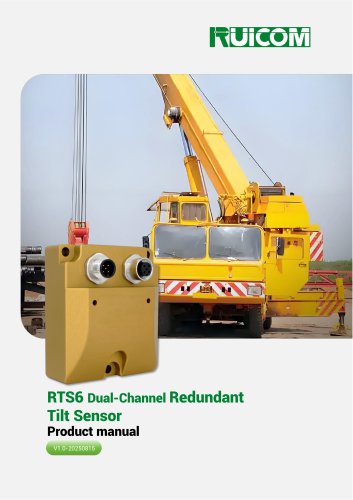
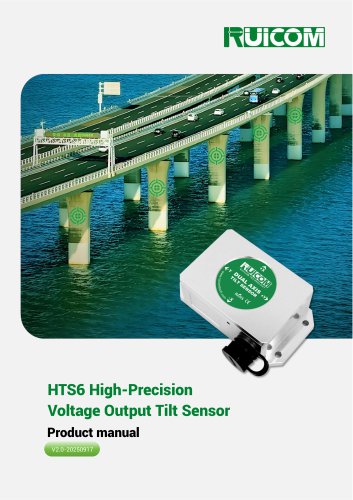
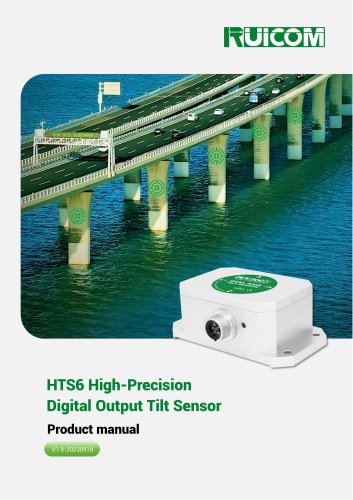

- Tilt sensor
- Digital inclination sensor
- 2-axis tilt sensor
- MEMS inclination sensor
- Multi-axis tilt sensor
- High-precision tiltmeter
- Analog inclination sensor
- IP67 inclination sensor
- 1-axis tilt sensor
- Vibration sensor
- Rugged inclination sensor
- Waterproof tiltmeter
- Angle measurement inclination sensor
- High-resolution inclinometer
- Tilt switch
- Inclination sensor with aluminum housing
- RS-485 inclinometer
- RS-232 inclinometer
- Anti-vibration inclinometer
- CAN inclination sensor