
- Catalogs
- SHENZHEN RION TECHNOLOGY CO.,LTD
- HDA436T-CANOpen


HDA436T-CANOpen
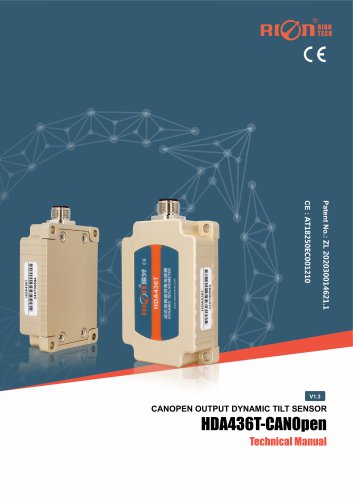
HDA436T-CANOpen
The HDA436T/HDA437T-C1 is a digital MEMS dynamic tilt sensor by RION Technology, designed for dual-axis tilt measurement in moving carriers. It features built-in acceleration and gyro sensors with a Kalman filtering algorithm for real-time motion data measurement. The sensor uses a non-contact measurement principle and CANOPEN communication protocol, suitable for complex motion scenes and harsh environments.
- Range: Biaxial ±90°
- Resolution: 0.01°
- Dynamic Accuracy: ±0.1°
- Static Accuracy: ±0.05°
- Wide Voltage Input: DC 9 ~ 36 V
- Temperature Range: -40 ~ +85 ℃
- Protection Grade: IP67/IP68
- High vibration impact equipment
- Satellite antenna star search
- Railway locomotive monitoring
- Oil drilling equipment
- Ship navigation attitude measurement
- Measure Range: Roll ±180°, Pitch ±90°
- Gyroscope Range: ±250°/s
- Acceleration Range: HDA436T: ±8g, HDA437T: ±20g
- Output Signal: CANOpen
- MTBF: ≥ 98,000 hours
- Waterproof Grade: Standard IP67, optional IP68
- Supply Voltage: 9-36 V
- Operating Current: 40mA (12V)
- Operating Temperature: -40 to +85 ℃
Options for standard industrial scenarios, high-intensity impact scenarios, and different protection levels. The product can be ordered with single or double connectors and as a PCBA board.
The sensor uses a capacitive miniature pendulum principle to measure tilt based on earth's gravity, converting capacitance changes into tilt angles.
Details the pin definitions for male and female wiring, including power supply and CAN_H/CAN_L connections.
The sensor supports various CANopen modes including polling, cycle, and synchronization modes. It operates based on the DS410 standard, allowing for multi-device communication on a CAN network.
Describes the boot-up process and mode transitions, including pre-operational, operational, and stopped modes.
Details the LSS feature for querying or changing settings on CANopen devices, with the HDA436T acting as an LSS slave.
The HDA436T inclinometer supports the LSS master function, focusing on application layer parameters like node numbers and baud rates. The LSS Master requests services from the inclinometer (LSS Slave) and identifies it using the LSS address, which includes vendor ID, product code, version number, and serial number.
For inclinometers at the bus's end or beginning, or when baud rates are ≥ 50 kbps, a 120-ohm termination resistor is necessary to prevent signal reflection.
The red LED indicates power and operational states: off for no power, flashing for pre-operational, and always bright for operational states.
The HDA436T is configurable via the CAN bus, with factory defaults including a device type of 2-axis, a cycle timer of 0 ms, a resolution of 0.01°, a node number of 1, and a baud rate of 125 kB.
CANopen objects vary in activity based on the inclinometer's state, with PDO and SDO objects active in different states.
Commands like Domain Request (22h) and Domain Confirm (60h) manage parameter writing and confirmation. Data lengths vary with command types.
Objects like 6010h and 6020h provide biaxial tilt angles, while 1010h and 2300h manage parameter storage. Resolution settings and preset values are crucial for accuracy.
PDOs handle real-time data exchange, with specific communication parameters for each transfer PDO.
Transmission modes can be cyclic or event-driven, with inhibit and event timers managing PDO intervals.
SDOs allow data access via explicit requests, with download and upload types based on client-server models.
Objects like 1000h describe device types, while others manage error registers, synchronization, and parameter storage and restoration.
This section provides general identification details for the inclinometer, including vendor ID, product code, revision number, and serial number. All values are read-only.
This object determines the transmission interval during cyclic transmission mode and is linked to event timers for TxPDO1 and TxPDO2. It ensures synchronization between the cyclic timer and event timers after power-up.
This object allows parameters to be stored in non-volatile memory and includes a reset function. The access code is write-only.
These objects set the X and Y axes to desired values, linked to specific objects. The preset range depends on the inclinometer's resolution, and values outside the range trigger an error message.
This object contains the device's node number, with a default of 01. The valid range is 1-127, and changes require a reset to take effect.
This object sets the device's baud rate, with valid values ranging from 0 to 7. The default is 125 Kbps, and changes require a reset.
This object manages the number of output angle slides for averaging. The filter is disabled by default, with valid values from 0 to 250.
These objects provide calibrated rotation rates and acceleration values for the X, Y, and Z axes. Values are read-only and can be mapped to a PDO.
This object provides the sensor's temperature in degrees Celsius, with a resolution of 0.1°C. It is read-only and can be mapped to a PDO.
This object shows the resolution for specific slope objects, with three available resolutions: 0.01º, 0.1º, and 1º.
These objects manage slope values and offsets for the X and Y axes, including preset values, operating parameters, and differential offsets. They ensure angle values remain within limits based on resolution settings.
The output type of PDO data is determined by the mapping of TxPDO1 and TxPDO2, with the output cycle frequency set by their event times.
- Device Type (1000): Unsigned 32, read-only
- Error Register (1001): Unsigned 8, read-only
- COB-ID SYNC (1005): Unsigned 32, read-write
- Device Name (1008), Hardware Version (1009), Software Version (100a): Strings, read-only
- Guard Time (100c) and Life Time Factor (100d): Unsigned 16 and 8, read-write
- Store and Restore Parameters (1010, 1011): Arrays with sub-indexes for saving and restoring various parameters
- Heartbeat Time (1016, 1017): Arrays for consumer and producer heartbeat times
- Identity Object (1018): Record containing vendor ID, product code, revision number, and serial number
- TxPDO Communication Parameters (1800, 1801) and Mapping (1a00, 1a01): Records for transmission settings and object mappings
- Cyclic Time (2200), Store Parameters (2300): Unsigned 16 and 32, read-write
- Preset X-Axis (2600) and Y-Axis (2601): Signed 16, read-write
- Node Number (3000) and Baud Rate (3001): Unsigned 8, read-write
- Moving Average Filter (3100): Unsigned 16, read-write
- Gyro and Acceleration Axes (3400-3405): Signed 16, read-only
- Sensor Temperature (3411): Signed 16, read-only
- Resolution (6000): Unsigned 16, read-write
- Slope Parameters (6010-6024): Various signed and unsigned types, with specific read-write permissions
Catalog excerpts
HDA436T/HDA437T CANOPEN OUTPUT DYNAMIC TILT SENSOR CANOPEN OUTPUT DYNAMIC TILT SENSOR Technical Manual
Open the catalog to page 1
HDA436T/HDA437T CANOPEN OUTPUT DYNAMIC TILT SENSOR RION QUALIFICATION CERTIFICATION ○ China National Intellectual Property Appearance Patent (Patent No.: ZL 202030439670. X) ○ CE CERTIFICATION: Registration No. AT18250EC001210 ○ Revision Date: 2024-9-9 Note: The function, parameters and appearance of the product will be adjusted with the technical upgrade. Please contact our pre-sales business for confirmation when purchasing. Disclaimer This product is developed exclusively for commercial applications and is prohibited from being used for illegal purposes, such as military activities, research...
Open the catalog to page 2
HDA436T/HDA437T CANOPEN OUTPUT DYNAMIC TILT SENSOR ▶ PRODUCT INTRODUCTION HDA436T/HDA437T-C1 product is a new generation of digital MEMS dynamic tilt sensor launched by RION Technology, which can measure the attitude parameters (dual-axis tilt) of the moving carrier and is suitable for tilt measurement in the state of motion or vibration. The HDA436T/HDA437T-C1 has built-in acceleration and gyro sensors and incorporates a Kalman filtering algorithm to measure real-time motion data of the carrier in motion or vibration. CANOPEN communication protocol is widely used. This product adopts the non-contact...
Open the catalog to page 3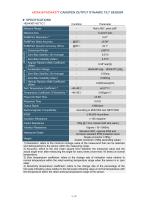
HDA436T/HDA437T CANOPEN OUTPUT DYNAMIC TILT SENSOR ▶ SPECIFICATIONS HDA436T/437T-C1 Measure Range Measure Axis Roll&Pitch Static Accuracy Roll&Pitch Dynamic Accuracy (Rms) Gyroscope Range Zero-Bias Stability (10s Average) Zero-Bias Instability (Allan) Angular Random Walk Coefficient (Allan) Acceleration Range Zero-Bias Stability (10s Average) Zero-Bias Instability (Allan) Velocity Random Walk Coefficient (Allan) Zero Temperature Coefficient 3) Temperature Coefficient Of Sensitivity Power-On Start Time Response Time Output Signal Electromagnetic Compatibility Insulation Resistance Impact Resistance...
Open the catalog to page 4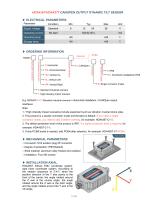
HDA436T/HDA437T CANOPEN OUTPUT DYNAMIC TILT SENSOR ▶ ELECTRICAL PARAMETERS Parameter Supply voltage Operating current Operating temp Storage temp ▶ ORDERING INFORMATION Optional Protection Grade Output Interface Installation Direction Application scenario S: Single connector (male) VR: Vertical Right 6: Standard industrial scenario 7: High-intensity impact scenario E.g.:HDA436T-C1:Standard industrial scenario / Horizontal installation / CANOpen output interfacel. Note: 1.7:High intensity impact scenarios include equipment such as vibration crushed stone piles. 2. This product is a double connector...
Open the catalog to page 5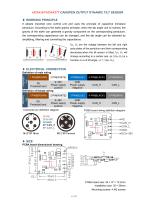
HDA436T/HDA437T CANOPEN OUTPUT DYNAMIC TILT SENSOR ▶ WORKING PRINCIPLE It adopts imported core control unit and uses the principle of capacitive miniature pendulum. According to the earth gravity principle, when the dip angle unit is inclined, the gravity of the earth can generate a gravity component on the corresponding pendulum, the corresponding capacitance can be changed, and the dip angle can be obtained by amplifying, filtering and converting the capacitance. UR, UL are the voltage between the left and right pole plates of the pendulum and their corresponding electrodes,when the tilt sensor...
Open the catalog to page 6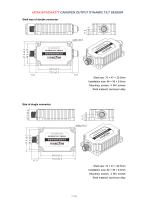
HDA436T/HDA437T CANOPEN OUTPUT DYNAMIC TILT SENSOR Shell size of double connector Shell size: 72 × 47 × 22.5mm Installation size: 64 × 39 × 6.5mm Mounting screws: 4 M4 screws Shell material: aluminum alloy Size of single connector Shell size: 72 × 47 × 22.5mm Installation size: 64 × 39 × 6.5mm Mounting screws: 4 M4 screws Shell material: aluminum alloy
Open the catalog to page 7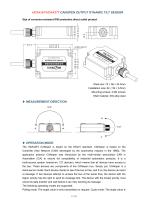
HDA436T/HDA437T CANOPEN OUTPUT DYNAMIC TILT SENSOR Size of corrosion-resistant IP68 protection direct outlet product Shell size: 72 × 56 × 24.5mm Installation size: 64 × 39 × 6.5mm Mounting screws: 4 M4 screws Shell material: 304 alloy steel ▶ OPERATION MODE The HDA436T CANopen is based on the DS410 standard. CANopen is based on the Controller Area Network (CAN) developed by the automotive industry in the 1980s. The application protocol CANopen was introduced by the multi-vendor association CAN in Automation (CiA) to ensure full compatibility of industrial automation products. It is a multi-access...
Open the catalog to page 8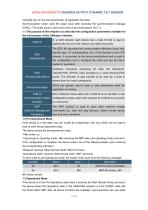
HDA436T/HDA437T CANOPEN OUTPUT DYNAMIC TILT SENSOR cyclically sent on the bus (periodically, at adjustable intervals). Synchronization mode: send the angle value after receiving the synchronization message (SYNC). The angle value is sent once every N synchronizations (N ≥ 1). 1.1 The purpose of this chapter is to describe the configuration parameters available for the inclinometer of the CANopen interface: Node ID In a CAN network, each device has a node ID that is used to address the device in the network and define its priority. The EDS file describes the communication attributes (baud rate,...
Open the catalog to page 9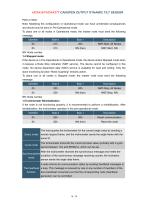
HDA436T/HDA437T CANOPEN OUTPUT DYNAMIC TILT SENSOR PDO or SDO. Note: Modifying the configuration in Operational mode can have unintended consequences and should only be done in Pre-Operational mode. To place one or all nodes in Operational mode, the master node must send the following message: Identifier NN: Node number 1.4 Stopped mode If the device is in Pre-Operational or Operational mode, the device enters Stopped mode when it receives a Node Stop indication (NMT service). The device cannot be configured in this mode. No device dependent data (SDO) service is available for read and writing....
Open the catalog to page 10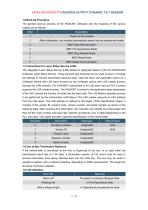
HDA436T/HDA437T CANOPEN OUTPUT DYNAMIC TILT SENSOR 1.6 Boot-Up Procedure The general boot-up process of the HDA436T CANopen and the mapping of the various modes are as follows: Order After initialization, the module automatically enters the pre-operational model NMT: Start Remote Node NMT: Stop Remote Node 1.7 Instructions for Layer Setup Service (LSS) The integrated Layer Setup Service (LSS) feature is designed based on the CiA DS305V200 CANopen Layer Setup Service. These services and protocols can be used to query or change the settings of several parameters (physical layer, data link layer...
Open the catalog to page 11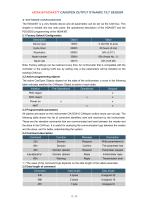
HDA436T/HDA437T CANOPEN OUTPUT DYNAMIC TILT SENSOR ▶ SOFTWARE CONFIGURATION The HDA436T is a very flexible device and all parameters can be set via the CAN bus. This chapter is divided into two main parts: the operational description of the HDA436T and the PDO/SDO programming of the HDA436T. 2.1 Factory Default Configuration Description Device type Cycle timer Node number Baud rate Note: Factory settings can be restored at any time. An inclinometer that is compatible with the controller or the existing CAN bus by setting only a few parameters will be installed on the existing CAN bus. 2.2 Active...
Open the catalog to page 12All SHENZHEN RION TECHNOLOGY CO.,LTD catalogs and technical brochures
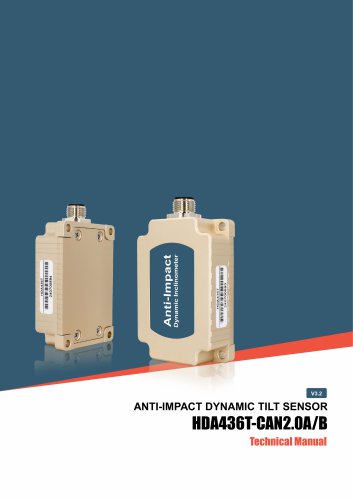 RION HDA436T TILT SENSOR
14 Pages
 RION SMI815 SMI825
5 Pages
 RION DMI850 inclinometer
9 Pages
 RION WCA300A
3 Pages
 RION PSI-25M
1 Page
 Rion inclinometer SDA118T
10 Pages
 SDA116T/SDA126T
16 Pages
 RION SDA116T/SDA126T-CAN OPEN
11 Pages
 Rion SDA110T inclinometer
9 Pages
 Rion inclinometer SCA118T
10 Pages
 Rion inclinometer SCA116
16 Pages
 Rion inclinometer SCA110
10 Pages
 Rion inclinometer PCA826T
21 Pages
 Rion inclinometer MCA418T
2 Pages
 Rion inclinometer MCA416T
2 Pages
 Rion inclinometer MCA416LD
10 Pages
 Rion inclinometer MCA416L
10 Pages
 Rion inclinometer MCA416
2 Pages
 Rion inclinometer MCA410T
2 Pages
 Rion inclinometer MCA-85
12 Pages
 Rion inclinometer LCA318T
10 Pages
 Rion HCA518T inclinometer
9 Pages
 Rion inclinometer HCA510T-N
11 Pages
 Rion inclinometer HCA510T
8 Pages
 Rion inclinometer HCA396B
11 Pages
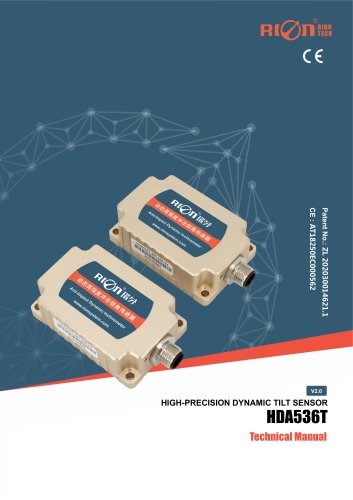 RION HDA536T INCLINOMETER
25 Pages
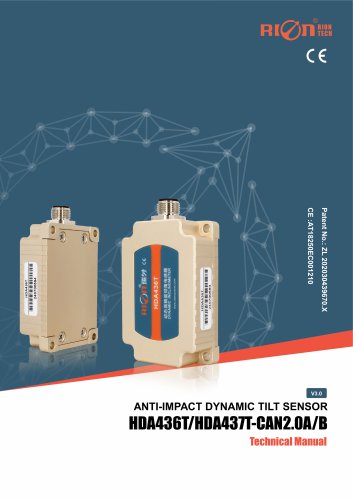 HDA437T/HDA437T-CAN2.0A/B
14 Pages
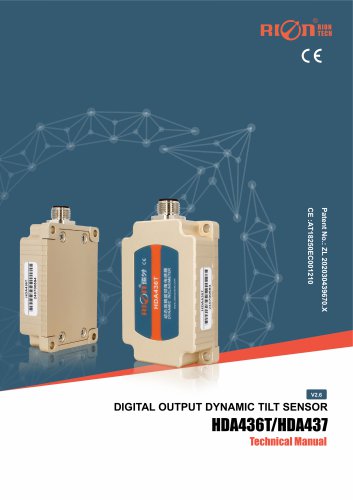 HDA437T/HDA437
25 Pages
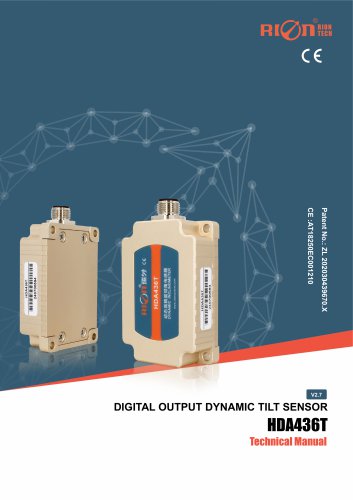 HDA436T
25 Pages
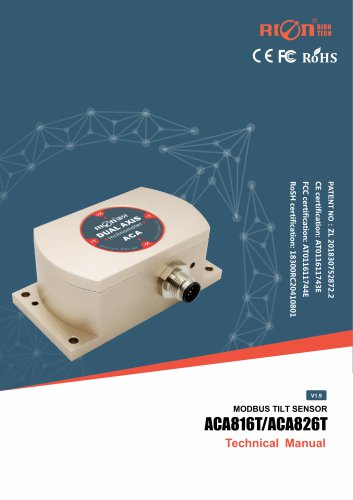 ACA816T/ACA826T
17 Pages
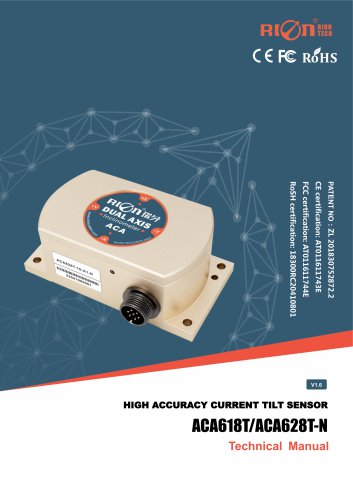 ACA618T/ACA628T-N
9 Pages
 Rion inclinometer ACA610T
9 Pages
 Rion electronic compass DDM350B
11 Pages
 Rion electronic compass DCM301B
11 Pages
 Rion electronic compass DCM250B
12 Pages
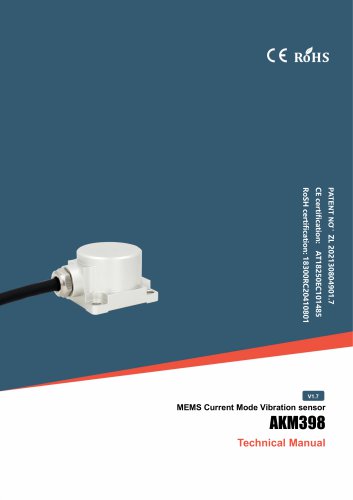 Rion AKM398 Vibration Sensor
6 Pages
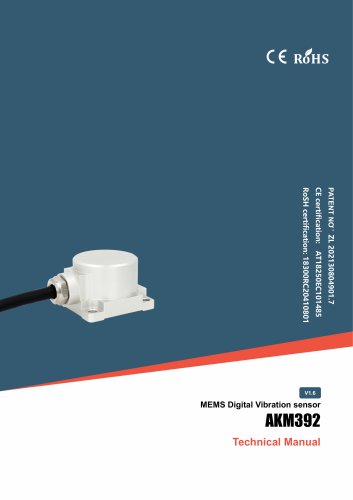 Rion AKM392 Vibration Sensor
15 Pages
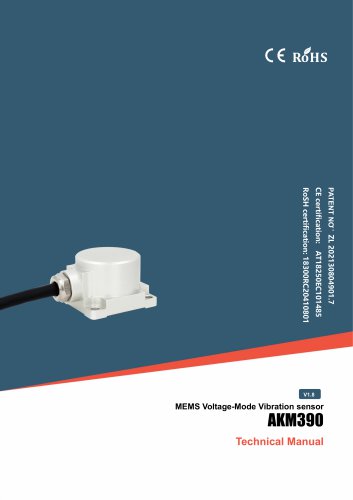 Rion AKM390 Vibration Sensor
6 Pages
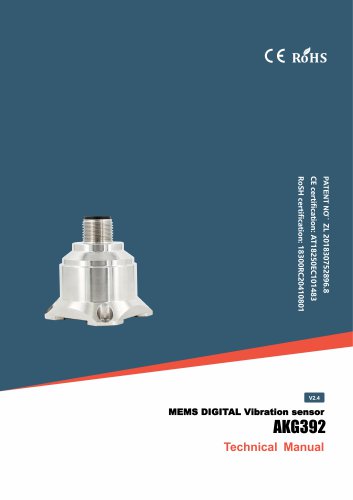 Rion Vibration Sensor AKG392
17 Pages



Archived catalogs
 SCA116T/SCA126T
9 Pages
- LCD screen
- Industrial monitor
- Panel-mount screen
- Pressure probe
- High-brightness monitor
- TFT-LCD monitor
- Analog pressure sensor
- RION digital inclinometer
- Stainless steel pressure sensor
- Relative pressure sensor
- RION 2-axis inclinometer
- RION MEMS inclinometer
- RION multi-axis inclinometer
- Absolute pressure sensor
- RION analog inclinometer
- Gas pressure sensor
- Sensitive element pressure sensor
- RION high-precision inclinometer
- Liquid pressure sensor