
- Catalogs
- SHAREBOT SRL
- Snowwhite2 PCL

Snowwhite2 PCL
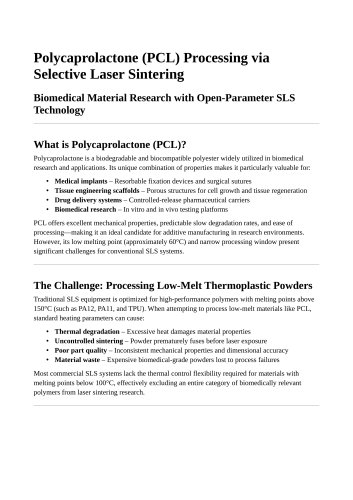
Snowwhite2 PCL
Polycaprolactone (PCL) is a biodegradable and biocompatible polyester used extensively in biomedical applications such as medical implants, tissue engineering scaffolds, drug delivery systems, and biomedical research. It is valued for its mechanical properties, slow degradation rates, and ease of processing. However, its low melting point (approximately 60°C) poses challenges for conventional Selective Laser Sintering (SLS) systems.
Traditional SLS systems are designed for high-performance polymers with melting points above 150°C. Processing low-melt materials like PCL can lead to thermal degradation, uncontrolled sintering, poor part quality, and material waste due to the lack of thermal control flexibility in most commercial SLS systems.
The Sharebot SnowWhite2 system is engineered for material research, offering precise thermal management for low-melt thermoplastic powders. Key advantages include CO₂ laser technology, precision thermal control, a wide temperature range, compact build volume, and open parameter architecture, allowing for complete process optimization.
Sharebot has optimized thermal management protocols for sintering industrial-grade PCL powders. Adjustments include setting the build chamber temperature to 55–60°C, reducing lamp intensity, and implementing a gradual heating curve to prevent thermal shock and ensure consistent processing.
PCL processing enables advancements in tissue engineering, drug delivery research, medical device prototyping, and material science. Researchers can fabricate patient-specific scaffolds, develop controlled-release devices, create resorbable implant prototypes, and study sintering behavior under controlled conditions.
The thermal control methodology for PCL can be applied to other low-melt thermoplastics. SnowWhite2's open architecture supports extending this methodology to materials requiring non-standard thermal management.
SnowWhite2 is the only research SLS system with CO₂ laser technology, validated for processing expensive biomedical powders, offering complete thermal management control, minimizing material waste, and providing open parameter access for process transparency and development support.
Catalog excerpts
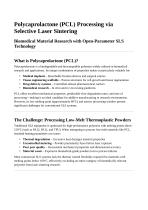
Polycaprolactone (PCL) Processing via Selective Laser Sintering Biomedical Material Research with Open-Parameter SLS Technology What is Polycaprolactone (PCL)? Polycaprolactone is a biodegradable and biocompatible polyester widely utilized in biomedical research and applications. Its unique combination of properties makes it particularly valuable for: • • • • Medical implants – Resorbable fixation devices and surgical sutures Tissue engineering scaffolds – Porous structures for cell growth and tissue regeneration Drug delivery systems – Controlled-release pharmaceutical carriers Biomedical research – In vitro and in vivo testing platforms PCL offers excellent mechanical properties, predictable slow degradation rates, and ease of processing—making it an ideal candidate for additive manufacturing in research environments. However, its low melting point (approximately 60°C) and narrow processing window present significant challenges for conventional SLS systems. The Challenge: Processing Low-Melt Thermoplastic Powders Traditional SLS equipment is optimized for high-performance polymers with melting points above 150°C (such as PA12, PA11, and TPU). When attempting to process low-melt materials like PCL, standard heating parameters can cause: • • • • Thermal degradation – Excessive heat damages material properties Uncontrolled sintering – Powder prematurely fuses before laser exposure Poor part quality – Inconsistent mechanical properties and dimensional accuracy Material waste – Expensive biomedical-grade powders lost to process failures Most commercial SLS systems lack the thermal control flexibility required for materials with melting points below 100°C, effectively excluding an entire category of biomedically relevant polym
Open the catalog to page 1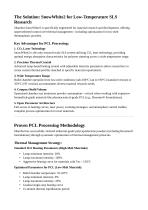
Sharebot SnowWhite2 is specifically engineered for material research and development, offering unprecedented control over thermal management—including optimization for low-melt thermoplastic powders. SnowWhite2 is the only research-scale SLS system utilizing CO2 laser technology, providing optimal energy absorption characteristics for polymer sintering across a wide temperature range. Advanced lamp-based heating system with adjustable intensity parameters allows researchers to create custom thermal profiles matched to specific material requirements. Build chamber operation from low-melt conditions...
Open the catalog to page 2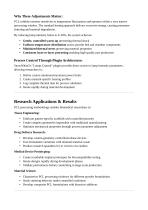
PCL exhibits extreme sensitivity to temperature fluctuations and operates within a very narrow processing window. The standard heating approach delivers excessive energy, causing premature sintering and material degradation. By reducing lamp intensity limits to 0-20%, the system achieves: • Gentle, controlled warm-up preventing thermal shock • Uniform temperature distribution across powder bed and chamber components • Minimized thermal stress preserving material properties • Consistent layer-to-layer processing enabling high-quality part production SnowWhite2's "Lamps Control” plugin provides...
Open the catalog to page 3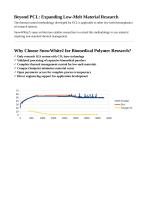
The thermal control methodology developed for PCL is applicable to other low-melt thermoplastics of research interest. SnowWhite2's open architecture enables researchers to extend this methodology to any material requiring non-standard thermal management. ✓ Only research SLS system with CO2 laser technology ✓ Validated processing of expensive biomedical powders ✓ Complete thermal management control for low-melt materials ✓ Compact footprint minimizes material waste ✓ Open parameter access for complete process transparency ✓ Direct engineering support for application development
Open the catalog to page 4All SHAREBOT SRL catalogs and technical brochures
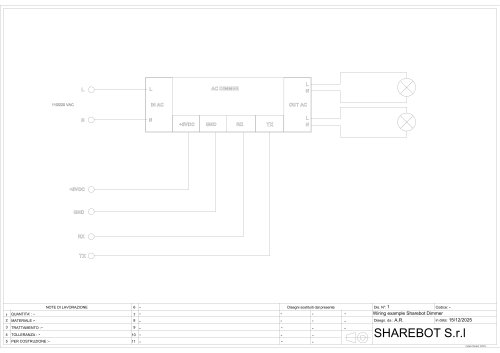 Dimmer wiring diagram
1 Page
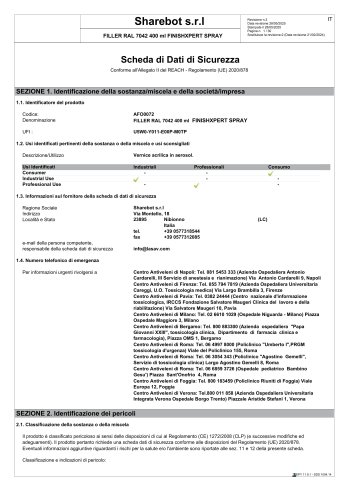 SDS Finishxpert Filler
30 Pages
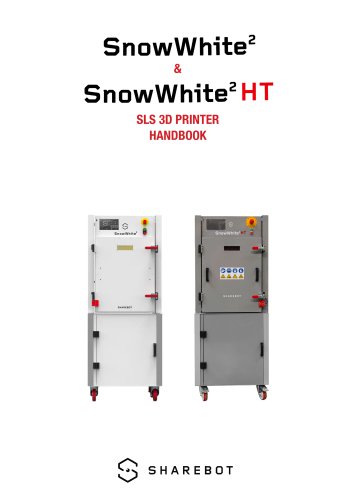 Snowwhite2 Handbook
40 Pages
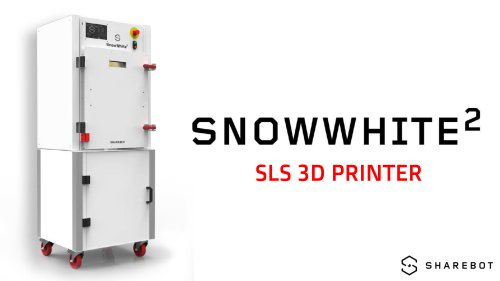 Snowwhite2 enduser patent report
25 Pages
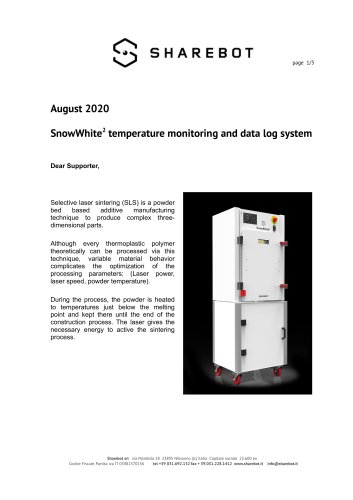 Snowwhite2 Temperature LOG
3 Pages
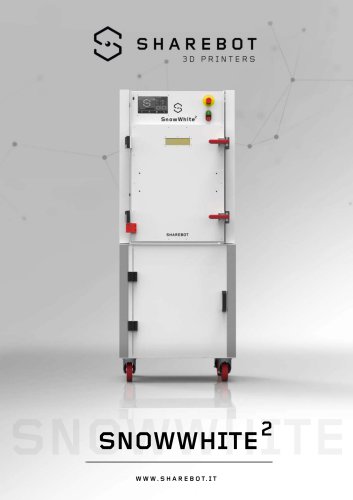 Snowwhite2 brochure
2 Pages
 Snowwhite2 User Manual
49 Pages
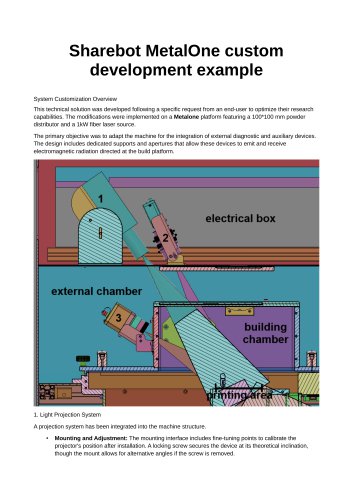 Metalone custom development
2 Pages
 Metalone User Manual
73 Pages
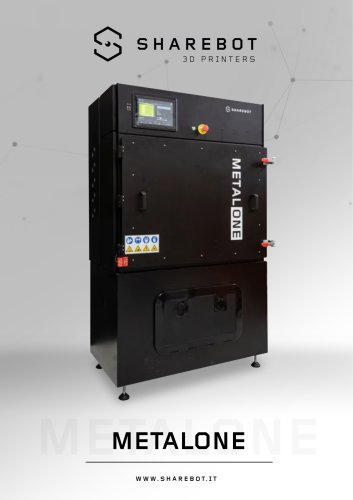 Metalone brochure
2 Pages
 Metalone Handbook
28 Pages
 User Manual Snowwhite2HT
44 Pages
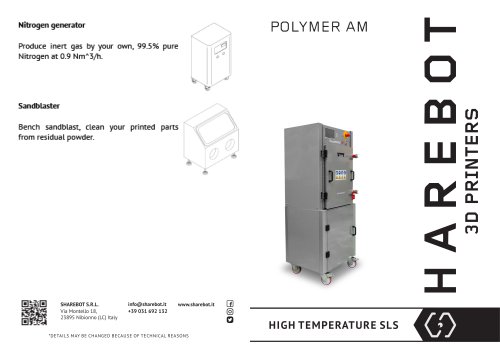 Brochure Snowwhite2HT
2 Pages
- Additive manufacturing machine
- Automatic test kit
- Industrial 3D printer
- Plastic additive manufacturing machine
- Prototyping 3D printing machine
- FDM 3D printer
- High-performance 3D printer
- Laboratory test kit
- Plastic spray
- Large-format 3D printer
- High-speed 3D printer
- Metal 3D printing machine
- ABS 3D printer
- Polyester sealant
- PLA 3D printer
- Resin 3D printer
- Desktop 3D printer
- Medical 3D printing machine
- Dental additive manufacturing machine
- PA 3D printer