

- Company
- Products
- Catalogs
- News & Trends
- Exhibitions
Secomak - Gas Boosters & Package Gas Boosters

1 / 21 PagesView full catalog
Secomak - Gas Boosters & Package Gas Boosters
Product catalog summary
Introduction
Secomak Gas Boosters are engineered to enhance gas pressure for optimal combustion and reduced pipework size. They are compact, energy-efficient, and quieter than direct drive boosters. With over 40 years of incident-free installations, they offer easy installation, flexible control, and compatibility with building management systems. The package includes necessary pressure switches and controls, requiring only electrical and mechanical connections.
Secomak Gas Boosters are engineered to enhance gas pressure for optimal combustion and reduced pipework size. They are compact, energy-efficient, and quieter than direct drive boosters. With over 40 years of incident-free installations, they offer easy installation, flexible control, and compatibility with building management systems. The package includes necessary pressure switches and controls, requiring only electrical and mechanical connections.
Technical Data
The document details specifications for models GB576, GP576, GB535, GP535, GB539, GP539, GB540, and GP540. Key parameters include maximum flow rates, pressure lift, outlet pressure, electrical supply, control voltage, motor power, run current, and noise levels. The boosters comply with Machinery, EMC, and Low Voltage Directives.
The document details specifications for models GB576, GP576, GB535, GP535, GB539, GP539, GB540, and GP540. Key parameters include maximum flow rates, pressure lift, outlet pressure, electrical supply, control voltage, motor power, run current, and noise levels. The boosters comply with Machinery, EMC, and Low Voltage Directives.
Dimensional Data
Dimensions for each model are provided, detailing measurements for various components and flange sizes.
Dimensions for each model are provided, detailing measurements for various components and flange sizes.
Component Diagram
A diagram lists components such as the booster impellor chamber, control panel, drive motor, and pressure switches.
A diagram lists components such as the booster impellor chamber, control panel, drive motor, and pressure switches.
Performance Curves
Performance curves for models 576, 535, 539, and 540 are included, showing pressure lift against volume for natural gas.
Performance curves for models 576, 535, 539, and 540 are included, showing pressure lift against volume for natural gas.
Booster Installation Guidelines
Installation should be performed by a competent person, following guidelines from the Institution of Gas Engineers. Key points include:
Installation should be performed by a competent person, following guidelines from the Institution of Gas Engineers. Key points include:
- Location: Avoid installing in governor or meter rooms, ensure good ventilation, and maintain access for maintenance.
- Ventilation: Provide high and low-level openings, ensuring they are away from ignition sources.
- Pipework: Minimize pressure drop and use anti-vibration mountings and flexible connectors.
- Electrical: Conform to BS 7671, ensure continuous running, and use appropriate starters to prevent pressure surges.
- Protection Equipment: Include low-pressure cut-off switches and non-return valves where necessary.
- Warning Notices: Display operational and emergency instructions.
Booster Commissioning
Commissioning should be done by a competent person, following IGE/UP/4 procedures. Pre-commissioning checks include ensuring correct rotation direction and checking the drive belt and pulleys. Adjust the inlet pressure switch and test the system for gas tightness using air, not hydraulic pressure.
Commissioning should be done by a competent person, following IGE/UP/4 procedures. Pre-commissioning checks include ensuring correct rotation direction and checking the drive belt and pulleys. Adjust the inlet pressure switch and test the system for gas tightness using air, not hydraulic pressure.
Conclusion
The document provides comprehensive guidelines for the installation, operation, and maintenance of Secomak gas boosters, ensuring safe and efficient performance.
The document provides comprehensive guidelines for the installation, operation, and maintenance of Secomak gas boosters, ensuring safe and efficient performance.
Pressure Testing and Safety Procedures
To ensure safety during pressure testing, if the low-pressure cut-off switch activates prematurely, establish a flow on the booster outlet using a separate test appliance or vent the gas safely. Ensure venting is done at least 2.5m above ground and 3m from ignition sources. Use reinforced flexible hoses, securely fastened, and ensure externally armoured hoses are earthed to prevent sparking.
To ensure safety during pressure testing, if the low-pressure cut-off switch activates prematurely, establish a flow on the booster outlet using a separate test appliance or vent the gas safely. Ensure venting is done at least 2.5m above ground and 3m from ignition sources. Use reinforced flexible hoses, securely fastened, and ensure externally armoured hoses are earthed to prevent sparking.
Booster Maintenance
Regular inspection of Secomak Gas Boosters is crucial to prevent wear or damage to components like bearings, fans, seals, and drive elements. Flexible connectors should be replaced every five years. Electric motors have sealed-for-life bearings requiring no lubrication, and correct belt tension is maintained by the motor's weight. Drive pulleys should be replaced if damaged, and alignment checked. Drive belts should be replaced annually, following a specific procedure to ensure proper installation.
Regular inspection of Secomak Gas Boosters is crucial to prevent wear or damage to components like bearings, fans, seals, and drive elements. Flexible connectors should be replaced every five years. Electric motors have sealed-for-life bearings requiring no lubrication, and correct belt tension is maintained by the motor's weight. Drive pulleys should be replaced if damaged, and alignment checked. Drive belts should be replaced annually, following a specific procedure to ensure proper installation.
Bearing Assemblies
Bearing assemblies should be replaced every five years. Sealed-for-life bearings require no lubrication, but increased noise or vibration indicates replacement is needed. The replacement procedure involves isolating the electricity supply, removing the belt guard and belt, and carefully replacing the bearing assembly with a Secomak part.
Bearing assemblies should be replaced every five years. Sealed-for-life bearings require no lubrication, but increased noise or vibration indicates replacement is needed. The replacement procedure involves isolating the electricity supply, removing the belt guard and belt, and carefully replacing the bearing assembly with a Secomak part.
Spare Parts
Spare parts for boosters are listed with part numbers. Always provide full nameplate details when ordering, including voltage, phases, and periodicity.
Spare parts for boosters are listed with part numbers. Always provide full nameplate details when ordering, including voltage, phases, and periodicity.
Guarantee
Secomak gas boosters are tested for gas-tightness before dispatch and are guaranteed for twelve months against defects due to materials or workmanship. Any defects should be reported immediately, and the machine should not be dismantled if a claim is to be made under the guarantee.
Secomak gas boosters are tested for gas-tightness before dispatch and are guaranteed for twelve months against defects due to materials or workmanship. Any defects should be reported immediately, and the machine should not be dismantled if a claim is to be made under the guarantee.
See more
All SECOMAK catalogs and technical brochures
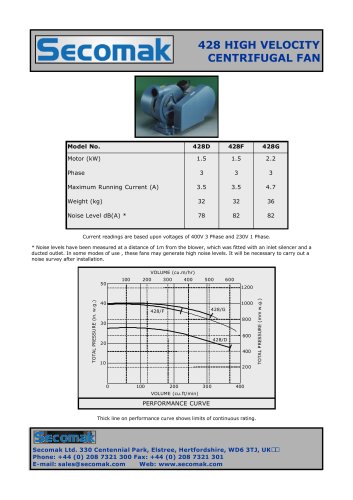
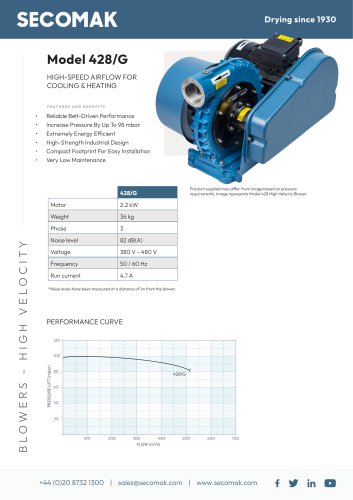 Model 428/G
2 Pages
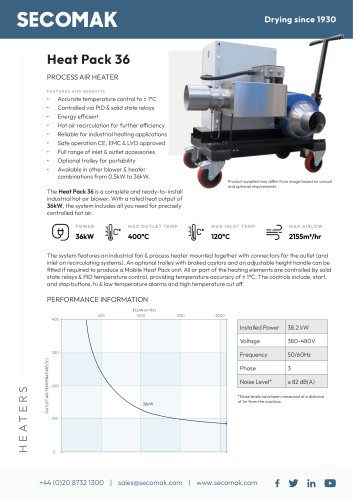 Heat Pack 36
1 Page
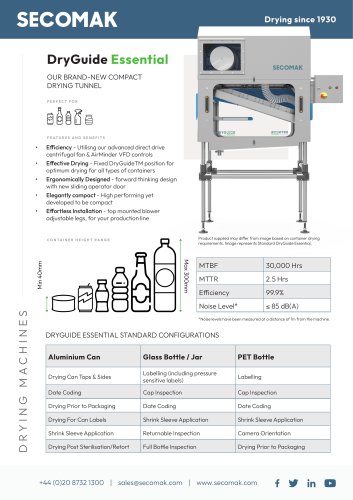 DryGuide Essential
2 Pages
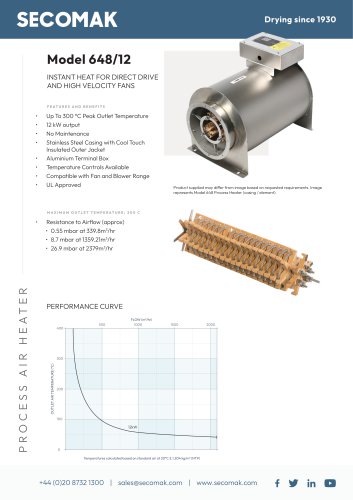 Model 648/12
2 Pages
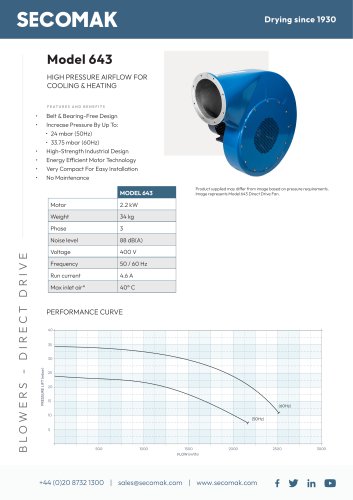 Model 643
2 Pages
Archived catalogs
 648 HEATER
2 Pages
 Heaters Process Air
2 Pages
 Heatcurves
2 Pages
 Latex Testing
2 Pages
 Fans & Blowers Spares
1 Page




Related Searches
- Test machine
- Automatic cleaning system
- Drying system
- Radial fan
- Industrial fan
- Air blower
- Water cleaning system
- Centrifugal blower
- Single-stage blower
- Stainless steel cleaning system
- Continuous drying system
- Heater
- Air blast drying system
- Compact cleaning system
- Mechanical testing machine
- Air heater
- Electric heater
- Pressure booster
- Air heater unit
- Direct-drive fan
*Prices are pre-tax. They exclude delivery charges and customs duties and do not include additional charges for installation or activation options. Prices are indicative only and may vary by country, with changes to the cost of raw materials and exchange rates.
About DirectIndustry
DirectIndustry is a marketplace that offers B2B players a complete experience, from product sourcing to purchase. DirectIndustry is an entity of VirtualExpo Group.
Are you a buyer?
Are you a supplier?