
- Catalogs
- SEBA PROTEZIONE srl
- A SAFE BODY FOR A SAFE WORK

A SAFE BODY FOR A SAFE WORK

A SAFE BODY FOR A SAFE WORK
The document outlines testing procedures for gloves, including air and water leakage tests, in compliance with ISO 2859 standards. These tests ensure quality by determining the probability of defects, with a lower AQL (Accepted Quality Level) indicating fewer defects.
EN 16523-1:2015 specifies methods for testing glove resistance to chemical permeation under continuous contact. Performance levels range from 1 to 6, based on the time it takes for chemicals to permeate the glove.
Gloves are classified into types A, B, and C based on their permeation performance against a list of 18 chemicals. Type A gloves must resist at least six chemicals at level 2, Type B at least three, and Type C at least one.
EN ISO 374-1:2016 and EN ISO 374-5:2016 outline requirements for gloves protecting against chemicals and microorganisms. They specify penetration and permeation tests, with additional standards for resistance to degradation (EN 374-4:2013) and protection against viruses.
EN 421:1994 covers protection against ionizing radiation, while the EN 455 series addresses medical gloves, focusing on the absence of holes, physical properties, biological evaluation, and shelf life.
EN 16350:2014 and EN 1149 series specify requirements for gloves used in flammable or explosive environments, focusing on electrostatic discharge prevention.
Gloves intended for food contact must comply with EU regulations, ensuring no harmful substances are transferred to food. OEKO-TEX® certification ensures products are free from harmful substances.
The document references the REACH regulation, ensuring gloves do not contain prohibited substances, and the TP TC 019/2011 technical regulation for safety in the Eurasian Customs Union.
The updated EN407:2020 standard expands thermal protection requirements to include gloves and other hand equipment, ensuring protection from heat and flames.
1. Polyurethane Foam Gloves: These gloves feature a seamless textile support interior, with a length of 22-27 cm and a lightweight thickness. They comply with EN 388 4131X - CAT 2 standards, indicating resistance to mechanical risks.
2. Clothing Standards: Various standards are outlined for protective clothing, including EN 14404 for knee protection, EN 340 and EN ISO 13688 for general protective clothing requirements, EN ISO 20471 for high visibility clothing, EN 342 for cold protection, UNI EN 343 for rain protection, EN ISO 11612 for flame and heat protection, and EN ISO 11611 for welding protection.
1. EN 388 4131X - CAT 2: Specifies mechanical risk resistance for gloves.
2. EN 14404: Details knee protection requirements for kneeling work.
3. EN 340 and EN ISO 13688: Cover general requirements for protective clothing, including ergonomics and comfort.
4. EN ISO 20471: Specifies high visibility clothing requirements for professional use.
5. EN 342: Outlines requirements for clothing protecting against cold environments.
6. UNI EN 343: Specifies requirements for rain protection clothing.
7. EN ISO 11612: Details protection against heat and flame.
8. EN ISO 11611: Specifies protection for welding and related processes.
9. CEI EN 61482-1-2: Covers protection against thermal risks of electric arcs.
10. EN 13034: Provides guidelines for protection against liquid chemicals.
11. EN 1149-5: Specifies protection against electrostatic charges.
12. EN 14605: Details protection against liquid chemicals.
13. EN ISO 13982: Specifies protection against solid particles.
14. EN 14126: Covers protection against infectious agents.
15. EN 1073: Details protection against radioactive contamination.
1. High Visibility Clothing: Combining two certified high visibility garments can achieve a higher protection class.
2. Cold Protection: Specific padding and technical features allow garments to breathe while keeping the wearer warm.
3. Rain Protection: Emphasizes the importance of waterproof and breathable materials with sealed seams for comfort.
4. Flame and Heat Protection: Specifies performance requirements for materials to ensure safety against heat and flames.
1. MAXTEX® Fabric Garments: These include padded bodywarmers and jackets made from water-repellent, breathable, and tear-resistant fabric. Features include full-length zipper closures, concealed hoods, and multiple pockets.
2. Customizable Clothing: Offers the possibility of personalized garments in various fabrics, colors, and with logos.
1. Minimum Material Areas: Specifies the minimum areas of fluorescent and retroreflective materials required for different classes of high visibility clothing.
2. Size Chart: Provides measurements for waist, chest, and height for various clothing sizes, from S to XXXL.
3. Protection Classes: Lists protection classes for various standards, indicating levels of protection against specific risks.
This document provides detailed specifications and descriptions of various clothing items, including jackets, vests, and trousers, made from different materials such as MAXTEX, nylon, and polyester. The clothing items are designed for different uses, including winter wear, sports, and casual wear, with features like waterproofing, breathability, and multiple pockets.
- Specifications: Each clothing item is described with its material composition, features like detachable hoods, internal padding, and pocket configurations. For example, the jackets are often made of waterproof materials like nylon or polyester with additional features such as reflective details and detachable sleeves.
- Procedures: The document outlines the availability of each item in various sizes, from small to XXXL, and the packaging details, indicating the number of pieces per package.
- Standards and Norms: All items are categorized under [CE - Cat.1], indicating compliance with certain European standards for safety and quality.
- Recommendations: The document suggests the use of these clothing items for specific conditions, such as winter or sports activities, due to their waterproof and breathable properties.
The document includes multiple product codes (e.g., ART. 700SVC, ART. 900NTC) with corresponding descriptions in multiple languages (Italian, English, Spanish, French), highlighting the international applicability of the products. Key features such as material weight (e.g., 180 gr/m2 for padding) and specific fabric types (e.g., 190T pongee) are consistently mentioned to emphasize product quality and functionality.
The document emphasizes the importance of material quality, such as the use of MAXTEX fabric for breathability and waterproofing, and the inclusion of practical features like multipockets and detachable components for versatility. These features are crucial for ensuring the clothing items meet the needs of various environments and user preferences.
This document provides detailed specifications and descriptions of various clothing items, primarily focusing on SOFTSHELL jackets, sweatshirts, and caps. Each product is categorized under the CE - Cat.1 certification, indicating compliance with basic health and safety requirements.
- Materials: Predominantly made from polyester and spandex blends, with some featuring TPU membranes for water repellency.
- Design Features: Include full-length zip closures, multiple zippered pockets, reflective elements for visibility, and adjustable cuffs. Some models have removable hoods.
- Sizes: Available in a range from M to XXXL.
- Materials: Combinations of cotton, polyester, and elastane, with weights ranging from 260 to 300 gr/m2.
- Design Features: Include options with full-length or short zips, elastic cuffs and waistbands, and reinforced seams.
- Sizes: Typically available from S to XXL.
- Types: Include safety caps with anti-impact features, high visibility caps for different seasons, and standard baseball caps.
- Materials: Use of acrylic and thinsulate for warmth in winter caps.
- Features: Some caps include reflective bands for enhanced visibility.
- Gym Coveralls: Made from cotton and polyester blends, available in grey and blue.
- Polo Shirts and T-Shirts: Made from 100% cotton, available in various colors and weights.
- All items are designed with functionality and safety in mind, adhering to CE - Cat.1 standards.
- Reflective elements and water-repellent features are common in outerwear for enhanced safety and comfort.
- Size ranges and material compositions are consistent across product lines, ensuring a wide range of options for different needs.
1. Safety Cap: The document describes a safety cap with an internal shell designed to absorb impacts, with a resistance of 12.5 Joules. It is available in Blue Navy color and complies with CE EN 812 standards.
2. Waterproof Clothing: Various waterproof jackets and trousers are detailed, made from materials like PVC, polyurethane, and nylon. They feature adjustable elements, pockets, and closures, with thicknesses ranging from 0.16 mm to 0.45 mm. These garments are categorized under CE Cat.1.
3. Aprons: The document lists aprons made from polyurethane and cotton, with specific features like heat resistance up to 85°C and reinforcement in certain areas.
4. Workwear: Includes trousers, jackets, and bermuda shorts made from cotton, elastane, and canvas. These garments feature reinforcement for durability, reflective details for night visibility, and are designed for comfort and flexibility.
The document emphasizes the importance of using materials like elastane for stretchability and comfort, and canvas for reinforcement to enhance durability. It also highlights the design aspects that make the workwear modern and appealing, while maintaining functionality.
The document includes tables listing product codes, sizes, and packaging details for each item, indicating the availability of sizes from S to XXXL and packaging in units of 10 or 20 pieces per box.
- The document details various work clothing items made from different fabric compositions, primarily cotton, polyester, and elastane. The weights of these fabrics range from 180 gr/m2 to 310 gr/m2.
- Reinforcements are commonly made from canvas fabric, particularly in areas like shoulders, arms, knees, and crotch.
- Reflective details are included for night visibility in several items.
- Jackets: Available in various compositions, including 98% cotton and 2% elastane, and 65% polyester, 32% cotton, 3% elastane. Features include concealed button closures, zip pockets, and reflective trims.
- Trousers: Made from similar fabric compositions as jackets, with reinforcements and reflective details. Available in slim fit and multipocket designs.
- Bermudas: Made from cotton and elastane or polyester/cotton blends, with crotch reinforcements.
- Coveralls: Available in 100% cotton or polyester/cotton blends, with adjustable elastic waists.
- Vests and Bib Pants: Made from polyester/cotton blends, featuring multiple pockets and adjustable features.
- Many items include features like zip closures, press-stud pockets, and ventilation systems.
- Some jackets have removable sleeves and badge pockets.
- Trousers often include knee pad pockets and adjustable waists.
- All items are categorized under CE - Cat.1, indicating compliance with basic health and safety requirements.
- Sizes range from S to XXXL, with packaging options typically including 10 to 20 pieces per package.
- Material and Weight: Most items are made from 100% cotton with a weight of 250 g/m², while others include blends like 65% polyester and 35% cotton, or specialized fabrics with fireproof and antistatic properties.
- Design Features: Many garments include features such as elastic cuffs, covered zippers, and reinforced pockets. High visibility items have reflective strips for safety.
- Size Range: Sizes vary from S to XXXL, accommodating a wide range of body types.
- CE Certification: All items are CE certified, ensuring compliance with European safety standards.
- Multi-Norm Compliance: Some garments meet multiple international standards, including UNI EN ISO 13688:2013 and UNI EN ISO 11611:2015, indicating suitability for various industrial applications.
- Usage: The document suggests appropriate use cases for each type of clothing, such as high visibility jackets for outdoor work and fireproof garments for hazardous environments.
- Care Instructions: While not explicitly detailed, the material composition implies standard care practices for cotton and polyester blends.
- Product Codes: Each item is associated with a specific article number for easy identification and ordering.
- Packaging: Items are typically packaged in quantities of 10 or 20 pieces per box, with individual pieces also available.
The document outlines various types of safety footwear, each designed with specific features to meet EN ISO 20345 standards. The footwear includes low shoes and boots with steel or composite toe caps and anti-puncture textile midsoles. The materials used for the uppers include breathable suede leather, nubuck, and microfibre, with some models featuring waterproof and breathable membranes.
The footwear is available in multiple sizes, typically ranging from size 36 to 47, and is packaged in pairs. Each model is designed to provide specific protections such as anti-static, slip resistance, oil and acid resistance, and in some cases, heat resistance.
The footwear complies with EN ISO 20345 standards, with classifications such as S1P, S3, SRC, and HRO, indicating the level of protection offered, including slip resistance and resistance to oils, acids, and heat.
The document suggests selecting footwear based on the specific environmental hazards present in the workplace. For instance, models with composite toe caps and non-metallic midsoles are recommended for environments where metal detection is a concern.
- Dual-density polyurethane outsoles for enhanced durability and slip resistance.
- Anti-static properties to prevent static build-up.
- Oil and acid resistance for protection in chemical environments.
- Some models feature ultralight EVA outsoles for reduced weight and increased comfort.
- Waterproof and breathable membranes in certain models for use in wet conditions.
- The footwear is designed to provide maximum protection while maintaining comfort and durability.
- Specific models are tailored for different industrial applications, such as chainsaw protection or environments requiring non-metallic components.
- The document emphasizes the importance of selecting the right footwear based on the specific hazards and requirements of the workplace.
- Ear Muffs: Various models are available with different SNR (Single Number Rating) values, indicating the level of sound attenuation. For example, polypropylene ear muffs have an SNR of 25.7 dB, while others range from 23 dB to 28.5 dB, complying with EN 352-1 standards.
- Disposable Earplugs: Made from polyurethane foam, these earplugs offer an SNR of 36 dB and are available in packs of 5 pairs.
- Ear Plugs with Arc: These have an SNR of 19 dB and are designed for easy hanging and storage.
- Risks: Mechanical impacts, chemical exposure, and radiation (UV, infrared, visible, laser) are primary threats to eye safety.
- Standards: Eye protectors must comply with UNI EN 166, providing protection against impacts, optical radiation, molten metal, splashes, dust, and electric arcs.
- Types of Protectors: Include spectacles with or without side shields, goggles, visors, and welding helmets.
- Marking: Eye protectors are marked with details such as light protection type, manufacturer, optical class, mechanical resistance, usage fields, abrasion resistance, and anti-fog properties.
- Risks: Insufficient oxygen and hazardous substances in the air can cause severe health issues, including lung diseases and intoxications.
- Protection Equipment: Respiratory protective devices (RPDs) are used when engineering controls are insufficient. They filter contaminated air or provide breathable air from an alternative source.
- Types of Contaminants: Include dust, mists, fumes, gases, and vapors.
- Technical Definitions: RPDs are classified by type and protection level, such as FFP2 for dust respirators. The maximum usage level and TLV (Threshold Limit Value) are critical for determining safe exposure limits.
- Hammers: Includes different types such as the 'Malepeggio' hammer with a wooden handle, 'Catania' hammer with a collar, and German type hammers with various handle materials.
- Measuring Tools: Features measuring rollers, tape measures, and folding rulers with specifications like length and material.
- Chisels and Scrapers: Various chisels for masonry and plaster work, including tempered blade scrapers and plaster scrapers with unique designs like 'wolf teeth'.
- Cutting and Grinding Tools: Includes abrasive discs for iron and stainless steel, cut-off discs, and flap discs with detailed dimensions and packaging.
- Ensure the correct tool is selected for the specific task to maintain efficiency and safety.
- Regular maintenance and inspection of tools are recommended to ensure longevity and performance.
- Tools are described with standard measurements and weights, ensuring compatibility with industry norms.
- Attention is drawn to the fact that product images may differ from actual materials while maintaining the same characteristics.
- Each tool is listed with its article number, weight, dimensions, and the number of pieces per package.
- Specific tools like the 'EXTRA pickaxe' and 'Rubber mallet' are highlighted with their unique features such as handle material and additional grip.
- Product availability is indicated by the number of pieces per package, which varies across different tools.
- Some tools are available in multiple configurations, such as different handle materials or additional features like magnetic tips.
Catalog excerpts

A SAFE BODY FOR A SAFE WORK Vestiti di Sicurezza Produzione, Distribuzione e Manutenzione di DPI ASSOSISTEMA SAFETY rappresenta le imprese che producono, distribuiscono e mantengono in stato di efficienza i dispositivi di protezione individuale e collettiva, per la tutela e la salute dei lavoratori di tutti i settori merceologici. Le imprese associate sono tutte leader sul mercato nazionale ed internazionale e producono i propri beni e servizi in conformità alle normative europee e nazionali in termini di garanzia della sicurezza e della qualità dei prodotti utilizzati. UNA FILIERA DI ECCELLENZA CHE VA DALLA PRODUZIONE ALLA MESSA A DISPOSIZIONE DEI DISPOSITIVI DI PROTEZIONE INDIVIDUALE E COLLETTIVA, AL SERVIZIO CON TUTTE LE ATTIVITÀ CONNESSE ALLA GESTIONE, ALL’UTILIZZO E ALLA MANUTENZIONE DEI PRODOTTI. I soci sono attivi nei settori della protezione del capo, della vista, dell’udito, della respirazione, degli arti superiori e di quelli inferiori, del tronco e del corpo intero, oltre che dalle cadute dall’alto, interventi di primo soccorso di emergenza, segnalazione ed orientamento, con un programma tra i servizi offerti che comprende anche la formazione e l’addestramento. www.assosistema.it I soci Assosistema SAFETY Seba Protezione S.r.l. Via Italia, 1/2 - 44045 - Fraz. Renazzo - Cento (FE) Tel. +39 (0)51/685.63.11 Fax + 39 (0)51/683.01.61 - (0)51/685.63.01 www.sebagroup.eu - mail: [email protected] Ufficio Vendite-Sales Office: [email protected] Amministrazione-Administration: [email protected] Dispositivi di Protezione Individuale ASSOSISTEMA SAFETY CONSOLIDA QUOTIDIANAMENTE LA PROPRIA PARTECIPAZIONE IN EUROPA NEL CONFRONTO CON I MERCATI ESTERI. ASSOSISTEMA SAFETY è socio diretto di Confindustria e aderisce all’ESF e all’ETSA, le Federazioni che, a livello europeo, rappresentano le imprese fornitrici e distribu
Open the catalog to page 1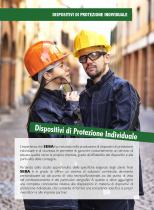
DISPOSITIVI DI PROTEZIONE INDIVIDUALE Dispositivi di Pro tezione Individua le L’esperienza che SEBA ha maturato nella produzione di dispositivi di protezione individuale e di sicurezza le permette di garantire costantemente un servizio di elevata qualità verso la propria clientela, grazie all’affidabilità dei dispositivi e alla puntualità delle consegne. Partendo dallo studio approfondito delle specifiche esigenze degli utenti finali SEBA è in grado di offrire un sistema di soluzioni combinate, altamente personalizzate sia dal punto di vista tecnico/funzionale, sia dal punto di vista del confezionamento...
Open the catalog to page 2
DISPOSITIVI DI PROTEZIONE INDIVIDUALE Qualità Al fine di garantire un servizio globale alla propria clientela che rispecchi la qualità dei dispositivi di sicurezza, SEBA ha istituito S.I.Q.S (SEBA Internal Quality System) un sistema di qualità autonomo che ha il compito di mantenere sotto controllo gli elementi tecnici, organizzativi ed umani che caratterizzano la relazione con i propri clienti. La politica aziendale per la qualità di SEBA si basa sull’efficiente evasione degli ordini, sul rispetto dei tempi di consegna, sulla trasparenza nei confronti della propria rete di rivenditori, sul massimo...
Open the catalog to page 3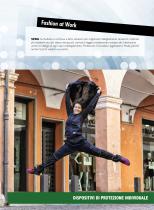
Fashion at Work SEBA ha studiato, e continua a farlo, soluzioni per migliorare l’abbigliamento da lavoro: materiali più resistenti ma allo stesso tempo più comodi e leggeri, mantenendo sempre alta l’attenzione anche sul design di ogni capo d’abbigliamento. Protezione, Comodità, Leggerezze e Moda, perché anche l’occhio vuole la sua parte. DISPOSITIVI DI PROTEZIONE INDI
Open the catalog to page 4
DISPOSITIVI DI PROTEZIONE INDIVIDUALE L’Azienda SEBA è stata fondata nel 1968 da Giancarlo Minarelli a cui ha fatto seguito l’entrata all’interno dell’impresa di tutti i componenti della famiglia e di alcuni importanti collaboratori di fiducia. Nasce come produttrice di guanti di protezione sul lavoro e nel corso degli anni ha ampliato la propria gamma di prodotti e la propria mission divenendo fornitrice di dispositivi globali di protezione individuale. L’attività si fonda su una carta di valori fondamentali per lo sviluppo dell’azienda: serietà, efficienza nei servizi, sviluppo tecnologico...
Open the catalog to page 5
SEBA ha intrapreso importanti sponsorizzazioni con il TEAM IMPERIALE RACING che partecipa al Campionato Italiano di Gran Turismo Sprint, uno tra i più esaltanti e combattuti eventi per vetture GT nella scena motoristica italiana e internazionale. A bordo della Lamborghini Huracan GT3 EVO, il pilota Alex Frassineti ha portato sul casco, sulla tuta e sull’auto il nostro Logo! DISPOSITIVI DI PROTEZIONE INDIVIDUALE 5
Open the catalog to page 6
DISPOSITIVI DI PROTEZIONE INDIVIDUALE Normativa “CHIEDETE SOLO DISPOSITIVI DI PROTEZIONE A NORMATIVA CE” Regolamento (UE) DPI 2016/425 MODALITÀ E TEMPI DI APPLICAZIONE: Il Regolamento (UE) 2016/425 è entrato in vigore il 20 aprile 2016 ed è applicato dal 21 aprile 2018. Per il 2019 la nuova normativa è partita lasciando in vita anche la Direttiva 89/686 che è stata definitivamente abrogata il 21 aprile 2019. In quest’anno di transizione, le aziende hanno potuto immettere sul mercato indistintamente prodotti conformi alla Direttiva o conformi al Regolamento. (NDR - Per immissione sul mercato va...
Open the catalog to page 7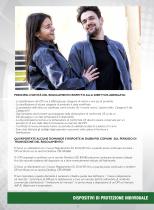
PRINCIPALI NOVITÀ DEL REGOLAMENTO RISPETTO ALLA DIRETTIVA ABROGATA: - La classificazione dei DPI ora è effettuata per categorie di rischio e non più di prodotto. - La classificazione di alcune categorie di prodotto è stata modificata - a protezione dell’udito, ora classificata come (rischio di) “rumore nocivo”, passerà dalla Categoria II alla L Categoria III - Ogni prodotto dovrà essere accompagnato dalla dichiarazione di conformità UE (o da un link alla pagina in cui tale dichiarazione è disponibile) - La documentazione tecnica e la dichiarazione di conformità UE devono essere conservate per...
Open the catalog to page 8- Shoes
- Fabric clothing
- Mechanical protection protection gloves
- Polyester clothing
- Anti-slip safety shoes
- Cotton clothing
- Electrical protection safety shoes
- Synthetic lubricant
- Mechanical protection safety shoes
- Work safety gloves
- Industrial safety gloves
- Anti-perforation safety shoes
- Anti-static safety shoes
- S3 safety shoes
- Work jacket
- EN 388 safety gloves
- Chemical protection safety shoes
- 8 protection gloves
- Fabric safety shoes