
- Catalogs
- S.C.A.T. Europe GmbH
- The right Strategy for Liquid Waste.

The right Strategy for Liquid Waste.

The right Strategy for Liquid Waste.
SCAT Europe GmbH, through its SymLine brand, focuses on enhancing laboratory safety and comfort by providing innovative solutions for liquid waste management. The company emphasizes environmental and health safety, sustainable waste management, and modular, expandable systems.
SCAT stands for Safety Center for Analytical Technologies, specializing in solvent supply and disposal systems. The company aims to protect laboratory personnel from solvent exposure risks by offering high-quality, safe handling solutions.
The SymLine system is designed for safe and efficient waste management in laboratories. It integrates directly into laboratory equipment, ensuring waste containers are stored outside the work area for enhanced safety and environmental protection. The system is modular and can be expanded to connect multiple HPLC stations.
- ATEX Compliance: Suitable for use in potentially explosive atmospheres.
- Modular Design: Easy integration into existing setups and flexibility for future expansions.
- Safety Features: Includes safety waste caps, grounding connections, and electrostatic conductive materials to prevent static charging and sparking.
- Central Collection Point: Facilitates waste collection from multiple workstations into a single disposal system.
SymLine offers professional installation services and personalized support to ensure optimal system integration. Consulting and planning services are provided to tailor solutions to specific laboratory needs.
- Pipe and Tube System: Designed for optimal flow and leak prevention, with high tensile strength connections.
- Grounding and Antistatic Measures: Essential for handling flammable liquids, preventing static charging and reducing fire risks.
SCAT Europe GmbH, through its SymLine brand, is committed to making laboratories safer by providing high-quality, innovative waste management solutions. The company continuously invests in new technologies and materials to maintain its market leadership and ensure the highest level of safety for laboratory personnel.
SymLine products comply with ATEX directives, using high-performance synthetic materials that provide a safe link to safety cabinets. These products offer advantages in terms of weight and corrosion resistance compared to stainless steel.
SymLine components are made from electrostatic conductive plastic, suitable for voltage equalization as per TRGS 727. The material, PE-HD EC, has a discharge resistance against earth of less than 109 Ω and is suitable for hazardous zones 0, 1, and 2. It is chemically resistant as defined by SEFA standards.
Electrostatics, or static electricity, is generated by separating surfaces that have been in contact. Conductive materials serve as electron suppliers, while insulating materials absorb charged particles. Charge separation can lead to voltage generation, posing risks in laboratory environments, especially when handling flammable liquids.
Electrostatic ignition risks arise when handling solvents in laboratories. Charge accumulation can occur in systems with high flow velocities, leading to potential spark discharges. Conductive or dissipative earthing materials are recommended to prevent such discharges.
- Spark Discharge: Occurs when conductive materials are charged by separating from insulating materials.
- Brush Discharge: Happens on insulating surfaces charged by surface processes like rubbing.
- Propagating Brush Discharge: Occurs in insulating tubes with high-velocity transfers, capable of igniting fuel-air mixtures.
To mitigate electrostatic hazards, use conductive or dissipative materials, ensure proper grounding, and apply additional safeguards like dissipating floor mats and appropriate footwear. Regulations such as TRGS 727 in Germany provide guidelines for electrostatic safety in hazardous areas.
The document discusses European regulations for managing ignition hazards due to electrostatic charges, specifically referencing CENELEC standards. It highlights the importance of these regulations in describing hazards and specifying safety measures, serving as a reference for specific questions.
Kurt Moritz, an expert in electrostatics and mechanical explosion protection, is mentioned as a key figure in the Technical Plant Safety department of Merck KGaA. The document offers assistance in planning phases, encouraging contact with lab furniture manufacturers, lab planners, or the SymLine planning team.
SCAT Safety Caps provide optimal protection during the supply and disposal of solvents by blocking and filtering solvent vapours. This system ensures clean and stable solvents, protecting users and the environment.
Exhaust filters with three types of active carbon are described, which adsorb solvent vapours, bind alkalis, and acids. The Safety Waste Cap provides a safe connection to waste containers, ensuring protection against toxic fumes and is suitable for explosive areas.
SymLine offers customized solutions for unique applications, ensuring flexibility and high-quality standards. Examples include safety cabinets with HPLC connections and mobile HPLC racks.
The SymLine installation service guarantees safety in demanding installations, offering on-site advice, planning, and certified installation training.
The document provides guidance on planning lab setups, including HPLC systems and the use of Building Information Modeling (BIM) data. Configuration assistance is available to help put together project components.
SymLine safety funnels are designed to safely contain harmful liquids, featuring integrated ball valves, hinged lids, and removable dirt sieves. They are made of electrostatic conductive material and can be grounded.
The document details various components for managing HPLC waste, including Safety Waste Caps with multiple connections and table feedthroughs for direct disposal from devices.
The document provides comprehensive information on safety measures, product offerings, and services related to electrostatics and solvent management in laboratory environments.
The document provides detailed information on various disposal and connection systems for containers, focusing on safety waste caps, exhaust filters, adapters, ventilation tubes, canisters, collecting trays, and level control systems. It highlights the materials used, specifications, and compliance with safety standards such as ATEX for use in potentially explosive areas.
These caps are designed for safe disposal of waste with features like electronic level control and ATEX compliance. They are made from PTFE-EL material and come in different sizes and configurations (e.g., GL45, S55, S60/61).
The document describes various exhaust filters with splash protection and change indicators. They are made from PP material and have different service lives ranging from 3 to 24 months. The filters use active carbon layers to adsorb harmful vapors and ensure safe pressure equalization.
Offset adapters and extensions for exhaust filters are available in different angles and lengths, made from PE-HD-EL material.
These tubes are used for safe ventilation in safety cabinets, available in different lengths and materials like PE-HD-EL and PTFE-EL.
Various canisters are described with different capacities, materials, and features like UN approval and integrated sensor holders. The document emphasizes compliance with TRGS 727 regulations for container volumes in explosive zones.
Made from PE-HD-EL, these trays are electrostatically conductive and come with removable base inserts for easy maintenance.
The document details built-in and set-up solutions for level control, featuring optical and acoustic signals for monitoring fill levels. Signal boxes and switch amplifiers are used for controlling external devices and ensuring safety in explosive areas.
This section describes a waste disposal system for viscous chemicals, emphasizing fast draining, durability, and safety features like drip protection and earthing connections.
The High Flow Solution is designed for efficient waste disposal of viscous fluids in laboratory settings. It features a 90° drop pipe system for easy canister exchange, ensuring cleanliness and safety in the laboratory environment. The system includes automatic drip protection to prevent contamination of the safety cabinet.
- Fast canister exchange
- High working comfort
- Safety cabinet cleanliness
The safety funnel includes a hinged lid with a sealing ring for secure closure and a dirt-collecting sieve to prevent magnetic stirrers from falling into the canister. The funnel is made from anti-static, robust materials to prevent ignition and ensure chemical resistance.
- Secure closure with hinged lid
- Removable dirt-collecting sieve
- Anti-static and robust construction
The system includes a capacitive, contactless liquid level sensor with an adjustable signal feature. A memo function reminds users to replace the sensor after canister exchange to ensure safe monitoring of liquid levels.
- Ease of handling
- Safe monitoring of liquid levels
The exhaust hood provides optimized fume extraction, while the automatic drip protection prevents residual liquids from contaminating the safety cabinet.
- Additional fume extraction
- Automatic drip protection
The SymLine FLEX is a flexible waste disposal system for HPLC workstations, offering simple installation and adaptability. It serves as a central collection point for solvent waste and is made from anti-static, solvent-resistant materials.
- Simple installation and adaptability
- Central collection point for solvent waste
- Anti-static and solvent-resistant
The pipe system is designed for safe attachment and optimum flow direction, with components made from electrostatic conductive plastic suitable for voltage equalization. The system is resistant to chemicals and complies with various safety standards.
- High tensile strength and permanent sealing
- Compliance with safety standards
The system allows for flexible table and wall attachments, with options for self-adhesive, screw fastening, and magnetic attachments. The installation is designed to ensure a safe downward flow of liquid.
- Flexible installation options
- Safe downward flow of liquid
SCAT Safety Caps provide optimum protection during solvent supply and disposal, blocking and filtering solvent vapors. The system includes a collection container made of electrically conductive PE-HD to prevent static charge buildup.
- Optimum protection with Safety Caps
- Prevention of static charge buildup
The document provides detailed ordering information for various components of the SymLine FLEX system, including starter sets, extensions, and safety caps.
- Detailed component descriptions
- Ordering part numbers
The document offers guidance for planning and configuring the SymLine FLEX system, including the provision of BIM data for technical departments.
- Planning assistance and configuration tools
- Provision of BIM data
This document provides detailed specifications and descriptions of various accessories used in high flow solutions, focusing on safety waste caps, filters, ventilation systems, tubes, grounding cables, and thread adapters.
- Safety Waste Caps: The LISA V3.0 series includes multiple extensions and connectors, made from electrostatic conductive PTFE-EL material, suitable for various tube and capillary connections.
- Filters and Ventilation: Exhaust filters are available in sizes S, M, and L, each with splash protection and change indicators, with service lives ranging from 3 to 24 months. Ventilation tubes are electrostatic conductive and available in various lengths.
- Tubes: PTFE-EL and PFA-EL tubes are offered in different inner and outer diameters, all electrostatic conductive, ensuring safe flow for hazardous substances.
- Grounding Cables: Various grounding cables and clips are available, designed for different pipe diameters and lengths, ensuring proper grounding in high flow systems.
- Thread and Offset Adapters: A range of thread adapters is provided, compatible with different thread types and sizes, made from electrostatic conductive materials.
- Ensure compatibility of accessories with existing systems by checking thread sizes and material specifications.
- Regularly replace filters according to their service life to maintain optimal performance and safety.
- Use grounding cables to prevent static discharge in high flow systems.
- Thread types and sizes are detailed according to DIN, GPI, and NPT standards, ensuring compatibility with international systems.
- All measurements are subject to manufacturing tolerances, and brand names are used for descriptive purposes only.
This document serves as a comprehensive guide for selecting and using accessories in high flow systems, emphasizing safety, compatibility, and adherence to international standards.
1. General Provisions
These terms apply to business relationships with contractors/traders under § 14 of the German Civil Code. Customers agree to these terms by placing orders. Any deviations require written acknowledgment. The language of contracts is German.
Prices exclude VAT and are ex-works. Price changes are possible for delivery periods over four months, with a cap of 10%. Additional costs for packing and transport are charged to the customer.
Payments are due within 30 days of invoice receipt. Late payments incur interest. Payments are applied first to interest and costs, then to the oldest receivables.
Goods remain our property until full payment is received. Customers must inform us of any third-party claims on these goods.
Partial deliveries are allowed. Customers bear transport risks. Returns must be pre-approved and meet specific conditions.
Risk transfers to the customer upon handover to the carrier. The place of performance is our company seat.
Force majeure events may extend delivery times. Customers can withdraw from contracts if delivery is delayed beyond a reasonable period.
Goods are free from defects if they meet product descriptions. Defects must be reported within two weeks of delivery.
Catalog excerpts

The right Strategy for Liquid Waste. ✔ Environment and health safety ✔ Sustainable waste management ✔ Modular and expandable sys
Open the catalog to page 1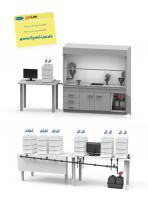
up-to-date! Always stay : our website Please visit ne.de Www.SymLi
Open the catalog to page 2
We bring Safety and Comfort to You. Thank you for your interest in SCAT! SCAT stands for Safety Center for Analytical Technologies in the field of solvent supply and disposal systems. Today's innovation and quality leadership of SCAT Europe GmbH is based on the former maintenance and service operation of SCAT of HPLC systems in analytical laboratories. During customer visits, we have observed very often how laboratory personnel are exposed to the risks of everyday laboratory life. As they are in direct contact with solvents, their health is clearly at stake here! This is the driving force behind...
Open the catalog to page 3
Explanation I Overview ATEX compliant ATEX: A widely used synonym for the ATEX directives of the European Union. The term ATEX is derived from the French abbreviation for Atmosphere Explosive. This directive covers two guidelines in the field of explosion prevention, namely the ATEX product directive 94/9/EG and the ATEX Operating Directive 1999/92/EG. All of the products in this overview that we have marked with the ATEX symbol are suitable for use in potentially explosive atmospheres. Funnel with sealing ring PE-HD electrostatic conductive Electrostatic conductive Grounding connection Removable...
Open the catalog to page 4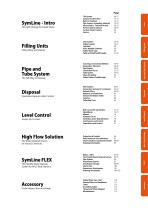
Hazardous Vapours under Control. Level Control Always Up-To-Date. High Flow Solution The Waste Disposal System for Viscous Chemicals. SymLine FLEX The Flexible Waste Disposal System for HPLC Work Stations. Useful Helpers from our Range. Informations Connection Systems for Containers Exhaust Filters Adapters and Extensions Exhaust Ventilation Tubes Canisters Collecting Trays Built-in and Set-up Solution Signalboxes Mounts Isolation Circuit Switchbox and 3-Way Ball Valve Continuous Level Control Capacitive Level Control Protection & Comfort Daily Routine in the Laboratory Clever Solutions explained...
Open the catalog to page 5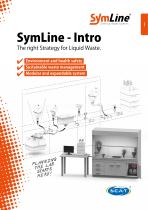
The right Strategy for Liquid Waste. ✔ Environment and health safety ✔ Sustainable waste management ✔ Modular and expandable system
Open the catalog to page 7
✔ Safe waste management for solvents ✔ Perfectly integratad in / at the lab furniture ✔ Modular and flexible system for installation and extension Fume Hood HPLC System Sample view for an HPLC connection and a SymLine integration in a fume hood.
Open the catalog to page 8
This is what the SymLine® principle stands for. Environmental protection, more free space, fewer hazards at the workplace - the SymLine® system is integrated directly into your laboratory equipment. The waste containers are stored outside the work area for more safety, comfort and sustainable environmental protection. Pipe and Tube System Safety and maximum comfort in the disposal of liquid waste Filling Units High Flow Solution Level Control Filling Units Central Collection Point
Open the catalog to page 9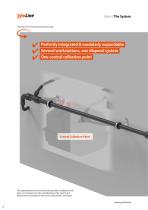
Intro I The System The rear view of a laboratory fume hood. ✔ Perfectly integrated & modularly expandable ✔ Several workstations, one disposal system ✔ One central collection point Central Collection Point The representation serves to illustrate possible installations and does not correspond to the real laboratory. Pipe system and attachment are installed in the service shaft of the fume hood.
Open the catalog to page 10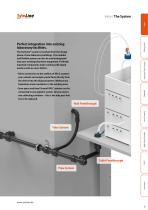
Filling Units Perfect integration into existing laboratory facilities. Pipe and Tube System The SymLine® system is involved from the design phase of new laboratory buildings. The modular and flexible system can also be easily integrated into your existing laboratory equipment. Perfectly matched components make working with liquid waste as safe as never before. • Direct connection to the outflow of HPLC systems: your solvent and sample waste flows directly from the device into the disposal system. Without any hazardous waste containers in the working area. • Save space and time! Several HPLC systems...
Open the catalog to page 11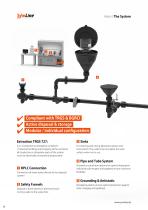
✔ Compliant with TRGS & BGRCI ✔ Active disposal & storage ✔ Modular / individual configuration Extraction TRGS 727: 4.5.1 Conductive or dissipative containers (1) During the filling and emptying of the container, all conductive or dissipative parts of the system must be electrically connected and grounded. For cleaning and rinsing laboratory glasses and instruments. The useful cover increases the work surface when not in use. 4 Pipe and Tube System 1 HPLC Connection Connection of waste tubes directly to the disposal system! Disposal is done directly in the fume hood no long walks to the waste...
Open the catalog to page 12
Filling Units Pipe and Tube System Level Control High Flow Solution 5 6 Safety Waste Caps Collection containers for liquid waste. Gases and vapours do not get into the laboratory air. Exhaust filters and vent lines eliminate health and environmental hazards effectively. Explosion and fire protection according to the latest standards.
Open the catalog to page 13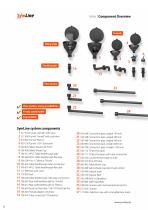
Intro I Component Overview Filling Units Pipe System ✔ One system, many possibilities ✔ Freely combinable ✔ Expandable SymLine system components 1 317 633 Funnel "Arnold" with sieve 2 317 638 Funnel "Arnold" with ball valve 3 318 962 Funnel "Marco" 4 450 120 Funnel "LISA"-Extension 5 450 045 Safety Waste Cap "LISA" 6 306 498 Safety Waste Cap 7 106 412 HPLC Table feedthrough pipe 8 106 669 HPLC Table feedthrough flat pipe 9 306 509 4-in-1 Collector "Nicole" 10 106 455 Table feedthrough tube connection 11 106 616 HPLC Table feedthrough flat tube 12 117 989 Sink with cover 13 118 003 Sink 14 106...
Open the catalog to page 14
Intro I Component Overview Pipe and Tube System Level Control Shut-off valve Tube System Exhaust Filter / Exhaust Tube Safety Waste Caps Collection Tray High Flow Solution Electronic Level Control Filling Units HPLC Connection
Open the catalog to page 15
Intro I SymLine® „Built-in“ ✔ Consulting & planning ✔ Integrated installation ✔ Space-saving assembly To the SymLine „Classic“ system, chapter "Filling Units", starting from page 32.
Open the catalog to page 16
Intro I SymLine® FLEX „Built-on“ HPLC System 4 Safety Caps Pipe and Tube System Filling Units ✔ Consulting & planning ✔ Do-it-yourself built-on ✔ Flexible conversion Wall M Use pipe he ount re Table Mount Level Control Table Mount To the SymLine FLEX system, High Flow Solution chapter „FLEX“, starting from page 90.
Open the catalog to page 17All S.C.A.T. Europe GmbH catalogs and technical brochures
 Exhaust Filter V3.0
4 Pages
 Quick-Lock Connectors
2 Pages
 Lisa Safety Waste Cap V3.0
8 Pages
 SCAT Active Carbon
1 Page
 S.C.A.T. SafetyCaps 2.0
4 Pages
 Safety can be reordered!
20 Pages
 PROTECTION PAYS OFF!
26 Pages
 SCAT Safety Solutions
192 Pages
 Safety Caps 2.0
4 Pages


