
- Catalogs
- SAURER SCHLAFHORST
- Shrinkage Belt


Shrinkage Belt

Shrinkage Belt
Saurer is a leading manufacturer of natural rubber shrinkage belts, known for their expertise in rubber applications and long-standing manufacturing experience. The document outlines the features, benefits, and technical specifications of the Daytex Shrinkage Belt, which is essential for the Sanforization process in textile finishing.
Features and Benefits
The Daytex Shrinkage Belt is designed with a unique elastomer composition and a new edge shape to enhance durability and performance. With over 55 years of experience, Saurer ensures high-quality production and global customer support.
Sanforization Process
Sanforization stabilizes fabric dimensions by shrinking and fixing cloth in both length and width. The process involves a shrinkage belt and a heated cylinder, where pressure and temperature are critical factors. Approximately 80% of textiles undergo this process, particularly heavy fabrics like denim.
Technical Specifications
- Material: Natural Rubber
- Color: Light Tan
- Shore Hardness: 38-40 ShA
- Surface: Finished ground
- Dimensions: Inner Circumference 3,962 mm, Thickness 50.8-70 mm, Width Customized
Economics and Efficiency
Optimal belt width and edge shape are crucial for cost-efficiency and performance. The Saurer Daytex Curved Edge optimizes area usage and reduces the risk of cracks.
Extending Belt Lifetime
Factors influencing belt longevity include proper operating conditions, compression, temperature, tension, cooling, grinding frequency, and maintenance. Regular checks and proper grinding techniques are essential.
Temperature and Tension
Each fabric type requires specific temperature settings to prevent premature belt aging. Proper tension (2%) is necessary for effective shrinkage.
Maintenance and Service
Daytex provides a comprehensive service network for installation, troubleshooting, and maintenance. Regular grinding and cooling are vital to maintaining belt performance.
Accessories
Saurer offers various accessories, including grinding cloths and wax rods, to support the shrinkage process. Felts are used for cooling and drying in the process.
Patching Process
The document includes a patching process for repairing defective areas on the belt, ensuring continued performance.
Catalog excerpts
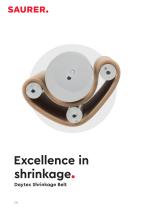
Excellence in shrinkage. Daytex Shrinkage Belt EN
Open the catalog to page 1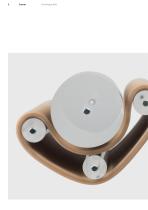
Shrinkage Belt
Open the catalog to page 2
Saurer is the leading manufacturer of natural rubber shrinkage belts. Experienced experts in the field of rubber applications as well as natural rubber from approved plantations in combination with longstanding manufacturing expertise ensure the constant product quality. Multi-national teams are responsible for the development, manufacturing and sale of Saurer Daytex Shrinkage Belts. A network of experienced representatives around the globe offer the highest levels of service and expertise to deliver optimal performance of our products. 6 Daytex Shrinkage Belt 7 The economics of a shrinkage belt...
Open the catalog to page 3
Shrinkage Belt →→ lastomere composition used for E producing the belt →→ he new edge shape T →→Belt production method →→ he global Daytex Belt Service assists T the customer whenever necessary →→ ore than 55 years of experience in M producing high qualit
Open the catalog to page 4
Shrinkage Belt Illustration courtesy of Morrison Textile Machinery Inc. Shrinkage, also called Sanforization, was patented in the US in 1954. Today this process is an essential part of the finishing process for most fabrics. Like in all other pro cesses, also here the optimum result can only be reached when using the best equipment. Saurer has 55 years of experience in production of excellent shrinkage belts. Sanforizing is a method of shrinking and fixing the cloth in both length and width The shrinking process takes place between the shrinkage (rubber) belt and the heated cylinder. The pressure...
Open the catalog to page 5
Shrinkage Belt Daytex Shrinkage Belt General data - Material: - Color: - Shore Hardness: - Surface: - Application: Natural Rubber Light Tan 38-40 ShA Finished ground From heavy to light fabric including comfit and knitted goods Dimensions - Inner Circum: - Thickness: - Width: - Edge: 3 962 mm 50.8-70 mm Customized Daytex Curved NEW Area of application Daytex Shrinkage Belts are engineered to produce the best quality for all different types of fabrics like all Sanfor types, Comfit, knitted goods and of course, open-width knits. This includes fabrics from light to heavy weight. Besides this it...
Open the catalog to page 6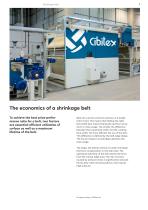
Shrinkage Belt The economics of a shrinkage belt To achieve the best price-perfor mance ratio for a belt, two factors are essential: efficient utilization of surface as well as a maximum lifetime of the belt. Belts all over the world are sold per unit length (US $ / inch). This means that finding the right belt width also means finding the optimum price and / or area usage. The smaller the difference between the overall belt width and the working face width, the more efficient the use of the belt. This difference is defined by the belt edge shape. The Saurer Daytex Curved Edge optimizes the area...
Open the catalog to page 7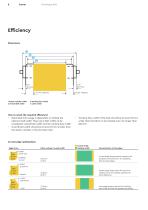
Shrinkage Belt Efficiency Dimensions 1 Steam cylinder width 2 Overall belt width 3 Working face width 4 Cloth width How to reach the required efficiency? –– ptimized area usage is dependent on finding the O optimum belt width. There are 2 belt widths to be considered: overall belt width and the working face width. –– Overall belt width should be at least 25 mm smaller than the steam cylinder or the shortest roller. –– orking face width of the belt should be at least 150 mm W wider than the fabric to be treated, but not longer than 200 mm. Curved edge optimization Edge forms Belt thickness Belt...
Open the catalog to page 8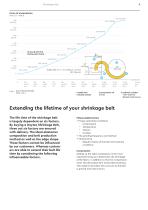
Shrinkage Belt Force of compression in PLI *, ( ) = metric Rubber Belt 73 x 2 – 5 / 8 (1 854 m × 67 mm) (38 ° Shore A) 7⁄8 22.225 33.3 1 ubber belt R 2 Heated cylinder 3 Compression roll 4 Pivot Extending the lifetime of your shrinkage belt The life time of the shrinkage belt is largely dependent on six factors. By buying a Daytex Shrinkage Belt, three out six factors are ensured with delivery. The ideal elastomer composition and belt production method as well as the edge shape. These factors cannot be influenced by our customers. Whereas custom ers are able to extend their belt life time by...
Open the catalog to page 9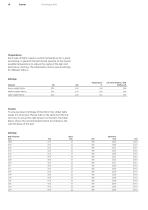
Saurer Shrinkage Belt Temperature Each type of fabric needs a certain temperature for a good processing. In general the belt should operate at the lowest possible temperature to reduce the aging of the belt and premature cracking. The table below shows typical settings for different fabrics. Tension To ensure proper shrinkage of the fabric the rubber belts needs 2% of tension. Please refer to the technical information how to set up the right tension on the belt. The table below shows the recommended stretch according to the wall thickness of the belt.
Open the catalog to page 10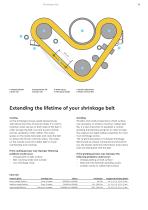
Shrinkage Belt 1 Heated cylinder 2 Drive roll 3 Compression roll 4 Tension roll 5 Water spray 6 Felt doctor blade 7 Tension adjustment 8 Water removal felt Extending the lifetime of your shrinkage belt Cooling As the shrinkage process needs temperatures well above the limits of natural rubber it is vital to maintain water sprays on both sides of the belt in order to keep the belt cool and avoid cracking and de- gradation of the rubber. The water sprays on the inside lubricates and cools the belt to reduce the friction with the rollers. The water on the outside cools the rubber belt to avoid overheating...
Open the catalog to page 11
Shrinkage Belt The best shrinkage belt only per forms best in close cooperation with each customer. Therefore, Daytex has created a network of experts to support our customers in every phase over the whole lifetime of a shrinkage belt, starting with how to order the correct width, overall installation of the belt, trou bleshooting during usage and guid ance in all necessary maintenance during the lifetime of the rubber belt.
Open the catalog to page 12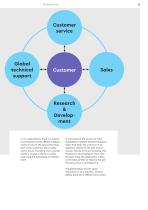
Shrinkage Belt Customer service Global technical support Research & Develop ment In our organization, there is a closed loop between all the different departments to ensure the best performing belt at the customers place today and in future. Therefore, the customer needs is always in the focus while improving the processing or the belt itself. In every part of the world, we have established a Global Technical Support Team that helps the customer in all questions related to the belt and of course, the fabric he is processing. The backbone of knowledge of more than 55 years living this application...
Open the catalog to page 13All SAURER SCHLAFHORST catalogs and technical brochures
 Blow room
44 Pages
 ZR 72XL/ZI 72XL
24 Pages
 Zinser 51
24 Pages
 Autospeed/Autospeed M
24 Pages
 Card JSC 230
9 Pages
 Be unique. ZR 451/ZI 451
24 Pages
 Be modular. ZR 72XL/ZI 72XL
28 Pages
 Think progress . Autoairo
12 Pages
 Be faster◊ Autospeed/Autospeed M
32 Pages
 Autocoro
12 Pages
 Autodraw DL
2 Pages
 Carding Machine JSC 328A
9 Pages
 Leaflet Autocard
7 Pages
 Precise and connected.
12 Pages
 Autoconer 6
60 Pages
 BD 480
16 Pages
 BD 7
BD 724 Pages
 ZINSER AUTOFLOW SYSTEMS
24 Pages
 Zinser 451 Impact FX
14 Pages
 ZINSER 71.
28 Pages
 ZINZER ROVING FRAMES.
24 Pages
 ZINSER 351 2IMPACT FX
14 Pages
 IRisFX
8 Pages
 ZINSER 451.
22 Pages
 ZINSER 72.
32 Pages
 Autocoro 9
26 Pages
 ZINSER 351.
22 Pages
Archived catalogs
 Blow room
23 Pages
- Dynamic agitator
- Batch agitator
- Management software solution
- Analysis software solution
- Process software
- Baler
- Dust collector
- Quality software
- EDM software
- Machine software
- Filter dust collector
- Vertical chamber baling press
- Automatic baling press
- Bearing unit
- Handling transfer car
- Planning software solution
- Solid kneader
- Compact homogenizer
- Winding machine
- Top-loading baling press