


- Company
- Products
- Catalogs
- News & Trends
- Exhibitions
TOOLS
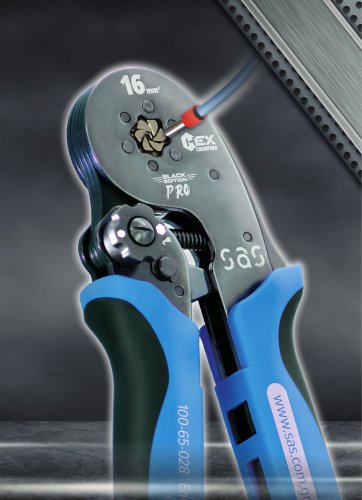
TOOLS
Cable cutters are crucial for electrical work, available in hand and ratchet mechanisms for cutting copper and aluminum cables. They are designed for both single and multi-strand cables, ensuring efficient and precise cutting.
SAS offers a range of crimping tools that reduce muscle effort by 30% compared to traditional tools. These tools are ergonomically designed and lightweight.
SAS provides essential equipment for installations, including nylon and polyester fish tapes, fiberglass duct rodder, cable pulling grips, rollers, lubricants, and metallic accessories.
SAS's test screwdrivers, made in Germany, are VDE certified and designed to detect voltage reliably, featuring a milled blade and durable PC body.
The range includes permanent markers, marking pencils, steel ties fastening tools, and hole cutters, catering to diverse needs in construction, laboratories, and factories.
SAS's new range of strippers features self-adjusting "Piranha" steel jaws for copper and aluminum cables, offering smooth operation and ergonomic handling.
The document provides detailed specifications for various cable cutters and strippers, including material, cutting range, weight, and length. It emphasizes the importance of periodic lubrication and specifies that these tools are not suitable for cutting iron, steel, or plastic.
- Ergonomic anti-slip handles
- Chromium-molybdenum steel construction
- Ratchet mechanisms for precise cutting
- Suitable for NYAF and NYM cables
- Not recommended for iron, steel, or plastic
SAS offers a wide range of high-quality tools designed for efficiency, safety, and ease of use in electrical applications.
The document provides detailed specifications for various crimping tools and accessories. It includes product codes, descriptions, dimensions, and the number of pieces per package. The crimping tools are designed for different cable terminal types and ranges, with features such as ratchet mechanisms and various crimping shapes (hexagonal, trapezoidal, square).
The document lists several crimping tools with specific features and applications. These tools are suitable for cable lugs, connectors, and end sleeves, with different mechanisms like ratchet and leverage. The tools are categorized by their crimping range and shape, such as deep compression, hexagonal, and trapezoidal.
This section highlights tools for electricians, including promotional stands with specific dimensions. The stands are designed for displaying tools and are available in different configurations, such as two-sided and counter display stands.
The document describes a range of technical tools, including screwdrivers, permanent markers, and marking pencils. These tools are designed for various applications, such as detecting voltage, marking in construction, and cable installation. The screwdrivers are noted for their durability and ergonomic design.
Details are provided for a steel ties fastening and cutting tool, including its usage instructions and ergonomic design. The tool is used for tightening and cutting cable ties with adjustable tension.
The document describes a polycarbonate adjustable hole cutter with specifications for cut diameter and depth. It includes features like a debossed ruler, clear shield, and HSS twin blades. The cutter is suitable for materials like veneer, wood, and plastic, with adjustable cutting depth and speed settings.
The document provides comprehensive information on various tools and equipment, focusing on their specifications, applications, and features. It serves as a guide for selecting the appropriate tools for specific tasks in electrical and technical fields.
Catalog excerpts
cable cutters | κόφτες κα
Open the catalog to page 1
electrician's tools | εργαλεία ηλεκτρολόγου cable cutters Cable cutters are useful and practical tools that accompany any type of electrical work. sas tool range includes hand cutters for copper and aluminum cables, as well as cable cutters with a ratchet mechanism for long-range cutting of single or multi-strand copper and aluminum cables. κόφτες καλωδίων Οι κόφτες καλωδίων είναι ιδιαίτερα χρήσιμα και πρακτικά εργαλεία που συνοδεύουν κάθε είδους ηλεκτρολογική εργασία. Η sas διαθέτει κόφτες χειρός για καλώδια χαλκού, αλουμινίου, αλλά και κόφτες καλωδίων με μηχανισμό καστάνιας για κοπή μεγάλης...
Open the catalog to page 2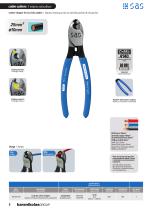
cable cutters | κόφτες καλωδίων cutter/ stripper for Cu & Alu cables | κόφτης/ απογυμνωτής για καλώδια χαλκού & αλουμινίου Cutting socket 1 Υποδοχή κοπής 1 material υλικό κατασκευής Cutting socket 2 Υποδοχή κοπής 2 Ηandles with plastic-coating Λαβές με πλαστική επικάλυψη NYAF up to 25mm² Stranded copper 16mm² Stranded aluminum 25mm² NYM up to 5x2.5mm² NYAF έως 25mm² Μονόκλωνο χαλκό 16mm² Μονόκλωνο αλουμίνιο 25mm² NYM έως 5x2.5mm² Usage | Χρήση Cut Kοπή Strip Απογύμνωση Does not cut iron and steel. Not recommended for plastic. Periodic lubrication is recommended to maintain it. Δεν κόβει σίδερο...
Open the catalog to page 3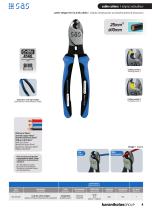
cable cutters | κόφτες καλωδίων cutter/ stripper for Cu & Alu cables | κόφτης/ απογυμνωτής για καλώδια χαλκού & αλουμινίου Cutting socket 1 Υποδοχή κοπής 1 Cutting socket 2 Υποδοχή κοπής 2 Ergonomic anti-slip handles Εργονομικές αντιολισθητικές λαβές NYAF up to 25mm² Stranded copper 16mm² Stranded aluminum 25mm² NYM up to 5x2.5mm² NYAF έως 25mm² Μονόκλωνο χαλκό 16mm² Μονόκλωνο αλουμίνιο 25mm² NYM έως 5x2.5mm² Usage | Χρήση Strip Απογύμνωση Does not cut iron and steel. Not recommended for plastic. Periodic lubrication is recommended to maintain it. Δεν κόβει σίδερο και ατσάλι. Δεν προτείνεται...
Open the catalog to page 4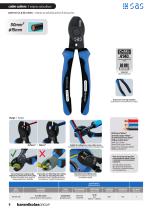
cable cutters | κόφτες καλωδίων cutter for Cu & Alu cables | κόφτης για καλώδια χαλκού & αλουμινίου material υλικό κατασκευής Ergonomic anti-slip handles Εργονομικές αντιολισθητικές λαβές NYAF up to 50mm² Stranded copper 16mm² Stranded aluminum 25mm² NYM up to 5x2.5mm² NYAF έως 50mm² Μονόκλωνο χαλκό 16mm² Μονόκλωνο αλουμίνιο 25mm² NYM έως 5x2.5mm² Suitable for cutting two or more cables at once. Κατάλληλο για κοπή δύο ή παραπάνω καλωδίων μαζί. Does not cut iron and steel. Not recommended for plastic. Periodic lubrication is recommended to maintain it. Δεν κόβει σίδερο και ατσάλι. Δεν προτείνεται...
Open the catalog to page 5All SAS catalogs and technical brochures
 FLASHLIGHTS
12 Pages
 TERMINALS
36 Pages
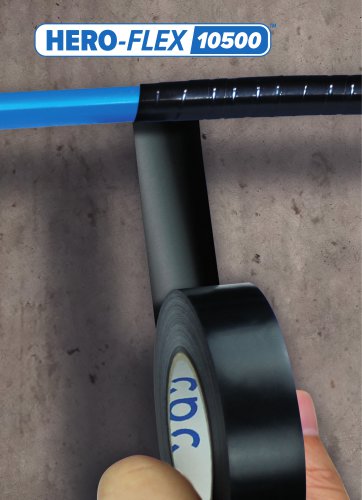 INSULATION TAPE
4 Pages
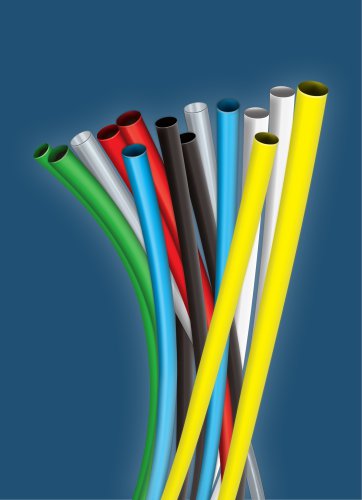 HEATSHRINK TUBES
12 Pages
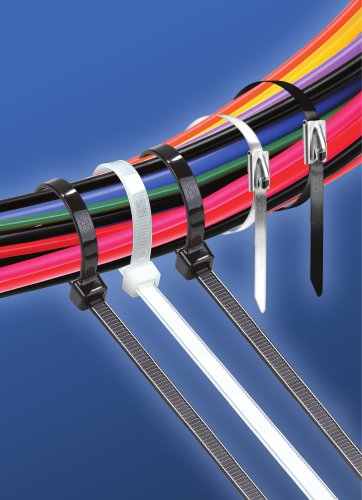 CABLE TIES
10 Pages
 sas Product catalogue
124 Pages