
- Catalogs
- Sartorius AG
- Products for Microbiological Control


- Products
- Catalogs
- News & Trends
- Exhibitions
Products for Microbiological Control

Products for Microbiological Control
This document provides a comprehensive overview of products and methodologies for microbiological control, focusing on microbial limit testing, sterility testing, air monitoring, and mycoplasma detection. It emphasizes the importance of reliable and reproducible results to meet current industry standards and future demands.
Microbial enumeration involves quantifying microorganisms in samples to ensure product safety and compliance with regulations. The document highlights the use of membrane filtration as a preferred method for detecting and quantifying microorganisms in liquid samples.
Membrane filters are essential for microbiological quality control, offering benefits such as sterility, ease of use, and compliance with international standards. The document details various types of membrane filters, including high-flow membranes, and their applications in colony counting and particle testing.
Culture media are crucial for microbial growth and testing. The document outlines different types of culture media available in various forms, such as nutrient pad sets and media in bottles and tubes.
Filtration units and equipment, such as the Biosart® monitors and Microsart® funnels, are designed to streamline microbiological testing processes. The document provides guidance on setting up vacuum filtration systems and highlights the importance of accessories for efficient operation.
Sterility testing is critical for final pharmaceutical products. The document describes the Sterisart® NF system and its components, including consumables, pumps, and media, to ensure reliable sterility testing.
Mycoplasma detection is vital for ensuring the safety of biological products. The document introduces the Microsart® range of products for mycoplasma detection and control, including AMP, ATMP, and RESEARCH kits.
Air monitoring is essential for maintaining clean environments in pharmaceutical and food industries. The document discusses products like Gelatine Membrane Filters and the MD8 airscan® for effective air quality monitoring.
The document provides information on the chemical compatibility of filter materials, ensuring that the chosen filters are suitable for specific applications and solvents.
The document concludes by emphasizing Sartorius' expertise in microbiological quality control and the benefits of using their products to achieve high safety standards and efficient workflows.
The document provides detailed information on Microsart® e.motion Membrane Filters and related products, focusing on their specifications, applications, and benefits in microbiological quality control.
The Microsart® e.motion dispenser is a fully automated membrane filter dispenser designed for high throughput. It features touch-free operation via an optical sensor, rapid and reliable filter dispensing, and easy cleaning. Key specifications include dimensions (204+213+165 mm), weight (2.9 kg), operating voltage (110 V/230 V), and dispensing speed (0.5 sec).
The membrane filters are used for colony counting, particle testing, sterility testing, and microscopy. They are available in various materials such as cellulose nitrate, cellulose acetate, and regenerated cellulose, each offering specific benefits like high-flow rates, thermal stability, and low adsorption characteristics.
The document highlights several advantages of using Microsart® e.motion products, including outstanding recovery rates for microorganisms, defined particle retention, certified quality, and compliance with international standards like ISO 7704 and BCT.
Detailed ordering information is provided for various types of membrane filters, including cellulose nitrate and cellulose acetate filters, with specifications on pore size, diameter, and packaging.
The document also describes Microsart® @media, an advanced system for agar and membrane transfer, and Nutrient Pad Sets, which offer economical and time-saving solutions for microbiological quality control.
The document emphasizes the ease of use, reliability, and high quality of Microsart® products, making them suitable for various laboratory applications in microbiological testing.
This document provides detailed information on various Nutrient Pad Sets (NPS) and their applications in microbiological enumeration. It includes specifications, procedures, and recommendations for using these products in different sectors such as food, beverages, pharmaceuticals, and water testing.
The document lists various NPS types, each designed for specific microorganisms. These include:
- Standard TTC: For total colony count.
- CHROMOCULT®: For E. coli and coliforms.
- Azide | KF Strep: For Enterococci.
- Cetrimide: For Pseudomonas aeruginosa.
- Malt Extract: For yeasts and molds.
The document outlines the use of NPS in microbiological testing, emphasizing the importance of selecting the correct membrane filter type for each application. It also describes the packaging and sterile conditions of the NPS, which are individually packaged in petri dishes with membrane filters.
NPS are used across various industries:
- Food and Beverages: Detection of spoilage organisms and pathogens like Salmonella, E. coli, and yeasts.
- Pharmaceuticals: Testing for contaminants in raw materials and finished products.
- Water Testing: Monitoring of water quality by detecting coliforms and other bacteria.
The document recommends using specific NPS types for different microorganisms and provides guidance on the selection of membrane filters based on pore size and grid color. It also suggests further testing to validate results due to potential variations in colony appearance.
The document mentions the availability of special brochures and posters that provide visual guidance on the use of NPS. It also highlights the continuous improvement of NPS products to meet changing application requirements.
The document provides detailed information on the Biosart® 100 Monitors and Microsart® products, which are designed for microbiological analysis in pharmaceuticals, water, cosmetics, foods, and beverages. These products are ready-to-use disposable units that optimize the detection and enumeration of microorganisms.
These monitors are specifically designed for detecting microorganisms in various liquids. They feature a sterile disposable design with an incorporated membrane filter and cellulose pad, converting into a petri dish post-filtration. This eliminates the need for membrane manipulation and cleaning of reusable funnels. They comply with international standards such as the European drinking water directive, ISO standards, and WHO guidelines.
The Biosart® 100 Monitors are available with 0.45 μm High-Flow membranes, which offer 30% higher flow rates, promoting better growth of microorganisms like E. coli.
These monitors are used for microbial enumeration, particle testing, and microscopy. They offer high performance with high flow rates and throughput, are safe and reliable with sterile packaging, and are economical due to minimal equipment requirements.
The monitors have a polystyrene housing, cellulose nitrate membrane filters, and a capacity of 100 ml. They are available in various pore sizes and colors.
These are sterile disposable funnels and filter units designed for microbiological quality control. They offer reliable results by preventing cross-contamination, are time-saving, and simplify handling by eliminating the need for flaming or autoclaving.
These units combine a funnel, filter base, and membrane in one, designed for detecting microorganisms in pharmaceuticals and cosmetics. They feature a Click-Fit closure for easy handling and are fully disposable to reduce contamination risks.
The document provides detailed ordering information for various configurations of Biosart® 100 Monitors and Microsart® products, including pore sizes, membrane colors, and packaging options.
These are sterile disposable filter units available in 47 mm and 250 ml capacities, ideal for use with Microsart® Funnel Dispenser. They come in various pore sizes and colors, with specific order numbers for each configuration.
Designed for microbiological and analytical quality assurance, these sterile funnels are used for fast filtration in routine testing of pharmaceuticals, cosmetics, water, food, and beverages. They feature a polypropylene construction, bayonet-type closure, and are marked for exact sample volumes.
This system offers modular design and accessories for microbiological analysis. It includes stainless-steel manifolds and individual systems for various filter holders and funnels. The system supports sterile venting and is compliant with ISO 8199 for sterilization methods.
The document provides detailed specifications for materials, capacities, filtration areas, and sterilization methods for the equipment. It also includes ordering information for various components and accessories.
The equipment is used for microbial enumeration, particle testing, and microscopy. Benefits include high-flow rates, sterility, reliability, and economical use with minimal equipment needed.
The document provides detailed information on the Microsart® Combi.jet and Microsart® e.jet systems, designed for efficient vacuum filtration and liquid waste transfer in laboratory settings. These systems are noted for their compact design, ease of assembly, and sterile venting capabilities.
- Compact Design: The Microsart® Combi.jet system reduces laboratory space requirements and operational complexity compared to traditional equipment.
- Quick Connection: Innovative Quick Connection technology allows for fast and easy assembly and disassembly of the system.
- Sterile Venting: Stainless-steel three-way valves enable individual control and sterile venting of each filter station, preventing secondary contamination.
- Flexibility: The system accommodates various filter holders and funnels, including ready-to-use units and autoclavable options.
- Reliability and Efficiency: Ideal for microbiological applications, the system is easy to clean, sanitize, and offers smooth filtration processes.
- Materials: High-grade stainless-steel, silicone O-rings, and PVDF Quick Connection Couplings.
- Dimensions: 246 mm (L) x 98 mm (H) x 130 mm (D).
- Operating Pressure: Vacuum only, with sterilization possible by autoclaving up to 134°C.
The document lists various components and accessories available for the Microsart® systems, including different manifold configurations, filter holders, and replacement parts.
- Setup: Instructions for setting up a vacuum filtration system using the Microsart® Combi.jet and e.jet are provided, emphasizing the ease of assembly with Quick Connection technology.
- Accessories: Includes details on suction flasks, vacuum hoses, and other components necessary for system operation.
The document also covers traditional multi-branch manifolds and individual filter holders made of stainless-steel, glass, and polycarbonate, highlighting their specifications and ordering information.
This document provides detailed information on various laboratory equipment and consumables used in microbiological enumeration and sterility testing. It includes specifications, ordering information, and descriptions of products such as vacuum pumps, filtration equipment, and sterility test consumables.
- Woulff’s Bottle and Rubber Vacuum Hose: Used for connecting system components like suction flasks and vacuum pumps. The rubber hose is available in specified lengths.
- Electric Vacuum Pumps: The Sartorius neoprene membrane pumps are oil-free, maintenance-free, and provide reliable vacuum sources. They are designed for microbiology labs with adjustable vacuum levels to protect sensitive cells.
- Microsart® Vacuum Pumps: Available in maxi.vac and mini.vac versions, these pumps offer different flow rates and are suitable for various filtration applications. They are compact and efficient, reducing space requirements in labs.
- Microsart® e.jet Transfer Pump: This pump simplifies vacuum filtration by eliminating the need for additional equipment like Woulff’s bottles. It is designed for easy setup with quick connections and is ideal for microbiology applications.
- Traditional Pumps: These pumps are available for multiple and individual filtration runs, with specifications for vacuum levels and flow rates.
- Water Jet Pump: Provides a practical vacuum source for use outside the laboratory, capable of achieving up to 80% vacuum.
- Hand-Operated Vacuum Pump: A convenient tool for moistening NPS with water using a dosing syringe and Minisart® syringe filter.
- Colony Counter: A compact, battery-operated device with a 4-digit LCD display for counting colonies.
- Incubator: Designed for incubating membrane filters, with a capacity of 18 liters and features like a swing-up cover for easy loading.
- Stainless-Steel Tweezers and Prefilter Attachment: Used for handling membrane filters and removing coarse particles from samples.
- Container for Anaerobic Incubation: Designed for anaerobic incubation of petri dishes with features like vacuum exhaust and inert gas cleaning.
- Introduction: Sterility testing is crucial for pharmaceutical products to ensure they are free from microbial contamination. The test is based on the membrane filtration method and involves visual analysis for turbidity after incubation.
- Sterisart® NF – Sterility Test Consumables: A closed system for sterility testing that eliminates the risk of secondary contamination. It uses a peristaltic pump to transfer samples into filtration units for incubation.
The document provides detailed ordering information for each product, including order numbers and descriptions, ensuring easy procurement of necessary equipment and consumables.
The document outlines the prerequisites for the installation and commissioning of the Sterisart® Pump, including the need for the system to be at the installation location with unobstructed access and available power. A responsible person must be appointed during ordering.
The objective is to ensure continuous and precise operation of the equipment. Maintenance is performed according to Sartorius’ standards at fixed intervals. It includes visual inspections, maintenance checks, flow rate capacity checks, and start-up tests. Repairs and spare parts are not included in the service scope.
Sterility testing is crucial for pharmaceutical product release, requiring aseptic conditions and validated methods. Validation ensures compliance with regulatory requirements. The process involves selecting representative products for testing, conducting tests according to USP and EP requirements, and ensuring chemical compatibility and microbial growth promotion.
Mycoplasma are small bacteria that can pass through conventional filters. Early detection is crucial to prevent contamination. Real-time PCR kits like Microsart® AMP, ATMP, and RESEARCH Mycoplasma offer rapid detection solutions. These kits are validated for sensitivity and specificity, and are designed for use in microbiological QC labs and research.
This kit allows for flexible sample volumes and provides results within hours using real-time PCR technology. It is validated according to EP guidelines and is suitable for microbiological QC labs.
Designed for testing autologous cell transplants, this kit reduces testing time to 3 hours and is validated for specificity and robustness.
This kit is used for detecting Mycoplasma DNA in cell culture supernatants, suitable for research and development applications. It provides results within 3 hours using TaqMan® probes for specificity.
The document provides detailed information on the Microsart® RESEARCH Mycoplasma kit, which utilizes Real-time PCR technology for the detection of Mycoplasma species in cell cultures. It highlights the kit's ease of use, speed, and high specificity.
The kit is available in two sizes, containing reagents for either 25 or 100 reactions. It requires storage at +2 to +8°C before use and below –18°C after opening. The kit includes Mycoplasma Mix, Rehydration Buffer, Positive Control, and PCR grade Water.
The kit is designed for rapid screening of cell culture supernatants, applicable in research and development sectors such as biotech and biopharmaceuticals. It is used for detecting Mollicutes in cell cultures and related materials.
This kit is used for isolating genomic DNA from samples, particularly cell culture supernatants. It involves cell lysis, DNA binding to a silica membrane, and purification through washing steps. The process is completed in 30 minutes.
The Coating Buffer is used in mycoplasma testing according to European Pharmacopoeia standards. It helps concentrate Mycoplasma particles for DNA extraction.
This standard is used to validate the sensitivity and robustness of NAT-based mycoplasma detection methods. It is non-infectious and titrated to 10 CFU/ml, aligning with European Pharmacopoeia requirements.
The Calibration Reagent provides genomic DNA for PCR sensitivity control and standard curve creation. It involves DNA extraction and purification, with concentration adjustments using TE80 buffer.
The document also covers air monitoring solutions, including Gelatine Membrane Filters and BACTair™ systems for sampling airborne microbes. These systems are used in critical environments to ensure product and process safety.
Detailed ordering information is provided for each product, including kit sizes, components, and accessories.
The document provides detailed information on the MD8 airscan® and AirPort MD8 air samplers, including specifications, ordering information, accessories, and maintenance services. These devices are used for air sampling in various industries such as pharmaceuticals, biotechnology, and food and beverage.
- Adjustable air flow rate from 2.0 m3/h to 8 m3/h in 100-liter steps.
- Timer adjustable from 1 to 99 minutes.
- Noise level for gelatine membrane filters is a maximum of 62 dB (A).
- Not compliant with the RoHS Directive, limiting spare part availability to exchange and maintenance only.
- Includes a filter holder for gelatine disc filters.
- Battery-powered and portable with a clear battery power level indicator.
- Volume flow adjustable at 30, 40, 50, and 125 l/min.
- Noise level for gelatine membrane filters is 48 dB (A).
- Includes an adapter for disposable gelatine filter units.
- Calibration unit available for local calibration of both MD8 airscan® and AirPort MD8.
- Various accessories such as flexible hoses, connectors, and filter holders are available for different applications.
- Remote control options via PC or PLC interface.
- Preventive maintenance ensures continuous and precise operation.
- Installation and commissioning services ensure proper setup and operation from the start.
- Gelatine membrane filters and cellulose nitrate filters are available for different environmental conditions.
This document provides a comprehensive guide on the chemical compatibility of various filter materials and O-ring materials with different solvents, acids, bases, and aqueous solutions. The compatibility is indicated using symbols: • for compatible, – for not compatible, ? for not tested, and additional symbols for specific conditions.
The document lists the compatibility of several filter materials such as Cellulose Acetate, Cellulose Nitrate, PTFE, Polyamide, Glass Fiber, Polycarbonate, and Polyethersulfone with various solvents and acids. Each material's compatibility is assessed for a 24-hour contact time at 20°C.
Compatibility of O-ring materials like EPDM, PTFE, Silicone, and Fluoroelastomer with solvents and acids is detailed. Specific conditions for compatibility, such as replacing silicone O-rings with EPDM or Fluoroelastomer O-rings, are noted.
The document emphasizes the importance of confirming compatibility through trial filtration runs before actual use, as chemical compatibilities can be influenced by various factors.
An index of products and services related to laboratory instruments, consumables, and microbiological control is provided. This includes details on various filtration products, calibration units, and training services.
Contact details for Sartorius offices across Europe, America, and Asia-Pacific are listed, providing phone and fax numbers for customer support and service inquiries.
Catalog excerpts

Microbiological Control turning science into solutions
Open the catalog to page 1
Microbiological Analysis Benefit from Sartorius’ long-standing expertise in microbiological quality control while increasing performance and enhancing your workflows. To help improve the safety of quality-critical processes, we offer premium products for microbial limit testing, sterility testing, air monitoring and Content mycoplasma detection. Obtain reproducible, reliable results for in-process and final release testing to meet the industry’s requirements of today and anticipate the demands of tomorrow. Table of Contents Microbiological Enumeration 7 Membrane Filters 18 Culture Media 28 Filtration...
Open the catalog to page 2
Microbiological Enumeration Microbiological Enumeration Table of Contents Membrane Filters 7 Gridded Cellulose Nitrate Membrane Filters (Cellulose Mixed Ester) 12 Microsart® e.motion Membrane Filters 13 Microsart® e.motion Dispenser 14 Ungridded Cellulose Nitrate and Cellulose Acetate Membrane Filters 16 Hydrophobic Edged Membrane Filters Culture Media 19 Microsart® @media 21 Nutrient Pad Sets 26 Culture Media in Bottles and Tubes Filtration Units 29 Biosart® 100 Monitors 32 Biosart® 100 Nutrient Media 33 Microsart® Funnel 100 | Microsart® Funnel 250 35 Microsart® @filter 100 | Microsart® @filter...
Open the catalog to page 5
Microbiological Enumeration Microbial Enumeration is the quantitative determination of microorganisms present in a sample. To assure the quality of a manufacturing process, raw materials, in-process samples, as well as final products, are subject to microbiological testing. These samples are examined for microbial colony and | or particle counts to ensure product safety and compliance. Whether it is about testing the sterility of a final product or evaluating the microbial contamination of water, it is essential to be able to rely on the quality of results test after test. At the same time, it...
Open the catalog to page 6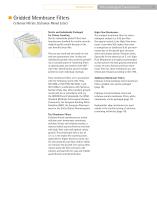
Membrane Filters Microbiological Enumeration Gridded Membrane Filters Cellulose Nitrate (Cellulose Mixed Ester) Sterile and Individually Packaged for Colony Counting Sterile, individually packed filters have long become standard for routine microbiological quality control because of the user benefits they offer. They are pre-sterilized and ready-to-use and save preparatory time. As they are individually packed, they avoid the possibility of contamination of remaining filters in opened packs and conform with GLP – with filter identification and lot number printed on each individual envelope. These...
Open the catalog to page 7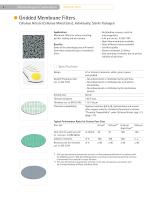
Microbiological Enumeration Membrane Filters Gridded Membrane Filters Cellulose Nitrate (Cellulose Mixed Ester), Individually, Sterile Packaged Applications Membrane filters for colony counting, particle testing and microscopy. – Outstanding recovery rates for microorganisms – 0.45 μm are acc. to ISO 7704 – High-Flow membranes available – Three different colours available – Certified quality – Gamma irradiated, 25 kGrey – Easy counting of colonies due to perfect visibility of grid lines Benefits Some of the advantages you will benefit from when using this type of membrane filter: Specifications...
Open the catalog to page 8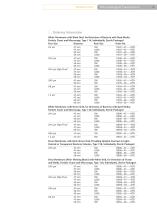
Membrane Filters Microbiological Enumeration White Membrane with Black Grid, for Detection of Bacteria with Dyed Media, Particle Count and Microscopy, Type 114, Individually, Sterile Packaged Pore Size Diameter Pack Size Order No. White Membrane with Green Grid, for Detection of Bacteria with Dyed Media, Particle Count and Microscopy, Type 139, Individually, Sterile Packaged Green Membrane with Dark-Green Grid, Providing Optimal Contrast to Light- Colored or Transparent Bacteria Colonies, Type 138, Individually, Sterile Packaged Grey Membrane (After Wetting Black) with White Grid, for Detection...
Open the catalog to page 9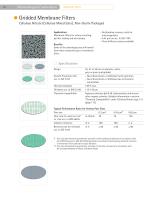
Microbiological Enumeration Membrane Filters Gridded Membrane Filters Cellulose Nitrate (Cellulose Mixed Ester), Non-Sterile Packaged Applications Membrane filters for colony counting, particle testing and microscopy. – Outstanding recovery rates for microorganisms – 0.45 μm are acc. to ISO 7704 – Three different colours available Benefits Some of the advantages you will benefit from when using this type of membrane filter: Specifications Design Growth Promotion Test acc. to ISO 7704 Thermal resistance Thickness acc. to DIN 53105 Chemical compatibility 25, 47 or 50 mm in diameter, white, grey...
Open the catalog to page 10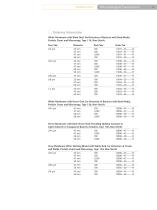
Membrane Filters Microbiological Enumeration White Membrane with Black Grid, for Detection of Bacteria with Dyed Media, Particle Count and Microscopy, Type 114, Non-Sterile Pore Size Diameter Pack Size Order No. White Membrane with Green Grid, for Detection of Bacteria with Dyed Media, Particle Count and Microscopy, Type 139, Non-Sterile Green Membrane with Dark-Green Grid, Providing Optimal Contrast to Light-Colored or Transparent Bacteria Colonies, Type 138, Non-Sterile Grey Membrane (After Wetting Black) with White Grid, for Detection of Yeasts and Molds, Particle Count and Microscopy, Type...
Open the catalog to page 11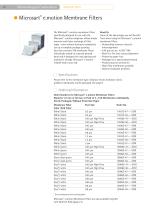
Microbiological Enumeration Membrane Filters Microsart® e.motion Membrane Filters The Microsart® e.motion membrane filters specifically designed for use with the Microsart® e.motion dispenser allows simple insertion and faster exchange of filter types - even without having to completely use up a complete package quantity. Each box contains 100 membrane filters individually sealed on a special pleated band and is designed for easy opening and sealing for storage. Microsart® e.motion – reliable help in your lab. Benefits Some of the advantages you will benefit from when using the Microsart® e.motion...
Open the catalog to page 12
Membrane Filters Microbiological Enumeration Microsart® e.motion Dispenser Fully automated membrane filter dispenser for high throughput of membrane filters. The membrane filters are automatically individually removed from their sterile packaging – either in a touch-free mode via an optical sensor or at the touch of a button. A foot switch can be optionally connected to the dispenser. Thanks to their motorized traction roller, each filter is quickly and reliably dispensed. A dispensing operation is triggered when the optical sensor detects approaching tweezers. It’s simple and fast. Applications...
Open the catalog to page 13All Sartorius AG catalogs and technical brochures
 Picus® and Picus® NxT
8 Pages
 Univessel® Glass
40 Pages
 Ambr® Analysis Module
8 Pages
 Resolute® RCC MU
6 Pages
 Flexboy 2D Bags
55 Pages
 iQue® Forecyt®
8 Pages
 iQue® 3
7 Pages
 Sterisart® NF
4 Pages
 Vivaflow®
12 Pages
 Vacusart
2 Pages
 Sterisart® Sterility Testing
6 Pages
 Sterisart ® Family
12 Pages
 Speedcal Mobile
2 Pages
 Sartocheck® 5 Plus Filter Tester
26 Pages
 Quintix® and Secura®
24 Pages
 Rline® Dispenser Module
4 Pages
 Midi Plus Pipette Controller
4 Pages
 MA160 Moisture Analyzer
8 Pages
 Filter Papers
36 Pages
 Cubis® II
12 Pages
 Claristep® Filtration System
12 Pages
 Arium® Mini
11 Pages
 Midi Plus
4 Pages
 Microbiological QC Solutions
12 Pages
 Practum®
8 Pages
 Entris®
4 Pages
 Cubis® MCM10K3
4 Pages
 Quintix®
12 Pages
 Laboratory Weighing Products
96 Pages
 Laboratory Filtration Products
123 Pages


- Vessel
- Welding system
- Force sensor
- Vacuum generator
- Liquid filter
- Concentration analyzer
- Automation software solution
- Monitoring analyzer
- Liquids analyzer
- Automatic welding machine
- Single-stage vacuum pump
- Process software
- Automatic analyser
- Steel load cell
- Windows software
- Calibration system
- Metal tank
- Benchtop analyser
- Solids analyser