
- Catalogs
- SafetyConcept s.a.
- Protection antichutes


- Company
- Products
- Catalogs
- News & Trends
- Exhibitions
Protection antichutes

Protection antichutes
- Company Leadership: In July 2022, Stefan Beckers, Josef Bergrath, and Kai Brendel took over leadership roles at ABS Safety, with the original owners remaining part of the management team.
- Product Innovations: The introduction of a new Access Technology section caters to professionals working at heights, offering integrated solutions for safe ascent and descent on various building structures.
- Lock Book Application: The Lock Book Draw application simplifies the planning of flat roofs, including fall protection, guard rails, and drainage systems, enhancing efficiency for roofing professionals.
- Quality Assurance: All products are tested by DEKRA in Germany, with additional load testing conducted at ABS Safety's headquarters to ensure maximum safety.
- Material and Design: Products are made from high-strength stainless steel, with weatherproof labeling and individual serial numbers for easy documentation and maintenance tracking.
- Product Range: The document lists various products categorized by application, such as concrete, metal roofs, wood, seam roofs, flat roofs, pitched roofs, and steel, along with lifeline and rail systems.
This document provides a comprehensive overview of ABS products for 2023, including various safety and access technologies, guard rails, personal protective equipment (PPE), and accessories. The document is structured into several sections, each detailing specific product lines and their components.
1. Product Specifications
The document lists various ABS products such as ProSlide, QuattroRoll, SkyRoll, and RopeGlide, along with their specifications. It includes supporting tubes for different ABS-Lock models and aluminum and stainless steel rails with connectors and brackets.
2. Access Technology
This section covers products like ABS LaddWall, LaddQuick, LaddFix, and the ABS Crossover Platform. It also includes vertical ladder rails and access kits designed for safety and ease of use.
3. Guard Rails
Details on various ABS Guard OnTop models are provided, including Fusion, Weight-B, and Dome OnTop systems. These products are designed to enhance safety on rooftops and other elevated areas.
4. Personal Protective Equipment (PPE)
The document outlines PPE offerings such as the ABS ComfortVest, Roofer Kit, and Trauma Strap. It also includes information on ABS Lanyards and B-Lock systems for fall protection.
5. Accessories
Various accessories are listed, including ABS-LockSeal products, installation kits, and maintenance tools like the ABS DustBrush and DustPump. These accessories support the installation and maintenance of ABS safety systems.
6. Training and Certification
The document emphasizes the importance of training in fall protection. It offers a structured training program that includes installation, inspection, and planning of ABS systems. The training is designed to enhance technical competency and ensure safety in high-altitude work environments.
7. Additional Services
Information on training sessions, accommodation, safety, and hygiene during seminars is provided. The document also highlights the availability of customized training and company excursions.
Conclusion
The document serves as a detailed guide to ABS products and services, focusing on safety, training, and comprehensive support for users and installers of fall protection systems.
Several training programs are offered for specialists in ABS systems, focusing on installation, planning, and maintenance of fall protection systems. These programs are designed to ensure safety and compliance with legal standards.
1. Training as a Specialist for ABS Systems
This course covers the installation of anchorage, lifeline, and rail safety systems. Key topics include legal basics, operator obligations, selecting fall arrest systems, and creating inspection documentation. The course concludes with a test, certifying participants for three years.
2. Training as an Installation Specialist for ABS Systems
Participants learn about legally watertight installation documentation, required tools, and evaluating installation environments. The course emphasizes correct installation techniques to ensure long-term safety.
3. Basics Seminar on Planning Fall Protection Systems
This seminar introduces participants to planning fall protection systems, focusing on evaluating needs, creating installation plans, and understanding special requirements. Practical examples are used to illustrate implementation.
4. Training on Personal Fall Protection Equipment (PPE)
This hands-on training teaches participants how to use PPE to protect against falls, recognize dangerous situations, and maintain equipment. It includes a demonstration of a fall using a dummy.
5. Rescue Training Using PPE
Participants learn about rescue concepts and first aid measures after a fall. The training includes practical exercises on saving oneself and colleagues using ABS rescue equipment.
6. Specialist Training for PPE and Rescue Equipment
This course qualifies participants to evaluate the condition of PPE and rescue equipment. It covers legal basics, inspection procedures, and proper equipment maintenance.
7. Qualification for Inspecting Ladders and Mobile Work Platforms
Participants learn to inspect and document the safety of ladders and mobile platforms. The course covers legal obligations, product evaluation, and maintenance.
8. Qualification for Regular Fixed Ladder System Inspections
This training focuses on inspecting fixed ladder systems, ensuring they are safe for use. It includes legal basics, ladder types, and inspection documentation.
Lock Book Tool
Lock Book is a digital tool designed to optimize work processes related to roof planning and documentation. It allows users to plan, draw up quotes, and prepare orders without expensive software licenses. The tool automates many planning tasks, making professional planning accessible and efficient.
The document outlines specifications for hollow core slabs with a minimum concrete grade of C45/55. It specifies that installations can be made over cavities or solid materials with a minimum web thickness of 25mm. Various anchorage points and systems are described, including ABS-Lock® X-SR-HD, ABS-Lock® X-Durch, and others, each with specific dimensions and installation requirements.
Procedures:
Installation procedures for anchorage points involve using stainless steel components, including base plates and counter plates. The document details the use of special adhesives like WIT-VM-250 for securing anchor rods in concrete. It also describes the use of toggle bolts for installations on metal roofs and sandwich panels.
Standards and Approvals:
All products and installations comply with DIN EN 795:2012, A and DIN CEN/TS 16415:2017 standards. National technical approval (abZ) is required for certain installations, ensuring compliance with safety and construction regulations.
Recommendations:
The document recommends specifying the clamp size when ordering anchorage systems. It also suggests using optional installation aids and special adhesives for enhanced security and ease of installation.
Key Data from Tables and Diagrams:
The document includes various product codes and dimensions for different anchorage systems, such as LX-DURCH-300, LX-Y-300, and LX-B-KLEMM-150, indicating the protrusion lengths and installation specifics. It also provides details on the spacing of pre-drilled holes for metal roof installations.
Critical Information:
The document emphasizes the importance of using stainless steel materials for durability and corrosion resistance. It highlights the need for compliance with specified standards and approvals to ensure safety and reliability in construction applications.
- Materials: Stainless steel is used for anchorage points, ensuring durability and resistance to environmental factors.
- Standards: Products comply with DIN EN 795:2012, A and DIN CEN/TS 16415:2017 standards, ensuring safety and reliability.
- Installation: Various installation methods are described, including riveting, screwing, and using toggle bolts, depending on the material and structure.
- Container Anchorage: Extremely flat design for stackability, installed using 14 watertight blind rivets, suitable for sandwich and trapezoidal sheeting.
- Trapezoidal Sheeting Anchorage: Installed using a special toggle bolt, ideal for retrospective installation on metal roofs and concrete.
- Wooden Structures: Multiple anchorage options are available, including direct screwing onto beams, clamping around beams, and using additional OSB boards for support.
- Ensure compliance with specified standards for safety.
- Choose the appropriate anchorage point based on the structural material and installation requirements.
- Consider environmental factors such as moisture and load-bearing capacity when selecting anchorage points.
- Hole Distances: Specified for different anchorage models, ensuring compatibility with various structural designs.
- Material Thickness: Minimum thickness requirements for steel, aluminum, and wood are provided to ensure structural integrity.
- Load-Bearing Capacity: Anchorage points are designed to support multiple individuals, with specific models accommodating up to three people.
- Installation Flexibility: Products offer versatile installation options, catering to different structural configurations and materials.
- ABS-Lock® Falz V and VI: These are stainless steel anchorage points with aluminum clamps, designed for metal seam roofs. They are clamped onto seams without penetrating the surface and can be used as intermediate or end brackets in lifeline systems. They are approved by the national technical authority (abZ) and support seam intervals of 305-500 mm.
- ABS-Lock® DH06: A stainless steel safety hook for metal seam roofs, allowing non-axial load in all directions. It is installed without perforation using nuts and bolts and complies with DIN EN 517:2006, B standards.
- ABS-Lock OnTop Max: A stainless steel anchorage point for flat roofs, fused onto bitumen sheeting. It includes an integrated shock absorber and is designed for roof pitches up to 5°. It is penetration-free and complies with national technical approval standards.
- ABS Weight OnTop Max: A weighted anchorage system for flat roofs, using concrete slabs for stability. It is suitable for lifeline systems and requires a supporting tube for end or corner use. It is approved by the national technical authority (abZ).
- ABS SafetyBull: A mobile anchorage system for temporary fall protection on flat roofs. It is easy to move and can secure up to two individuals without additional installation.
The document outlines various components and optional accessories for roof safety systems, including toolboxes, side bars, material storage supports, and additional weights. It specifies the use of stainless steel posts with UV-resistant plastic weights for flat roofs, and barrier chains for marking hazardous areas.
Flat Roof Systems:
The ABS BorderMark system includes stainless steel posts and weather-resistant barrier chains for marking and cordoning off danger zones. The system is designed for easy transport and installation.
Pitched Roof Systems:
The document describes roof safety hooks designed for tiled roofs, which can be installed on wooden beams. These hooks are available in various colors and can also serve as ladder hooks. The ABS-Lock® Loop is a discreet anchorage loop for wooden structures, and the ABS-Lock® SD provides adjustable anchorage points for pitched roofs.
Steel Structure Systems:
The document details anchorage devices for steel surfaces, including penetration-free solutions that do not affect the static properties of steel girders. These systems can be installed using special clamps or counter plates, allowing for lifeline systems over long distances.
Standards and Compliance:
The products comply with various standards, including DIN EN 517:2006, B, and DIN EN 795:2012, A, ensuring they meet safety and technical requirements for fall protection systems.
Installation and Usage Recommendations:
Installation involves screwing components onto wooden beams or steel structures, with specific instructions for different roof types. The document emphasizes the importance of checking the load-bearing capacity of supporting structures before installation.
The document outlines the national technical approval (abZ) for construction surveillance and compliance with standards such as DIN EN 795:2012, A, DIN CEN/TS 16415:2017, and DIN EN 50308:2004, which allow for a maximum of two individuals. It also mentions GL certification.
Product Specifications:
The ABS-Lock® series includes various stainless steel anchorage points designed for different installation scenarios, such as wind turbines, steel girders, and concrete surfaces. These products are characterized by their compliance with safety standards, ease of installation, and availability in custom colors.
Installation Procedures:
The anchorage points are designed for easy installation, either by screwing into pre-drilled holes or clamping onto girders. They come with all necessary stainless steel installation materials. Specific models are designed for lateral installation using angular plates, and some can be installed on wood and concrete surfaces.
Product Variants and Customization:
The document lists various models with different specifications, such as thread lengths and protrusion sizes, to accommodate different structural requirements. Custom sizes and colors are available upon request.
Safety Features:
The ABS-Lock® I+II system offers a detachable anchorage point that can withstand loads of up to 2 tons. It is designed to be unobtrusive and does not affect the building's aesthetics.
Accessories:
Accessories include practical silicone caps to protect anchorage point threads from dirt and optional stainless steel caps for enhanced durability.
Applications:
These anchorage systems are suitable for various surfaces, including concrete, metal roofs, wood, seam roofs, flat roofs, pitched roofs, and steel structures.
The document outlines various components and accessories for ABS-Lock® safety systems, including stainless steel sleeves, angular brackets, and cementing aids. These components are designed for use in different materials such as steel, wood, and concrete, and are compliant with DIN EN 795:2012 and DIN CEN/TS 16415:2017 standards. The products come with national technical approval (abZ) from the German Institute for Construction Technology (DIBt).
Installation procedures involve using stainless steel installation sets and optional accessories like special adhesives. The document specifies the dimensions and materials required for proper installation, such as minimum rafter dimensions and concrete quality.
The products comply with DIN EN 795:2012 and DIN CEN/TS 16415:2017 standards, ensuring safety and reliability in construction applications. National technical approval (abZ) is also highlighted, indicating compliance with German construction regulations.
For optimal use, the document recommends using specific accessories like the ZU-1000 special adhesive and the WIT cartridge applicator gun. It also suggests using the ABS TI-FlexCurve for navigating obstacles and height differences in lifeline systems.
The ABS Safety lifeline systems provide continuous protection across long distances, with features like the manually adjustable ABS TI-FlexCurve for navigating obstacles. Rail systems like ABS RailTrax and ABS AluTrax offer smooth operation and are made from high-quality stainless steel.
All components are designed to be robust and weather-resistant, with options for different lengths and materials. The document emphasizes the importance of using certified and approved products to ensure safety and compliance with construction standards.
- Materials: Most components are made from extremely robust V4A stainless steel (AISI 316), known for its durability and resistance to environmental factors.
- Components: Includes end attachments (clevis), force limiters, tensioning elements, and special cables, each designed for specific applications in lifeline systems.
- Dimensions and Weights: Components are available in various sizes, typically 6mm and 8mm, with specific weights and lengths detailed for each type.
- Installation: Components such as clevises and tensioning elements are designed for onsite attachment to steel cables, with inspection windows for monitoring.
- Adjustment: Elements like the ABS TI-FlexCurve allow for adjustable curvature up to 120°, ensuring flexibility in system design.
- All components comply with DIN EN 795:2012 and CEN/TS 16415:2017 standards, ensuring safety and reliability in lifeline systems.
- Usage: Components are suitable for various roof types and structures, including concrete, metal, wood, and more.
- Safety: Systems are designed to secure individuals, with specific components like the ABS ProSlide and ABS SkyRoll ensuring smooth and safe traversal.
- Force Limiter: Includes a fall indicator for a maximum of 10kN, suitable for use by up to four individuals.
- Identification Plates: Weather-resistant, laser-etched plates are mandatory for lifeline systems, allowing for flexible attachment and optimal alignment.
The document details various components and systems made from robust stainless steel, specifically AISI 316 (V4A), known for its durability and resistance to environmental changes. These components are primarily used in lifeline and rail systems, ensuring safety and compliance with standards such as DIN EN 795:2012 and DIN CEN/TS 16415:2017.
- Stainless Steel Cables: Available in 6mm and 8mm diameters, these cables are pre-packed in specific lengths and are designed to withstand significant weight and environmental stress.
- End Attachments (Clevis): These are robust stainless steel components with integrated tensioning devices and inspection windows for monitoring cable clamping mechanisms.
- Force Limiter: Made from stainless steel, it includes a fall indicator for up to 10kN, suitable for use by up to four individuals.
- Flexible Curve Elements: These allow for adjustable curvature up to 120°, facilitating the installation of lifeline systems in various configurations.
- Intermediate Brackets: Designed for traversable lifeline systems, these brackets are compatible with ABS-Lock® SYS II and SYS IV systems.
- Rail Systems: The ABS AluTrax and RailTrax systems include aluminum and stainless steel components, offering flexibility, easy installation, and compliance with safety standards.
- Components are designed for easy on-site installation, with options for custom lengths and configurations.
- Systems are suitable for various surfaces, including concrete, metal, wood, and different types of roofs.
- Special attention is given to thermal expansion and contraction, ensuring system integrity under varying temperature conditions.
All components and systems comply with national technical approvals and international safety standards, ensuring reliability and safety in their application.
The document outlines various components of the ABS RailTrax® system, including rail gliders, intermediate brackets, connectors, and end attachments. These components are primarily made from stainless steel, specifically AISI 304 and AISI 316 (V2A and V4A), ensuring durability and compliance with standards such as DIN EN 795:2012 and DIN CEN/TS 16415:2017. Optional components are available in AISI 316 steel for enhanced corrosion resistance.
Installation and Usage:
The document provides detailed installation instructions for various components, including intermediate brackets and end attachments, which are suitable for concrete and steel surfaces. The components are designed for easy installation with included stainless steel installation sets. Specific models, such as RT-ZW-100 and RT-END-100, are designed for facade installation with 100mm tabs.
Access Technology:
ABS Safety offers a range of access technology products, including crossover platforms and fixed ladder systems. These systems are designed to provide safe access to heights, with features such as broader crossover platforms and safety cages. The systems are modular, allowing for easy installation and integration with existing anchorage devices.
Ladder Safety Devices:
The document describes various ladder safety devices, such as the ABS LaddWall and ABS LaddFix, which prevent ladders from slipping or tipping over. These devices are suitable for both indoor and outdoor use and can be installed permanently or temporarily, depending on the model.
Vertical Lifeline Systems:
ABS SafetyHike® systems provide secure vertical lifeline solutions for standard ladders. These systems include fixed guides with stainless steel cables and are designed to secure up to two individuals. The systems comply with DIN EN 353-1:2018 standards and offer various top section protrusions for flexibility.
Additional Features:
The document highlights optional accessories, such as weather-proof stickers for equipment inspection and shock absorber elements for enhanced safety. The ABS Guard OnTop Weight Access Set provides a penetration-free installation for safe access to flat roof areas.
- Upper Bracket (SH2-TOP-S & SH2-TOP-L): Stainless steel attachments with shock absorber elements for the ABS SafetyHike® vertical lifeline system. The SH2-TOP-S has a maximum protrusion of 30cm, while the SH2-TOP-L has a longer protrusion of approximately 130cm for safer ladder access.
- End Bracket (SH2-END): Lower stainless steel attachment with a tensioning device, designed for the ABS SafetyHike® system.
- Identification Plate (SY-1009): Weather-resistant stainless steel plate with laser-etched specifications, mandatory for lifeline systems.
- Clevis (SY-1051): Robust stainless steel end attachment for ABS-Lock® SYS I, SYS II, and SafetyHike® systems.
- Glider (SH2-GLIDER): Vertical lifeline glider for one person, includes a carabiner hook and automatic braking system.
- Intermediate Bracket (SH2-ZW): Stainless steel bracket for the SafetyHike® system, can be clamped or screwed onto ladder rungs.
- Special Cable (SY-1000): 8mm stainless steel cable for ABS-Lock® SYS I, SYS II, and SafetyHike® systems, weighing 250g/m.
- General Features: Made from high-quality aluminum, these guard rails are weather-resistant and designed for various flat roof surfaces. They are lightweight, easy to transport, and can be set up quickly.
- ABS Guard OnTop Fusion: Designed for flat roofs with pitches up to 10°, these rails are installed without penetration on bitumen or PVC membranes. They are adjustable in height and significantly lighter than weighted systems.
- ABS Guard OnTop Weight: These rails use UV-resistant concrete or plastic weights for penetration-free installation on flat roofs. They include protective fleece material for the subsurface.
- ABS Guard OnTop Auflast: Ideal for green roofs, these rails are weighted with gravel or substrate and installed without surface penetration.
- ABS Guard OnTop H: Designed for direct installation on wooden panelling, providing temporary side protection during installation work.
- ABS Guard OnTop Falz: Suitable for rounded-edge and standing seam roofs, these rails are installed without penetrating the surface, with a maximum support distance of 2.50m.
This document provides detailed information on safety equipment and systems for working at heights, particularly focusing on flat and pitched roofs. It includes specifications for various products such as safety nets, harnesses, and lifeline systems, along with their compliance with international safety standards.
- Domed Rooflight Safety Net: Designed to prevent falls through non-fall-through resistant domed rooflights. Available in sizes 2x2m and 3x3m, suitable for rooflights up to 1.5m and 2.7m respectively. Complies with DIN EN 795:2012, B and DIN EN 1263-1:2015.
- Permanent Rooflight Protection: Suitable for installation on concrete, wood, and steel. Features stainless steel design with aluminum clamps and a mesh size of 100/100mm.
- PPE Equipment: Includes safety harnesses, lanyards, and helmets. Products meet DIN EN standards and are designed for comfort and durability.
- Installation: Easy-to-install systems for securing rooflights and providing anchorage points. Includes detailed instructions for setting up safety nets and harness systems.
- Usage: Emphasizes the importance of using complete personal protective equipment (PPE) including harnesses, lanyards, and helmets for safety.
- Products comply with various DIN EN standards ensuring high safety and quality.
- Specific standards mentioned include DIN EN 795:2012, DIN EN 1263-1:2015, DIN EN 361:2002, and others relevant to fall protection and safety equipment.
- Use appropriate PPE for all anchorage and fall protection systems.
- Regularly inspect and maintain equipment to ensure safety and compliance with standards.
- ABS Comfort Safety Harness: Lightweight, adjustable, with quick-release fasteners and suitable for users up to 136kg.
- ABS Profi Roofer Kit: Complete PPE set for roofers including harness, lanyard, fall arrester, and helmet.
- ABS Lanyard: Guided type fall arrester with rope shortener and energy absorber, suitable for loads up to 140kg.
The document outlines various safety equipment designed for use on mobile elevating work platforms and other structures. Key specifications include compliance with standards such as DIN EN 354:2010 for lanyards and DIN EN 355:2002 for energy absorbers. The equipment is designed for individuals weighing up to 140 kg, with adjustable lengths and sharp edge-tested components.
Procedures:
Installation and usage procedures emphasize the importance of correct installation on substructures to ensure safety. The document provides details on the use of self-retracting lifelines with polyamide straps and steel cables, highlighting their suitability for horizontal and vertical loads.
Standards and Norms:
The equipment adheres to several standards, including DIN EN 360:2002 for self-retracting lifelines, with strength ratings of 12 kN to 15 kN. The document also mentions PPE-R/11.060 for sharp edge-tested straps.
Recommendations:
Recommendations include using sealant collars for roof impermeability and ensuring proper installation of anchorage devices. Accessories such as adhesives, extensions, and seals are suggested to enhance safety and installation efficiency.
Key Data from Tables and Diagrams:
The document provides detailed specifications for various models of lanyards and lifelines, including lengths, weights, and load capacities. It also lists compatible roof materials and manufacturers for sealant collars.
Critical Information:
Emphasis is placed on the importance of using the correct equipment for specific applications, such as mobile elevating work platforms, and ensuring compliance with relevant safety standards. The document highlights the need for proper installation and maintenance to ensure the effectiveness of fall protection systems.
This section describes a stainless steel extension designed for supporting tubes, including an energy absorber. It is compatible with Ø 16mm anchorage points reinforced with an SR supporting tube. Available lengths are 100mm, 200mm, or longer, and it includes an installation set.
A signal rod (800mm) designed for attachment to a thermal protective cover, ensuring visibility even in snow conditions.
A synthetic thermal protective cover (330mm) for anchorage points and lifeline systems, UV-resistant and weatherproof, can be shortened as needed.
Various installation kits and accessories are available for different anchorage systems, including universal mounting rods for solar panels, telescopic rods for PPE equipment, and various protective covers and sealants.
A universal stainless steel mounting rod for installing solar panels and photovoltaic systems, suitable for concrete, wood, or steel surfaces.
Extendable telescopic rods for hooking PPE equipment to high anchorage points, available in various lengths.
Stainless steel warning signs indicating "Danger of tripping" and "PPE compulsory," with adjustable angles. Identification labels with serial numbers and data matrix codes for equipment documentation.
Silicone caps and plugs to protect anchorage point threads from dirt.
Installation kits are available for anchorage points on different surfaces, including concrete, wood, steel, and metal roofs. These kits ensure proper installation and maintenance of safety systems.
The document outlines the specifications of products manufactured from weatherproof stainless steel, tested for static loading capacity in accordance with ANSI Z359.1, and GL-certified. The products feature weather-resistant laser marking and are labeled with individual serial numbers. They are sharp edge-tested and specially designed for ladders, with a maximum number of users specified. The products can handle axial and lateral loads and are suitable for abseiling by one individual. They are available in multiple colors and may incur additional delivery charges.
The document describes the use of lifeline systems with 8mm and 6mm stainless steel cables. These systems can be used as end or corner supports in a lifeline system with the addition of a supporting tube, and are suitable as intermediate supports. The document also mentions the availability of digital tools for planning, installation, and maintenance of fall protection systems, such as Lock Book Docu and Lock Book Draw.
The products are tested according to ANSI Z359.1 standards and are GL-certified. Certification is provided upon successful participation in training, which includes a final test that is both written and practical. Training is available in German and English.
The document recommends using Lock Book Draw for intuitive planning of roof configurations without the need for expensive software. It simplifies the process by allowing users to create true-to-scale sketches and determine system points, with the software handling the rest.
The document provides contact information for ABS Safety GmbH and highlights the benefits of using Lock Book for more efficient work processes.
Catalog excerpts

Plus de temps pour ton travail proprement dit More time for your work Lock Book facilite la planification, l’installation et l’entretien des protections antichute sur les toitures. Lock Book simplifies the planning, installation and maintenance process for the fall arrest systems installed on your roof. Page / Page
Open the catalog to page 1
Symboles / Explanation of icons Infrastructures en béton Concrete substructures Infrastructures en béton léger Lightweight concrete substructures Marquage au laser résistant aux intempéries Weather-resistant laser marking Infrastructures en bois Wooden substructures Infrastructures en acier Steel substructures Lés bitumés / membrane synthétique renforcée Bitumen sheeting / fabric-reinforced plastic membranes Planchers alvéolaires Suspended ceilings Identifié par numéro de série individuel Labeled with individual serial number Testé sur arête Sharp edge-tested Spécialement pour échelles specially-designed...
Open the catalog to page 2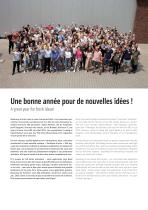
Une bonne année pour de nouvelles idées ! A great year for fresh ideas! Beaucoup d’entre vous le savent sûrement déjà : trois nouveaux spécialistes chevronnés sont désormais à la tête de notre entreprise familiale recensant 180 personnes. Stefan Beckers, fils du fondateur, Josef Bergrath, directeur des ventes, et Kai Brendel, directeur IT, ont repris la barre chez ABS en juillet 2022. Les propriétaires, Ludwig et Ingrid Beckers ainsi que leur fille Ilona Wassenberg, font cependant encore partie de la Direction. Many of you will already have heard the latest: Three new “old hands” are now steering...
Open the catalog to page 3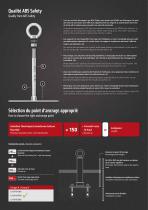
Qualité ABS Safety Quality from ABS Safety • Tous les produits développés par ABS Safety sont testés par DEKRA en Allemagne. De plus, des tests de contrainte sont effectués régulièrement au siège de la société dans notre tour de chute ultra moderne pour garantir une sécurité maximale. All products developed by ABS Safety are tested in Germany by the DEKRA test institute. In addition, we are constantly conducting in-depth load testing at our main office, utilizing our state of the art drop-tower to achieve the ultimate in safety. • Les supports de nos dispositifs d’ancrage sont fabriqués en acier...
Open the catalog to page 4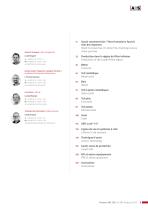
Ventes & Technique / Sales & Engineering Josef Bergrath +49 (0) 28 32 - 972 81 - 0 +49 (0) 28 32 - 972 81 - 285 [email protected] Savoir comment faire ? Nos formations fournis sent des réponses. Want to know how it‘s done? Our training courses show you how Production dans la région du Rhin inférieur Production in the Lower Rhine region Gestion projets, Préparation montage & Entretien / Installation & Maintenance Administration Formations / Training Janine Wojtczak +49 (0) 28 32 - 972 81 - 148 +49 (0) 28 32 - 972 81 - 285 [email protected] Toit à joints métalliques Seam roofs...
Open the catalog to page 5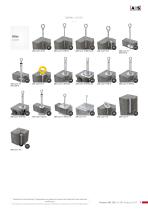
CONTENU / CONTENTS Concrete 37 ABS-Lock® III-BE Illustrations à titre d’exemple. Correspondant aux produits au moment de l’impression. Sous réserve de modifications All images are intended to provide examples only and correspond to our products at the time of publishing.
Open the catalog to page 7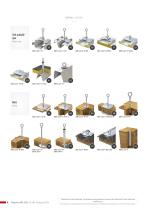
CONTENU / CONTENTS Toit métallique Metal roofs Illustrations à titre d’exemple. Correspondant aux produits au moment de l’impression. Sous réserve de modifications All images are intended to provide examples only and correspond to our products a
Open the catalog to page 8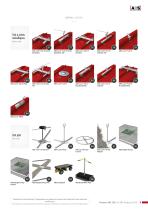
CONTENU / CONTENTS Toit à joints métalliques Seam roofs 80 ABS-Lock® Falz IV Klip ABS-Lock® Falz IV Rundbördelfalz ABS-Lock® Falz IV Rundbördelfalz ZW 80 ABS-Lock® Falz IV Klip ZW 78 ABS-Lock® Falz IV Stehfalz 79 ABS-Lock® Falz IV Stehfalz ZW 82 ABS-Lock® Falz V Rundbördelfalz 82 ABS-Lock® Falz V Stehfalz 83 ABS-Lock® Falz VI Rundbördelfalz Toit plat Flat roofs 92 ABS Weight OnTop Double 89 ABS-Lock OnTop® Control 91 ABS-Lock® OnTop Weight Illustrations à titre d’exemple. Correspondant aux produits au moment de l’impression. Sous réserve de modifications All images are intended to provide examples...
Open the catalog to page 9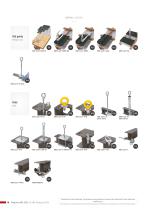
CONTENU / CONTENTS Toit pentu Pitched roofs Acier Steel Illustrations à titre d’exemple. Correspondant aux produits au moment de l’impression. Sous réserve de modifications All images are intended to provide examples only and correspond to our products at
Open the catalog to page 10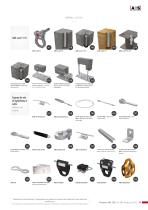
CONTENU / CONTENTS ABS-Lock® I+II 117 ABS-Lock® I 120 Accessoires pour couler dans du béton / Cementing accessory kit 120 Douille à couler dans du béton pour plafonds suspendus / Cementing aid for suspended ceilings 120 Coude de fixation latérale / Angular bracket for lateral installation 121 Infrastructure pour plafonds surbaissés / Bridging device for suspended ceilings Lignes de vie et systèmes à rails Lifeline & rail systems 137 Chape ABS (non sertie) / ABS Clevis (loose) Câble spécial en acier inox ABS / ABS special stainless steel cable 159 Plaque d’identification ABS / ABS specification...
Open the catalog to page 11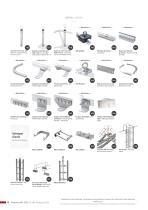
CONTENU / CONTENTS 138 Douille de renfort pour ABSLock® III / Supporting tube for ABS-Lock® III 138 Douille de renfort pour ABS-Lock® X / Supporting tube for ABS-Lock® X 142 Courbe horizontale / Horizontal curve 143 Support intermédiaire / Intermediate bracket 145 Élément de connexion / Connector 138 Douille de renfort pour ABS Weight OnTop / Supporting tube for ABS Weight OnTop 143 Fixation terminale / End attachment 145 Support intermédiaire / Intermediate bracket 146 Support intermédiaire + connexion / Intermediate bracket + connector 140 Élément de liaison / Connector 144 Rail en acier inox...
Open the catalog to page 12All SafetyConcept s.a. catalogs and technical brochures
 ABS-Lock® SYS III
24 Pages
 ABS TriPole
20 Pages
 ABS Comfort, ABS Basic
20 Pages
 ABS-Lock® T-MAX
8 Pages
Archived catalogs
 Catalogue Ligne de vie & Ancrages
168 Pages
 ABS SafetyHike Glider
8 Pages