
- Catalogs
- SAB BROECKSKES GMBH & Co. KG
- Temperature Measurement Guideline


Temperature Measurement Guideline
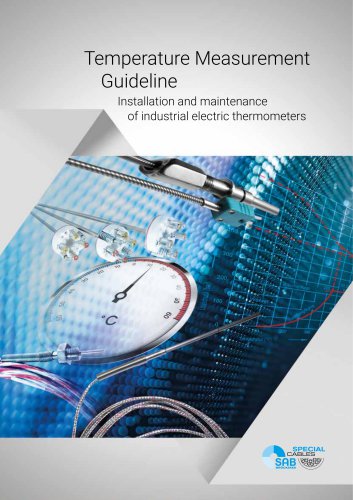
Temperature Measurement Guideline
This document provides comprehensive guidelines for the installation and maintenance of industrial electric thermometers, focusing on resistance thermometers and thermocouples. It includes principles of operation, installation procedures, maintenance practices, and troubleshooting of common operational defects.
S Bröckskes GmbH & Co. KG specializes in customized connection solutions in cable and measurement technology, emphasizing quality, innovation, and sustainability, with a global presence in over 100 countries.
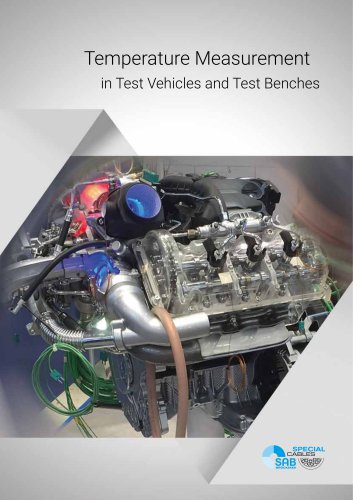
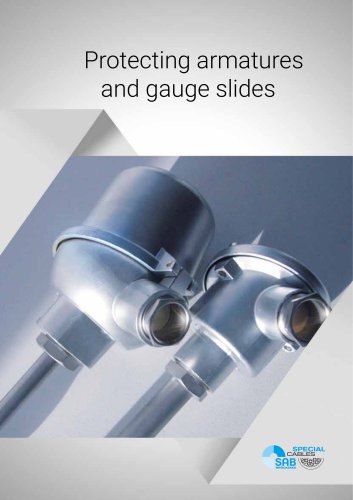
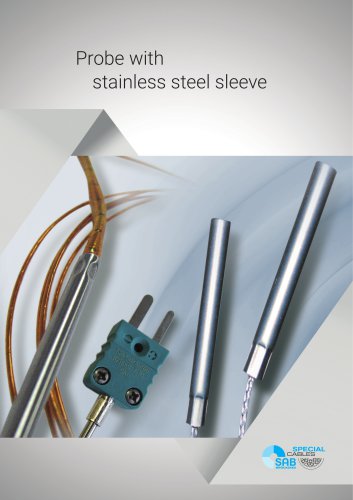
The company offers a variety of temperature measurement solutions, including standard and custom temperature sensors, thermocouples, and resistance thermometers, designed for industrial applications and tailored to meet specific customer requirements.
Electric thermometers convert temperature into a signal for processing. Resistance thermometers, especially Pt 100 types, provide precise measurements within specific temperature ranges. Thermocouples, though less accurate, can operate at higher temperatures and endure mechanical stress.
Proper installation considers spatial arrangement, operational conditions, and surrounding conditions at the connection head. Methods include threaded connections, flanges, and welded joints, with careful handling of ceramic protecting tubes to avoid mechanical stress and temperature shocks.
Cables should be selected based on environmental resistance and installed to minimize interference. Specific cables are required for thermocouples and resistance thermometers, with attention to correct polarity and connection integrity.
Regular inspections ensure the integrity of thermometers and their circuits, checking for mechanical damage, corrosion, and proper function of measuring circuits. Specific tests can identify issues with transmission, resistance, and insulation.
Common defects include faulty signals due to interference or connection issues. Remedies involve checking cable installations, ensuring proper grounding, and using screened cables to minimize interference.
Ensure only one grounding point in measuring circuits to prevent insulation faults caused by humidity. Use floating measuring circuits and apply new sealing to dry gauge slides to mitigate thermal stress.
For incorrect temperature readings, ensure the thermometer is placed in an area with undisturbed flow and adequate immersion depth. Address additional heat sources by selecting a different installation location.
Regularly clean protecting tubes to remove sediments and choose the smallest possible tube for the process. Adjust immersion depth according to the medium and ensure gauge slides have sufficient contact with the protecting tube.
Address vibrations by selecting a different mounting place or using more rigid protecting tubes. Consider special constructions for gauge slides and protecting tubes to enhance stability.
Check operational conditions and medium composition to prevent corrosion or abrasion. Choose appropriate materials and constructions for protecting tubes to withstand flow velocity and solid particles.
For low temperature indications, ensure high incoming resistance and clean contact points to prevent humidity-related issues. Address deviations from table values by checking thermoelectric voltage and compensating cables. Prevent structural transformations by controlling harmful substances and using appropriate thermocouple types.
For low process temperatures, use cables with larger sections and consider 3- or 4-wire circuits. Address variable readings by ensuring steady current supply and controlling environmental temperature impacts. Prevent measurement faults by maintaining insulation resistance and protecting against impurities.
Catalog excerpts
Temperature Measurement Guideline Installation and maintenance of industrial electric thermometers
Open the catalog to page 1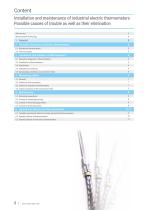
Installation and maintenance of industrial electric thermometers Possible causes of trouble as well as their elimination Who we are Measurement technology 2 Principle of function of electric thermometers 2.1 Resistance thermometers 3 Installation and initiation of thermometers 3.1lSpacial arrangement of thermometers 3.5l Surrounding conditions at connection head 4 Measuring cables 4.1 General 4.3l Cables for resistance thermometers 4.4 Cable connection in the connection head 5 Maintenance 5.11 Returning inspections 5.2 Control of measuring circuits 5.3l Control of removed gauge slides 5.4 Control...
Open the catalog to page 2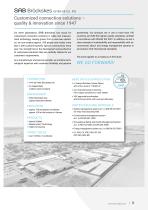
S Bröckskes GmbH & Co. KG Customized connection solutions – quality & innovation since 1947 For three generations, B Bröckskes has stood for customised connection solutions in cable and measurement technology. Having grown from a one-man operation, we now employ approx. 550 people and realise more than 1,500 customer-specific special constructions every year. Our strength lies in the development and production of customised solutions that are perfectly tailored to our customers‘ requirements. partnership. Our products are in use in more than 100 countries and fulfil the highest quality standards,...
Open the catalog to page 3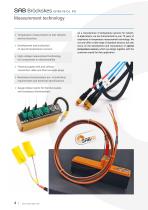
S Bröckskes GmbH & Co. KG Measurement technology » Temperature measurement on test vehicles and test benches » Development and production of special temperature sensors » High-voltage measurement technology for components in electromobility » Thermocouples with and without connection cable and thermocouple plugs » Resistance thermometers acc. to individual requirements and technical specifications » Gauge slides inserts for thermocouples and resistance thermometers As a manufacturer of temperature sensors for industrial applications, we are characterized by over 75 years of experience in temperature...
Open the catalog to page 4
Guideline 1 General 2 Principle of function of electric thermometers 1 General Electric thermometers transfer the physical temperature value into a temperature dependent signal. They are closed constructive components delivering output signals for further treatment. In most cases auxiliary energy sources are necessary dependent on the sensor type. The good transmission of those electrical signals over far distances offer a great advantage. The reception of the measured value and the reading place of the temperature can be far away from each other. The measuring signals can easily be integrated...
Open the catalog to page 5
Guideline 3 Installation and first initiation of thermometers 3 Installation and first initiation of thermometers 3.1 Spacial arrangement of thermometers In general, electrical thermometers work independently of their position. The preferred mounting position is „vertically suspended” that means connection head on the top and protecting tube below. 3.2 Installation of thermometers Usual installation methods are: » screwed thread (cylindric and conical outer thread) » swivel nut with inner thread » adjustable flanges and counter flanges, only tight with small gas pressures » welded flanges » adjustable...
Open the catalog to page 6
Guideline 4 Measuring cables 4 Measuring cables 4.1 General The cables have to be chosen that they are appropriate for the corresponding environment that means resistant against thermal, mechanical and chemical influences. All cable connections have to be well done. Measuring cables shall be laid separately and > 0.5 m away from supply cables and cross the latter rectangular. All measuring circuits shall be operated ungrounded; if necessary a one point grounding is recommended. In order to avoid electrostatic or magnetic interference the cables shall be screened respectively have twisted cores....
Open the catalog to page 7
Guideline 5 Maintenance 5 Maintenance 5.1 Returning inspections Thermometers and their measuring circuits shall be controlled regularly (1 to 12 months) with regard to: » mechanical, thermal, chemical damage of the protecting tubes » corrosion and bad contacts at cable connections » tightness of connection heads » function of the measuring circuits (drifts, insulation resistance) 5.2 Control of measuring circuits Loosen cable connections in connection head and check instruments with regard to the operating temperature for » thermocouples with mV signal » for resistance thermometers with test...
Open the catalog to page 8
S Bröckskes GmbH & Co. KG Grefrather Str. 204 - 212 b | 41749 Viersen | GERMANY
Open the catalog to page 12All SAB BROECKSKES GMBH & Co. KG catalogs and technical brochures
 Cables for E-Mobility
8 Pages
 Industrial Ethernet Cables
32 Pages
 Cables for construction machines
12 Pages
 Servo Motor Cables
16 Pages
 Halogen-free Cables
61 Pages
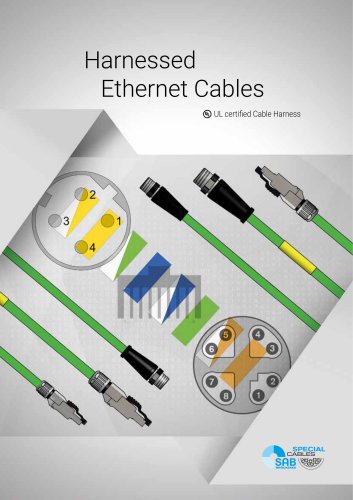 Harnessed Ethernet Cables
16 Pages
 USB 2.0/3.0 Cables
12 Pages
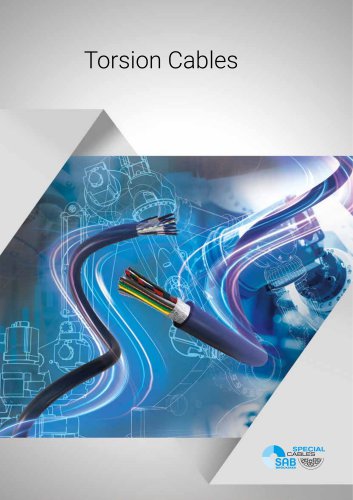 Torsion cables
8 Pages
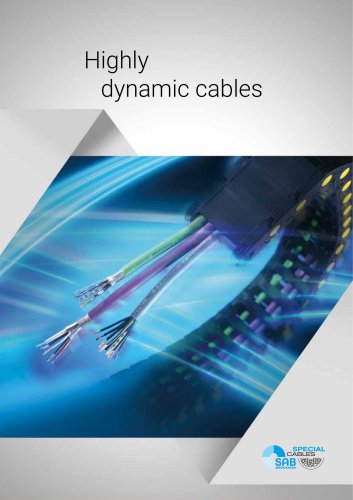 Dynamic Cables
30 Pages
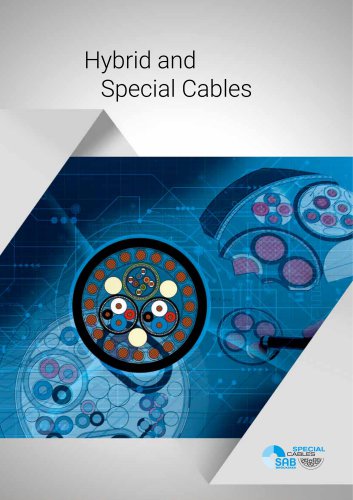 Hybrid and Special Cables
27 Pages
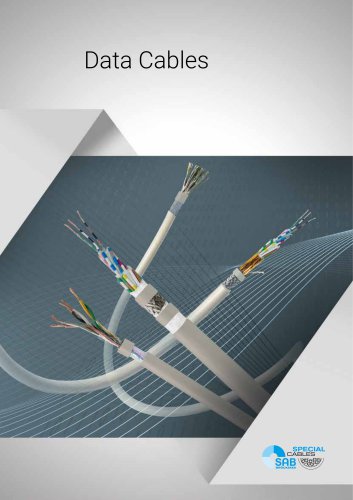 Data Cables
22 Pages
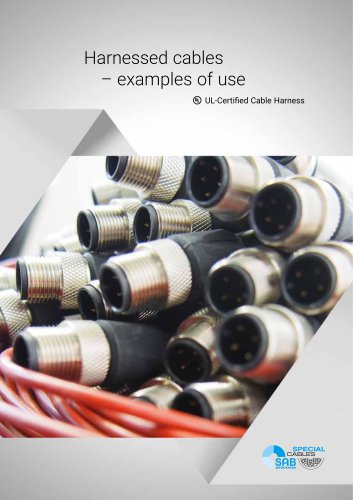 Harnessed cables
40 Pages
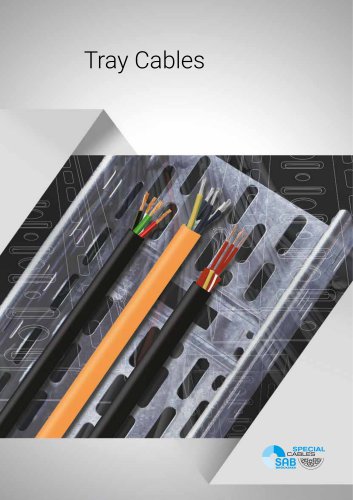 Tray Cables
19 Pages
 Tactical Cables
12 Pages
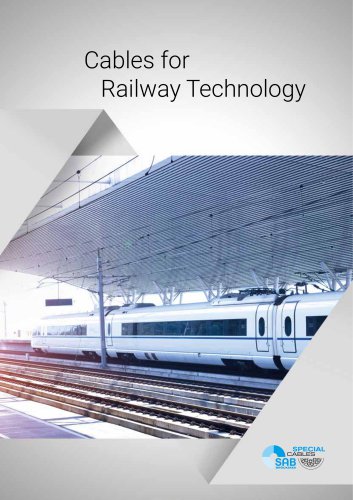 Cables for Railway Technology
32 Pages
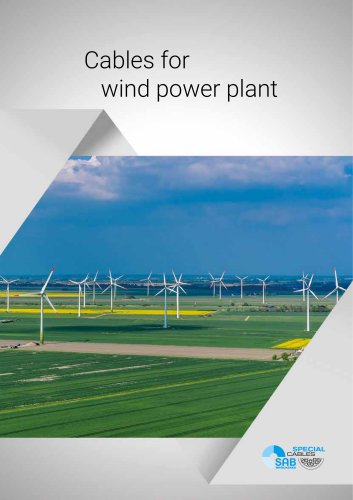 Cables for wind power plant
28 Pages
 Lift Control Cables
12 Pages
 Reeling Cables
16 Pages
 Cleanroom Cables
12 Pages
 Cables for Sensors
8 Pages
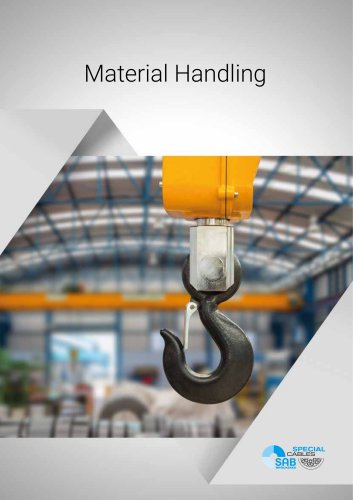 Material Handling
24 Pages
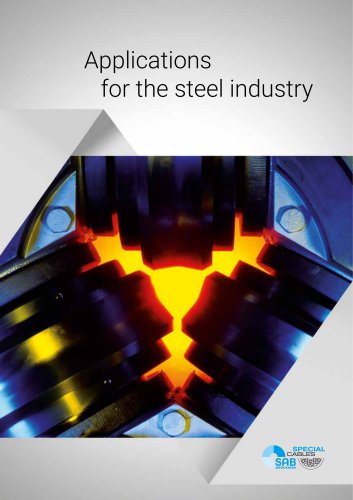 High-Temperature Cables & Wires
52 Pages
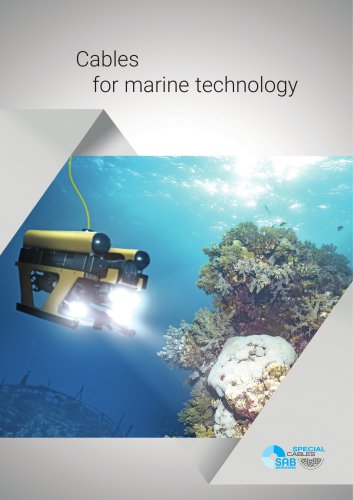 Cables for Marine Technology
8 Pages
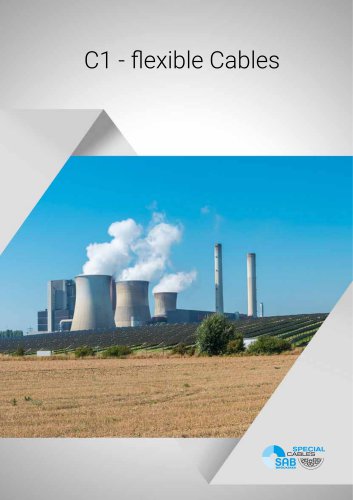 Flexible Cables C1
20 Pages
 Special cables
20 Pages




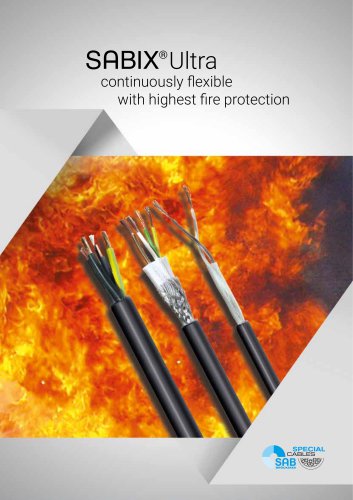
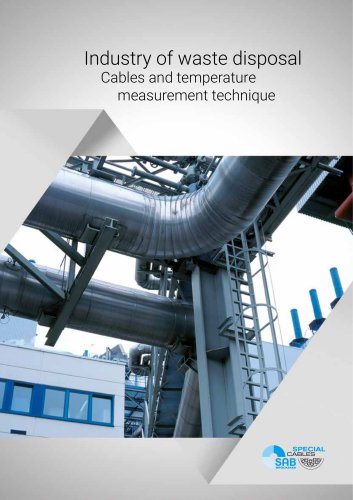
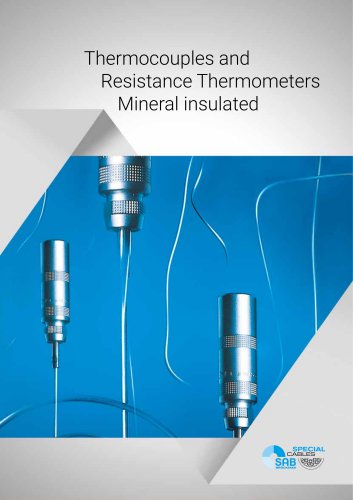
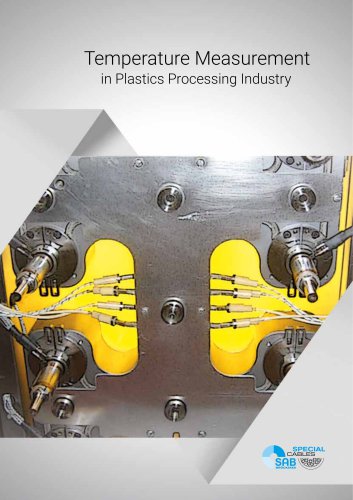
- SAB electrical cable
- SAB copper cable
- SAB copper electrical cable
- Resistance temperature sensor
- SAB power cable
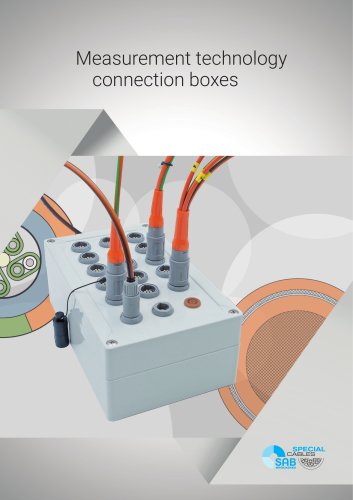
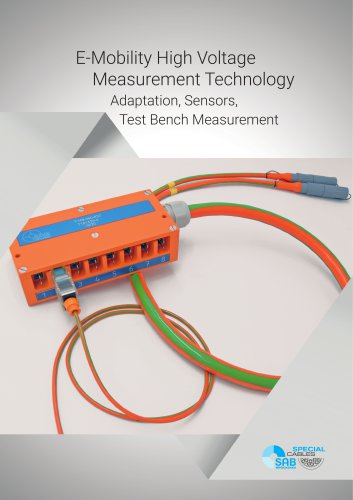
- Terminal box
- SAB insulated cable
- SAB insulated electrical cable
- SAB multi-strand cable
- SAB multi-strand electrical cable
- SAB electrical data cable
- SAB flexible cable
- Industrial thermometer
- Wall-mounted splice box
- SAB flexible electrical cable
- Pt100 temperature transducer
- SAB IEC electrical cable
- SAB PVC-sheathed cable